Polish cooking classes in Kraków: the best hands-on options
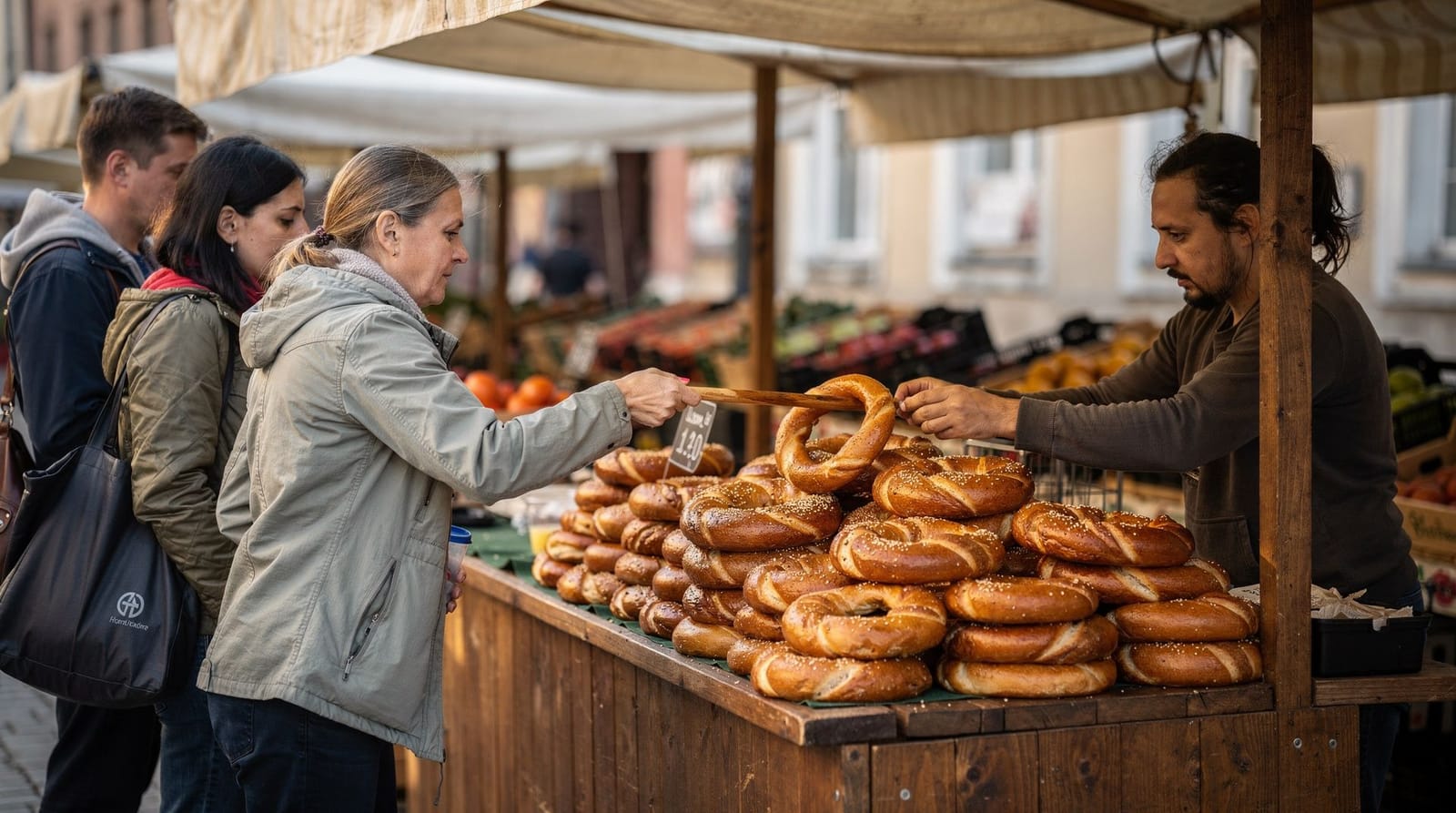
Krakow: traditional obwarzanek baking workshop & tasting
Can I take a Polish cooking class in Kraków and what will I learn?
Yes — Kraków has excellent hands-on cooking classes, mostly focused on pierogi making. Classes typically run 2–3 hours in small groups (4–10 people), you make pierogi from scratch including the dough, fill and fold them yourself, and eat everything at the end. Prices: 150–250 PLN (≈ €35–60) per person. Book 3–7 days ahead in summer.
Kraków has no shortage of places to eat pierogi, but only a handful of ways to learn to make them properly. Here is the practical layout before you dig into the formats and what a class actually involves.
| Where | mostly Old Town / Kazimierz, some home-kitchen locations |
| Cost | around 150–250 PLN/person |
| Time needed | 2–4 hours depending on format |
| Group size | 4–8 (home) or 8–15 (studio) |
| Booking | 5–10 days ahead in summer, easier off-season |
Why take a Polish cooking class in Kraków
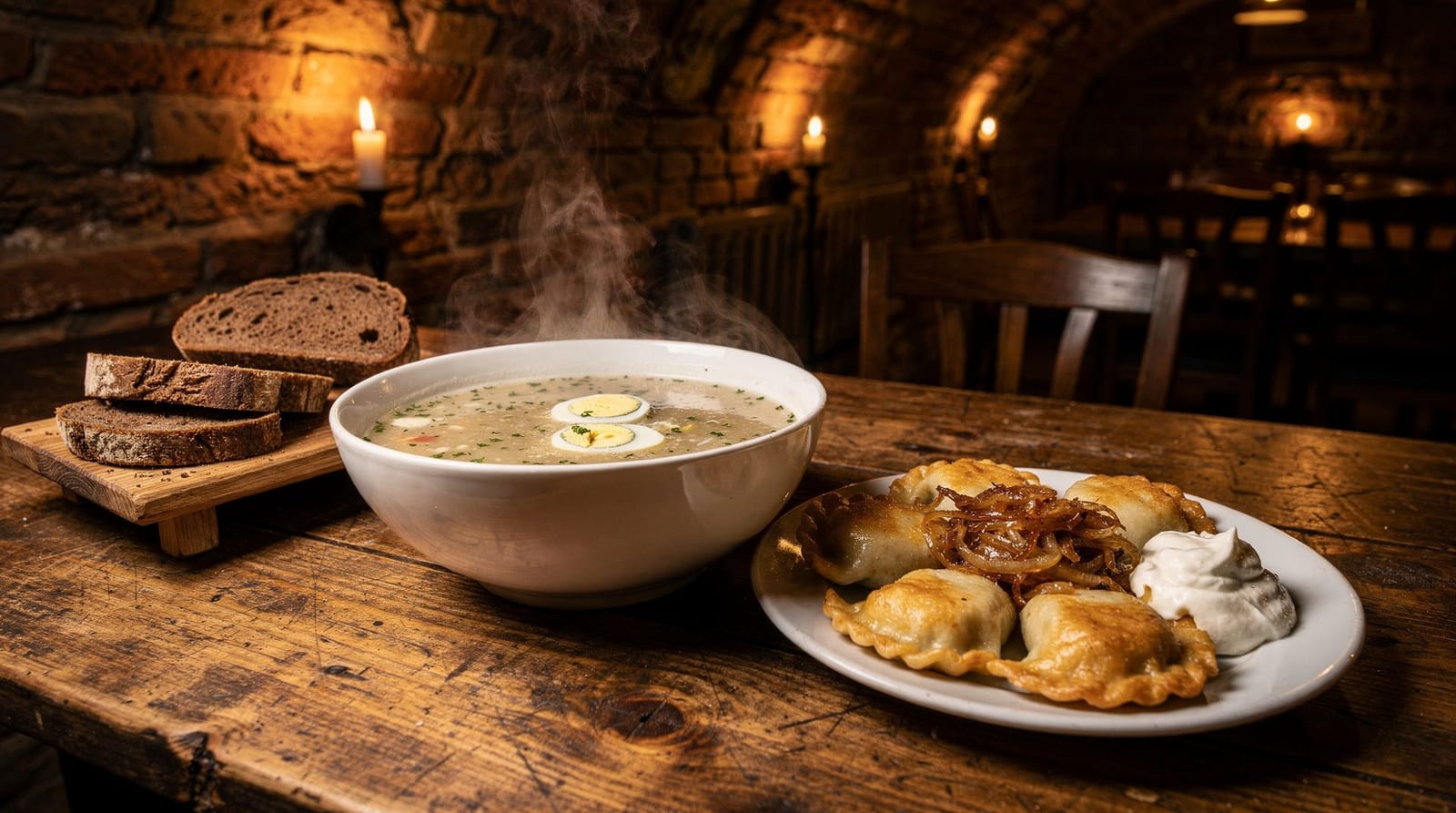
Eating well in Kraków is easy; understanding what you are eating takes more effort. A hands-on cooking class bridges that gap. You leave not just having eaten pierogi but knowing how the dough should feel, why the filling needs the right balance of twaróg and potato, and how to achieve the traditional rope-crimp that seals each dumpling. It is a different quality of engagement with Polish food — and you get to eat everything you make.
Kraków’s cooking class scene is primarily focused on pierogi because they are (a) Poland’s most iconic dish, (b) genuinely learnable in 2–3 hours, and (c) something you can replicate at home with widely available ingredients. Some classes expand beyond pierogi to a broader introduction to Polish cooking.
The classes range from home-kitchen sessions with a local host to more professionally equipped kitchen studios. The difference is mostly atmosphere rather than instruction quality — home settings feel more intimate and personal; studio settings feel more organised and can accommodate larger groups.
The main formats
Home cooking class (intimate, small group)
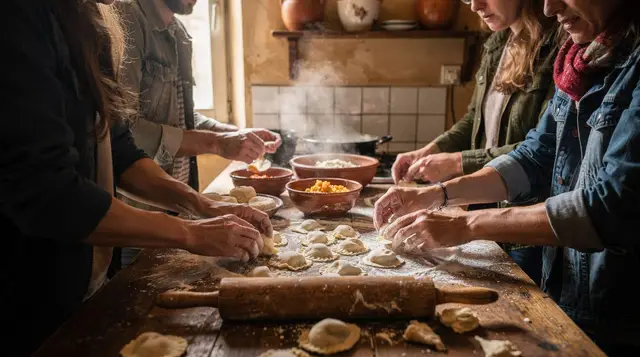
The home format is the most popular for pierogi: a Kraków resident opens their apartment and teaches pierogi making to a small group (typically 4–8 people). The setting is genuinely domestic — you work around a kitchen table, watch the host demonstrate dough-making, take turns at rolling and filling, and eat together at the end with tea and conversation. If you would rather try a different local food craft, the traditional obwarzanek baking workshop with tasting is a close alternative: you bake Kraków’s famous ring-shaped bread instead of dumplings.
This is the format best suited for solo travellers, couples and small groups who want a social, informal experience. The host typically includes Polish home stories and food traditions in the conversation. For pierogi home classes, expect 2.5–3 hours and roughly 160–200 PLN per person (≈ €38–48).
What you will make: two to three types of pierogi (typically ruskie + one other, chosen from kapusta i grzyby, meat, or spinach-feta). You will also learn to make the dough from scratch (flour, eggs, butter — relatively simple) and practice the traditional fold-and-crimp technique.
Kitchen studio class (group, more structured)
The pierogi cooking class runs in a dedicated kitchen space with proper equipment and can accommodate larger groups (8–15 people). More organised than the home setting — work stations, professional tools, a more systematic demonstration. Better for groups of friends, hen/stag parties, or family visits where you want a coherent group experience.
Duration 2–3 hours. Price similar to the home format: 150–220 PLN per person. Includes eating everything at the end.
Broader Polish cuisine classes
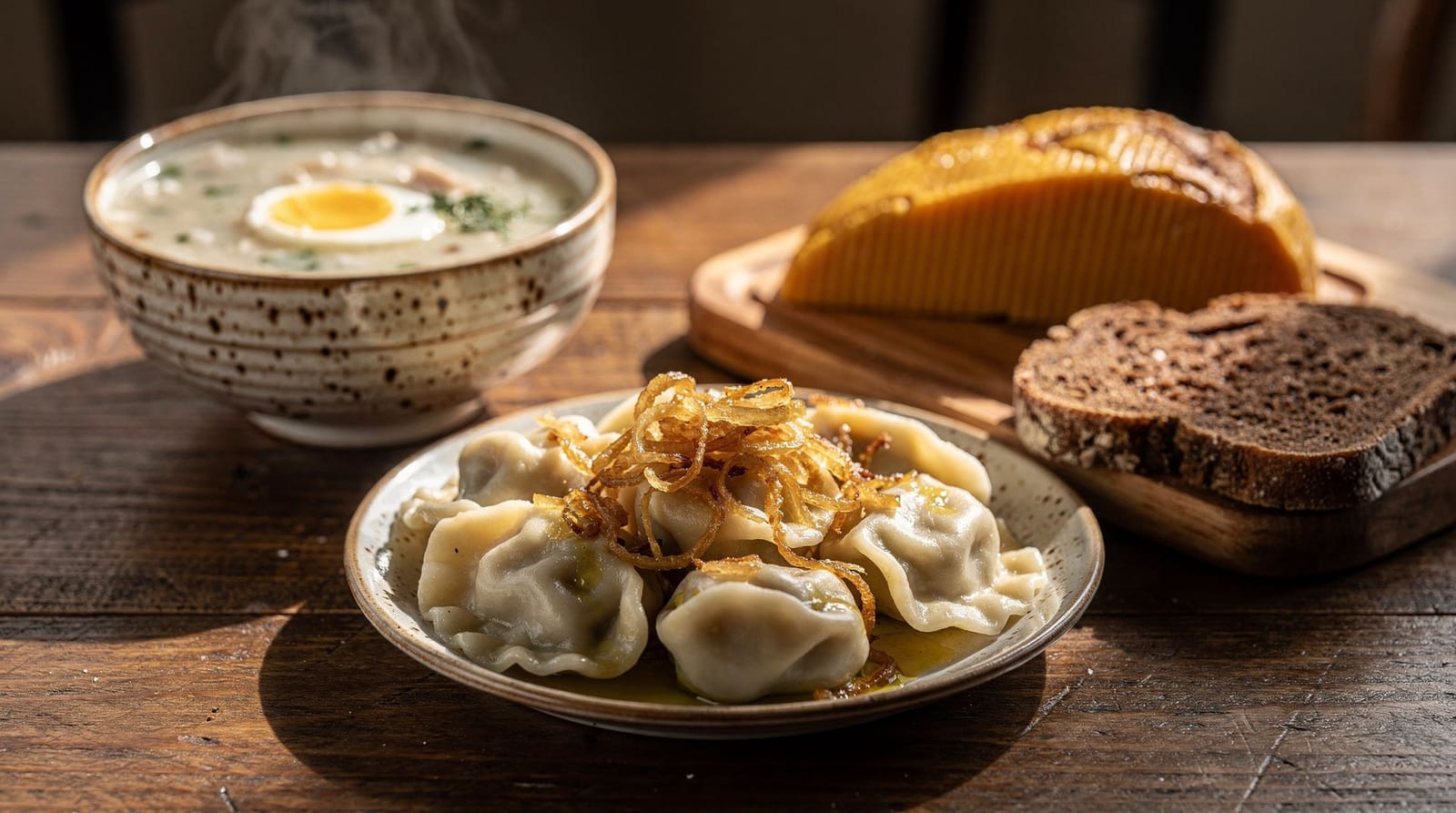
Some operators offer a fuller introduction to Polish cooking beyond pierogi, covering: bigos (hunter’s stew), żurek (sour rye soup), kopytka (potato dumplings), and sometimes a dessert. These classes run longer (3.5–4 hours) and are better suited to those who want to go home with a broader repertoire rather than just one dish.
Ask specifically about the class content when booking — the pierogi-only classes are by far the most common, and “Polish cuisine class” can sometimes mean a longer pierogi session with a soup add-on.
What to expect at a pierogi class
Before you arrive: you do not need prior cooking experience. No special equipment is required — bring an apron if you have one (most classes provide aprons, but a clean set of clothes is a good idea anyway; flour travels).
Dough making (30–40 minutes): the instructor demonstrates the simple dough (plain flour, eggs, butter, warm water) and discusses the texture. You practice the kneading. This is the step most people underestimate — pierogi dough needs to be worked enough to become silky and elastic without being overworked. The host will guide you until it feels right.
Filling preparation (20–30 minutes): the classic ruskie filling (boiled potato, twaróg/cottage cheese, fried onion, salt, pepper) is demonstrated. For subsequent varieties, the process is repeated.
Rolling and cutting (20–30 minutes): thin rolling (2–3mm) and cutting circles. Most classes use a glass or a circle cutter; some teach to roll by hand.
Filling and sealing (30–40 minutes): the key technique — placing the filling, folding the dough over, and crimping the edge. The traditional Kraków crimp is a rope-style press; some classes also teach the simpler fork-press method. Expect to eat several imperfect attempts while learning.
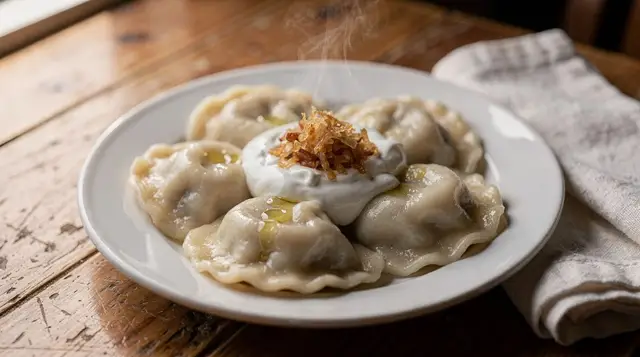
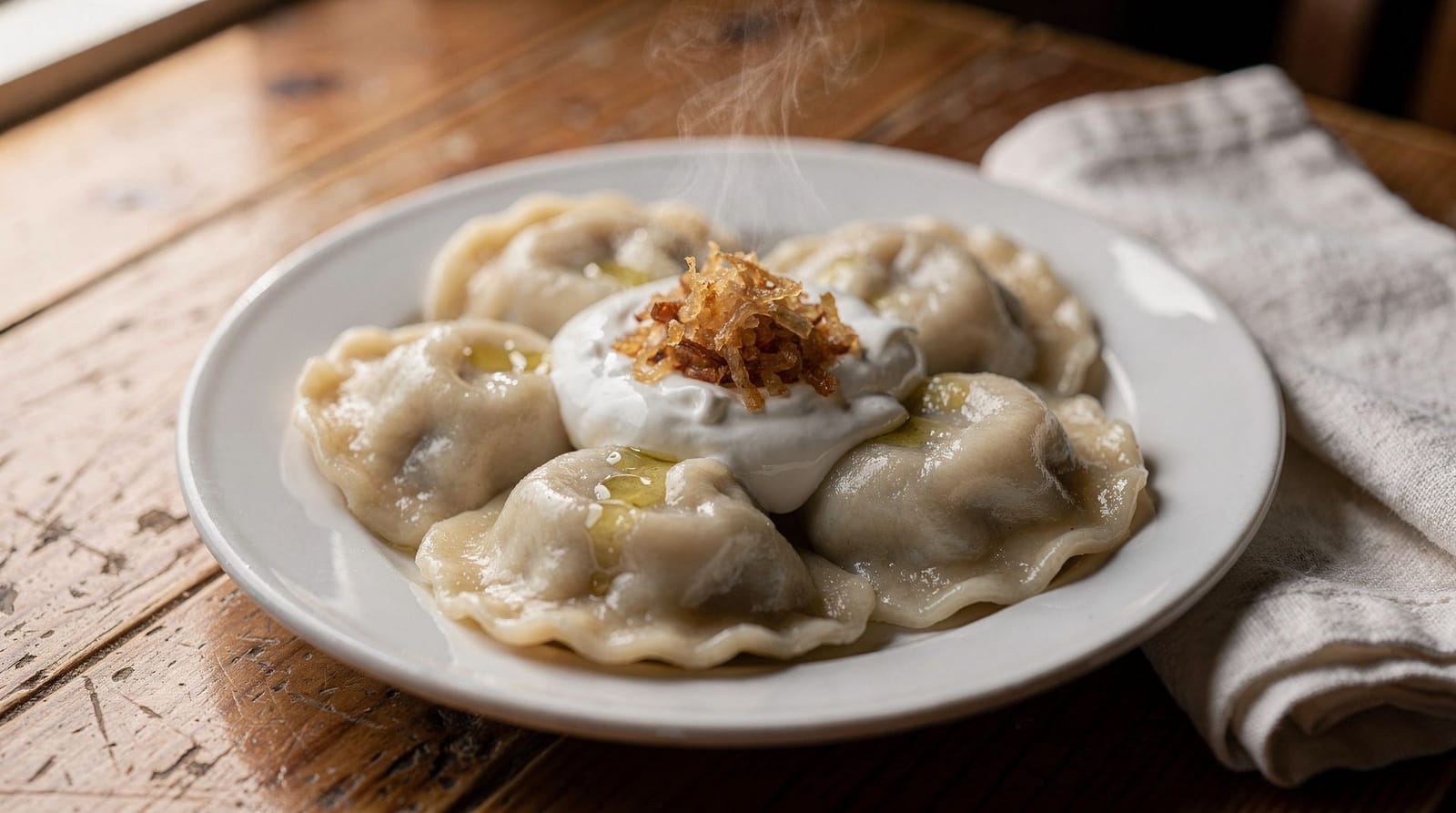
Cooking and eating (30 minutes): the pierogi are boiled in batches, then pan-fried in butter (at good classes) for the crispy version. You eat them at the table, typically with soured cream, fried onion, and tea. Some classes include a small glass of vodka or kompot (stewed fruit drink).
What you leave with: the ability to make pierogi at home. Some classes provide a recipe card; others trust your memory and notes.
Which format fits your trip
| Format | Group size | Feel | Best for |
|---|---|---|---|
| Home cooking class | 4–8 | intimate, personal, conversational | solo travellers, couples |
| Kitchen studio class | 8–15 | organised, structured, sociable | groups of friends, hen/stag parties |
| Broader Polish cuisine class | varies | longer, wider repertoire | serious home cooks, longer stays |
None of these is objectively “better” — the home format wins on atmosphere, the studio format handles bigger groups more smoothly, and the broader class suits anyone who wants more than one dish in their repertoire. If you are travelling with a larger group booked through your hotel or a Kraków food tour, the studio format is usually the easier fit logistically.
What to consider when choosing a class
Group size: smaller groups mean more time with the instructor and a more personal experience. Above 12 people, the class starts feeling like an event rather than a lesson.
Language: all classes listed here run in English (and often other languages on request). Ask if you have a specific language requirement.
Dietary restrictions: pierogi dough is egg-based and contains gluten. Vegan versions are possible in theory (with adjustment) but not standard — contact the operator in advance. Gluten-free versions are not well-supported in traditional pierogi classes. Vegetarian-filling versions (ruskie, spinach) are the default at most classes.
Location: most classes run in the Old Town or Kazimierz area, within 10–15 minutes of the Rynek by foot. The home classes can be further afield; confirm the address when booking.
Season: June–September is the busiest period. Book 5–10 days ahead for summer weekends. October–May is easier; same-week booking usually possible.
Pairing a cooking class with other food experiences
Cooking classes work well as part of a broader food-focused day. Suggested combination:
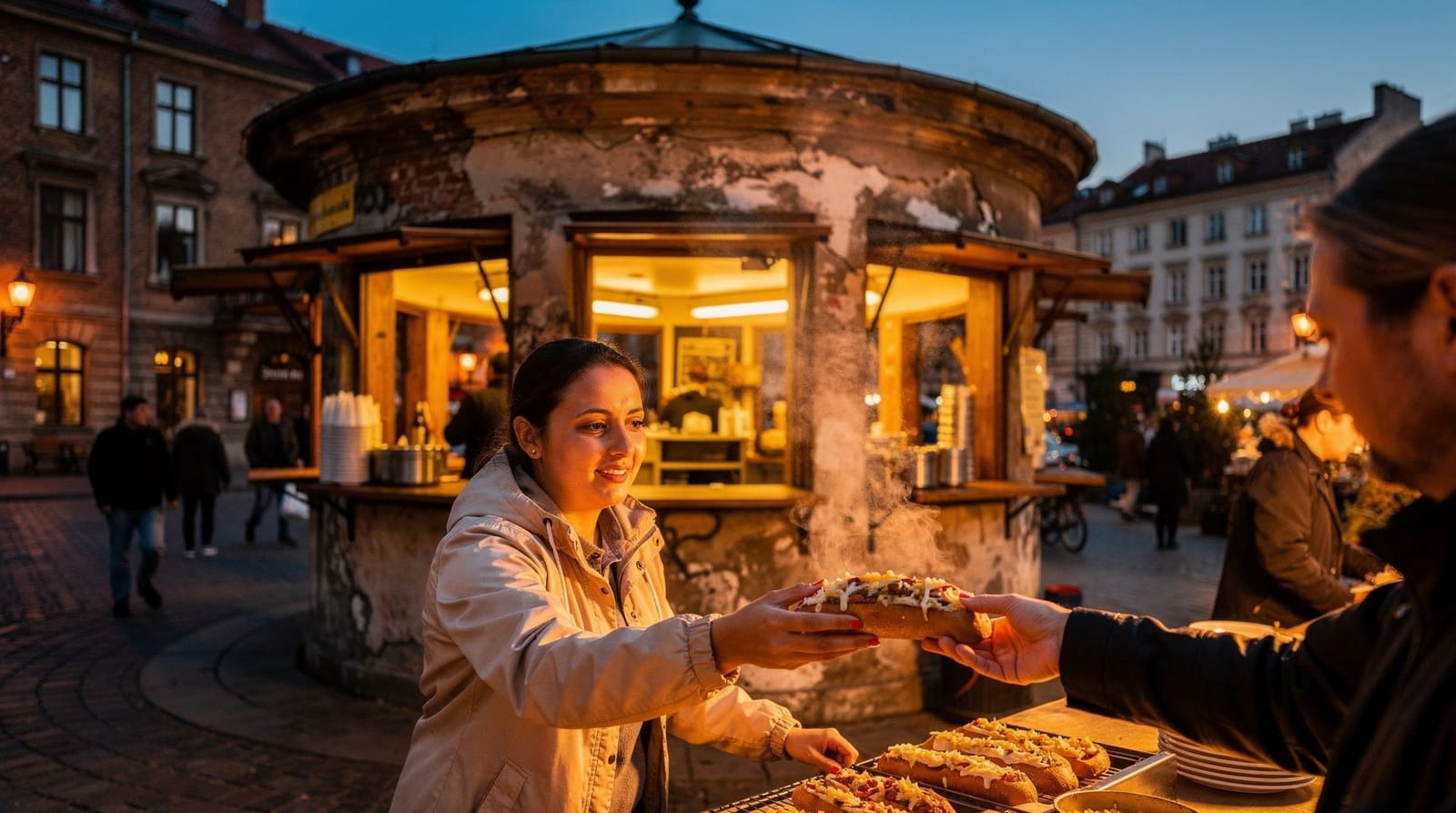
Morning: food market visit to Hala Targowa (ul. Grzegórzecka) — see where Polish ingredients are sourced Midday: pierogi cooking class (most run noon–3pm) Afternoon: walk the Kazimierz food streets (Kazimierz food scene: the best restaurants and bars) or explore Plac Nowy (Zapiekanka: Kraków’s street food icon at Plac Nowy) Evening: vodka tasting at a specialist bar (Polish vodka tasting in Kraków: the honest guide)
For those who want guidance across all these food experiences in a single session, the food tours covered at Kraków food tours: which one is actually worth it are an alternative or complement.
Can I learn to cook other Polish dishes?
Beyond pierogi, some operators offer:
Bigos (hunter’s stew) classes: usually a half-day event since bigos benefits from long cooking. Less common but more satisfying for serious cooks.
Bread and obwarzanek workshops: rare but occasionally offered by artisan bakeries. Check local listings.
Polish dessert classes: makowiec (poppy seed roll), sernik (cheesecake), szarlotka (apple cake). Found mainly as add-ons to longer cooking days.
For understanding traditional Polish dishes without making them yourself, the Traditional Polish dishes in Kraków: what to eat and where guide covers the full spectrum.
Where to keep eating pierogi after the class
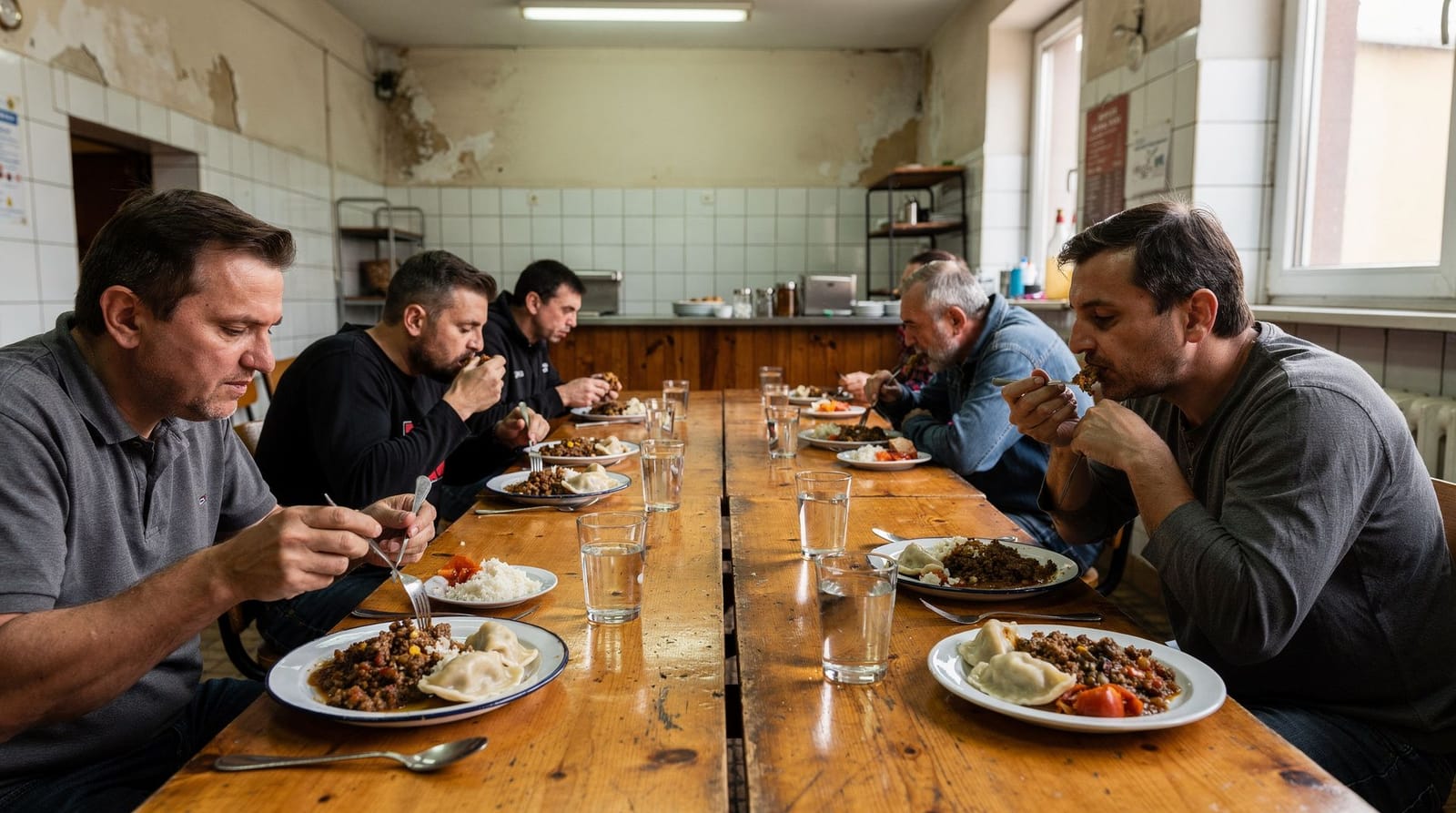
A class teaches you to make them; it does not stop you wanting to eat more of them made by someone else. Our best pierogi in Kraków guide rounds up where locals actually eat, and a proper milk bar (bar mleczny) is the cheapest, most authentic comparison point — expect to pay a fraction of restaurant prices for a plate that is often better than what tourist-facing spots serve. Most of the best options cluster in Kazimierz, within easy walking distance of where many cooking classes run.
Frequently asked questions about cooking classes in Kraków
Are cooking classes worth the price compared to eating at a restaurant?
Different value proposition. Eating at a restaurant is cheaper and faster. A cooking class gives you a skill, a story and (if the class is good) a social experience. For many people, the hands-on learning is the point — you go home able to make pierogi for yourself and others. Worth it for those who cook at home and want to take Polish food culture back with them.
Can children participate in pierogi cooking classes?
Most classes can accommodate children aged 8+ who are supervised by an adult. Some classes are specifically designed for families. Confirm with the operator when booking.
How long does it take to make pierogi at home after the class?
First attempt at home: 2–3 hours for a batch of 30–40. With practice: 60–90 minutes. The dough and filling are straightforward; the crimping technique takes a few batches to get consistent.
Do classes run on weekends?
Yes — weekends are actually the most common class days. The morning and afternoon slots (10am–1pm and 1pm–4pm) are typical. Evening classes (6–9pm) also exist for those combining with other daytime plans.
Is there a minimum age requirement for the vodka-inclusive versions?
If the class includes vodka tasting, the minimum age is 18 under Polish law. ID may be checked. Non-alcoholic alternatives (kompot, juice) are usually available.
Do I need to book in advance or can I turn up on the day?
Book ahead where possible, especially June–September when popular classes fill 5–10 days out. Off-season (October–May), same-week or even next-day booking is often possible, but availability still isn’t guaranteed on short notice for the smaller home format.
Will I take home leftovers or just eat everything on site?
Most classes plan portions so everything is eaten together at the table, though some hosts will let you take extra dough or uncooked pierogi home if there is surplus — ask at the start rather than assuming, since it varies by operator.
Top experiences
Bookable activities with verified prices and instant confirmation on GetYourGuide.