Milk bars (bar mleczny) in Kraków: the complete guide
Krakow: guided food tour with tastings
What is a bar mleczny (milk bar) and are they worth visiting in Kraków?
A bar mleczny is a Polish cafeteria-style restaurant serving traditional home-cooked food at prices left over from the communist era — typically 20–35 PLN (≈ €5–8) for a full meal with soup and a main. They are absolutely worth visiting: the food is honest, the atmosphere is authentically local, and nothing comes close on value.
| Cost, full meal | around 20–35 PLN |
| Payment | Cash only, almost everywhere |
| Busiest hours | 11:30am–1:30pm, arrive outside this window |
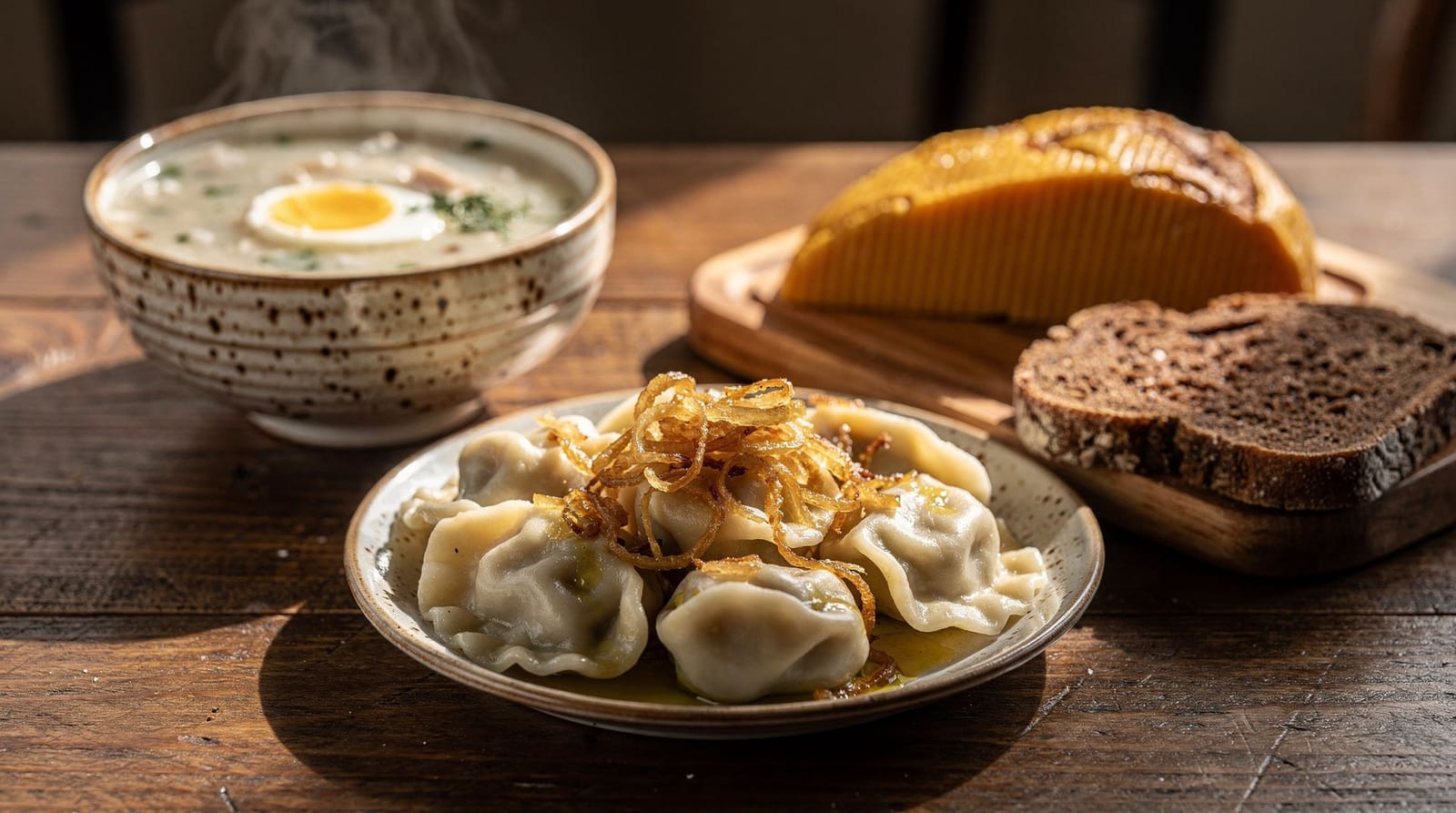
| Best first order | Żurek soup + pierogi ruskie |
| Closed | Most milk bars close Sundays |
What is a bar mleczny?
Bar mleczny means “milk bar” — a Polish cafeteria institution dating from the 1960s and 1970s, when the communist government subsidised communal eating places to provide hot meals to workers. The name originally reflected a partial dairy focus (milk, cheese, eggs) that distinguished them from meat-heavy restaurants during rationing, though today most serve full menus including meat.
The format is always the same: a counter where you queue, a chalkboard menu (sometimes translated, often not), prices by the portion, trays and cutlery collected at the counter, seating at communal tables. You order at the counter, pay (almost always cash only), collect your food when your number is called or when the server passes it across.
Most milk bars survived the post-1989 transition because they were subsidised, adapted, and because there was simply no substitute at their price point. Several in Kraków have been running in the same premises for decades, serving the same recipes to students, pensioners, market workers, and increasingly — visitors who have learned what they are missing.
A full meal — soup, main course, side salad, compote (stewed fruit drink) — costs 20–35 PLN (≈ €5–8). A main alone: 12–22 PLN. This is extraordinary value for genuinely home-style cooking.
The best milk bars in Kraków
Bar Mleczny Pod Temidą
Address: ul. Grodzka 43 (Old Town, south end) Hours: vary and change often; check on arrival (most close by late afternoon) Payment: cash only
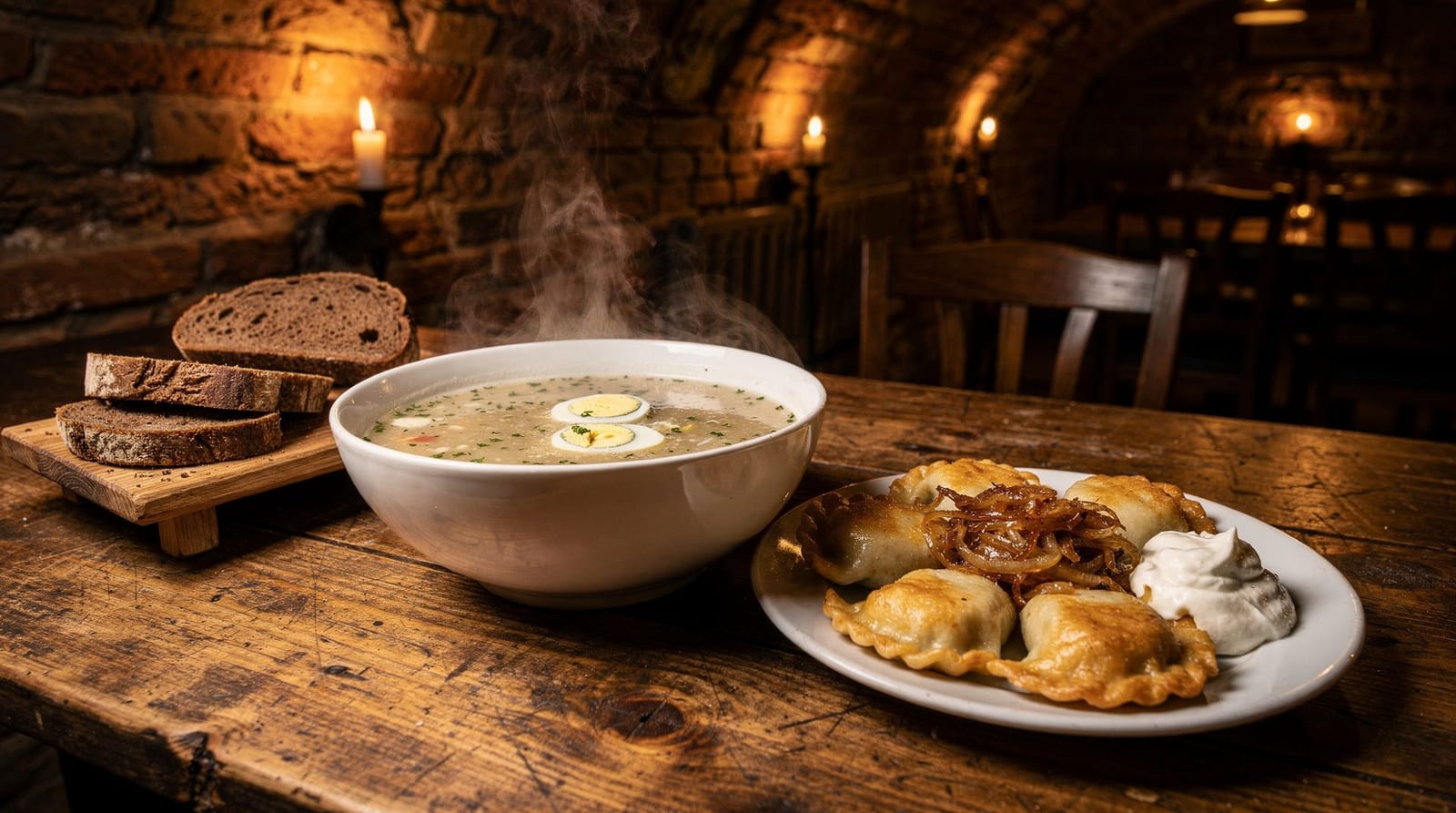
The most central and most celebrated of Kraków’s milk bars. “Under Themis” sits on the Old Town’s historic ul. Grodzka, a five-minute walk from the Rynek. The menu rotates daily but always includes żurek, barszcz, pierogi ruskie, kotlet schabowy, gołąbki, and kopytka. The żurek here is particularly good — sour and filling, served with egg and kiełbasa. Arrive before noon to beat the queue; the room fills fast at lunchtime.
Expect to wait 5–15 minutes at the counter during peak hours. The staff speak minimal English but pointing works perfectly. A full meal here runs 22–30 PLN (≈ €5–7).
Bar Mleczny Krakus
Address: ul. Grzegórzecka 26 (east of Old Town, near Hala Targowa) Hours: vary and change often; check on arrival (most close by late afternoon)
Slightly off the tourist circuit and all the better for it. Krakus is a working neighbourhood milk bar serving the market traders and residents of the Grzegórzecka area. The menu is extensive by milk bar standards — often 20–25 items on the board. The pierogi are generous; the soups are made from scratch. Very cheap even by milk bar standards: full meal 18–28 PLN.
Mieszek
Address: Rynek Kleparski 15 (inside the market square) Hours: vary and change often; check on arrival (most close by late afternoon)
Located inside Kraków’s smaller open-air market, Mieszek is used primarily by market vendors and shopping regulars rather than tourists. The food is honest and the atmosphere is the most authentically local of any milk bar in the city. The bigos is outstanding. Arrives by 11am for the full menu; dishes sell out early.
Bar Mleczny Czerwony Kapturek
Address: ul. Mikołajska 19 (Old Town) Hours: vary and change often; check on arrival (most close by late afternoon)
“Red Riding Hood” milk bar occupies a small premises just off the main Old Town area. Slightly more tourist-aware than the others — the menu has English translations — but still charging authentic milk bar prices and serving good food. The kotlet z kurczaka (breaded chicken) and mashed potato is a reliable order. Good for those hesitant about the language barrier.
Bistro Kuchnia U Babci Maliny
Address: ul. Sławkowska 17 (courtyard entrance) Notes: this is the more casual branch associated with the Pierogarnia u Babci Maliny; not strictly a milk bar but operates on similar principles with table service
How to order at a milk bar
Step 1: Read the chalkboard or board at the counter. Daily specials (dania dnia) are often the best value. Categories: zupy (soups), dania główne (main courses), dodatki (sides), napoje (drinks).
Step 2: Queue at the counter. If the person in front is taking time, have a backup choice. Pointing at photographs or the food itself behind the glass counter works well.
Step 3: Give your order to the server at the counter. They will write it on a small slip and quote a price. Pay there and then (cash).
Step 4: Collect a tray and cutlery if not already given them. Find a table (sharing is normal and expected at busy times).
Step 5: Your number may be called, or the server may bring the food to the counter/hatch. Watch where others are collecting from.
Step 6: Eat. Return the tray to the designated spot near the counter.
What to order: the milk bar menu
Soups (zupy): always order a soup. At 6–12 PLN they are outstanding value. Żurek, barszcz czerwony, kapuśniak, grochówka (split pea soup with smoked pork — thick, filling, excellent in winter), tomato soup (zupa pomidorowa, surprisingly good with rice).
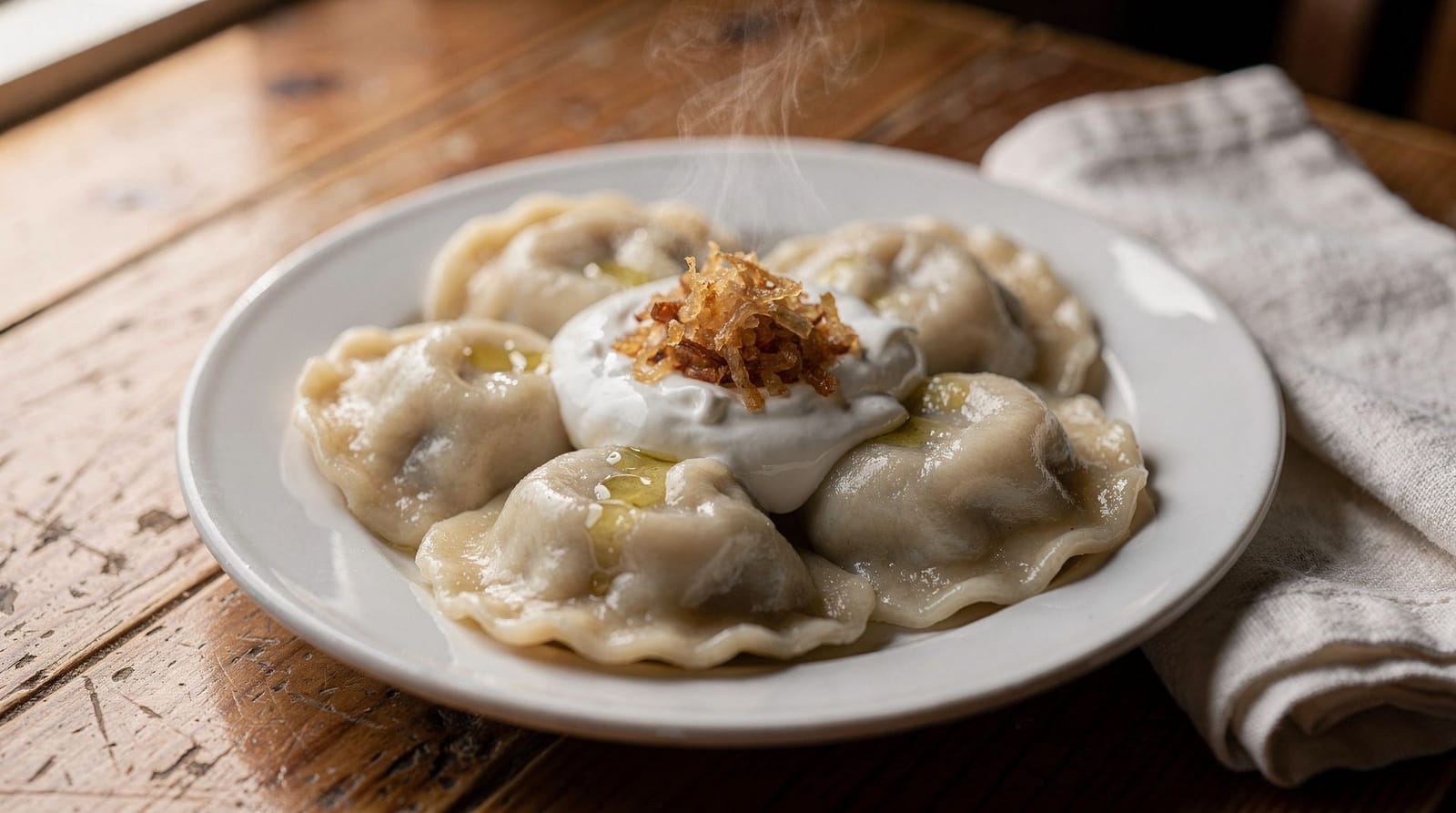
Main courses (dania główne): kotlet schabowy (breaded pork — the reliable default), pierogi ruskie (always present), gołąbki (stuffed cabbage rolls, usually 2–3 per portion), kotlet z kurczaka (chicken cutlet), bigos (if available), kopytka (potato dumplings).
Sides (dodatki): kapusta kiszona (sauerkraut salad), surówka z marchewki (carrot salad), buraczki (beetroot with horseradish), mashed or boiled potatoes.
Drinks: kompot (hot or cold stewed fruit drink — traditional and worth trying), kefir (fermented milk drink), soki (juice), water. No alcohol at milk bars.
Milk bars on food tours
Milk bars feature prominently on most serious Kraków food tours because they are such a defining local experience. The guided food tour with tastings is a close alternative if you want a guide to introduce Polish dishes and explain what you are eating. The traditional food tour with Old Town sightseeing also visits a milk bar as part of the food circuit.
For those who want to explore the full range of Kraków food rather than just milk bars, the Kraków food tours: which one is actually worth it compares all the main food tour options.
The honest assessment
Milk bars are not for everyone. The experience is functional, sometimes slightly chaotic, and the language barrier is the highest of any dining category. The food is not sophisticated. But the combination of authenticity, extraordinary value and historical interest makes them essential for anyone who wants to understand how Kraków actually eats.
The tourist trap version to avoid: several places near the Rynek have adopted the milk bar aesthetic (chalkboards, communal tables) while charging 2–3× milk bar prices. If a “bar mleczny” near the market square is charging 50+ PLN for a main course and has an English menu designed for tourists, it is not a milk bar.
The real milk bars are slightly out of the way, have menus that require minimal effort to decode, and charge prices that seem almost implausibly low. That is how you know.
Practical notes
Cash only: bring plenty of 10s, 20s and 50s. A 100 PLN note is sometimes an issue for the smaller operations; break larger notes at a supermarket beforehand.
Hours: most close between 4–6pm and are entirely closed on Sundays. The busiest period is 11:30am–1:30pm; arrive before or after for an easier experience.
Portion sizes: very generous. One main course is typically a substantial serving; adding a soup and a side salad produces a meal that would cost 40–60 PLN at any regular restaurant.
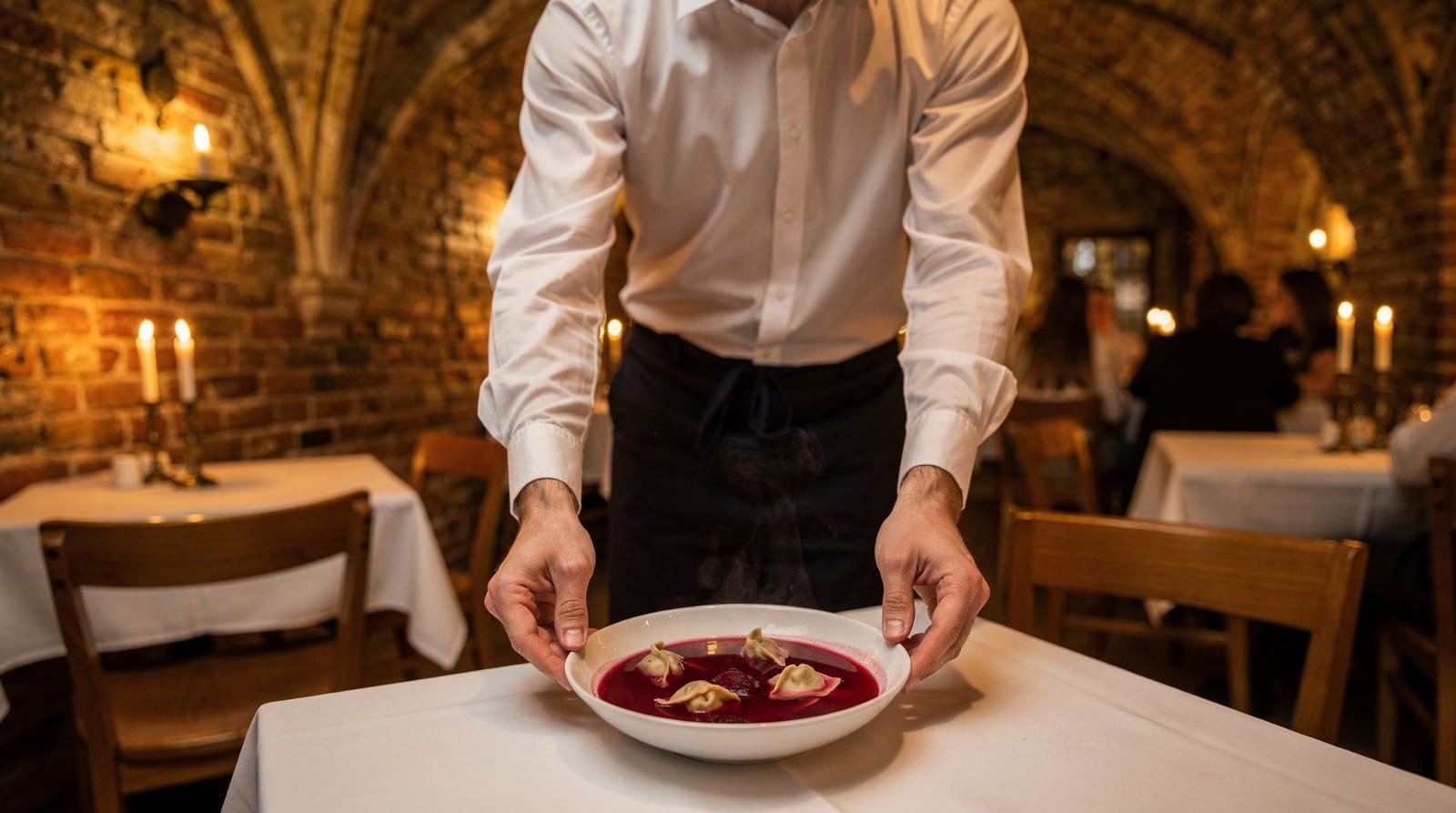
Seasonal menus: summer brings lighter options including salads and fresh fruit kompot. The menu is heavier in winter. Christmas period sees special dishes including barszcz with uszka.
How milk bars fit into a wider Kraków food trip
Milk bars are one part of a much bigger food story in the city, and they work best paired with the rest of it rather than treated as a novelty stop. The Kraków food guide covers the full landscape — from milk bars to fine dining — while the traditional Polish dishes guide explains the dishes themselves (żurek, bigos, gołąbki) in more depth than a menu board ever will. If pierogi specifically are your priority, the best pierogi in Kraków guide ranks the specialist pierogarnie alongside the milk bar versions. For a base to explore from, Kazimierz’s food scene sits a short walk from several milk bars and adds a very different — more modern, more experimental — layer to the same trip. And if you want a reliable sit-down option for the evenings when a milk bar’s early closing time doesn’t work, the best restaurants in Old Town guide has vetted, honestly priced picks.
A few other pages help you place a milk bar lunch inside a real day. Because the tables fill up around midday, it pairs naturally with a morning on the Rynek Główny main square or a walk along the Royal Route, after which a hot soup is exactly what you want. If you are watching your budget, the Kraków budget travel guide shows how a milk bar meal or two can anchor the whole daily spending plan.
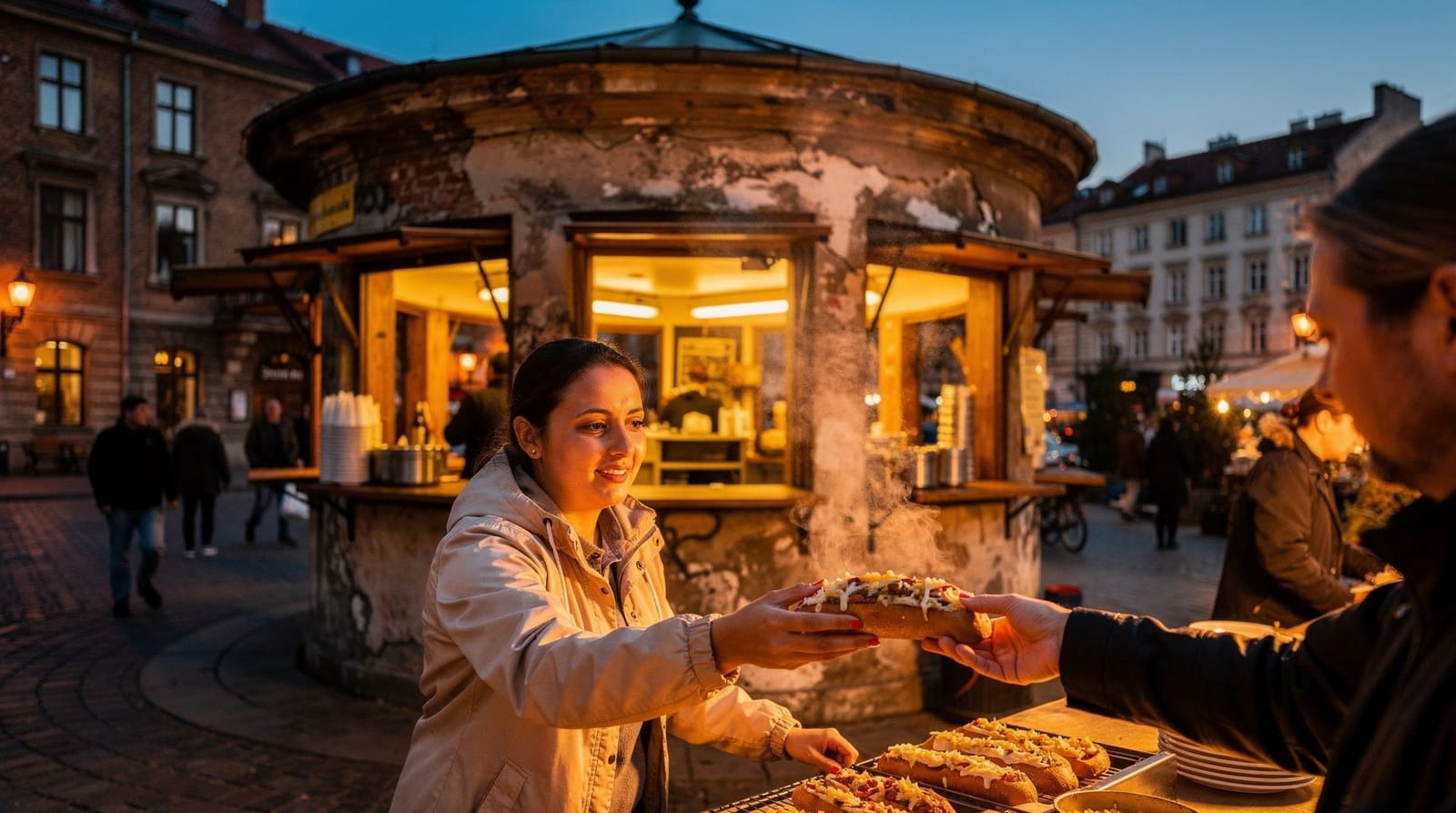
Anyone curious about the street-food side of the city can follow up with the zapiekanka street food guide, and the Kraków tourist traps guide explains in more detail why imitation milk bars near the square are worth skipping. Finally, since cash matters so much here, the Kraków money and currency guide covers how to handle it before you queue at the counter, and the Kraków for first-timers guide shows where a first milk bar visit fits into a first trip. For a personal account of the experience, the blog post on the milk bar experience in Kraków is a good companion read.
Frequently asked questions about milk bars in Kraków
Are milk bars still subsidised?
No — the state subsidies ended with communism. Surviving milk bars operate as regular businesses, though some receive indirect support through below-market rents in city-owned buildings. They remain cheap because of the simple format, minimal staff, no alcohol licence, and low margins rather than subsidies.
Do milk bars have vegetarian options?
Yes, more than you might expect. Pierogi ruskie, pierogi z kapustą, barszcz czerwony, tomato soup, kopytka with butter, and most surówki sides are vegetarian. Some soups are made with meat stock even if they do not contain meat (ask “czy zupa jest na mięsnym wywarze?” — “is the soup made with meat stock?”).
Can I visit a milk bar without speaking Polish?
Yes. Pointing, numbers and a basic “dziękuję” (thank you) are sufficient. If the format still feels daunting, the guided food tour with tastings lets you try Polish food with a guide to help — useful if you want context alongside the meal.
What is the difference between a bar mleczny and a regular cafeteria?
A genuine bar mleczny is distinguished by its history (communist-era origin), pricing structure (below restaurant prices for home-style cooking), no-frills atmosphere and typically cash-only policy. Modern cafeterias (stołówki) and food courts operate on similar self-service principles but are newer and not part of the milk bar tradition.
Are there milk bars in Kazimierz specifically?
A handful, though Kazimierz’s food scene leans more toward independent cafes and modern restaurants than the milk bar format, which is more concentrated in the Old Town and around Kraków Główny station. Bar Mleczny Krakus and Mieszek are both closer to the eastern edge of the centre than to Kazimierz itself, so budget a short walk or tram ride if you’re staying in Kazimierz.
Can I get milk bar food to take away?
Most milk bars offer takeaway (na wynos) if you ask, though the experience of eating in — sharing a communal table, watching the kitchen through the counter — is part of the appeal. If you do take away, expect the same low prices; there’s usually no premium for packaging.
Top experiences
Bookable activities with verified prices and instant confirmation on GetYourGuide.