Kraków in spring: blossoms, fewer crowds, and the city at its best
| Where | The Planty ring around the Old Town; blossom peaks near Floriańska Gate |
| Cost | Free to walk; hotel prices 20-30% below summer peak |
| Time needed | A morning walk, or a full spring visit of 3-4 days |
| Getting there | Central and walkable; the Planty circuit is about 4 km |
| Best time | Early-to-mid April for peak blossom (roughly a 4-day window) |
The moment the city changes
There is a specific morning in April when Kraków becomes a different city. It happens sometime between the last grey week of early spring and the first day warm enough to sit outside without a coat — and it is marked, as reliably as a calendar, by the flowering of the cherry trees along the Planty.
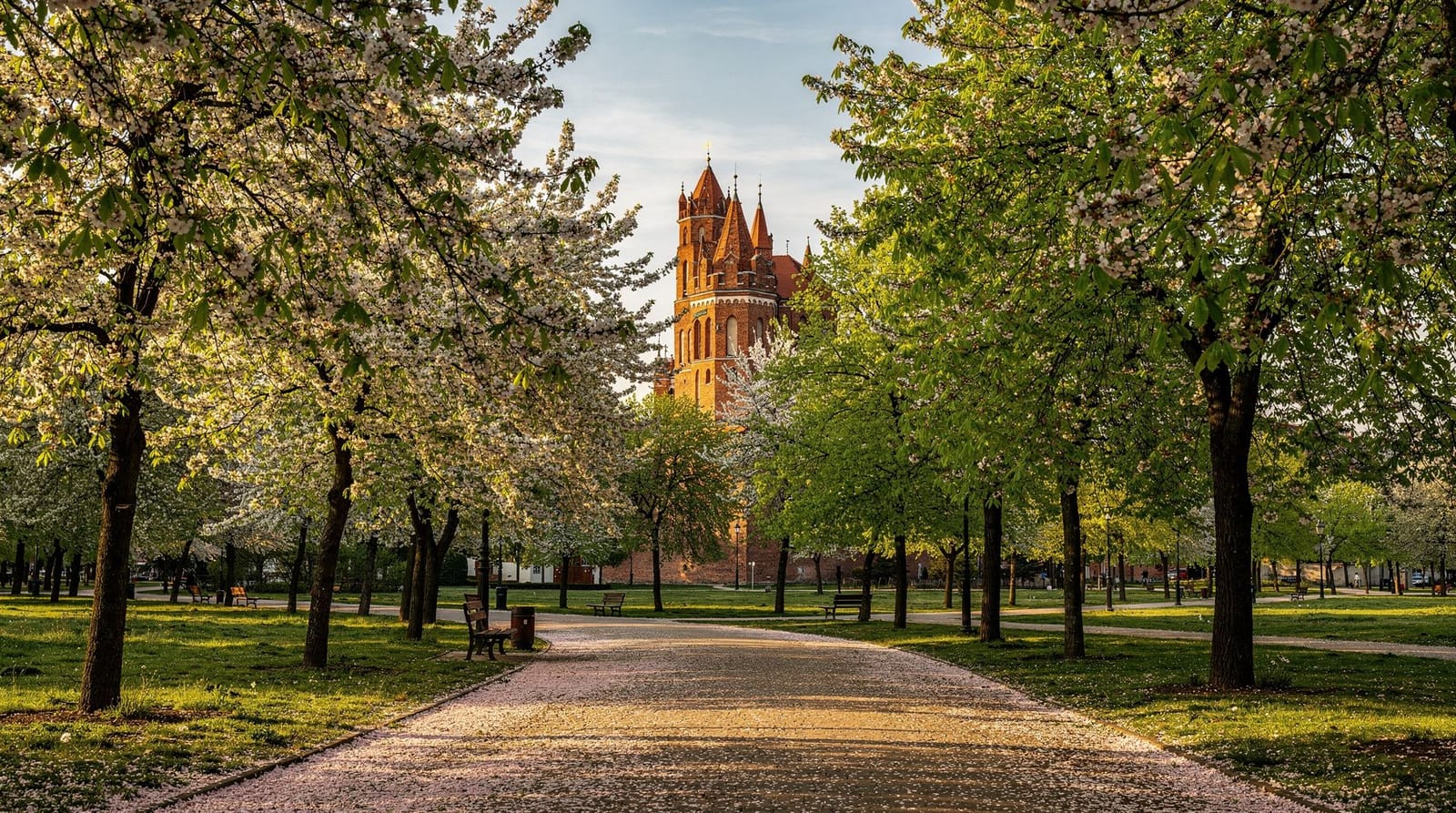
The Planty gardens ring the Old Town like a green belt, following the line of the medieval walls that were demolished in the 19th century to create what is now a long, curved park. In April, the cherry trees that line the main path produce blossom in the white-pink spectrum that occupies photographs and morning walks in approximately equal measure. The contrast with the medieval stone of the Barbican and the Floriańska Gate, visible through the branches, is the sort of thing that people come to photograph and end up simply looking at.
I was there in early April last year. The trees were at peak blossom for approximately four days — this is not a metaphor for the transience of beauty, just the ordinary fact of spring flowers — and then the petals were on the ground and the leaves were coming through, which is also beautiful and considerably less photogenic.
Why spring is the honest best time
The best time to visit Kraków guide covers this in full, with month-by-month data. But the argument for spring is essentially this: you get close to everything good about the city without the primary downside, which is the summer crowd density.
In July and August, the Rynek Główny fills with tour groups from approximately 9:30 in the morning. The queues for Wawel Castle’s ticketed attractions stretch past the gatehouse. Accommodation prices are at their annual peak. The city’s stag-party economy is at maximum operating capacity.
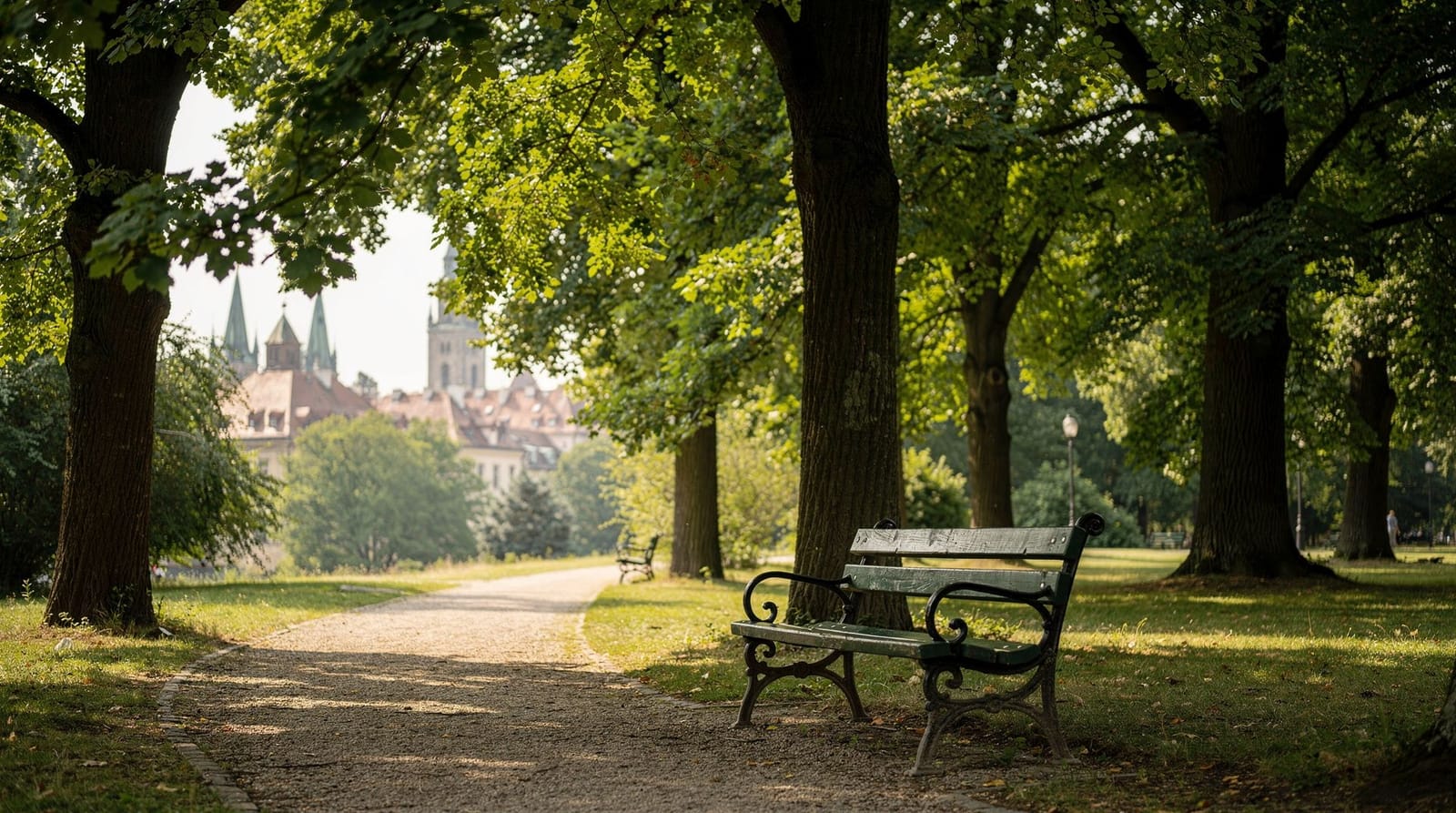
In April and May, temperatures sit at 12-18°C — comfortable for walking, acceptable for outdoor sitting with a jacket. The days are long and improving. Hotel prices are 20-30% lower than summer peaks. The Wawel ticket queues are manageable without arriving at opening. The Planty is full of people jogging and reading and sitting on benches rather than moving as a mass toward the next attraction.
The tourist infrastructure is entirely open. Wieliczka operates year-round. Auschwitz is year-round. Zakopane in spring is early-season hiking — the snow is still present above 1,500m, the trails are partially accessible, the thermal baths are magnificent after a cold walk.
What’s happening in the city
Kraków’s event calendar has several spring moments worth planning around.
Easter in Kraków is significant — this is a Catholic city in a Catholic country, and the Easter preparations are visible in the weeks before: decorated eggs (pisanki) sold in the markets, palm Sunday processions, the Emaus fair in Salwator (a traditional market with folk crafts and food) on Easter Monday. The church services in St. Mary’s Basilica and Wawel Cathedral during Holy Week are open to respectful visitors.
The Kraków Film Festival runs in late May and early June and brings international cinema to various venues across the city. This is one of the oldest documentary film festivals in the world (founded 1961) and occupies something of a different cultural register to the stag-party economy that dominates summer.
Juvenalia, the student carnival, happens in May — Jagiellonian University students take symbolic “control” of the city for several days, with concerts, street events, and a general increase in festivity. The energy is distinctly different from tourist nightlife: younger, more local, more unpredictable.
Walking the Planty in blossom season
The full Planty circuit is about 4 km and takes an unhurried hour. It is entirely flat, passes multiple entry points into the Old Town, and provides a coherent frame for understanding the shape of the medieval city.
The section between the Floriańska Gate (the old northern entrance to the city, with its connected Barbican) and the Słowackiego Theatre has the densest cherry planting. The Barbican itself — a round Gothic fortification connected to the city wall — is fully accessible in spring and worth entering; the view of the gate from inside the round tower is a good photograph regardless of blossom.
The Planty in spring also means the reappearance of the obwarzanek sellers — the ring-bread carts that are one of Kraków’s most enduring street food traditions. An obwarzanek costs 3-5 PLN (0.70-1.20 €), with prices posted at each cart, and comes in sesame, poppy seed, or occasionally salt. The correct method of eating is to tear off pieces while walking and drop the last quarter on the ground when you realise you have been eating it too fast.
The Rynek Główny in April
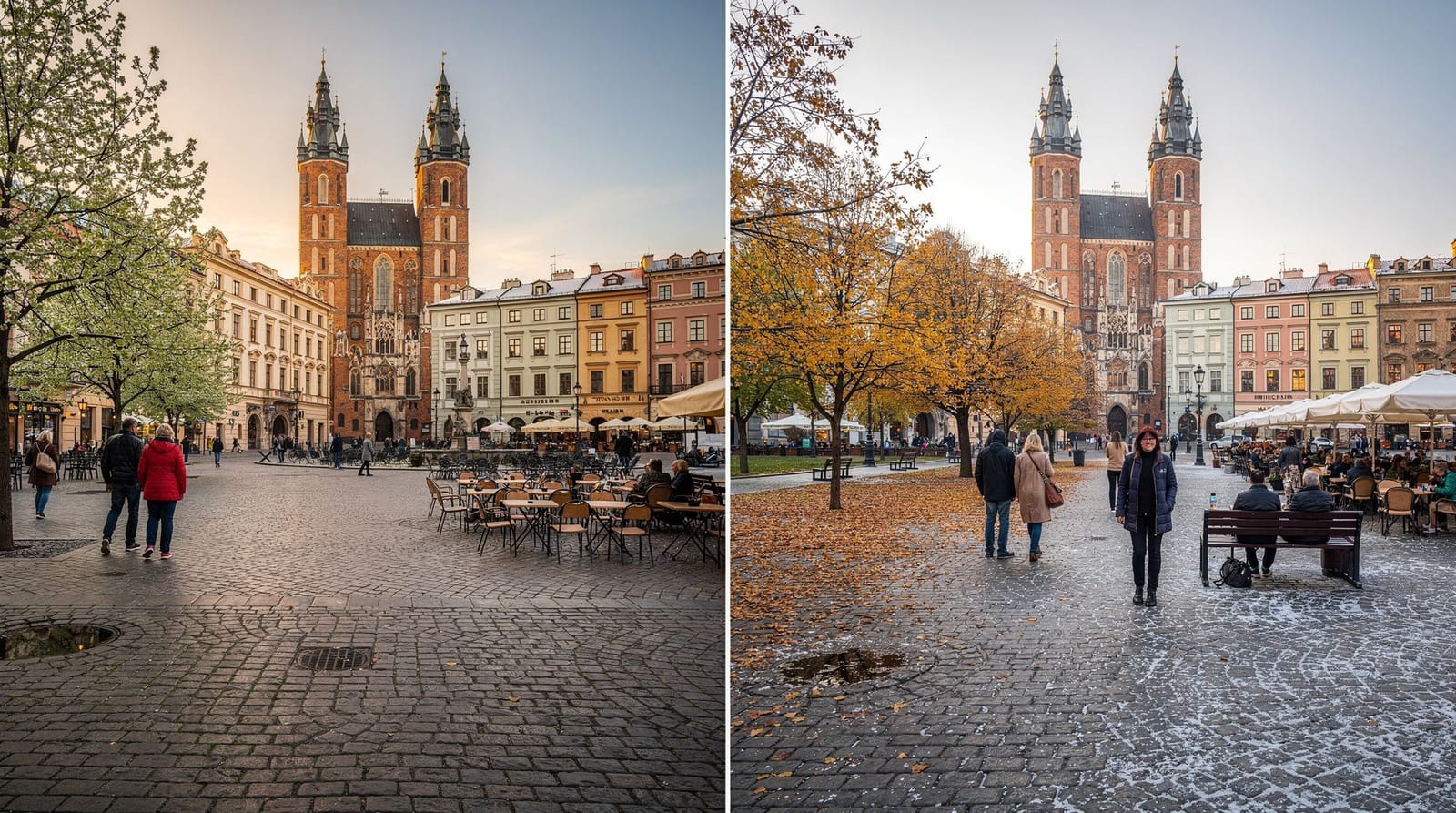
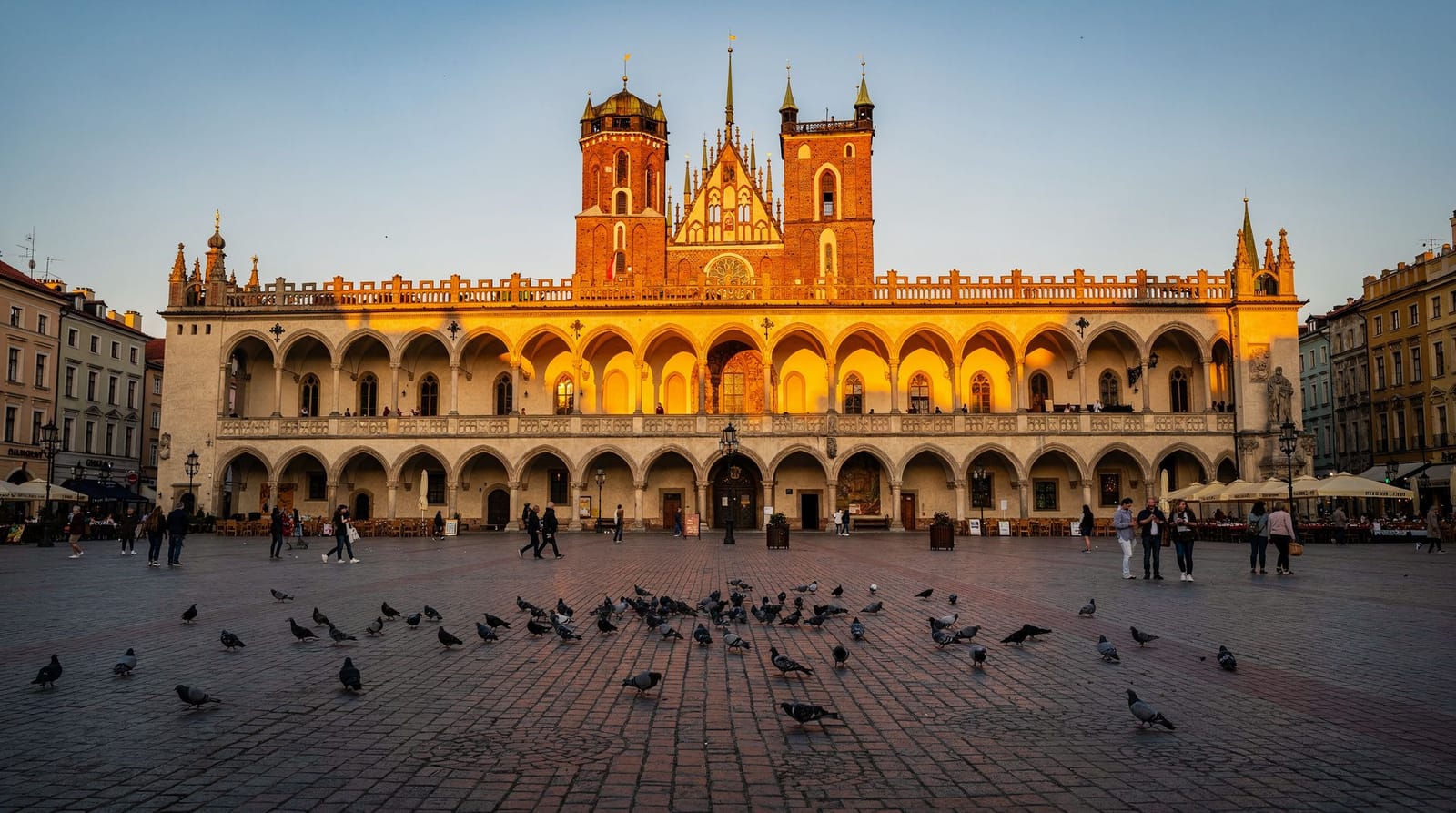
The main market square — Rynek Główny — is calmer in spring than in summer but no less itself. The pigeons remain. The Sukiennice (Cloth Hall) in the centre occupies the same Renaissance footprint it has since the 16th century. The street musicians come out when the temperature permits. The flower market stalls that appear around the square in spring sell tulips and narcissi grown in the region for prices that make you feel slightly guilty for how little you are paying.
The St. Mary’s Basilica is accessible year-round; in spring, the queues for entry are shorter than summer and the interior — which includes the largest Gothic altarpiece in the world, carved by Veit Stoss in the 15th century — can be seen without the shoulder-to-shoulder crowd density of peak season. The trumpeter plays the Hejnał Mariacki from the taller tower every hour. In spring, with fewer visitors competing for the acoustic space, the sound carries.
Kazimierz in spring
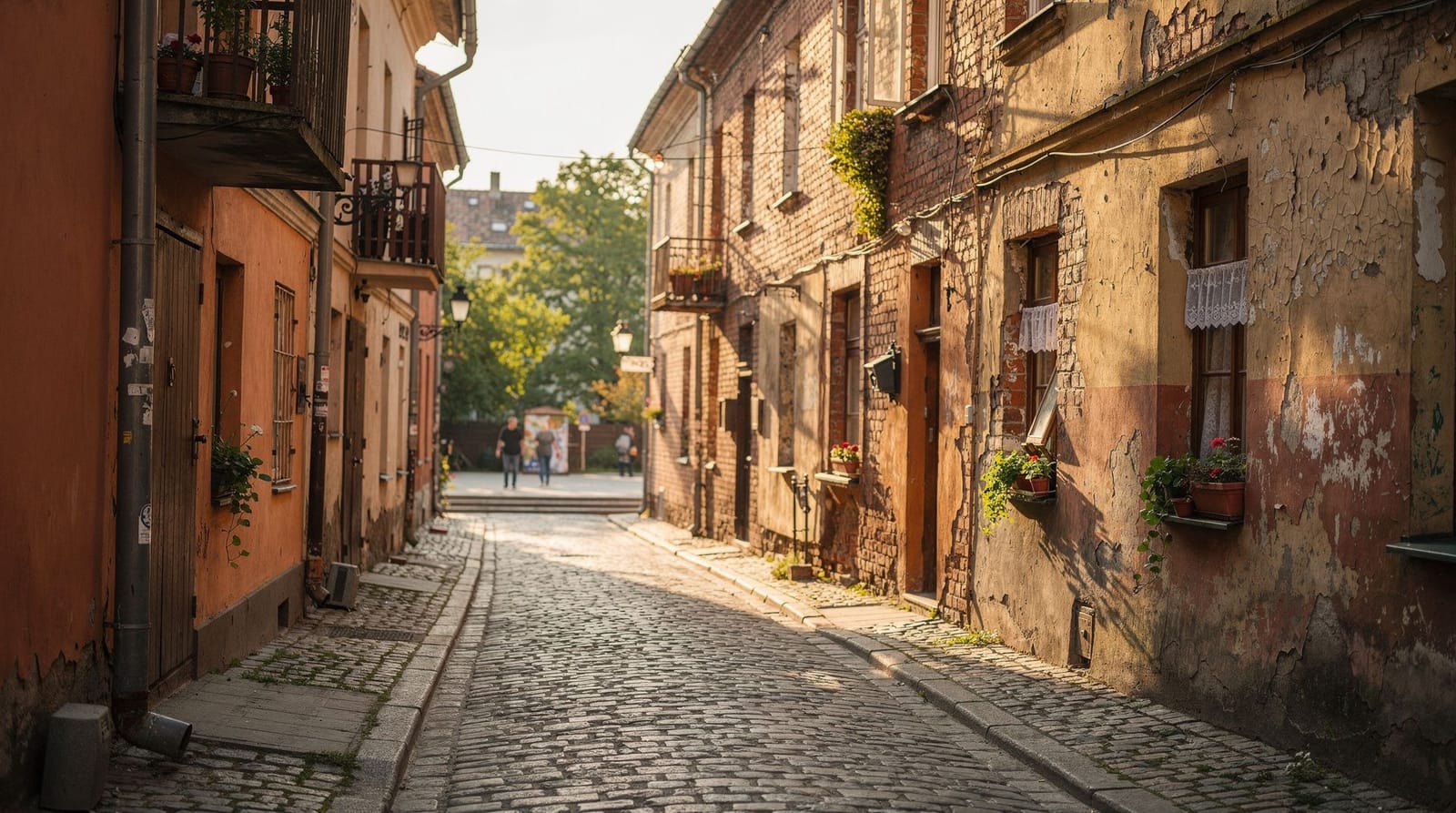
Kazimierz in April is specifically excellent. The neighbourhood’s characteristic mix of pre-war Jewish architecture, refurbished craft spaces, and independent cafés is most enjoyable when the terraces are beginning to open and you can sit outside without a heating lamp over the table.
Plac Nowy, the market square at the heart of Kazimierz, has a round rotunda (the former ritual slaughterhouse, now a takeaway food stall selling zapiekanki — open-face baguettes with mushrooms, cheese, and various toppings) surrounded by stalls selling second-hand clothing, vinyl records, and small-scale craft on Sunday mornings. The Plac Nowy guide covers this in full; the summary is that arriving at 9:00 on a Sunday morning, before the stalls are fully set up, and having a coffee at one of the surrounding cafés while the market assembles around you, is one of the more pleasurable ways to spend a spring morning in Kraków.
Building a spring day around the blossom
If the blossom is the reason you came, let it set the shape of the day. Start on the Planty early, while the light is soft and the benches are still empty, then drift into the Old Town once the cafés open. The Old Town walking tour guide gives a sensible order for the streets inside the ring, and the Royal Route walking guide links the square, the Planty and the hill beyond into one unhurried line.
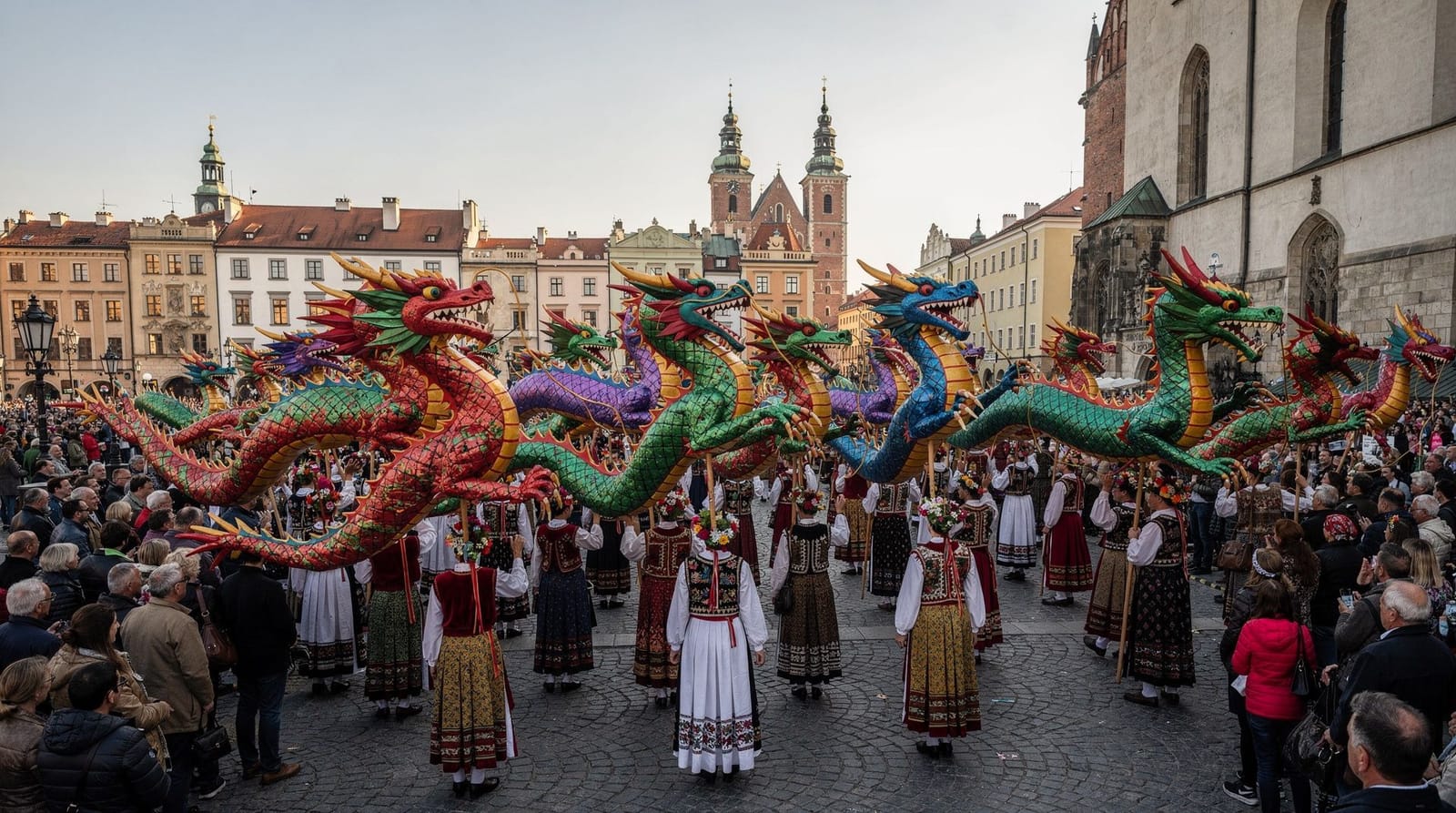
From there, the Wawel Castle guide is the natural second stop. The Wawel Cathedral guide is worth a read beforehand if the Holy Week services interest you, and the Wawel dragon legend is a good story to tell children on the walk down to the river. The embankment below the hill is another place where spring shows up quickly: the Vistula river cruise guide covers seeing the same skyline from the water.
Rain in spring is usually a passing thing, but it does happen. Keep the best museums in Kraków in your back pocket for the showers, and the Cloth Hall guide for a covered stretch right on the square. If you are staying longer, the Kraków 3-day itinerary and the weekend city break itinerary both fit comfortably around a morning devoted to the blossom.
For readers who like to see the city from a different angle, the best views in Kraków and the photography spots pages suggest where to point a camera once the petals are out. Those who plan to eat well between walks will find the Kraków food guide a useful companion, and the autumn in Małopolska story offers a contrast if you are deciding between seasons.
Day trips in spring: what changes
The spring transition affects the day-trip options around Kraków in specific ways.
Morskie Oko is accessible from approximately April onwards in a typical year, but the upper trail sections may still have snow and ice requiring microspikes or care. The horse-drawn carriages begin running along the road towards the lake when it clears (they never reach the lake itself); check current conditions on the Tatra National Park website before going.
If you would rather not manage the logistics yourself, a day that pairs the lake with a soak afterwards is an easy way to enjoy the mountains while the weather is still unsettled: a guided trip to Morskie Oko with a thermal baths visit leaves the planning to someone else, and the warm water is especially welcome after a cold spring walk.
Wieliczka operates year-round and is identical underground regardless of season. The advantage of a spring visit is external: the journey through the Małopolska countryside is genuinely pretty when the fields are green and the orchards are flowering, and this is visible from the bus or car window.
Ojców National Park in spring, when the Prądnik valley is running with snowmelt and the wildflowers are early, is specifically lovely and considerably quieter than summer. The castle ruins emerge from their winter bare-branch framing into green and are more atmospheric for it.
Back in the city, a showery afternoon is a good moment to see the parts of town beyond the Planty without walking all of it. a golf cart city tour that includes a visit to the Schindler Factory covers a lot of ground comfortably and keeps you moving between blossom-lined streets and indoor stops.
Book an Old Town walking tour to make the most of spring mornings in KrakówPractical spring notes
Temperatures: April averages 10-14°C by day, 3-6°C at night. May is 15-20°C by day, more consistently comfortable. Pack a waterproof layer regardless — spring in Małopolska produces afternoon showers without much warning.
Daylight: By late April, Kraków has approximately 14 hours of daylight. Sunset at 20:00 means the city in evening light — the golden hour on the Rynek’s Gothic and Renaissance facades — is available without a 21:00 dinner reservation.
Crowds and booking: Spring is the sweet spot for walk-in availability at most attractions. Wawel Castle does not require the advance booking that summer demands. Wieliczka Salt Mine has shorter queue times. Auschwitz still requires pre-booking year-round.
The Jewish Culture Festival happens on 1-5 July (2026 edition) rather than spring proper, but it is worth noting if your dates extend into early summer — it is one of Kraków’s most significant cultural events and transforms Kazimierz for its duration. The festivals guide covers the full annual calendar.
For anyone choosing between the seasons, spring travel to Kraków with its combination of manageable weather, lower prices, genuine seasonal character, and reduced crowd pressure is the honest recommendation for most visitors. The blossom is a bonus. The absence of a twenty-minute queue for Wawel tickets is the real argument.
Spring month by month
| Month | Temperature (day) | What’s happening | Crowds |
|---|---|---|---|
| April | 10-14°C | Cherry blossom peak (early-mid month), Easter | Low-moderate |
| May | 15-20°C | Juvenalia student carnival, flower stalls on the Rynek | Moderate, rising toward June |
| Early June | 18-23°C | Kraków Film Festival, approaching Jewish Culture Festival | Moderate-high |
Frequently asked questions about Kraków in spring
When exactly do the cherry blossoms bloom in Kraków? Typically early-to-mid April, but the peak window lasts only about four days before petals fall. Timing shifts year to year with the weather, so check closer to your travel dates if the blossom is a priority.
Is April or May the better month to visit Kraków? April is quieter and has the blossom, but is cooler (10-14°C) and rainier. May is more reliably warm (15-20°C) with the Juvenalia student carnival, though crowds start building toward June. Both are better than summer for queues and prices.