Kraków festivals and events calendar: the complete annual guide
Krakow: Old Town guided walking tour
Duration: 3h
What are the major festivals and events in Kraków throughout the year?
Kraków has a dense festival calendar. Key events: Christmas markets (late Nov–1 Jan), Wianki midsummer festival (late June), Jewish Culture Festival (late June–early July), Sacrum Profanum contemporary music festival (September), Unsound electronic music festival (October), Dragon Parade (early June), and the Szopka nativity-scene competition (first Thursday of December). The city also celebrates Easter with distinctive Polish traditions including the Rękawka festival.
How to use this calendar
Kraków’s event calendar is dense enough that almost any month holds something worth timing a visit around. This guide covers confirmed recurring events (annual festivals with consistent timing) and notes where exact dates shift year to year. The events are arranged month by month, followed by a quick-reference section at the end.
One important caveat: specific dates for 2026 and beyond should be confirmed via official sources, as festivals occasionally shift by a week or two. We indicate where this applies.
| Biggest event | Jewish Culture Festival (late June–early July) |
| Quietest month | January |
| Most free events | June (Wianki, Dragon Parade, Corpus Christi) |
| Book earliest | Jewish Culture Festival synagogue concerts (April) |
| Combine with | Christmas markets guide for December |
Quick reference by season
| Season | Highlights | Weather | Crowds |
|---|---|---|---|
| Winter (Dec–Feb) | Christmas markets, Szopka competition, Trzech Króli | Cold, -2 to 4°C | Low except December |
| Spring (Mar–May) | Easter traditions, Rękawka, Juvenalia | Mild, unpredictable | Low–moderate |
| Summer (Jun–Aug) | Wianki, Jewish Culture Festival, Dragon Parade | Warm, 20–28°C | High |
| Autumn (Sep–Nov) | Sacrum Profanum, Unsound, All Saints’ Day | Cool, crisp | Moderate |
For the full month-by-month weather and crowd picture beyond events, see the Kraków in spring, Kraków in summer, Kraków in autumn, and Kraków in winter guides.
January
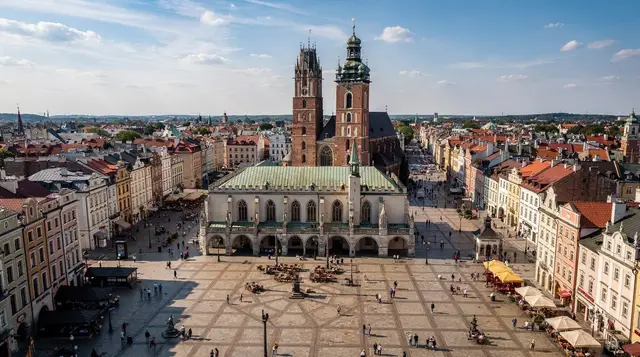
Trzech Króli / Three Kings’ Day (6 January): Epiphany is a public holiday in Poland and one of Kraków’s most colourful street celebrations. The Trzech Króli parade winds through the Old Town with participants costumed as the Three Magi, camels (yes), choirs singing carols, and theatrical floats. The procession typically ends at Rynek Główny with a short ceremony. Free; the square fills by mid-morning. Shops and some restaurants close on the holiday.
New Year’s residue: The Christmas market closes on 1 January, and the market stalls come down in the first week of January. After this, January is Kraków’s quietest month — ideal for museum visits without crowds and accommodation at annual low prices.
February
Tłusty Czwartek / Fat Thursday (the Thursday before Ash Wednesday): Not a festival per se, but a nationwide tradition that Kraków takes seriously. Every bakery in the city produces pączki (rose-jam doughnuts) by the thousand. The queues outside Cukiernia Karmela (ul. Starowiślna 14) and Piekarnia Mojego Taty stretch around the block. It is a good-natured, sweet-scented urban event and completely free. Date shifts annually with Lent; in 2026, Fat Thursday falls on 12 February.
Shrove Tuesday events: The days leading to Ash Wednesday see various carnival events in Kazimierz bars and clubs.
March and April: Easter and spring traditions
Easter Holy Week (Wielki Tydzień): Kraków’s Easter is a significant Catholic observance. The Franciscan Church (ul. Franciszkańska 2) holds Good Friday Way of the Cross processions through the Old Town. Wawel Cathedral and St. Mary’s Basilica hold solemn services through Holy Week. Easter Sunday (Niedziela Wielkanocna) in 2026: 5 April.
Emaus market (Easter Monday): A 600-year-old fair held at the Salvatorian Church in the Zwierzyniec neighbourhood on Poniedziałek Wielkanocny. Traditional crafts, painted eggs (pisanki), folk entertainers, and wooden toys. Free. A 20-minute walk or short tram ride from the Old Town (tram 1 to Salwator).
Rękawka festival (Tuesday after Easter): One of Kraków’s most distinctive and little-known events. At Kopiec Krakusa (Krakus Mound) in Podgórze — an ancient Slavic mound that predates the city — craftspeople, musicians, and early medieval re-enactors gather for this pre-Christian spring celebration. The mound itself provides a panoramic view over the city. Free. In 2026: 7 April.
May
Constitution Day (3 May): National holiday. Parade down the Royal Route (ul. Grodzka, ul. Floriańska to Rynek Główny) with historical re-enactors and brass bands. Free open-air celebrations on Rynek Główny follow. Shops generally closed.
Juvenalia (early to mid-May, dates set by Jagiellonian University each year): The traditional student festival of Kraków’s universities. Students parade through the city, concerts and events fill the streets and squares, and the atmosphere in the areas around the Jagiellonian campus (ul. Gołębia) and Kazimierz is particularly festive. Much of it is free or very low-cost.
Kraków Marathon (typically late April or early May): An international marathon that routes through the Old Town, along the Vistula, and through Nowa Huta. The race closes sections of the centre for several hours; if you’re visiting that weekend, it’s either a spectator event or a logistical consideration. Check krakowmaraton.pl for 2026 dates.
June: midsummer and the festivals begin
Dragon Parade (Parada Smoków, early June): Kraków’s annual dragon celebration, referencing the city’s founding legend of the Wawel Dragon. Participants in elaborate handmade dragon costumes (some motorised, some water-spraying) parade from the Old Town down to Wawel Hill. Free. A popular family event. Date varies; usually first or second weekend of June.
Corpus Christi procession (Boże Ciało, date shifts with Easter): A major Catholic procession from Wawel Cathedral through the Old Town to Rynek Główny, with elaborate flower-petal carpets laid along the route by parishioners. One of the most visually striking Catholic observances in Poland. In 2026: 4 June.
Wianki — Kraków Midsummer Festival (weekend nearest 24 June): The city’s most atmospheric summer celebration, rooted in the ancient Slavic solstice tradition of floating flower wreaths (wianki) on rivers. The Vistula embankment and Błonia meadow host live music performances across multiple stages; fireworks are launched from Wawel Hill at midnight. Free. In 2026, the Feast of St. John is 24 June; the main Wianki events are likely the weekend of 20–21 June. See the full guide at /guides/wianki-midsummer-krakow/.
Jewish Culture Festival (late June – early July, running approximately 10 days): One of the largest celebrations of Jewish culture in the world. Held in Kazimierz since 1988. Programme includes klezmer concerts in synagogues, workshops, film screenings, and the climactic Shalom na Szerokiej free outdoor concert on Szeroka Street (drawing 10,000–15,000 people). Synagogue concerts: 60–100 PLN (≈€14–24). The finale is free. Book synagogue concerts as soon as tickets go on sale (usually April). Dates: late June – early July, confirmed each year at jewish-culture-festival.pl. The Kazimierz Jewish Quarter walking tour provides essential context for understanding the festival’s historical setting.
July
Jewish Culture Festival finale (early July): If the festival straddles June–July (as it typically does), the Shalom na Szerokiej concert marks the first days of July. See above.
Kraków Summer Jazz Festival (throughout July): Various jazz performances across Old Town venues. Harris Jazz Bar (Rynek Główny 28) and Piec Art club (ul. Szewska) host regular concerts; the festival programme mixes Polish and international jazz artists. Tickets: 30–80 PLN (≈€7–19).
Lajkonik procession (first Thursday after Corpus Christi, so usually late June or July): The Lajkonik is Kraków’s beloved city mascot — a bearded figure in a Tartar khan costume riding a hobby horse — who leads a procession from the Premonstratensian Convent in Salwator to Rynek Główny, hitting bystanders with his staff for good luck. This 700-year-old tradition is free to watch and entirely charming. Date is set by the Corpus Christi date.
August
Kraków Film Music Festival (usually late August): A festival dedicated to film score performance, with live orchestral concerts of classic and contemporary film music at the ICE Kraków Congress Centre and in outdoor venues. Attracts major orchestras and conducts performed with film projections. Tickets from 80 PLN (≈€19). Check filmmusic.pl.
Street art and outdoor music: Throughout August, Kraków’s parks and public spaces host free outdoor concerts, film screenings, and street performances as part of various city cultural programmes. Błonia meadow and the Vistula amphitheatre (Amfiteatr Kraków) are the main venues.
September: the autumn cultural peak
Sacrum Profanum (September, exact dates set each year): Kraków’s premier contemporary music festival, held since 2001. The programming — top European ensembles (Ensemble Intercontemporain, Klangforum Wien, ICTUS) performing 20th–21st century works — is internationally recognised, and the choice of venues is characteristically Kraków: steelworks, Cold War bunkers, deconsecrated churches, the underground museum. Tickets: 30–120 PLN (≈€7–29). Check sacrum-profanum.com. In 2026, expect mid-to-late September.
Kraków International Book Fair (September or October, varies): A large publishing event at the ICE Congress Centre with public readings, panel discussions, and extensive book stalls. Major Polish publishers and several international houses participate.
Autumn season opening at Kraków’s major theatres and concert halls: September marks the start of the cultural season. The Kraków Philharmonic (ul. Zwierzyniecka 1) and Stary Teatr (ul. Jagiellońska 1, Poland’s oldest continuously operating theatre) begin their programmes. Tickets for Philharmonic concerts: 30–80 PLN (≈€7–19); Stary Teatr productions in Polish but often with international casts.
October
Unsound Festival (typically early October): An internationally recognised festival of electronic, experimental, and avant-garde music that has been defining the global experimental music conversation since 2003. Held across a range of Kraków venues — clubs, galleries, unusual architecturally significant spaces. Attracts artists from across the electronic spectrum: ambient, techno, noise, contemporary composition. Tickets: 40–80 PLN (≈€10–19) per event; day passes and full passes available. Many events sell out; check unsoundfestival.com well in advance.
All Saints’ Day and All Souls’ Day (1–2 November, though the main observance on the evening of 1 November): Kraków’s cemeteries — Rakowicki Cemetery (ul. Rakowicka) and the historic Salwator cemetery — are filled with thousands of candles. The illuminated cemetery at dusk on 1 November is one of the most powerful experiences in Kraków’s calendar. This is not a tourist event; it is a genuine Polish mourning and memory practice. Visitors are welcome to observe respectfully.
November
Andrzejki / St. Andrew’s Night (29–30 November): The traditional pre-advent fortune-telling night. Bars and clubs across Kazimierz and the Old Town hold Andrzejki parties. Low-key but atmospheric, especially in Kazimierz’s more characterful venues (Alchemia, Singer, Estery Street bars).
Christmas market opens (approximately 28 November): The Rynek Główny market typically opens in the final days of November. See the full guide at /guides/krakow-christmas-markets-guide/.
December
Szopka Krakowska competition (first Thursday of December): Master craftsmen parade their szopki — elaborate miniature architectural tableaux blending Kraków’s Gothic churches with foil and beads — to the Mickiewicz monument on Rynek Główny for judging. The winning szopki are then exhibited at the Krzysztofory Palace (ul. Szlak 24). Free to watch. One of the most beautiful free events in the city.
Christmas market continues (until 1 January): See /guides/krakow-christmas-markets-guide/.
Midnight Mass / Pasterka (24–25 December): Wawel Cathedral and St. Mary’s Basilica hold Midnight Mass. St. Mary’s is particularly atmospheric. No reservation needed; arrive by 23:00.
New Year’s Eve on Rynek Główny: Free outdoor concert on the main square, fireworks at midnight launched from Wawel Hill. One of the most impressive public New Year’s celebrations in Poland. Very cold; dress accordingly.
Lajkonik procession date: This shifts annually with the Corpus Christi calendar — it always falls the first Thursday after Corpus Christi, which means late June or early July. See July section above.
Planning by event type
For music lovers
- Jazz: Kraków Summer Jazz Festival (July), Harris Jazz Bar year-round
- Contemporary classical: Sacrum Profanum (September)
- Electronic/experimental: Unsound (October)
- Folk and Jewish music: Jewish Culture Festival (late June–early July)
- Film scores: Kraków Film Music Festival (late August)
- Classical concerts: Kraków Philharmonic season (September–June)
For cultural heritage and traditions
- Easter traditions: Emaus market (Easter Monday), Rękawka (Tuesday after Easter)
- Midsummer: Wianki (late June) — full guide at /guides/wianki-midsummer-krakow/
- Jewish culture: Jewish Culture Festival (late June–early July)
- Christmas: Szopka competition (1st Thursday December), Christmas markets, Midnight Mass
For free outdoor events
- Wianki finale (free)
- Dragon Parade (free)
- Corpus Christi procession (free)
- Rękawka (free)
- Trzech Króli parade (free)
- New Year’s Eve on Rynek Główny (free)
- Szopka competition viewing (free)
Frequently asked questions about Kraków festivals and events
Which is the single best festival to visit Kraków for?
If you can only time one festival, the Jewish Culture Festival (late June–early July) offers the widest range of experience — concerts, workshops, the free finale on Szeroka Street — and takes place during excellent summer weather. The Szopka competition in December and Wianki in June are close runners-up for spectacle value. For music specialists: Sacrum Profanum (contemporary) or Unsound (electronic) are niche but world-class.
Are these events confirmed annually or do they ever get cancelled?
The Christmas market, Wianki, Jewish Culture Festival, Sacrum Profanum, and Unsound are all well-established annual events with long track records. Cancellations have occurred only in extraordinary circumstances (the 2020–2021 pandemic period). The smaller traditional events (Rękawka, Emaus, Lajkonik) are centuries-old traditions and have never been permanently cancelled.
How far in advance should I book for the Jewish Culture Festival concerts?
Synagogue concerts sell out within days of tickets going on sale, typically in April. If you’re planning a late-June/early-July trip specifically for the festival, book synagogue concerts the moment they become available. The Shalom na Szerokiej finale is free and requires no booking.
What city-wide free events don’t require any planning?
The Hejnał Mariacki (St. Mary’s Basilica trumpet call, every hour on the hour, audible from Rynek Główny), the Planty park (always open), the Vistula embankment summer evenings, the Rękawka festival, the Trzech Króli parade, and the Wianki finale are all free and require no tickets or advance booking.
Where can I find the most up-to-date event listings?
The best sources: krakow.pl (City of Kraków official cultural programme), cracow.travel (tourism board), and the individual festival websites linked above. For English-language event listings, the Krakow Post (krakowpost.com) and In Your Pocket (krakow.inyourpocket.com) publish updated monthly calendars.
Is it worth planning a whole trip around one festival?
For the Jewish Culture Festival or Wianki, yes — both are genuinely worth building a trip around, since they showcase Kraków at its most atmospheric and involve free, unmissable events (the Szeroka Street finale, the midnight fireworks) alongside ticketed programming. For niche music festivals like Sacrum Profanum or Unsound, only if you’re already a fan of that specific genre — otherwise a standard visit any time of year covers Kraków’s main sights just as well.
Do festival dates clash with the best weather months?
Mostly yes — Wianki, the Jewish Culture Festival, and the Dragon Parade all fall in Kraków’s warmest, driest months (June–July), which is convenient but also means peak accommodation prices and crowds. If you want festival atmosphere with fewer crowds, target the December events (Christmas market, Szopka competition) or the autumn festivals (Sacrum Profanum, Unsound), both of which run in cooler but manageable weather.
Top experiences
Bookable activities with verified prices and instant confirmation on GetYourGuide.