Autumn in Małopolska: castles, forests and off-season Kraków
The moment Małopolska becomes itself
There are two Małopolskas. The one that operates from June to August is the region as tourism infrastructure — Wieliczka with its queues, Zakopane’s Krupówki street packed for two hundred metres, Kraków’s Rynek Główny from 9:00 in the morning as a continuous mass of group tours and golf carts and pub crawl survivors.
The other Małopolska starts sometime in late September, when the coach tours thin, the university term begins in earnest, and the forest canopy around Ojców turns the specific orange-gold that a week of cold nights and sunny days produces in beech and hornbeam woodland. I was there in the third week of October, which put me firmly in the second version, and I am finding it difficult to recommend any other season.
| Where | Kraków, Ojców National Park, Zakopane and the Tatras |
| Best window | Late September to mid-October |
| Cost | Hotel rates around 20-30% below summer peaks |
| Getting around | Rental car or taxi for Ojców; train or bus for Zakopane |
| Pack for | Cold mornings, warm afternoons, layers |
Kraków in October: the city returned
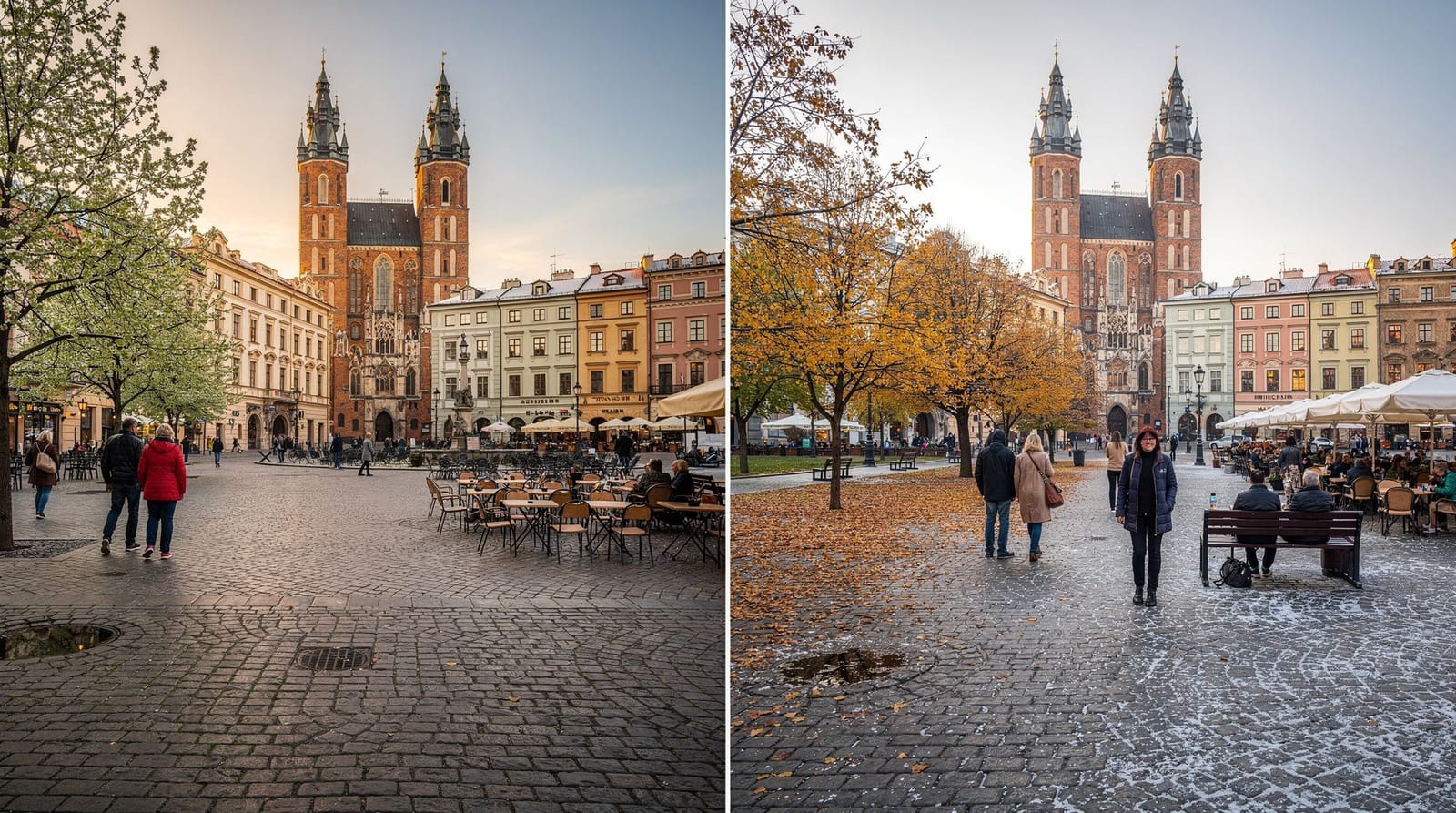
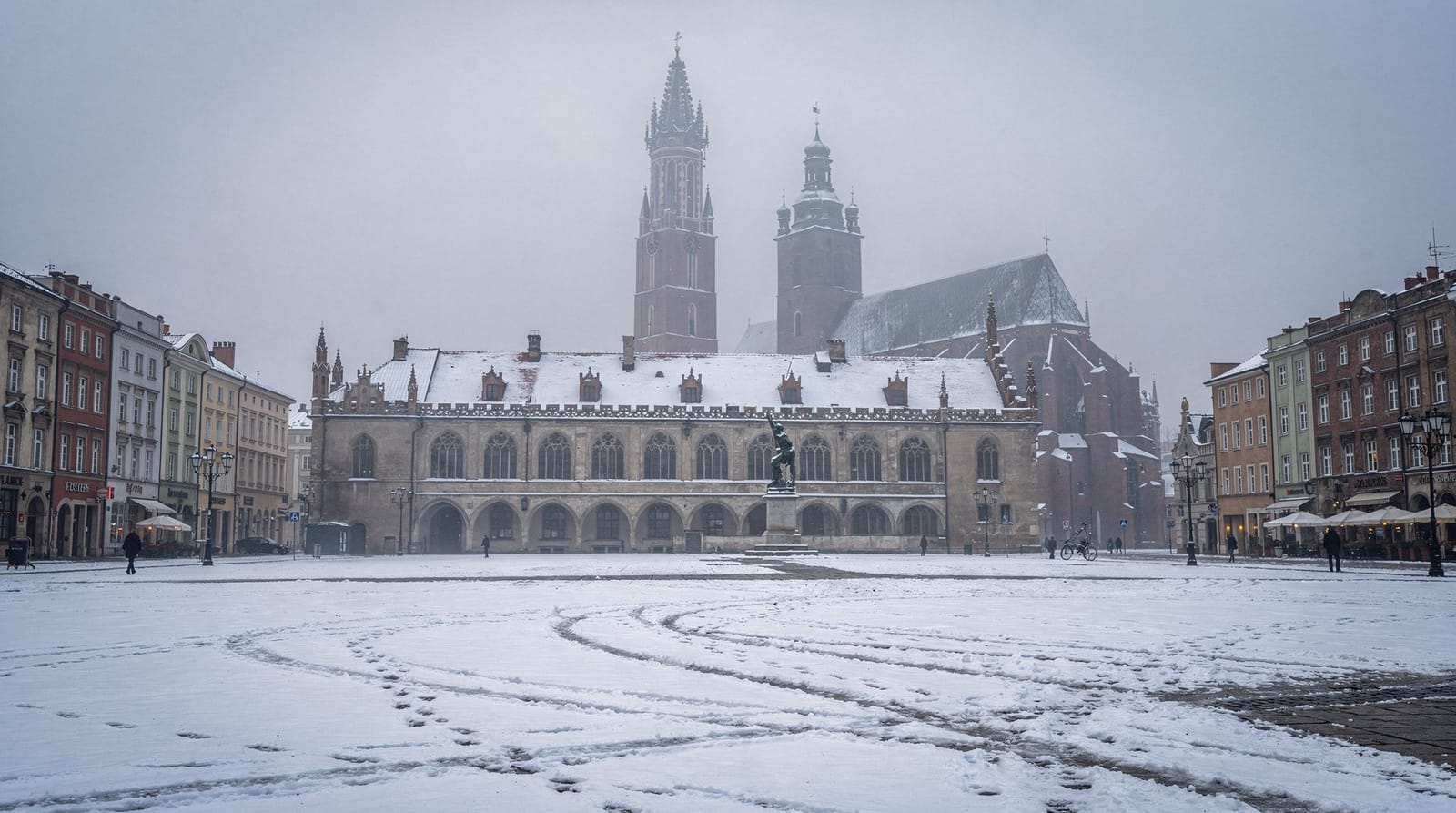
I arrived in Kraków on a Tuesday. The main square had pigeons, coffee drinkers, a few tourist groups, and air with actual temperature in it — about 12°C in the afternoon. The summer’s ambient roar was gone. The restaurants facing the square had brought their outdoor heaters out.
This is Kraków in autumn: the city still fully operational, the attractions open, the weather tolerably cool, and the spatial relationship between visitors and the city reversed. Instead of tourists filling every available surface while locals navigate around them, you find locals reclaiming the squares and streets and the tourist presence becoming background rather than foreground.
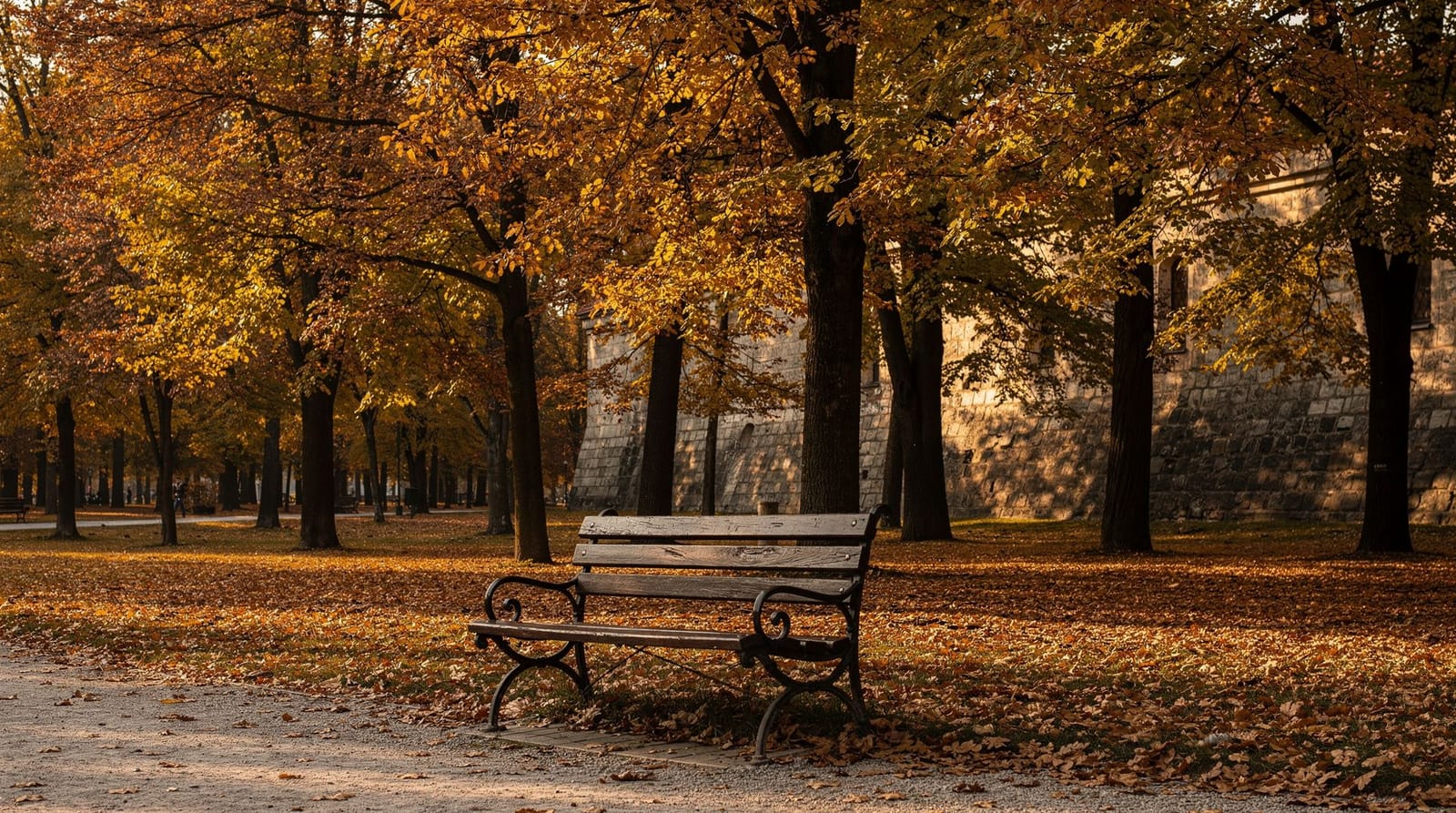
The Planty gardens in October have the specific quality of late autumn parks in central Europe: the lime trees and chestnuts are mostly turned or turning, the paths have a light covering of leaves, the light comes at a lower angle and warms rather than bleaches. I walked the full circuit on my first morning and encountered primarily people walking dogs, people jogging, and one elderly man feeding pigeons with the methodical care of a long-established ritual.
The Rynek Underground Museum had a ticket queue of about eight minutes. In August this is forty minutes minimum.
Autumn also suits the indoor half of the city. The Cloth Hall and St. Mary’s Basilica sit on the square itself, so a cold or rainy hour can be spent inside without leaving the centre, and the best museums in Kraków make a natural plan B for the days when the forecast turns. A walk up to Wawel Castle in low autumn light is a different experience from the same climb in a summer crowd. If you want the royal rooms and the cathedral explained rather than just walked through, a guided visit of the castle and cathedral is an easy way to use a grey autumn morning, and the Wawel Cathedral guide, the Wawel state rooms guide and the Wawel dragon legend fill in the background. The Royal Route walking guide links the hill with the square on foot.
If you are staying a few nights, the Old Town and Kazimierz both work well in this season, and the Kazimierz best bars and cafés guide is a good starting point for the evenings, when the cold makes a warm room feel like part of the destination. The Kraków in autumn guide goes further into events and day-by-day planning.
Ojców: the valley in autumn light
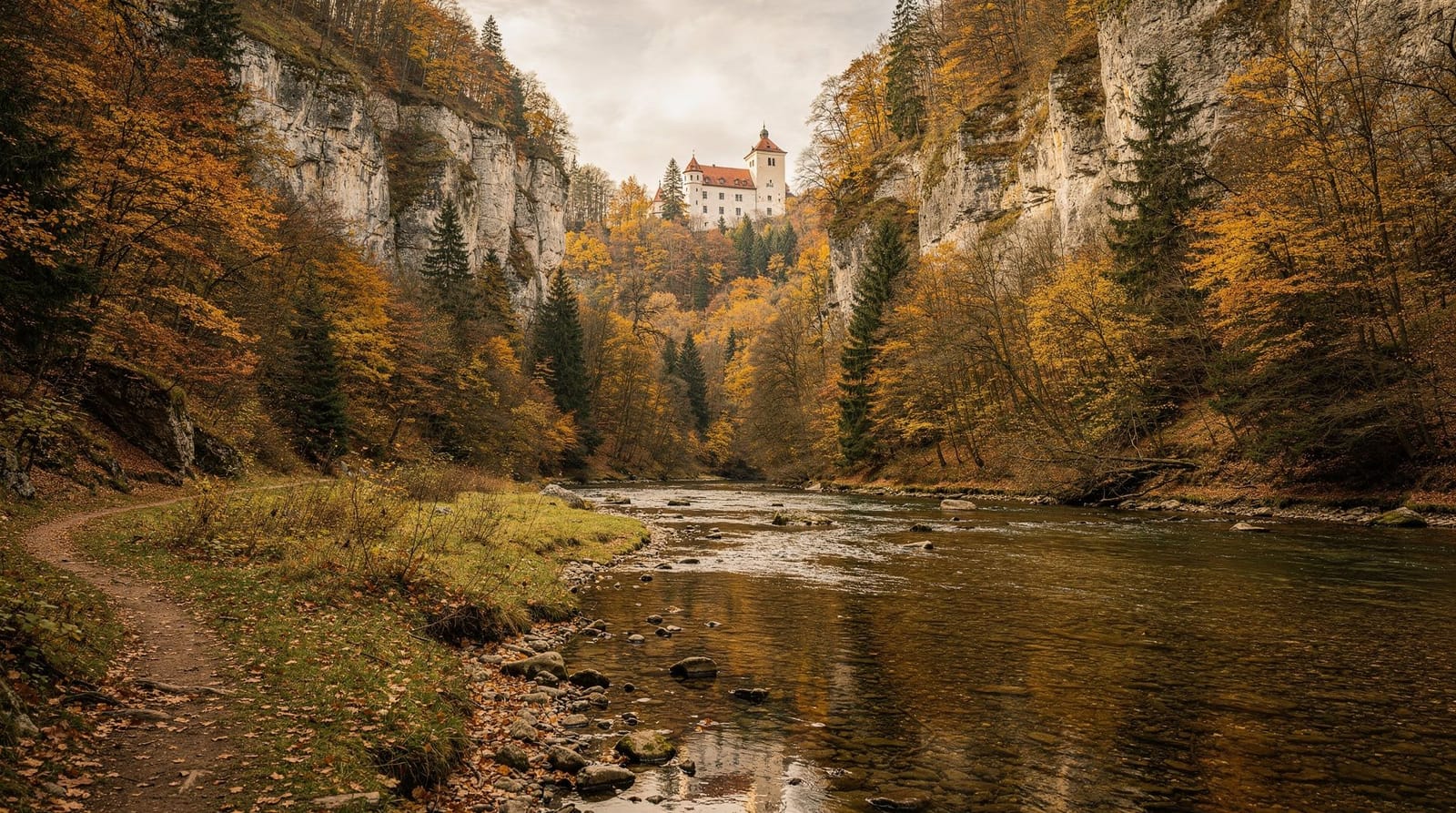
Ojców National Park is about 25 km north of Kraków, and in October it becomes one of the most beautiful places in the region. The park protects a limestone valley carved by the Prądnik River, with two ruined medieval castles — Ojców and Pieskowa Skała — on the canyon walls above the forest.
The drive from Kraków takes about 40 minutes. There is a bus service (bus 909 from al. Słowackiego) but the autumn timetable is reduced and requires checking in advance. A taxi or rental car gives considerably more flexibility for stopping along the valley road.
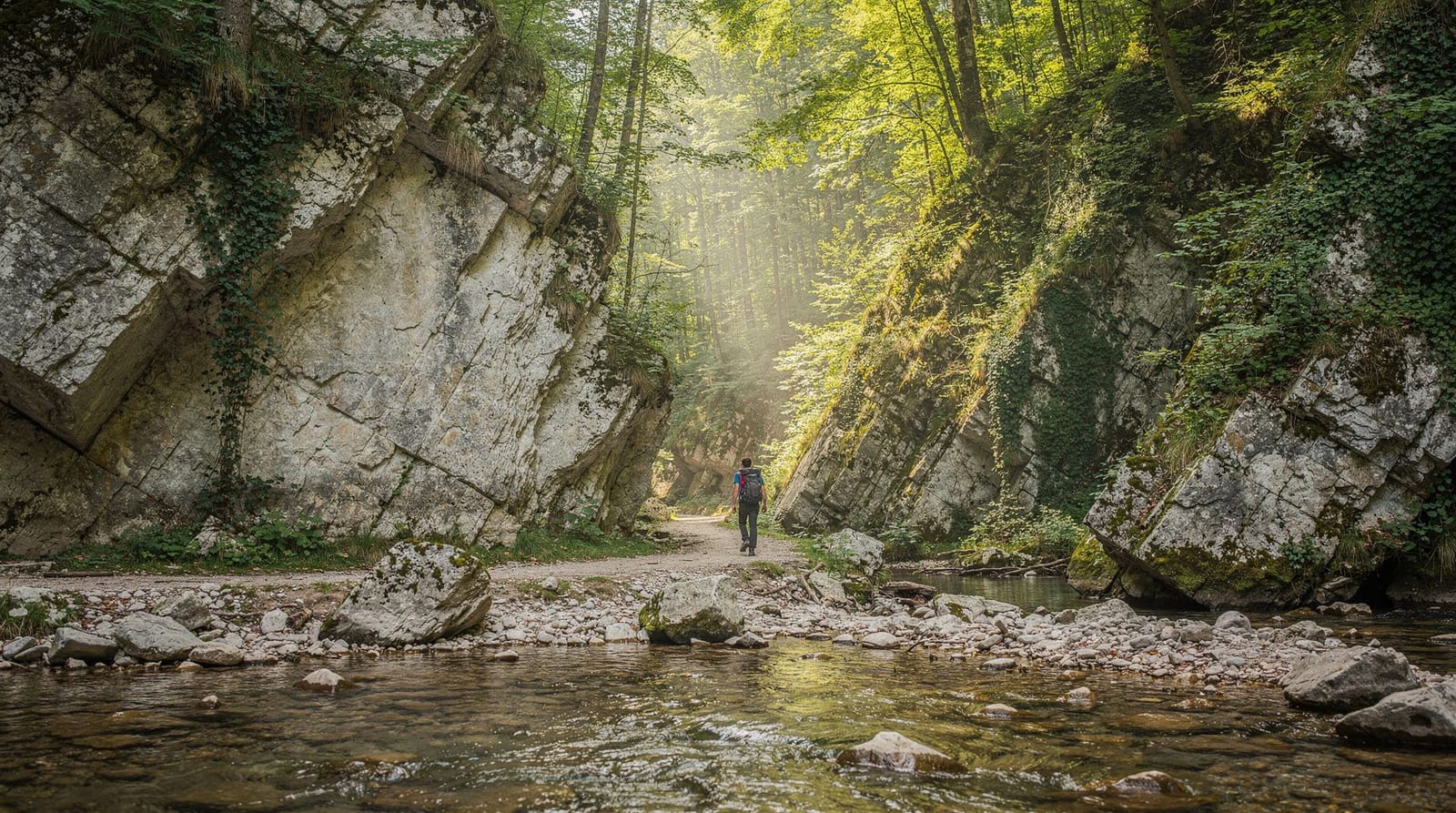
I arrived at the Ojców valley floor at about 10:00. The morning mist was clearing from the forest, the beech trees were at their absolute peak colour — deep amber and copper with occasional holds of still-green, backlit by the low-angle sun — and the valley walls were completely silent except for the river and a woodpecker working on a pine trunk about fifty metres from the path.
The trail through the Prądnik valley from the village of Ojców to Pieskowa Skała castle is about 8 km one way, mostly flat or gently climbing, through continuous forest with periodic limestone formations (the Eagles’ Nest Trail, Szlak Orlich Gniazd, runs through here). In October, the trail is navigable with standard walking shoes; in November it becomes muddy, and the foliage is gone.
Pieskowa Skała castle sits on a limestone promontory above the valley with a baobab-like stone column (Maczuga Herkulesa — Hercules’ Club) rising 25 metres from the hillside below. The castle is Renaissance-period and in significantly better condition than the Ojców ruins below — it contains a museum of decorative arts spanning several centuries. In October, the admission queue is nonexistent. In August, it is forty-five minutes.
Book an Ojców National Park and Pieskowa Skała tour from KrakówIf you would rather not manage the logistics yourself, the Ojców National Park day trip guide compares ways of getting there, and nature near Kraków lists other green escapes for days when the valley is not an option. Ojców also pairs well with a second stop on the same day, such as Wieliczka or Bochnia, if you are happy with an early start.
Zakopane and the Tatras in early autumn
Zakopane in September and October is a complicated proposition. The hiking season in the high Tatras effectively runs to mid-October in a normal year, with the first serious snow arriving in November. This window — September and October — produces the combination of autumn foliage in the lower valleys and snow on the higher peaks that is visually extraordinary and fairly rare in any given visitor’s timing.
I went to Zakopane for a day in mid-October, which placed me in what the weather turned out to be the last warm week of the season. The Gubałówka funicular (the ridge above town) gave a view of the central Tatra peaks with fresh snow on the summits and coloured deciduous forest filling the valleys below — the kind of landscape photography that requires nothing from you except being there.
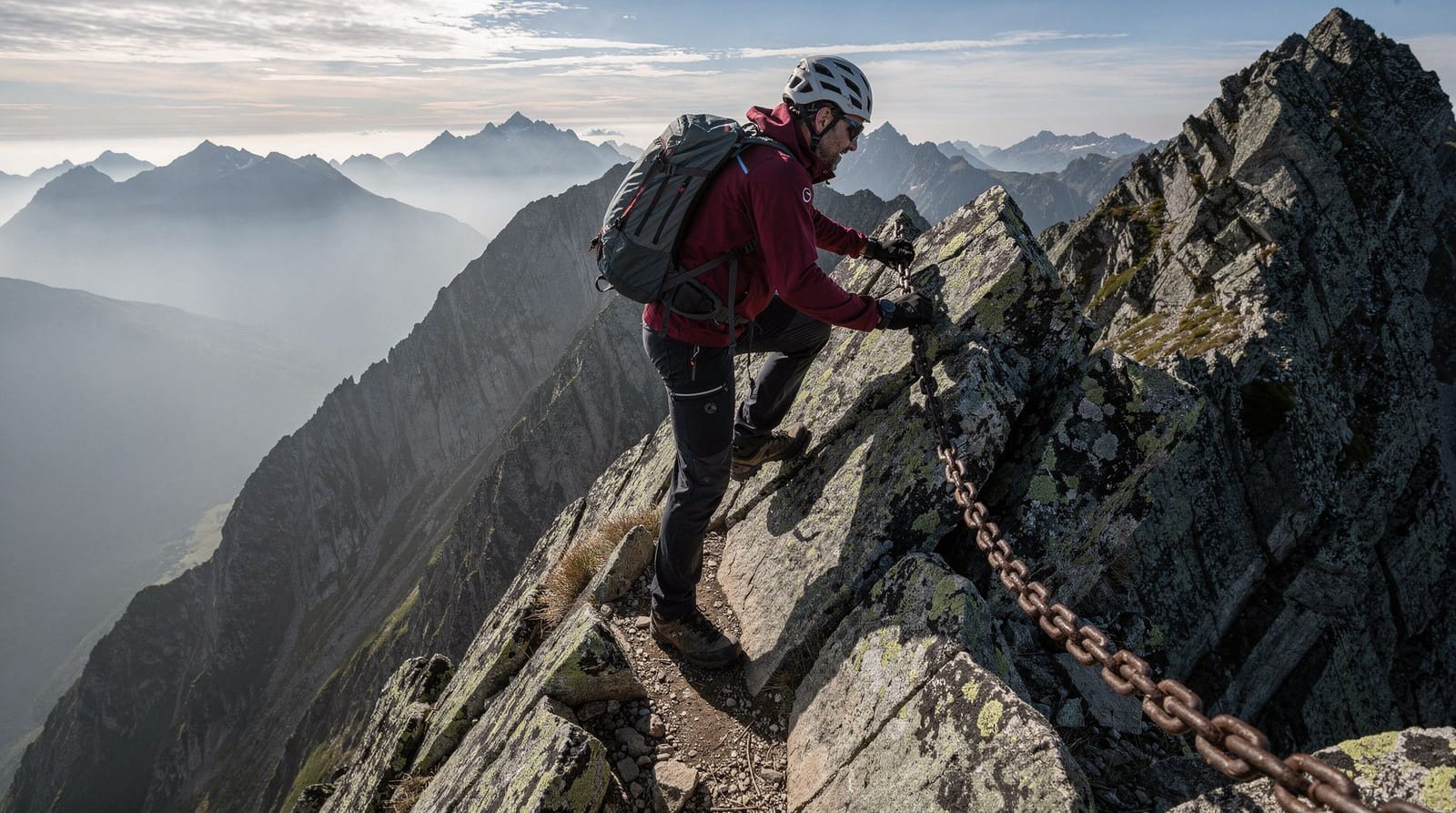
The trail conditions at this point were: Morskie Oko accessible with care (some ice on the higher sections of the road above Palenica Białczańska), the lower valley trails clear, the summit routes requiring appropriate equipment and experience. I stayed on the lower paths, which were extraordinary. The tourist infrastructure in Zakopane town was running at about half summer capacity; the restaurants on Krupówki were fully open, prices were standard, and the legendary weekend chaos of the main street in August was entirely absent.
The Tatra Mountains hiking guide covers autumn trail conditions and equipment in detail. The short version: October hiking in the Tatras is excellent if you are prepared for cold and potential rapid weather changes; the rewards are the season’s specific combination of colour and clarity. If you would rather leave the driving and route-finding to someone else, a day trip to Zakopane and the Polish Tatras keeps the logistics simple, and the Zakopane tour vs DIY comparison helps you decide. For gentler walking, the easy Tatra hikes and the Kościeliska Valley hike suit the lower, colourful valleys, while the Tatra Mountains destination page gives the wider picture.
Two other mountain options are worth knowing about if the weather cooperates: the Morskie Oko complete guide for the lake walk, and the Dunajec Gorge for a gentler day in the Pieniny landscape. For a first-hand account of a cold-weather lake walk, see the Morskie Oko sunrise hike.
What closes in autumn and what stays open
The honest logistics of an autumn visit to Małopolska:
Year-round (no seasonal restriction): Kraków’s Old Town, Wawel Castle and Cathedral, Wieliczka Salt Mine, Auschwitz-Birkenau Memorial, Schindler Factory Museum, Rynek Underground Museum, most guided tours from Kraków, Częstochowa.
Closes or reduces in autumn/winter: The Dragon’s Den cave (Smocza Jama) at Wawel closes from November for winter. Morskie Oko horse-drawn carriages operate until first heavy snow. The Dunajec River rafting season ends in October. Some hiking trails in the Tatras require mountain experience from approximately mid-October. Zakopane thermal baths operate year-round.
Specifically good in autumn: Ojców forest and valley trails, Kraków’s Planty gardens, wine tastings and harvest events in the Małopolska villages south of the city, the atmosphere in Kraków’s cafés and bars.
The thermal bath argument for autumn
Zakopane’s thermal baths — specifically the Terma Bania complex near Białka Tatrzańska, and the historic Jaszczurówka springs — are, in my experience, significantly better in October than in July. The water temperature is 28-36°C; the outdoor pools surrounded by trees with autumn colour and steam rising from the water in the cold air produce the specific sensory experience that makes thermal baths memorable. In July, this is competing with full sun and twenty-degree air temperature. In October, the contrast is everything.
I spent an afternoon at Terma Bania on my second day in the Zakopane area. The facility is modern, slightly touristy in its design, but the water is real and the setting — in a valley with a direct view of the lower Tatra ridge — is not contrived. Prices vary by day and duration, so check current prices on the official website of Terma Bania. This seemed reasonable for what is effectively several hours of outdoor hydrotherapy in a mountain landscape.
Autumn food: what the season adds
Polish autumn cooking is different from summer: more rooted in preserved things (pickled cabbage, dried mushrooms), heavier proteins (slow-roasted pork, game in better restaurants), soups that have had more time to work.
Bigos — the hunter’s stew made with sauerkraut, fresh cabbage, and various meats — is legally more appropriate in October than in May, and most Polish cooks would agree. I had a version in Kazimierz that had been cooking since morning and had developed a depth that bore no resemblance to the quick-made tourist versions.
The mushroom season in Małopolska runs through October, and the chanterelles and porcini that appear in restaurant dishes at this time of year are often locally gathered rather than imported. A mushroom soup (zupa grzybowa) made with fresh forest mushrooms is the seasonal dish that neither summer nor winter visits can provide.
For the classic dishes, the traditional Polish dishes guide and the milk bars guide show where to find them without paying Rynek prices, and the Kraków food guide covers the wider picture. The pierogi guide and my notes on the Polish food I tried are good companions for a cold evening.
The markets in Kraków’s residential neighbourhoods — not the tourist craft markets but the fruit and vegetable markets in places like Nowy Kleparz — have autumn produce at its most dramatic: apple varieties, pumpkins, dried herbs, the first walnuts.
Getting between the three without a car
The trickiest part of an autumn Małopolska trip is stitching Kraków, Ojców and Zakopane together once the summer bus timetables shrink. Ojców is the awkward one: the reduced autumn service on bus 909 means checking current times before you leave rather than assuming a summer frequency, and a taxi or rental car removes that uncertainty entirely for a half-day visit. Zakopane, by contrast, is well served year-round by both train and minibus from Kraków, roughly two hours each way, so public transport works fine there even in the shoulder season. If you’re building a longer loop, the Tatra Mountains day trip guide and the Ojców hiking guide both cover current transport options in more depth than I can here.
A last practical note on packing: the Kraków packing guide is worth a glance before an October trip, since the gap between a cold morning and a warm afternoon is what catches most people out. For a shorter stay, the Kraków weekend city break itinerary fits comfortably into the autumn calendar, and Zakopane from Kraków covers the mountain leg in more detail. The getting around Kraków guide and the public transport guide help with the city end of the journey.
Autumn versus summer versus winter in Małopolska
| Season | Weather & crowds | What’s best |
|---|---|---|
| Summer (Jun-Aug) | Hot, 25-30°C, heaviest crowds and queues | Long daylight, all trails open, full bus timetables |
| Autumn (Sep-Oct) | Cool, 8-15°C, thin crowds, unpredictable rain | Foliage colour, mushroom season, shortest queues |
| Winter (Dec-Feb) | Cold, often below 0°C, Christmas markets busy | Christmas markets, thermal baths, skiing near Zakopane |
The case for October over August
I have visited Kraków in July (busy, hot, energetic, occasionally overwhelming) and October (quieter, cooler, more comprehensible). Both are legitimate. But for anyone with flexibility in their dates, the best time to visit Kraków argument lands firmly in the spring and autumn shoulder seasons.
October specifically offers: the autumn colour in Ojców and the lower Tatras, mushroom season on menus, shorter queues at every major attraction, hotel rates 20-30% below summer peaks, and the particular quality of light that only arrives when the sun is low and the air is clear. The main trade-off is shorter days (sunset around 17:00 by late October) and unpredictable weather, neither of which requires significant adjustment for a prepared traveller.
The seven-day Małopolska itinerary maps out how to cover the region’s major sites in a full week, autumn or otherwise.
Frequently asked questions about Autumn in Małopolska
Is late October too late for Tatra hiking? The higher summit routes generally need mountain equipment and experience from about mid-October, but the lower valley trails around Zakopane and the Gubałówka ridge stay accessible well into November in a normal year. Check current conditions before committing to anything above the treeline this late in the season.
Do I need a car for an autumn Małopolska trip, or can I manage by public transport? Zakopane is easy without a car — trains and minibuses run year-round. Ojców is the exception: its autumn bus timetable is reduced, so a rental car or taxi gives far more flexibility for a single day trip than waiting on a thinned-out schedule.