Tatra Mountains hiking guide from Kraków: trails, seasons and gear
Tatra Mountains: full-day hiking tour from Krakow
Duration: 13h
Is hiking in the Tatra Mountains easy from Kraków?
Yes — the Tatras are about 2 hours by road from Kraków, making them a very practical full-day trip. Trails range from the flat valley floor of Dolina Kościeliska (easy, 6 km round-trip) to demanding ridge routes like Orla Perć. No permit is needed for most hikes, but guided tours are the most efficient option if you want to maximise time on the trails rather than organising transport.
Why the Tatras belong on every Kraków itinerary
The Tatra Mountains are the highest range in the Carpathians — and the only true alpine terrain in Poland. From the summit of Rysy (2,499 m), the highest peak on Polish soil, you can see the entire arc of the range: granite peaks, glacial cirques, permanent snowfields, and valleys cutting deep into the massif. For travellers staying in Kraków, the Tatras offer something genuinely rare: glacier-carved alpine scenery within a two-hour drive of a major city.
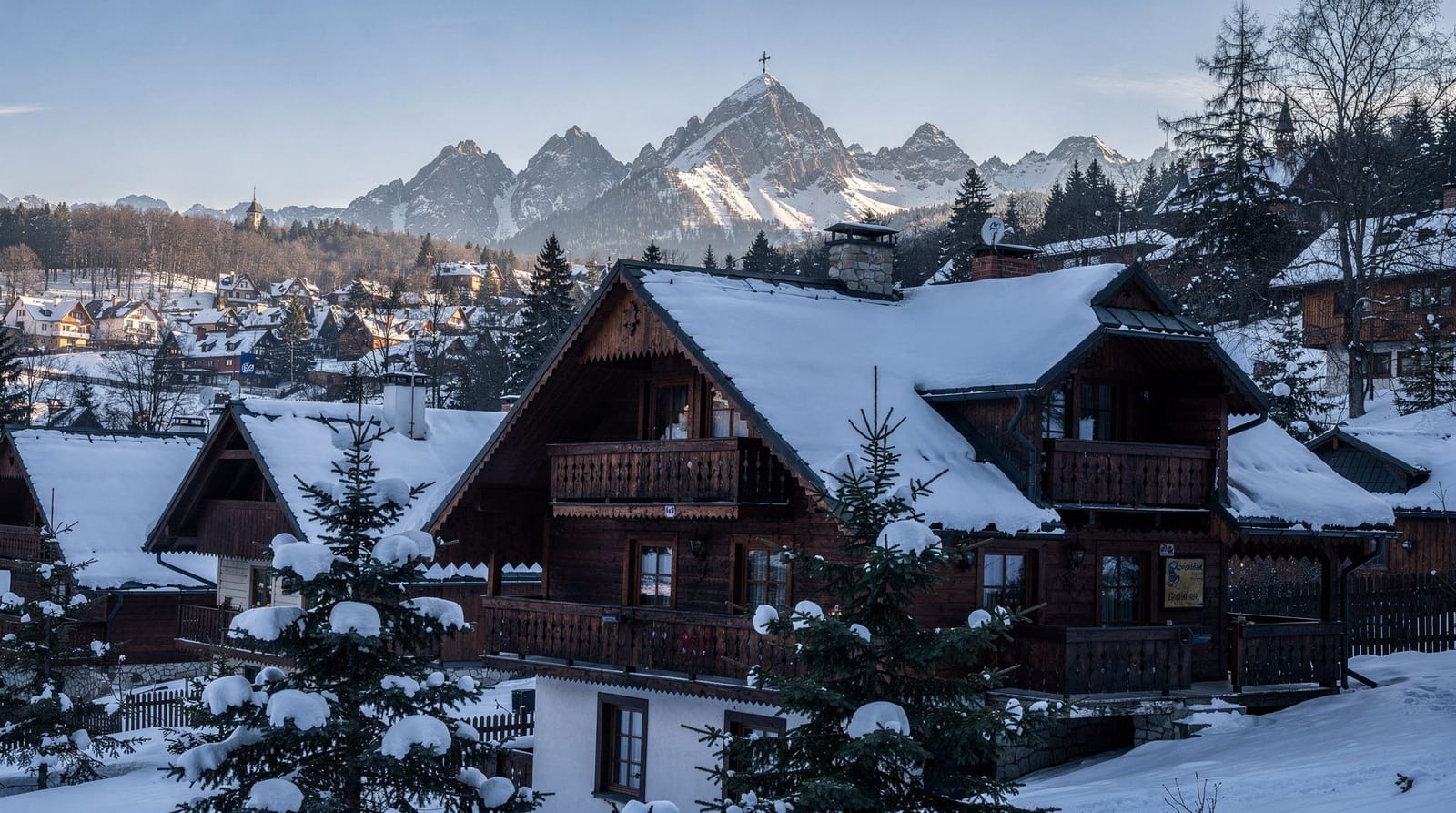
The Polish section of the Tatras — about 175 km² of the total 785 km² range, with the remainder in Slovakia — is managed as Tatrzański Park Narodowy (Tatra National Park). Trail infrastructure is excellent, with colour-coded waymarks, regular refuges (schroniska), and well-documented routes. The main gateway town is Zakopane, a resort of about 27,000 permanent residents that swells enormously in summer and winter.
This guide covers trail selection, seasonal conditions, independent access, gear, and organised tours — everything you need to make a hiking day in the Tatras work from Kraków.
| Where | Tatra National Park, around 100 km south of Kraków, base town Zakopane |
| Cost | around 25–45 PLN bus each way, or 220–300 PLN for a guided hiking tour |
| Time needed | full day, 8–12 hours door to door from Kraków |
| Getting there | bus, self-drive, or guided tour |
| Best time | June or September for quieter trails; July–August for guaranteed snow-free conditions |
The Tatra landscape: knowing what you’re hiking into
Geomorphology matters for route planning
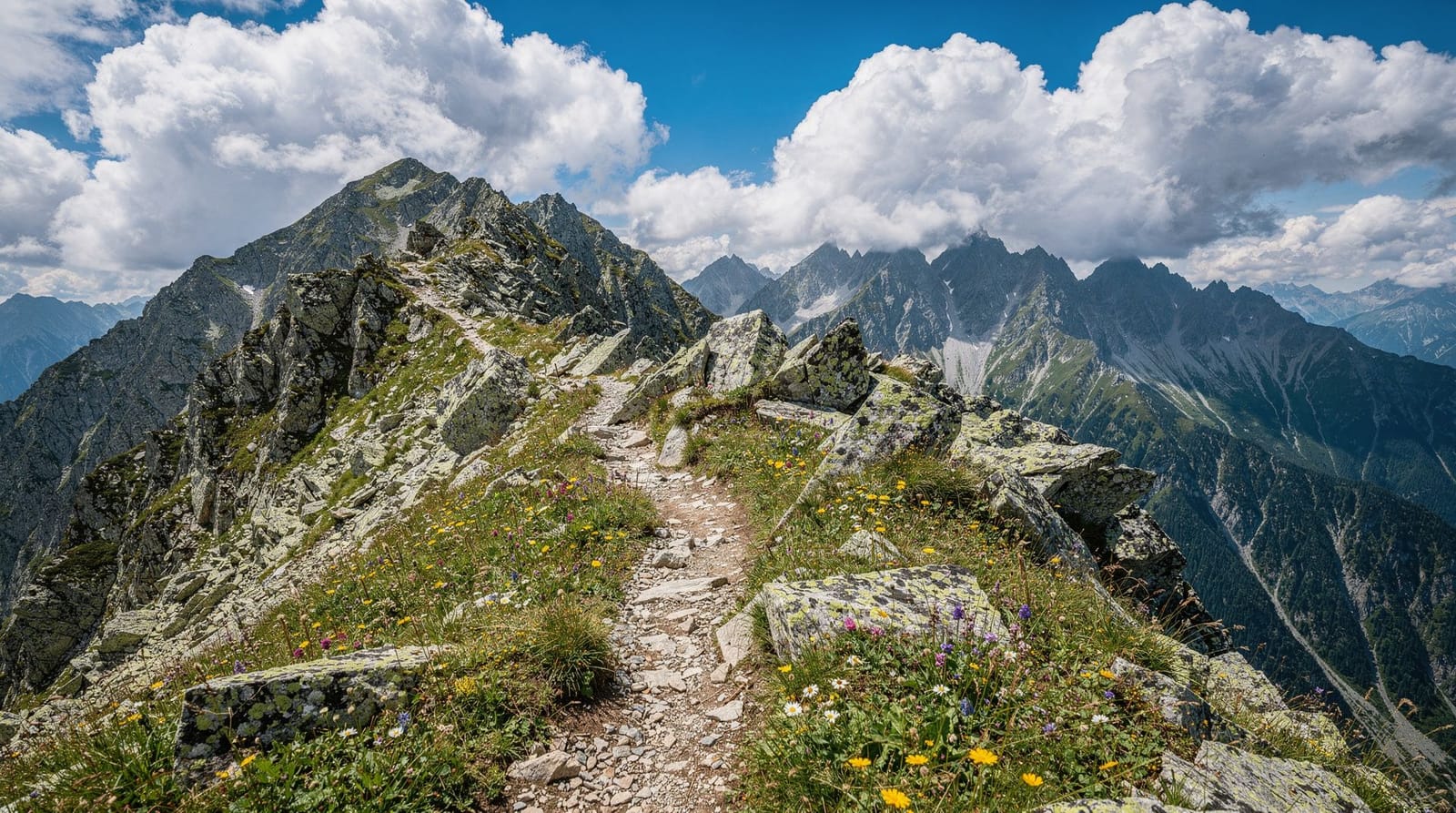
The Polish Tatras divide into two distinct zones. The Western Tatras (Tatry Zachodnie) are largely composed of limestone and dolomite — lower, more rounded summits, and green valley floors with streams cutting through karst terrain. Dolina Kościeliska is the defining Western Tatras valley. The High Tatras (Tatry Wysokie) are granite — steeper, sharper, with significant elevation changes. Morskie Oko sits at the foot of the High Tatras; Rysy and the Orla Perć ridge are in the same zone.
For day hikers, this distinction matters. Western Tatras routes are generally gentler; High Tatras routes gain elevation quickly and can involve exposed scrambles. Both zones are beautiful; the Western Tatras tend to be less crowded.
Elevation and fitness context
The valley floors sit at roughly 900–1,100 m. Orla Perć ridge (1,980–2,300 m) is genuinely demanding alpine terrain. Most popular day hikes fall in the 1,100–2,150 m range. Anyone comfortable with a full day’s walking in the UK Lake District or Black Forest will find Morskie Oko or Dolina Kościeliska accessible; Kasprowy Wierch via cable car is approachable for almost anyone.
Trail-by-trail guide: the main routes
Morskie Oko (Eye of the Sea)
Distance: 9 km round trip from Palenica Białczańska | Elevation gain: 580 m | Time: 4–5 hours | Difficulty: moderate
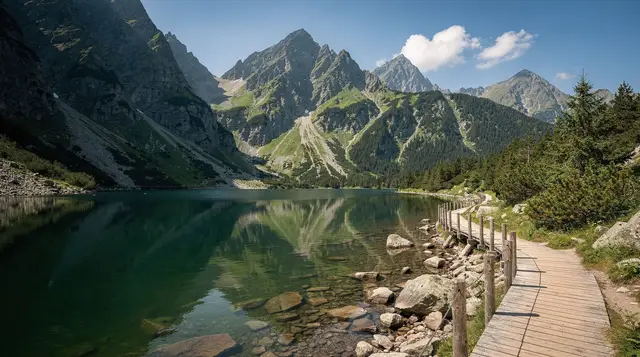
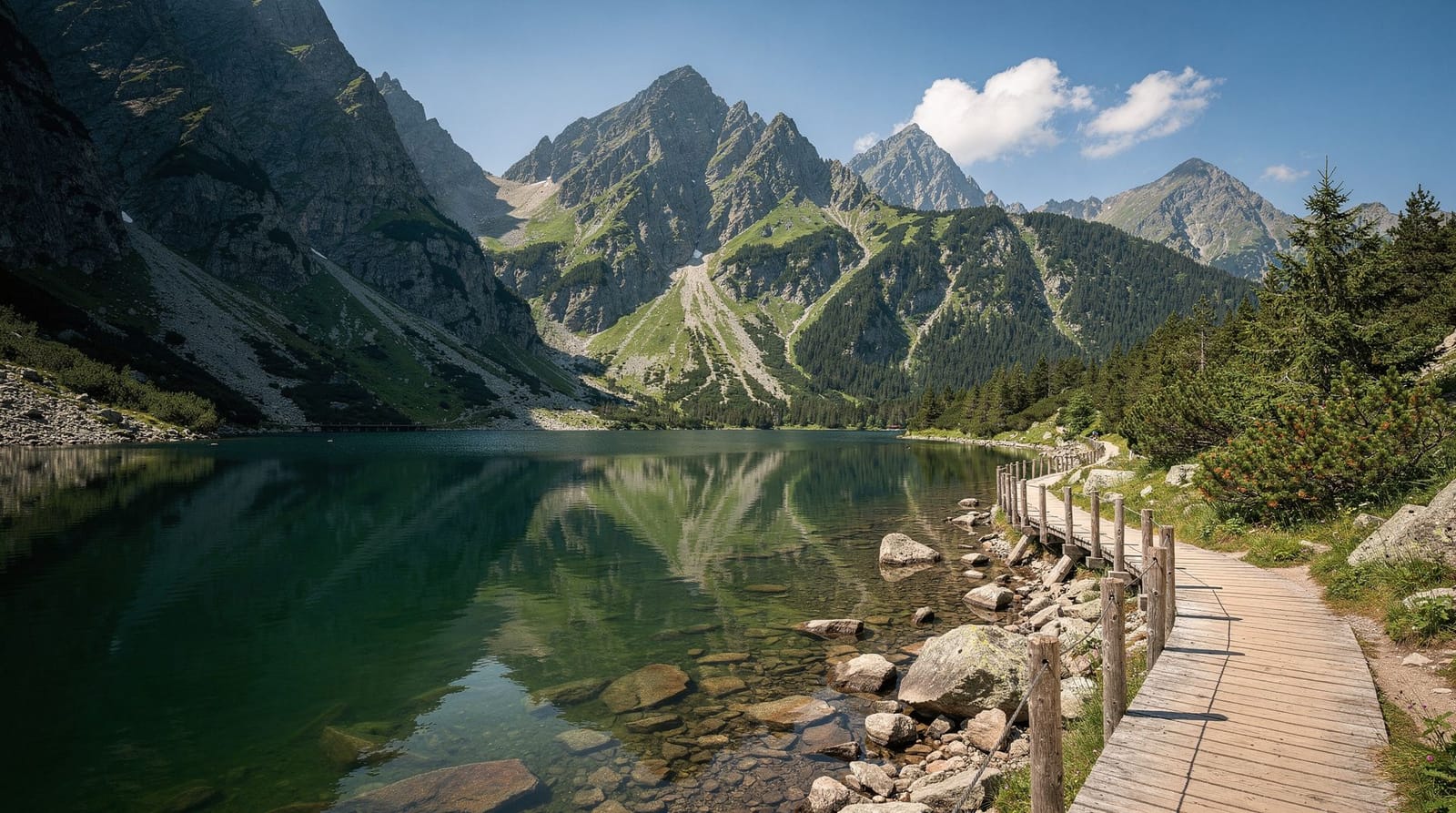
The most famous Tatra hike. A well-maintained asphalt road runs from the car park at Palenica Białczańska up to Morskie Oko lake (1,395 m). The lake is ringed by dramatic peaks — Mięguszowieckie Szczyty (2,438 m), Rysy (2,499 m) — and the dark water reflects them on calm days. Horse-drawn carriages (fiakry) cover part of the road for those who can’t walk the whole route (the route and prices changed in 2026: check tpn.gov.pl).
The route continues beyond the lake to the Czarny Staw (Black Lake, 1,583 m) — worth the extra 45 minutes if your legs allow. This is covered in detail in the Morskie Oko complete guide.
Dolina Kościeliska (Kościeliska Valley)
Distance: 10–14 km depending on turnaround point | Elevation gain: 150–300 m | Time: 3–5 hours | Difficulty: easy to moderate
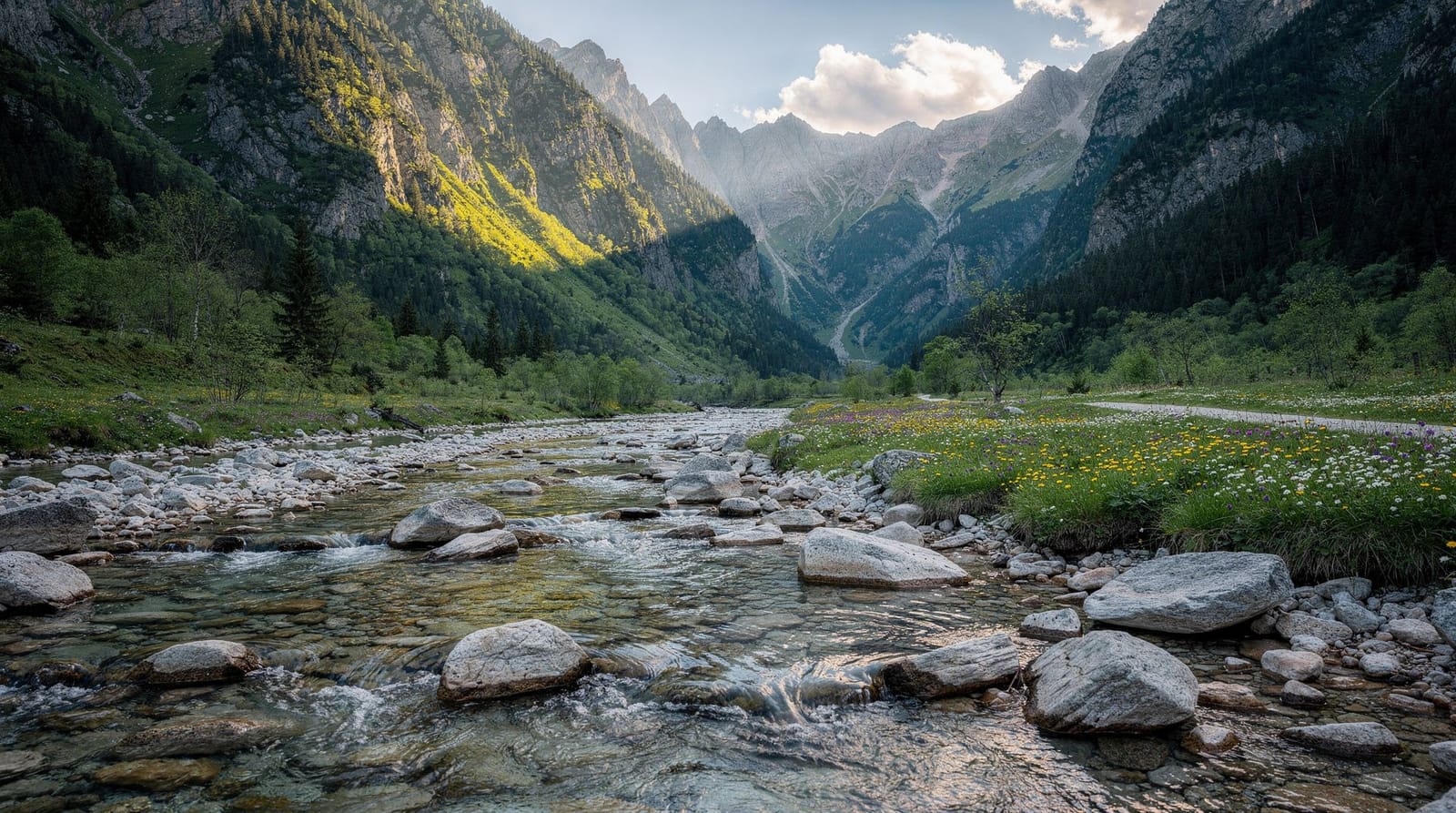
The finest valley hike in the Western Tatras. The trail follows the Kościeliski Stream through a canyon of limestone cliffs, past cave entrances (Jaskinia Mroźna is open to visitors in season; check ticket price and dates on tpn.gov.pl), through beech and spruce forests, to the Ornak shelter (1,100 m) or further to Hala Ornak pasture. No steep sections; flat enough to be enjoyable in walking shoes for the first section. Full details in the Kościeliska Valley hike guide.
Kasprowy Wierch (by cable car or on foot)
Elevation: 1,987 m | Time by cable car: 20 minutes | Time on foot: 3–4 hours from Kuźnice | Difficulty: moderate (on foot) / accessible (cable car)
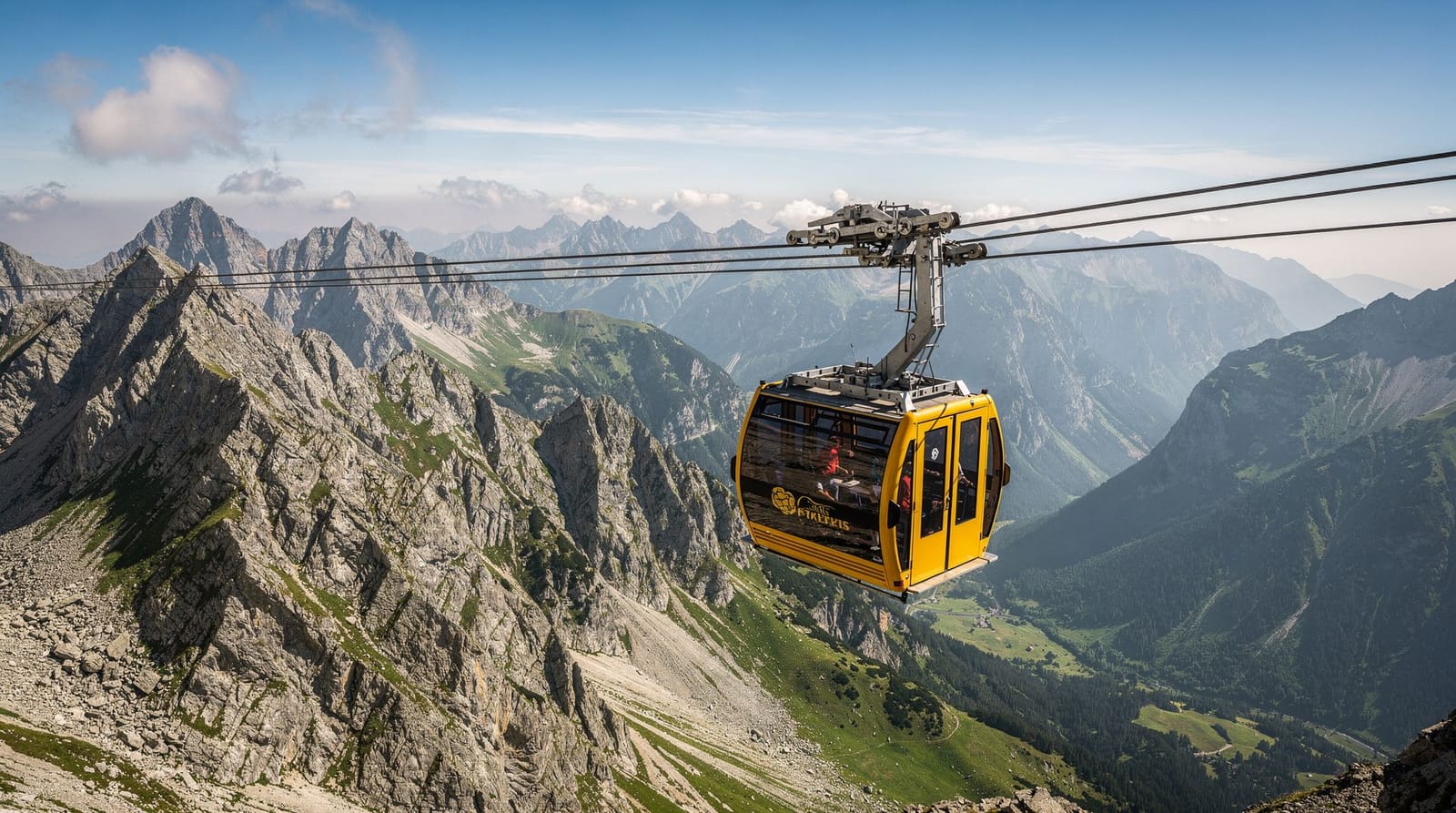
Kasprowy Wierch sits on the main ridge of the Tatras, with views into Slovakia on one side and the Zakopane valley below on the other. The cable car (kolejka linowa) runs from Kuźnice (1,013 m) up to the summit station. On clear days you see across both the Polish and Slovak High Tatras. From the top, the Gasienicowa Valley trail descends to Hala Gasienicowa (a good 2-hour loop). See the Kasprowy Wierch cable car guide for ticket booking and queue strategy.
Orla Perć (Eagle’s Path)
Distance: 4 km ridge traverse | Elevation: 1,980–2,300 m | Time: 5–8 hours (full traverse from Kozi Wierch to Świnica) | Difficulty: very difficult — exposed scrambling
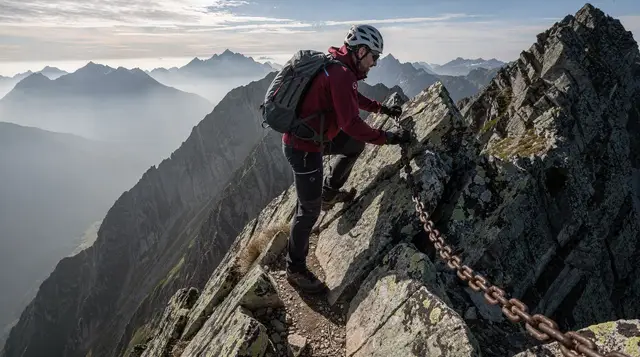
This is the Tatras’ most famous via ferrata-style trail: chains, fixed pegs, and serious exposure. Requires full hiking boots, a head for heights, and experience on technical terrain. Not recommended as a first Tatra hike; do not attempt in wet conditions. Experienced scramblers will find it magnificent.
Dolina Chochołowska
Distance: 18 km round trip to Chochołowska alpine meadow | Elevation gain: 280 m | Time: 5–7 hours | Difficulty: easy
The longest of the flat valley hikes, Dolina Chochołowska leads through one of the Tatras’ most beautiful meadows, surrounded by spruce forest and distant peaks. Springtime brings crocuses in late April to early May. Less crowded than Morskie Oko. Starting point: bus from Zakopane to Siwa Polana (~15 minutes).
Giewont (the sleeping knight)
Distance: 8 km from Kuźnice | Elevation gain: 800 m | Time: 4–5 hours | Difficulty: moderate-difficult
Giewont (1,894 m) is the iconic silhouette visible from Zakopane — the “sleeping knight” profile. The trail from Kuźnice via Kondratowa valley is steep in places. The summit has a large iron cross (erected 1901) and exposed rocky terrain. Popular but genuinely demanding in the final approach. Good boots essential.
Seasons: when to hike (and when not to)
June–September: main hiking season
The standard season. Trails above the treeline are fully snow-free from mid-June. July and August are warmest (average 14–16°C at 1,200 m) but crowded — expect queues at Morskie Oko and Kasprowy Wierch. September is often the finest month: stable weather, lower temperatures (10–13°C), far fewer visitors.
May: late-season snow above 1,400 m
May can be beautiful but plan carefully. Valley trails (Dolina Kościeliska, Dolina Chochołowska) are usually clear. Upper Morskie Oko lake may still have snow or ice patches. Kasprowy Wierch often has snow. Check Tatrzański Park Narodowy trail conditions (online, Polish/English) before setting out.
October: autumn colours, stable weather
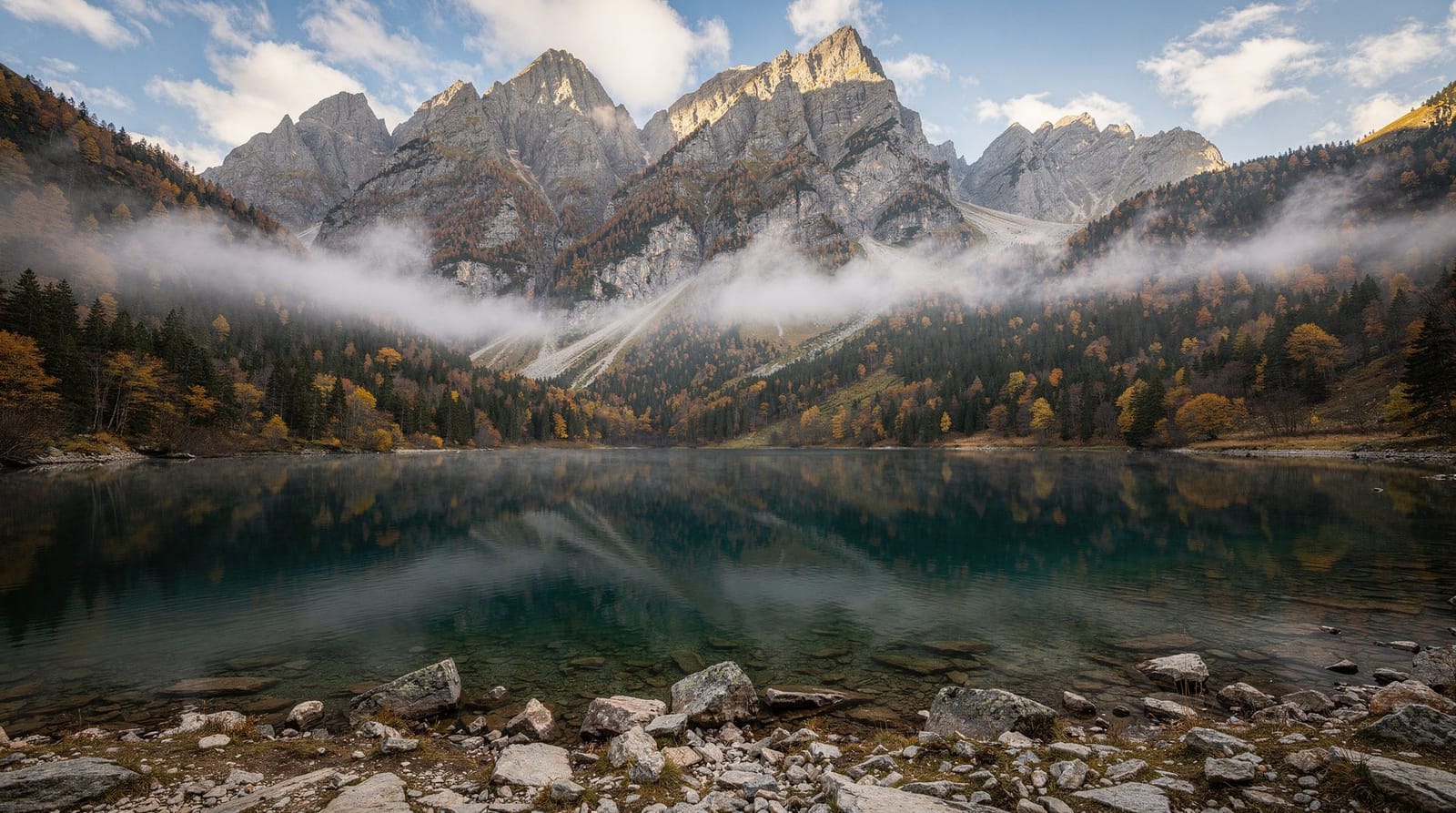
Often excellent hiking conditions. Forests turn gold and red. Snow can appear on high peaks from late October. Most schroniska (mountain huts) remain open through October; some close early November.
November–April: winter and spring
Avalanche risk above the treeline November through April. Many high trails close officially. The valley floor trails remain hikeable but require waterproof boots. Crampons and ice axe are standard equipment for any serious winter hiking. The Tatras are not closed in winter but are genuinely dangerous for unprepared hikers.
Independent access from Kraków
By car (recommended for flexibility)
Drive south from Kraków on the E77 / DK7 toward Rabka-Zdrój, then continue to Zakopane. The journey is approximately 100 km and takes 1h45–2h30 depending on traffic. Summer weekends and public holidays can add significant time — the approach to Zakopane from the north is frequently congested.
Parking: for Morskie Oko, you must park at Palenica Białczańska (12–25 PLN/day depending on season). For Dolina Kościeliska, park at the valley entrance (Kiry, similar rates). For Kasprowy Wierch cable car, park in Kuźnice.
By bus from Kraków
Flixbus and PKS express coaches run from Kraków Główny bus station to Zakopane, approximately 2 hours, 25–45 PLN one-way. In summer, several departures per hour. From Zakopane, local buses (line 20 or 25) run to trailhead car parks at Palenica Białczańska and Kiry. This is a practical, affordable option.
By guided tour (the efficient choice)
The Tatra Mountains full-day hiking tour from Kraków handles all transport logistics and provides a guide who knows the trails. This is ideal for first-time visitors who want to maximise time hiking rather than navigating buses and car parks. Tours typically depart at 7:00–8:00 AM and return by 19:00–20:00.
For those wanting to combine hiking with relaxation, the hiking adventure in Tatra Mountains with thermal baths adds a session at the Zakopane thermal pool complex on the return — a good combination after a long day on the trails.
Gear list for a Tatra day hike
Essential
- Boots: Waterproof hiking boots with ankle support (not trainers) for any route above the valley floor
- Waterproof jacket: Mountain weather changes rapidly; even summer days can bring thunderstorms
- Layers: Thermal base layer + mid-layer fleece; it can be 8°C cooler than Zakopane at 2,000 m
- Water: Minimum 2 litres. Stream water can be drunk in many areas but carry from the valley to be safe
- Snacks/food: Mountain huts (schroniska) serve hot meals but expect queues at Morskie Oko; bring supplies
- Sun protection: UV is intense above 1,500 m; factor 50 sunscreen, sunglasses, hat
- Trekking poles: Recommended for any route with significant descent
Recommended
- Map: 1:25,000 Tatra national park map (available at tourist info offices in Zakopane and online)
- First aid kit: Basic kit including blister treatment
- Headtorch: If there’s any chance of being on the trail after dusk
For advanced routes (Orla Perć, Rysy)
- Helmet for falling rock risk
- Via ferrata set (harness + lanyard) for Orla Perć
- Ice axe and crampons if any snow present
Mountain huts (schroniska) on the routes
Schronisko PTTK nad Morskim Okiem — at Morskie Oko lake. Beds from 65 PLN, meals 25–45 PLN. Very busy; booking months ahead required in July/August.
Schronisko Murowaniec — on Hala Gasienicowa, below Kasprowy Wierch. Excellent base for multi-day Tatras hiking. Accessible on foot from Kuźnice in 2.5 hours.
Schronisko na Hali Ornak — in Dolina Kościeliska, the turnaround point for most valley day hikers. Good soup and żurek (sour rye soup) at reasonable prices, 18–22 PLN.
Chata Hrebienok (Slovak side) — accessible from Kasprowy Wierch ridge. Useful if you cross into Slovakia.
Most schroniska serve hot food throughout the day but get genuinely busy around lunch (12:00–14:00) in July and August — arriving slightly off peak, or bringing your own snacks and treating a hut meal as a bonus rather than a plan, avoids the longest waits. Card payment isn’t always reliable at remote huts, so carry enough cash in PLN for a meal and drinks.
Safety and regulations
Tatrzański Park Narodowy entry fee: a daily entry fee applies on the park’s trails: 11 PLN adult, 5.50 PLN reduced (7-day ticket 55 / 27.50 PLN), payable at the ticket points near the trailheads. Individual sites (Jaskinia Mroźna cave) have their own fees.
Trail closures: Sections close seasonally for wildlife protection (chamois breeding areas, eagle habitat) or after severe weather. Check the TPN website or Zakopane information centre before setting out.
Bears and wolves: The Tatras have small populations of brown bear and wolf. Standard advice: make noise on the trail, don’t leave food unattended, don’t approach wildlife.
Altitude sickness: Not a serious concern at Tatra elevations (maximum 2,499 m) for healthy adults. However, visitors with heart conditions should consult a doctor before high-altitude hikes.
Rescue: Mountain rescue (TOPR — Tatrzańskie Ochotnicze Pogotowie Ratunkowe) operates 24/7. Emergency number in Poland: 985 (TOPR) or 112. Rescue is free but voluntary donations are appreciated.
Practical costs
| Item | PLN | EUR approx. |
|---|---|---|
| Guided tour from Kraków (hiking) | 220–300 | €52–71 |
| Bus Kraków–Zakopane (one-way) | 25–45 | €6–11 |
| Parking at Palenica Białczańska (full day) | 25–30 | €6–7 |
| Morskie Oko horse carriage (one-way) | see tpn.gov.pl | – |
| Tatra National Park daily entry | 11 | €2.60 |
| Schronisko meal (soup + main) | 35–50 | €8–12 |
| Kasprowy Wierch cable car (return) | 129 adults in October–mid-December; 99–165 in summer depending on time slot | €31 (low season) |
Combining Tatras hiking with a Zakopane visit
Most Tatra day trips from Kraków include time in Zakopane itself — a useful 1–2 hours to walk Krupówki (the main pedestrian street), try oscypek (smoked sheep’s cheese) from market stalls (8–12 PLN per piece), or visit the Tatra Museum. Combine with the Gubałówka funicular guide if you want panoramic views without the hiking effort.
For winter visits, the Zakopane winter skiing guide covers ski resorts and snow conditions. For thermal relaxation after your hike, see the Zakopane thermal baths guide.
The nature near Kraków guide lists additional natural sites in Małopolska if you want to plan a combined itinerary.
Choosing between a guided tour and going independently
A guided hiking tour makes the most sense for first-time visitors, solo travellers who’d rather not navigate bus timetables and trailhead logistics alone, or anyone who wants a guide’s judgement on route selection when weather is uncertain. The Tatra Mountains full-day hiking tour from Kraków handles all of this and adjusts the route to group fitness on the day. Going independently by bus or car saves money and gives you full control over pacing and which trail you pick, but demands more planning — checking bus times back to Kraków, watching the weather yourself, and carrying your own map. Neither approach is wrong; it depends on how much you value flexibility versus having logistics handled for you. The Tatra Mountains day trip guide has a fuller breakdown of transport options if hiking is only part of your day.
Frequently asked questions about hiking in the Tatra Mountains
Do I need a permit to hike in the Tatras?
No permit is required for standard day hiking in the Polish Tatras. You can walk freely on marked trails. Some areas close seasonally for wildlife protection, and the cave at Dolina Kościeliska (Jaskinia Mroźna) has a paid entry. Winter mountaineering above certain elevations may require TOPR registration — check current rules on the TPN website.
What are the best trails for beginners?
Dolina Kościeliska is the standout easy hike — flat valley floor, limestone cliffs, excellent scenery, no steep sections. Morskie Oko is classified moderate (580 m elevation gain over 9 km) but is very well-maintained and suitable for anyone reasonably fit. The Tatra best easy hikes guide covers the gentlest options in detail.
Is it safe to hike alone in the Tatras?
On the main marked trails in good conditions, yes. More remote or technical routes are better done with a companion. Always leave your intended route with someone, carry a map, and check the weather forecast. The TOPR rescue service is professional, but prevention is far better.
Can I combine Morskie Oko and Dolina Kościeliska in one day?
These valleys are on opposite sides of the massif and would involve 3+ hours of driving between trailheads in addition to the hiking. Not practical as a single day trip. Choose one per day, or do Morskie Oko and combine it with Zakopane town. For Dolina Kościeliska, pair it with the Chochołowskie thermal baths guide — the Chochołów spa is just 15 km from the valley entrance.
How physically demanding is a typical Tatras day trip?
A standard Morskie Oko return from Kraków involves about 18 km of walking (9 km each way) and 580 m of elevation gain. Allow 4–5 hours on the trail, plus transport. Comfortable hiking shoes and a reasonable level of fitness are adequate. Take the horse carriage on the approach road if you want to save energy for the lake circuit.
What’s the weather like in the Tatras?
Weather changes rapidly in alpine terrain. The valley can be sunny while clouds build on the peaks. Afternoon thunderstorms are common in July and August — aim to be off exposed ridges by 14:00 in summer. The Tatra National Park website and yr.no (Norwegian weather service, excellent for mountain forecasts) provide reliable local forecasts.
Which trail should a first-time visitor pick?
For a first Tatras hike, Morskie Oko is the classic choice — well-marked, moderate effort, and the destination is genuinely spectacular. If you’d rather ease in more gently or you’re hiking with young children, start with Dolina Kościeliska or the options in the Tatra best easy hikes guide instead, and save Morskie Oko or Giewont for a return trip once you know your pace on Tatra terrain.
Is Kasprowy Wierch worth it if I’ve already done Morskie Oko?
Yes — they’re different experiences. Morskie Oko is a valley-floor lake hike; Kasprowy Wierch (whether by cable car or on foot from Kuźnice) puts you on the main ridge with views into both Poland and Slovakia. The Kasprowy Wierch cable car guide covers ticket booking, which matters since it sells out on clear summer days.
Top experiences
Bookable activities with verified prices and instant confirmation on GetYourGuide.