Morskie Oko complete guide: hike, transport and what to expect
From Krakow: Morskie Oko lake tour in the Tatra Mountains
How do I get to Morskie Oko from Kraków?
Morskie Oko is roughly 120 km south of Kraków, about 2 hours by road to the Palenica Białczańska car park. From there, an 8 km asphalt road leads to the lake — either hike the full distance (about 2.5 hours each way), or take a horse-drawn carriage part of the way. The easiest option is a guided day tour from Kraków that handles all transport.
| Distance from Kraków | around 120 km, 2 hours by road |
| Trail | 8 km one-way, asphalt road |
| Time needed | 4–5 hours at Palenica, including the hike |
| Cost | Tatra National Park entry 11 PLN; parking 36–75 PLN (online reservation); horse carriage: check tpn.gov.pl |
| Best time | Early morning (7:00–7:30 AM) in June or September |
Poland’s most famous alpine lake — and how to do it properly
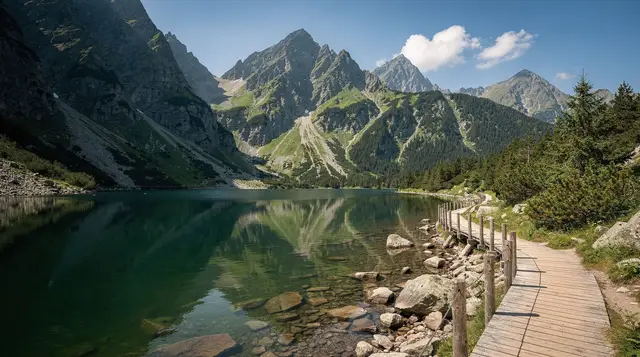
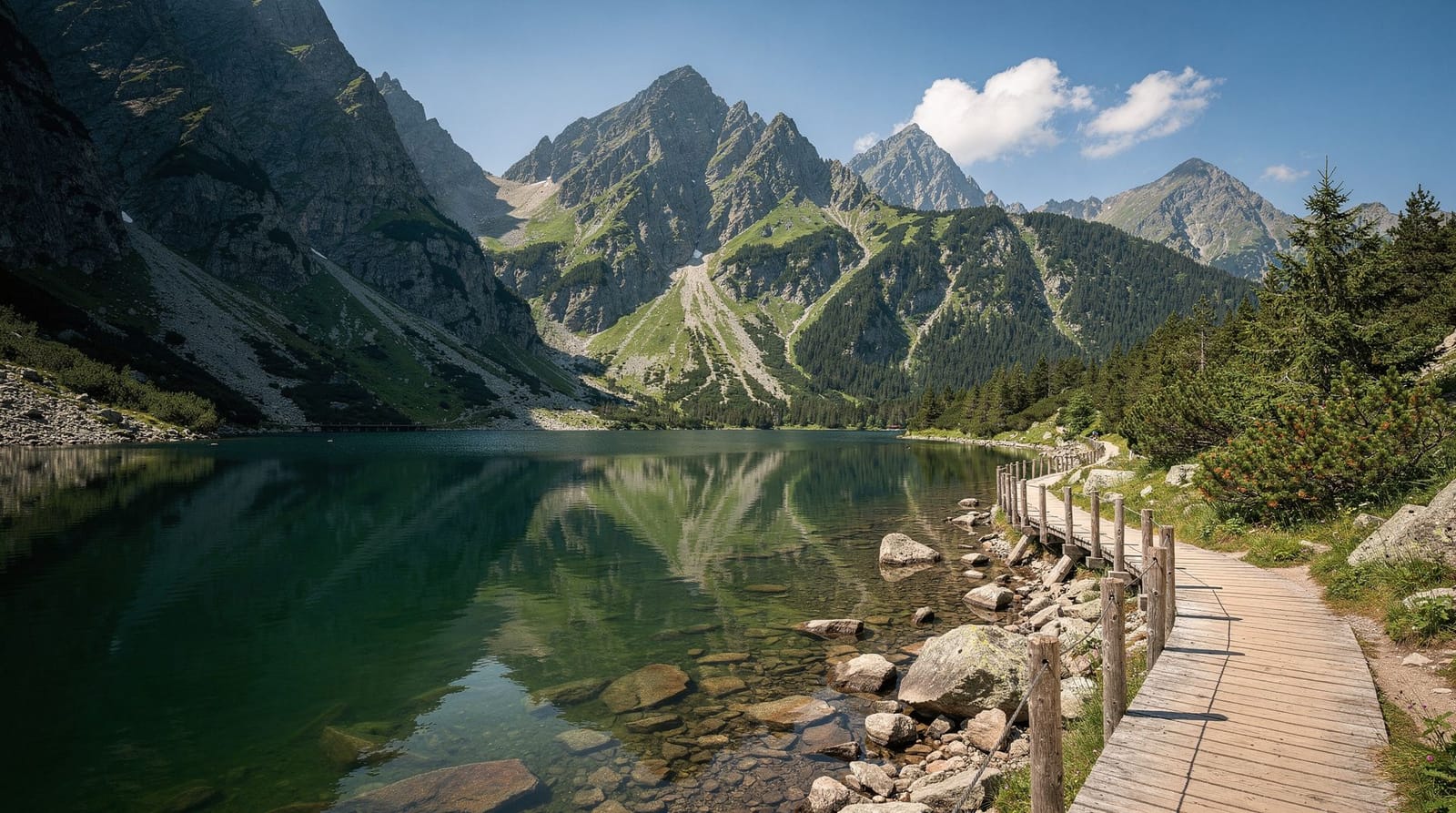
Morskie Oko translates literally as “Eye of the Sea,” and on a calm morning when the surrounding peaks — Mięguszowieckie Szczyty (2,438 m), Rysy (2,499 m), and Żabia Turnia — reflect perfectly in the water, you understand the name completely. This is the largest and most dramatic lake in the Polish Tatras: 34.5 hectares, 50.8 m deep, at an elevation of 1,395 m, carved into a granite cirque at the foot of the High Tatras.
Morskie Oko draws more visitors than any other site in the Polish Tatras — around 3 million people per year. Knowing what to expect and how to time your visit makes the difference between an extraordinary mountain day and a frustrating crowd experience. This guide covers everything: trail logistics, horse carriage options, what to see at the lake, and how to get there from Kraków.
The trail from Palenica Białczańska
Starting point and access
All traffic — on foot and horse carriage — must begin at Palenica Białczańska, the car park and bus stop at the foot of the approach road. Private cars are not permitted beyond this point (the road is gated). Parking costs 36–75 PLN depending on season and demand, and must be reserved online at tpn.gov.pl/parkingi-morskie-oko.
From Zakopane town centre, Palenica Białczańska is about 18 km southeast via the Polański hamlet — local buses (line 20 or 25) run the route in approximately 35 minutes; check current fares locally. Most guided day tours from Kraków drop at Palenica directly.
The approach road: 8 km to the lake
An asphalt road climbs steadily through spruce and beech forest, over 8 km. The gradient is consistent but never brutal — it’s more like a sustained hill walk than a mountain ascent. Key checkpoints:
- Wodogrzmoty Mickiewicza (km 3.5): Three small waterfalls audible from the road; a short detour to see them is worthwhile
- Włosienica (km 6): Former farmstead, now a bar serving oscypek and beer. Horse carriages have turned back from around here; walkers continue
- Morskie Oko schronisko (km 9): The mountain hut at the lake shore
Walking time
Allow about 2.5 hours up (Tatra National Park figure) and somewhat less down. Total trail time: around 5 hours moving, plus 45–60 minutes at the lake. Total time at Palenica Białczańska: 4–5 hours.
Horse-drawn carriages (fiakry)
Horse-drawn carriages have run from Palenica Białczańska up to Włosienica (km 6), but a Tatra National Park pilot from 1 September 2026 shortens the route to Wodogrzmoty Mickiewicza (about 2.9 km). Check current routes and prices on tpn.gov.pl.
The horse carriage is a genuine traditional element, not merely a tourist gimmick — Tatra Highland guides (górale) have used this route for generations. The animals are well-maintained. However: in high summer, carriages can be booked out or queues long. Arrive before 8:30 AM or plan to walk.
Condition by season
- April–May: Road is open but may have snow patches near the lake. The lake itself may be partially frozen. Crampons advisable above km 7 in early season.
- June–September: Ideal. Trail fully clear. Crowded in July/August.
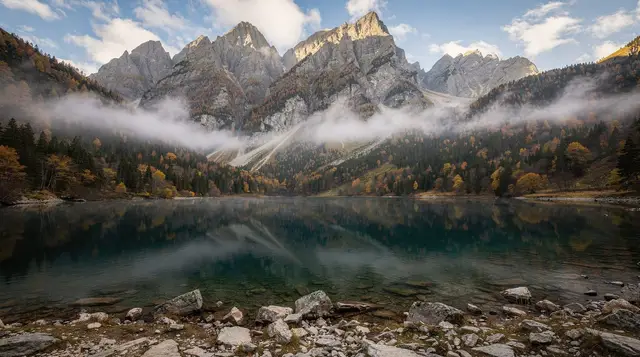
- October: Often excellent — quieter, autumn colours in the forest below.
- November–March: Road can be icy. Microspikes or crampons recommended. Horse carriages reduced frequency or suspended.
At Morskie Oko: what to see and do
The lake circuit
A marked trail runs around the entire lake — approximately 3.5 km, allowing 45–60 minutes. The circuit offers constantly changing perspectives: the hut and main viewpoint on the north shore, the dramatic southeast cliffs of the Żabi Koń ridge, and the quieter western shore where you may find near-solitude even in summer.
Czarny Staw pod Rysami (Black Lake)
The trail continues from the south end of Morskie Oko to Czarny Staw pod Rysami (1,583 m) — an additional 45 minutes of steeper hiking, gaining 188 m. This upper lake is darker, more dramatic, and significantly less visited. The path requires some scrambling on rocky terrain. Worth the effort for anyone with energy to spare.
The summit: Rysy
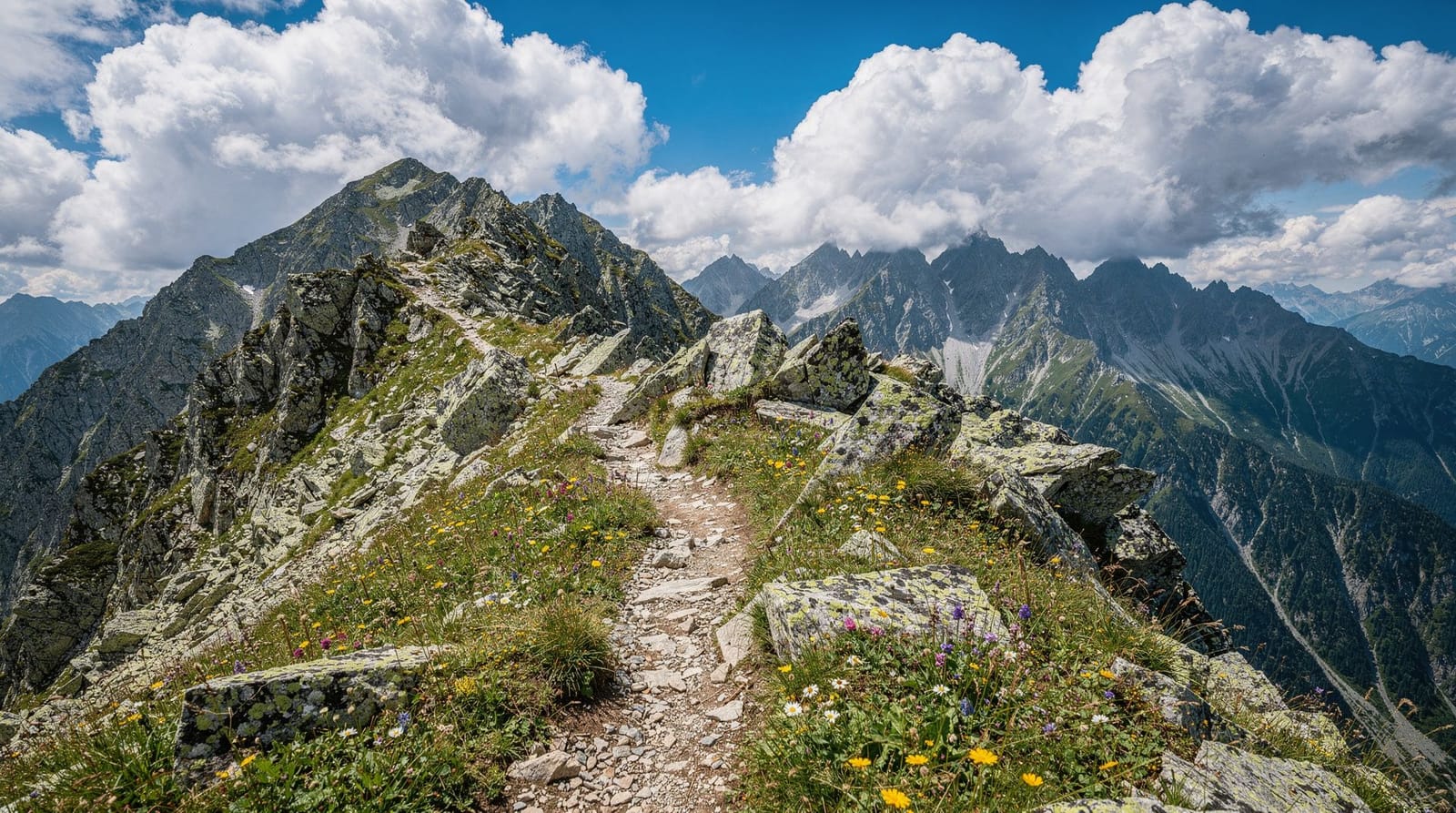
From Czarny Staw, the path continues to Rysy (2,499 m) — Poland’s highest peak. This is a serious mountain route: 1,000 m of additional elevation gain from Morskie Oko over exposed rocky terrain. Allow 3–4 hours from the lake to the summit, 2–3 hours down. Only for experienced hikers in good conditions, with proper gear. Not suitable as part of a Kraków day trip unless you are starting very early (before 5 AM from Palenica).
The schronisko (mountain hut)
Schronisko PTTK nad Morskim Okiem is one of the largest and most historic mountain huts in the Tatras. Built in its current form in 1908, it serves hot meals (żurek, bigos, goulash, 22–38 PLN) and hot drinks. Accommodation is available (beds from 65–90 PLN/night in dormitories), but booking in July and August requires reservations months in advance. In shoulder season, walk-in is often possible.
The terrace in front of the hut is the classic viewpoint — Mięguszowieckie peaks reflected in calm water, snow patches visible on the higher ridges, and the valley below. Arrive early for the best reflection light (mid-morning, before the wind picks up).
Getting from Kraków to Morskie Oko
By guided tour (recommended for most visitors)
The Morskie Oko lake tour in the Tatra Mountains from Kraków takes care of all logistics: return transport (approximately 2 hours each way), drop at Palenica Białczańska, guidance on the trail, and flexible return timing. Most tours depart between 6:30 and 8:00 AM; book the earliest available slot to beat the midday crowds.
For hikers wanting more elevation and a guide on the trail, the Tatra Mountains and Morskie Oko hike from Kraków adds a guided hiking component with more time on the trails.
If you want to combine the lake visit with a relaxation component, the Morskie Oko lake tour with thermal baths adds a session at the Zakopane spa complex on the return — an excellent way to finish a long hiking day.
By car
Drive south on E77/DK7 from Kraków toward Nowy Targ, then southeast via Szaflary to Białka Tatrzańska, then follow signs to Palenica Białczańska. Approximately 120 km, 2 hours without traffic. Parking at Palenica: 36–75 PLN/day, reserved online at tpn.gov.pl/parkingi-morskie-oko. Note: the road through the Poronin/Białka route can be congested in summer.
By bus
From Kraków Główny bus station: PKS express to Zakopane (~2 hours; check current fares). From Zakopane, bus line 20 or 25 to Palenica Białczańska (35 minutes). Check timetables for the last return.
When to visit: honest timing advice
Early morning is not optional
The path becomes genuinely crowded from 10:00 AM onward in July and August. By 11:00, queues form for horse carriages and the lakeside terrace at the hut is standing-room only. Aim to be at Palenica by 7:00–7:30 AM in peak summer. This means leaving Kraków by 5:00–5:30 AM at the latest if driving, or booking the earliest tour departure.
June and September: the sweet spots
June (post-mid-month, once snow is gone at the lake) and September offer the best compromise: snow-free trails, good weather statistics, and far smaller crowds. September in particular has stable high-pressure systems and the forest colours are spectacular.
Midweek versus weekends
Polish national holidays and summer weekends bring enormous crowds. If your schedule allows, midweek visits (Tuesday–Thursday) are dramatically quieter, even in July.
Weather and visibility
Cloud cover frequently settles on the peaks by early afternoon in summer. Clear mornings are the rule rather than exception — another reason to go early. The lake’s reflection photographs are best in calm, early-morning conditions. Bring a waterproof jacket regardless; afternoon thunderstorms are common June–August.
What to bring
- Hiking boots or strong trail shoes (the asphalt approach is fine in trainers; the lake circuit has some rocky sections)
- Waterproof jacket
- At least 2 litres of water (the hut water is drinkable; mountain stream water generally is too)
- Food — the schronisko serves meals but is expensive relative to Zakopane; pack sandwiches for a cheaper option
- Cash — the hut accepts cards but trail stalls (oscypek vendors) are cash only; bring 50–100 PLN in small notes
- Sun protection (UV is intense at elevation)
Combining Morskie Oko with Zakopane
Most Kraków day tours include 1–2 hours in Zakopane town, typically in the morning or afternoon. The Krupówki pedestrian street is the obvious stop: oscypek stalls (8–12 PLN per piece), góralski bread, and Podhale craft shops. The Tatra Mountains hiking guide covers other trail options if you want to plan a multi-day Tatras visit.
For panoramic views without the hike, the Gubałówka funicular guide explains the easy cable car to a hilltop overlooking Zakopane. After a long day on the trails, the Zakopane thermal baths guide covers the spa options in and around town.
Morskie Oko by season
| Month | Trail condition | Crowds | Notes |
|---|---|---|---|
| April–May | Snow patches near lake possible | Low–moderate | Crampons advisable above km 7 |
| June | Clearing, often snow-free by mid-month | Moderate, rising late June | One of the two sweet spots |
| July–August | Fully clear | Very high | Arrive by 7:00–7:30 AM or expect queues |
| September | Fully clear | Moderate, dropping | Best combination of weather and quiet |
| October | Clear, cooling | Low | Autumn colours in the forest below |
| November–March | Icy | Very low | Microspikes recommended; carriages reduced |
If you want a longer or easier alternative
Morskie Oko is the headline lake, but it isn’t the only worthwhile hike in the Tatras, and knowing the alternatives helps if the crowds or the distance don’t suit your day. The Kościeliska Valley hike offers a gentler, less crowded alternative on the opposite side of the range, better suited to a relaxed morning than an early-start crowd-beating mission. For visitors who want mountain views without the walking distance, the Kasprowy Wierch cable car guide reaches a comparable elevation in minutes rather than hours. And if you’re deciding among several short trail options, the Tatra best easy hikes guide rounds up routes suitable for a range of fitness levels, useful if Morskie Oko’s 9 km round trip feels like more than your group wants to take on.
Frequently asked questions about visiting Morskie Oko
How hard is the hike to Morskie Oko?
It is a moderate hike: 8 km one-way on an asphalt-surfaced road, about 2.5 hours up. Anyone who can comfortably walk for 2 hours on hilly terrain can reach the lake. The horse carriage option shortens the walk; check current routes on tpn.gov.pl.
Is it worth visiting Morskie Oko even if the weather is cloudy?
Yes, with caveats. The gorge and forest sections of the trail are beautiful in any weather. The iconic reflection image requires calm, clear conditions. A cloudy, moody atmosphere can be striking in its own way. Avoid visiting in heavy rain — the asphalt road becomes slippery and the lake view is lost in mist.
Can I visit Morskie Oko and the Kościeliska Valley in one day?
These trailheads are on opposite sides of the Tatras, roughly 30–40 km apart by road. It’s theoretically possible but would involve significant driving between hikes and little time in either valley. Choose one per day; combine Morskie Oko with Zakopane town, or Kościeliska with the Chochołowskie thermal baths.
Is Morskie Oko suitable for children?
Yes, for children who can walk several kilometres. The approach road is broad and well-surfaced, without any drops or difficult terrain. The horse carriage is a popular option with families. The lake circuit has some uneven rocky sections but is not dangerous. Bring snacks, layers, and waterproofs.
What does it cost to visit Morskie Oko?
Tatra National Park entry costs 11 PLN (5.50 PLN reduced). Other costs are parking (36–75 PLN, reserved online), horse carriage if used (check tpn.gov.pl), food and drink at the schronisko (40–70 PLN for a hot meal and drink), and transport from Kraków if not self-driving. A guided tour from Kraków typically costs 190–280 PLN inclusive.
Do I need to book anything in advance for Morskie Oko?
No pre-booking is required for the trail itself other than the Tatra National Park entry ticket and, if driving, the online parking reservation. If you’re taking a guided tour from Kraków, book that in advance, especially in July and August when the earliest, crowd-beating departure slots fill first. If you plan to stay overnight at the schronisko, book accommodation months ahead for summer.
How does Morskie Oko compare to Kasprowy Wierch for a first Tatras visit?
They offer different experiences. Morskie Oko is a walk to a lake — moderate effort, no cable car, a genuine hiking day. Kasprowy Wierch is a cable car ride to a high-altitude viewpoint — minimal effort, dramatic panoramic views, but no lake. If you only have one Tatras day and want the classic postcard lake image, choose Morskie Oko; if you want maximum view for minimum effort, choose Kasprowy Wierch.
Top experiences
Bookable activities with verified prices and instant confirmation on GetYourGuide.