Nature near Kraków: best natural sites within 2 hours of the city
From Krakow: Ojców National Park and Pieskowa Skała Castle
Duration: 4h
What are the best natural areas near Kraków for a day trip?
For mountains and glacial lakes: the Tatra Mountains and Morskie Oko (2 hours south). For karst landscapes and castles: Ojców National Park (25 km, 35 minutes). For river gorge rafting: the Dunajec Pieniny gorge (2 hours). For thermal baths with alpine backdrop: Zakopane area (2 hours). For underground landscapes: Wieliczka Salt Mine (14 km, 30 minutes). Each is distinct — see this guide for how to combine them.
| Closest option | Zakrzówek Reservoir, 4 km, free |
| Best half-day | Ojców National Park, 25 km, 35–45 min |
| Best full alpine day | Morskie Oko / Tatras, ~2 hours |
| Weather-independent | Wieliczka Salt Mine, 14 km |
| Best season overall | September for crowds and colour |
Kraków as a nature base: better than you’d expect
Kraków is primarily known for its historic centre — Wawel, Kazimierz, the Main Market Square. But the city’s position in southern Poland places it within easy reach of a remarkable variety of natural landscapes. The Tatra Mountains (Poland’s only truly alpine range) are 100 km south. The limestone karst of Ojców National Park is 25 km north. The Pieniny gorge and Dunajec River are 130 km to the southeast. The Wieliczka Salt Mine occupies an underground world 14 km east.
Few European cities of Kraków’s size offer this variety within a 2-hour radius. This guide organises the options by distance, type, and what kind of experience you’re looking for.
Natural sites by distance from Kraków
Within 30 km (under 45 minutes)
Ojców National Park (25 km north)
Poland’s smallest national park and Kraków’s most accessible natural area. A limestone karst gorge, two castles, a show cave, and the finest easy valley walk within reach of the city. Spring crocus season on Chełmowa Góra hill (April–May) is spectacular. Half-day minimum; full day recommended.
See the full Ojców National Park hiking guide.
Wieliczka Salt Mine (14 km east)
Not a natural landscape in the conventional sense, but one of the world’s most extraordinary underground environments — 300 km of passages, hand-carved chambers, and an underground lake, all in rock salt. A UNESCO World Heritage site since 1978. Well within range for half a day. The mine is operational year-round and immune to weather.
Zakrzówek Reservoir (4 km from Kraków centre)
A flooded limestone quarry within Kraków city boundaries, popular for swimming (the water is a stunning turquoise-blue from dissolved limestone), rock climbing, and cliff diving. Not a “natural” site in the wilderness sense, but a remarkable urban natural feature. Free access. Best June–September.
1–1.5 hours (60–90 km)
Wielka Puszcza and Beskid Wyspowy foothills
The rolling forested hills of the Beskid Wyspowy range begin approximately 60–80 km south of Kraków. Less dramatic than the Tatras but excellent for quiet walking, village tourism, and authentic górale (highland) culture without the crowds of Zakopane. The town of Myślenice (30 km south) is a good entry point.
Kalwaria Zebrzydowska (50 km southwest)
A UNESCO-listed baroque sanctuary set in a forested hillside, with 40+ chapels connected by covered walkways — a kind of outdoor pilgrimage circuit through woodland. Not primarily a nature experience but the setting — trees, streams, hillside paths — is beautiful. Free access to the paths.
Dobczyce Reservoir (40 km south)
A large artificial lake in the Raba valley, popular for water sports, cycling, and lakeside picnics. Kayak rental available in summer.
1.5–2 hours (100–130 km)
Tatra Mountains and Zakopane (100 km south)
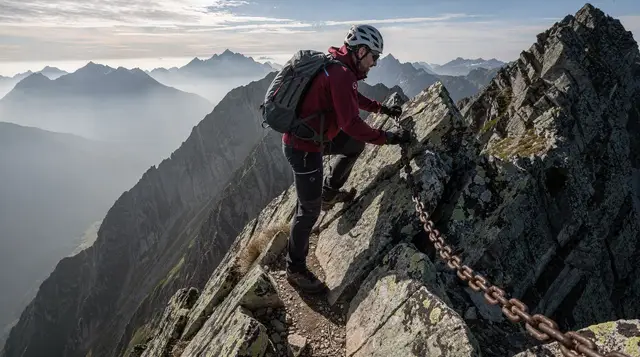
The main natural destination from Kraków. Alpine terrain, glacial lakes, limestone valleys, cable cars, and thermal baths in a single area. The range runs along the Polish-Slovak border; the Polish sector is 175 km² of national park with excellent trail infrastructure.
Key sites: Morskie Oko (glacial lake at 1,395 m), Dolina Kościeliska (Western Tatras valley walk), Kasprowy Wierch (summit cable car at 1,987 m). Full Tatra overview: Tatra Mountains hiking guide.
Dunajec Gorge and Pieniny (120–130 km south)
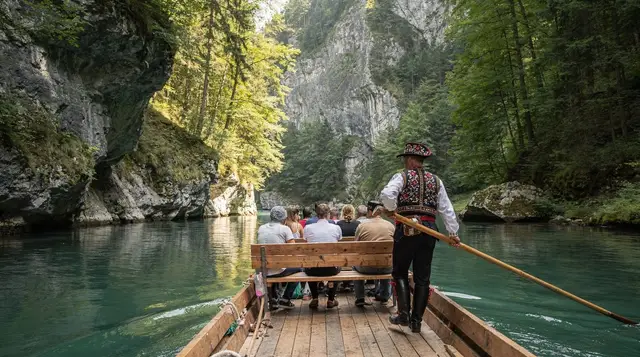
The Pieniny Mountains border Poland and Slovakia along the Dunajec River, which cuts a limestone canyon of extraordinary beauty. The traditional wooden raft journey through the gorge is one of the most distinctive natural experiences in the region — 18 km, 2.5 hours on the water. Season: April–October.
Full details: Dunajec gorge rafting guide and Dunajec Gorge destination page.
Thermal springs: Zakopane area (100–120 km south)
The Podhale region sits above rich geothermal water sources. Chochołowskie Termy and Aqua Park Zakopane offer outdoor thermal pools with Tatra mountain views — among the most scenic spa experiences in Central Europe.
Experiences by type
Alpine and high mountain
What: True alpine terrain — glacial lakes, granite peaks, cable cars, technical hiking routes. Where: Tatra Mountains, Zakopane. Best season: June–September for hiking; December–March for skiing and thermal baths. Difficulty: Easy to very difficult depending on route chosen.
The Tatra Mountains full-day hiking tour from Kraków is the best single introduction to the area.
River gorge and rafting
What: Traditional wooden raft through a spectacular limestone canyon on the Polish-Slovak border. Where: Dunajec Gorge, Pieniny Mountains. Best season: May–September. Difficulty: Physically easy (you sit on the raft); logistically complex to organise independently.
The Dunajec River rafting day trip from Kraków handles all logistics.
Karst landscapes and caves
What: Limestone karst formations — valleys, caves, rock pillars, castle ruins. Where: Ojców National Park (25 km), Jaskinia Mroźna cave in the Tatras, Pieskowa Skała Castle. Best season: April–October (caves open). Difficulty: Easy.
The Ojców National Park and Pieskowa Skała Castle tour from Kraków covers the key karst sites.
Thermal and water relaxation
What: Outdoor geothermal pools with mountain views. Where: Chochołowskie Termy (near Zakopane), Aqua Park Zakopane. Best season: Year-round (best in winter for atmosphere). Difficulty: None — just arrive and soak.
Wildlife watching
What: Chamois, marmots, brown bears, eagle owls, bats. Where: Tatra National Park (chamois, marmots), Ojców National Park (bats, raptors), Tatras generally (bears). Best season: June–September for most species; April–May for migratory birds; winter for tracking in snow.
Seasonal planner: what to visit when
January–February
Tatras skiing (Kasprowy Wierch, Nosal, Harenda). Thermal baths at Chochołowskie Termy — best winter atmosphere. Ojców valley walks in frost and snow (cave may be closed). Snow-shoe hiking in Tatra valleys with guide.
March–April
Spring thaw in the Tatras — some trails clear but high routes still snowy. April is crocus season at Ojców (Chełmowa Góra) and Dolina Chochołowska — one of the finest wildflower spectacles near Kraków. Dunajec rafting season opens in April; river runs fast with snowmelt.
May
The Tatras are emerging from winter. Valley trails (Kościeliska, Chochołowska) clear first; high trails (Morskie Oko path) usually clear by mid-May but check conditions. Orchids begin in Ojców. Excellent month for hiking — minimal crowds, fresh vegetation, cool temperatures.
June–August
Full hiking season. All trails open. Thermal baths busy. Dunajec at peak season. July–August = peak crowds at Morskie Oko and Kasprowy Wierch — arrive early or go midweek. Eagle’s Nests Trail (Ojców–Częstochowa) pleasant in the long summer days.
September–October
The finest season for most natural sites near Kraków. Lower visitor numbers. Autumn colours in forest valleys. Stable weather (September especially). Thermal baths enjoyable in cool autumn air. All sites remain open through October. October is peak foliage in Dolina Kościeliska and Dolina Chochołowska.
November–December
Most Tatra trails remain hikeable in valley floors with appropriate footwear. Cave and castle sites reduce hours or close by November. Ski season begins at Kasprowy Wierch from late November in a good year. Advent and Christmas markets in Zakopane add appeal to the mountain town visit.
Multi-site itineraries
2-day Kraków nature break
Day 1: Morskie Oko and Zakopane — early start, lake hike, afternoon Zakopane town and Gubałówka funicular. Day 2: Dolina Kościeliska morning, Chochołowskie thermal baths afternoon.
1-day highlights (forced choice)
Only one day for nature: Morskie Oko + Zakopane is the most iconic single day. Strong second: Dunajec rafting + Zakopane for a combination of river and mountain.
Family-focused day
Ojców National Park (short drive, castle, cave, easy valley walk, child-friendly) is the best family single-day nature option for visitors based in Kraków. Tatras with children need careful route selection — see Tatra best easy hikes guide.
Getting around: transport from Kraków
All natural sites near Kraków can be reached by car (the most flexible option) or by a combination of public transport and taxi. Key transport times:
| Destination | Distance | Driving time | Public transport |
|---|---|---|---|
| Ojców National Park | 25 km | 35–45 min | Bus 804, ~1 hour |
| Wieliczka Salt Mine | 14 km | 25–30 min | Tram/minibus, ~30 min |
| Zakopane | 100 km | 1h45–2h30 | PKS bus, ~2 hours |
| Morskie Oko (Palenica) | 120 km | 2 hours | Bus + local bus |
| Dunajec Kąty landing | 125 km | 2 hours | Bus + connections, 3h |
| Chochołowskie Termy | 115 km | 2h15 | Bus + taxi |
For any destination beyond Ojców, a car or guided tour significantly reduces complexity and travel time. Tour options referenced throughout this guide — particularly the Tatra hiking and Dunajec rafting tours — are worth considering if public transport logistics seem daunting.
Packing for a Kraków nature day trip
What you need shifts a lot depending on which of the sites above you’re aiming for, but a few essentials cover most of them. Sturdy footwear is non-negotiable for anything in the Tatras or Ojców — trainers work for Ojców’s gentle valley paths but are marginal on the rockier sections near Morskie Oko. Layers matter everywhere: the temperature at 1,400 m in the Tatras can run 10–12°C cooler than Kraków even in high summer, and mountain weather shifts fast. For Wieliczka, bring a light jumper regardless of season — the mine stays a constant 14–16°C year-round. If thermal baths are on the itinerary, pack a swimsuit and a spare set of dry clothes for the journey home. Cash in small notes covers trail-side vendors (oscypek stalls, park entry kiosks) that don’t always take cards.
Frequently asked questions about nature near Kraków
What’s the most dramatic natural landscape within 2 hours of Kraków?
The Tatra Mountains — specifically the Morskie Oko lake in its granite cirque and the Kasprowy Wierch ridge — are the most dramatically alpine. The Dunajec Gorge provides the most impressive river landscape. Both require approximately 2 hours of travel from Kraków.
Are there good nature options for half a day from Kraków?
Yes: Ojców National Park (25 km north) is excellent for a half-day — valley walk, castle, and cave all within the park. Zakrzówek reservoir within Kraków city is good for a shorter nature break. Wieliczka Salt Mine is 30 minutes away and completely weather-independent.
What’s the easiest natural day trip from Kraków for non-hikers?
Ojców National Park (easy valley trail, cave, castle — no serious hiking required), or Zakopane with the Gubałówka funicular and thermal baths (no hiking, panoramic views, hot spring soaking). For something truly effortless, the Kasprowy Wierch cable car takes you to 1,987 m in 20 minutes.
Is there good birdwatching near Kraków?
Ojców National Park is excellent for forest birds including eagle owl, kingfisher, and woodland raptors. The Tatra National Park is important for wallcreeper, alpine chough, and occasionally golden eagle. The Beskid Wyspowy and Babia Góra area (90 km southwest) is the best raptor watching site in southern Poland.
Can I combine a nature day trip with Auschwitz or Wieliczka?
Wieliczka pairs easily with a nature day since it’s only 14 km east and weather-independent — a common combination is a morning at Ojców followed by an afternoon at Wieliczka, though this makes for a long day. Auschwitz is best kept separate; it’s an emotionally demanding half-day visit in its own right and doesn’t combine well with a nature-focused itinerary logistically or emotionally.
Which of these sites works best if I don’t want to hike at all?
Wieliczka Salt Mine requires only a guided walk through level passages — no hiking fitness needed. Zakrzówek Reservoir is a short walk from parking. The Kasprowy Wierch cable car and the Gubałówka funicular both deliver mountain views without any climbing. Chochołowskie thermal baths require no physical effort beyond soaking.
Top experiences
Bookable activities with verified prices and instant confirmation on GetYourGuide.