Kraków in autumn: golden light, fewer crowds, and the Sacrum Profanum festival
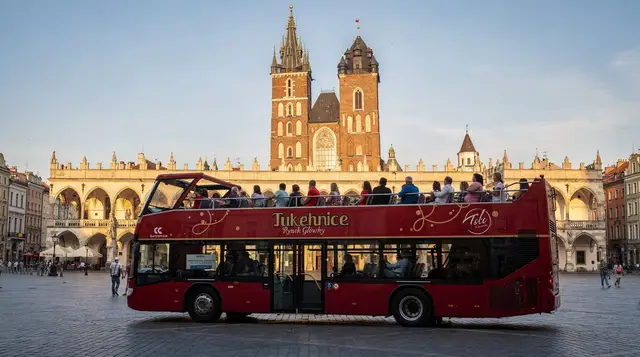
Krakow: hop-on hop-off bus tour with audio guide
Duration: 72h
What is Kraków like in autumn and what are the highlights?
Autumn (September–November) brings some of Kraków's best conditions: cooling temperatures (10–18°C in September, 5–12°C in October), beautiful foliage in the Planty and Tatra foothills, and the Sacrum Profanum contemporary music festival in September. Crowds thin dramatically after late September. November is grey and cold but very cheap. September–October is the second-best season after spring for a balanced Kraków trip.
| Where | Planty park, Wawel gardens, Kopiec Kościuszki for foliage |
| Cost | Hotels 20–50% below summer rates, especially in November |
| Time needed | A standard 3–4 day trip works well in any autumn month |
| Getting there | Same access as year-round; trams heated, Tatra trails start closing late Oct |
| Best time | Mid-September to mid-October for the best balance of colour and weather |
Autumn in Kraków: the underrated second season
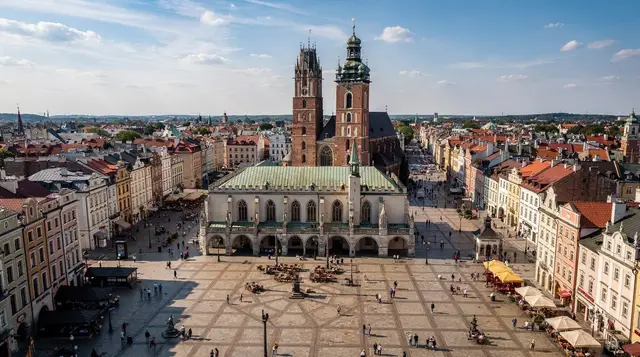
If spring is Kraków’s best-kept seasonal secret, autumn is its second. The tourist industry has become better at promoting September as “shoulder season with all the summer attractions still open” — which is accurate — but the city’s autumn character goes deeper than crowd mathematics. Kraków in October is genuinely beautiful: the horse-chestnut and lime trees of the Planty turn amber and gold, the light on Wawel Hill is warm and low-angled, and the street cafes cling to outdoor seating as long as the weather holds.
September specifically delivers something rare: the Sacrum Profanum contemporary music festival — one of the most serious festivals of contemporary classical music in Central Europe — alongside the final weeks of summer opening hours for Tatra Mountain trails, Morskie Oko, and Dunajec River rafting. The combination makes September the peak of autumn and arguably as good as May for a balanced visit.
November is the honest difficult month: grey, wet, cold (0–8°C), and stripped of festive events. But it compensates in price — January levels — and museum solitude.
September: the golden transition
September in Kraków is warm enough to feel like a continuation of summer (18–22°C in the first two weeks, easing to 13–17°C by month’s end) but without July’s oppressive heat or its crowds. The summer tour groups have thinned. Wawel Castle is bookable 1–3 days ahead rather than the week-plus required in July. The restaurants in Kazimierz are still bustling but no longer overwhelmed.
The major cultural event of September is Sacrum Profanum — a festival of contemporary music held across Kraków’s unusual performance spaces: industrial halls, brutalist sports arenas, deconsecrated churches, and the underground Rynek museum. The festival has been running since 2001 and has established itself as one of Poland’s most distinctive cultural events, programming works by living composers alongside 20th-century repertoire (Lutosławski, Ligeti, Xenakis) performed by top European ensembles. In recent editions, ensembles such as Ensemble Intercontemporain and Klangforum Wien have performed, alongside commissions from Polish composers.
Tickets for Sacrum Profanum events range from 30–120 PLN (≈€7–29) depending on the venue and ensemble. The festival is scheduled for September each year but exact dates shift; check sacrum-profanum.com from spring onwards for the 2026 programme. Many events are in venues not typically accessible to visitors — the opportunity to hear contemporary music inside the Nowa Huta Steelworks (Huta ArcelorMittal) or a Cold War-era bunker is genuinely unique.
September day trips still have full options:
- Morskie Oko (closes to comfortable casual hiking by early November): September is peak season for the lake’s scenery — the first autumn colours appearing in the valley, the water brilliant blue, crowds manageable compared to August. The Morskie Oko lake tour from Kraków includes transport; book 3–5 days ahead.
- Dunajec River rafting: Closes in late October; September conditions are excellent — the river at a comfortable level, the Pieniny limestone gorge walls glowing in autumn light.
- Tatra Mountain high trails: Full access through September; weather is generally stable with cool mornings and warm afternoons. The mountain refuges (schroniska) begin closing progressively from late October.
October: peak foliage and indoor pleasures
October is a divided month. The first two weeks often bring the best autumn colour — the Planty park, Wawel Hill’s garden terraces, and the beech forests of the Tatra foothills glow amber and red under low golden light. Temperatures in early October are 10–14°C; by month’s end they drop to 5–10°C and the first frost may appear.
Foliage walks in October:
- The Planty ring (2 km, free, always open): The lime trees and horse-chestnuts reach their peak autumn colour in mid-October. The walk from the Barbican south along the western Planty to Wawel Hill and back provides a complete tour of the medieval city walls in autumn dress.
- Wawel Hill gardens: The terraced gardens on the south and west sides of Wawel Hill are open and uncrowded in October. The view down to the Vistula is particularly beautiful in late afternoon autumn light.
- Kopiec Kościuszki (Kościuszko Mound): A 20-minute walk from the Old Town through the Zwierzyniec neighbourhood brings you to this 19th-century mound topped by a Romantic-era chapel. The 360-degree view over Kraków — city, Tatras visible on clear days, autumn foliage extending to the horizon — is one of the finest panoramas in the city. Entry to the mound grounds: free; chapel and small museum: 10 PLN (≈€2.4).
October cultural programming:
- Unsound festival (exact dates vary, typically early October): An internationally recognised festival of electronic, experimental, and avant-garde music, held since 2003. Unsound has become one of the key events on the global electronic music circuit, programming artists from Actress to Holly Herndon to William Basinski. It is held across clubs, venues, and unusual spaces in the city. Tickets 40–80 PLN (≈€10–19) per night; passes available. Check unsoundfestival.com.
- Kraków Book Fair (usually late October/early November at the ICE Kraków Congress Centre): Poland’s major publishing event is large and public-facing; interesting for visitors who read Polish or who follow Central European literature. Many authors give public lectures in English.
Museum access in October is still better than summer but the crowds are returning for autumn breaks. The Schindler Factory and Czartoryski Museum are bookable 2–5 days ahead. The Rynek Underground Museum has shorter queues than July but still benefits from online pre-booking.
October food and market culture
The autumn food market at Stary Kleparz (ul. Basztowa, near the Barbican) peaks in October with local apple harvests from the Sandomierz Valley, wild mushrooms (grzyby: borowiki, kurki, podgrzybki) foraged in the Beskidy forests, and root vegetables from Małopolska farms. This is the best time to shop at a Kraków open-air market for genuinely seasonal local produce.
Wild mushroom dishes appear on autumn menus across the city: mushroom risotto, zupa grzybowa (wild mushroom soup), bigos (hunter’s stew with sauerkraut, game, and mushrooms — the autumn and winter version is richer than summer iterations). Restauracja Polakowski (ul. Miodowa 39, Kazimierz) does one of the better traditional bigosy in the city; a portion costs 28–35 PLN (≈€7–8).
Oscypek from the Zakopane market is at its best in autumn — the highland cheese-making season peaks in summer and the smoked rounds mature through autumn. The górale (highlander) stalls on Krupówki Street in Zakopane, or at Kraków’s various outdoor markets, sell the real PDO-protected article.
November: the honest cold shoulder
November is Kraków’s most honest difficult month. The Planty is bare, days are grey and short (sunset by 16:00 by month’s end), temperatures hover at 0–8°C, and the pre-Christmas market energy hasn’t yet arrived (it typically begins 28 November).
What November offers:
- Minimum prices. A four-star hotel that charges 600 PLN (≈€143) in August may drop to 280–320 PLN (≈€67–76) in early November.
- Empty museums. A weekday November visit to the Rynek Underground Museum or Czartoryski Museum is as close to a private viewing as you will get without a curator arrangement.
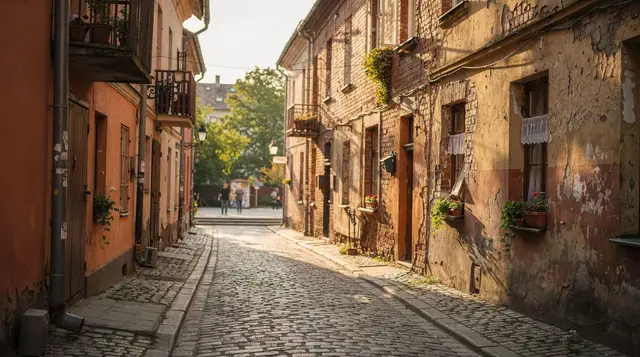
- Authentic daily life. Without tourist groups dominating the centre, Kraków’s residential character becomes visible: the milk bars, the Stary Kleparz market, the Planty’s dog walkers and student cyclists.
Zaduszki (All Souls’ Day, 2 November): A major observance in Catholic Poland. Kraków’s cemeteries — particularly Rakowicki Cemetery (ul. Rakowicka, the city’s main historic cemetery) and the military cemetery on Na Skałce hill — are filled with candles and flowers. The illuminated cemeteries at dusk on 1–2 November are a genuine, moving experience and one of the most distinctly Polish things a visitor can witness.
St. Andrew’s Night (Andrzejki, 29–30 November): The night before the December calendar, Polish tradition holds fortune-telling parties: wax is melted and poured through a key into cold water; the shadow cast reveals the future. More practically, the bars and clubs around Kazimierz and the Old Town hold Andrzejki parties. For a visitor, it is an excuse for a lively Tuesday night out.
The Christmas market opens at the end of November — see our full guide at /guides/krakow-christmas-markets-guide/.
Autumn day trips from Kraków
Zakopane in autumn transforms. The cable car to Kasprowy Wierch typically stops operating for seasonal maintenance in late October or early November (check kolejkanakasprowy.pl). Before it closes, September offers excellent hiking conditions on the high trails. October brings the beech forest colour on Gubałówka — the funicular to the ridge above Zakopane provides views of the Tatras and the valley with autumn foliage — a genuinely beautiful combination.
Ojców National Park in autumn: The Prądnik River valley’s limestone walls, crowned with the rock formations Maczuga Herkulesa (Hercules’ Club) and the ruins of Ojców Castle, are particularly photogenic in October with amber beeches and oaks. The park is uncrowded and the Pieskowa Skała Castle (a Renaissance manor house now housing a museum) has short queues. See /destinations/ojcow-national-park/.
Wieliczka Salt Mine in autumn is at optimal visiting conditions: the 14°C constant underground temperature feels refreshing after a cold October day rather than chilly. October–November queues are short; book 2–5 days ahead. See /destinations/wieliczka/.
Getting around Kraków in autumn
Autumn weather is unpredictable. Carry a compact waterproof jacket at all times — October Kraków can switch between beautiful sun and driving rain within a single afternoon. The tram network is reliable; line 1, 2, 6, and 13 cover the Old Town periphery, and the fleet is modern and heated.
For a comfortable orientation to the city at any time of year, the hop-on hop-off bus with audio guide covers the full city circuit including Old Town, Kazimierz, Wawel Hill, and Nowa Huta. In autumn, it provides a dry and heated way to survey the city before deciding where to explore on foot. The Old Town guided walking tour is the classic 2-hour orientation; in September and early October, the weather makes it ideal.
Autumn month by month
| Month | Temp | Crowds | Highlight |
|---|---|---|---|
| September | 13–22°C | Moderate, thinning fast after mid-month | Sacrum Profanum, last full day-trip season |
| October | 5–14°C | Low, rising slightly for autumn breaks | Peak foliage, Unsound festival |
| November | 0–8°C | Lowest of the year until Christmas markets open | Zaduszki, Andrzejki, minimum prices |
What to pack and what to skip in autumn
A single autumn packing list doesn’t work across September to November — the difference between the two ends of the season is closer to two seasons than one. September needs light layers and one jacket for cool evenings; by November you need a proper winter coat, hat, and gloves. Across the whole season, a compact umbrella or waterproof shell earns its space, since Kraków’s autumn weather can flip from sun to rain within an afternoon. Skip fashion shoes with flat, smooth soles — the Old Town’s cobblestones get genuinely slippery once the leaves are wet, and this is one of the more common ways visitors have an unplanned fall.
If you’re deciding between autumn and the other shoulder season, spring, the honest comparison is in the Kraków in spring guide — both offer similar crowd and price advantages, but autumn’s mushroom season and foliage give it a distinct character spring doesn’t match.
Frequently asked questions about Kraków in autumn
When does Sacrum Profanum take place in 2026?
Exact 2026 dates have not been announced as of mid-2026. The festival consistently takes place in September; check sacrum-profanum.com from spring 2026. Based on recent editions, expect mid-to-late September, running approximately 5–7 days.
Is Morskie Oko accessible in October?
Yes — the trail from Palenica Białczańska to Morskie Oko (8 km, 2–2.5 hours each way) is accessible through October. From mid-October the surrounding high peaks may have early snow and weather deteriorates faster; visit earlier in October for the best conditions. November: the trail is passable but increasingly wintry; check conditions.
Are the Tatra Mountain high trails open in autumn?
High trails above 2,000 m start closing progressively in late October. The main ridgeline trail (Orla Perć) is typically closed by November due to ice risk. September is the last fully reliable month for high-altitude hiking; October is possible for experienced hikers with the right footwear. Always check TOPR (topr.pl) before departing.
What should I wear in Kraków in autumn?
September: Light jacket, layers. October: Medium-weight waterproof jacket, jumper underneath; evenings require a proper coat by month’s end. November: Winter coat, hat, scarf. The Old Town’s cobblestones become slippery in wet autumn conditions — wear shoes with grip, not flat-soled fashion shoes.
Is the Unsound festival worth planning a trip around?
If you follow electronic or experimental music, yes — Unsound has built a genuine international reputation and the Kraków edition (the original, before it spawned spinoffs in other cities) has a distinct character shaped by the city’s mix of communist-era venues and historic spaces. Many attendees plan their only Kraków visit around the festival. Tickets sell out for headline nights; buy in advance.
Is autumn or spring better for a first visit to Kraków?
Both offer similar advantages — mild weather, thinner crowds, lower prices than summer. September edges ahead for cultural programming (Sacrum Profanum, Unsound) and mushroom-season food; May edges ahead for longer daylight and blooming greenery. See the Kraków in spring guide for the direct comparison.
What should I do in Kraków if it rains in autumn?
Autumn is a good season for museum-heavy days — the Rynek Underground Museum, Wieliczka Salt Mine (a constant 14°C regardless of weather), and Schindler’s Factory are all excellent wet-weather options. A hop-on hop-off bus with audio guide also gives a dry overview of the city on a washout day.
Top experiences
Bookable activities with verified prices and instant confirmation on GetYourGuide.