Kraków overtourism and responsible travel: what visitors should know
Krakow: Kazimierz Jewish Quarter walking tour
Duration: 2h
Is Kraków suffering from overtourism, and how can I visit responsibly?
Yes, in specific ways — the Old Town and Kazimierz experience heavy visitor concentration, housing costs have risen sharply, and the stag-party economy creates genuine friction with residents. Responsible visiting means staying in city-centre hotels rather than short-term rentals, eating at restaurants that serve locals as well as tourists, visiting in shoulder season where possible, and spreading time beyond the Rynek.
| Scale | ~14–15 million visitors/year, ~800,000 residents |
| Pressure points | Rynek Główny, Kazimierz, Auschwitz-Birkenau |
| Best time to ease your footprint | April–May, September–October |
| Easy fix | Stay in a licensed hotel, eat where locals eat, spread time beyond the Rynek |
| Not required | Avoiding Wawel or the Rynek entirely — timing matters more than avoidance |
Kraków’s tourism scale
Kraków receives approximately 14–15 million visitors annually, making it one of the most-visited cities in Central Europe relative to its permanent population of around 800,000 residents. The tourist-to-resident ratio in the Old Town historic core — a UNESCO-listed area — is one of the highest in Europe during peak summer months.
This is not a neutral fact. It has real consequences for how the city functions, who can afford to live in it, and what kind of experience both visitors and residents have. This guide does not tell you not to come — it tries to give you the information to visit in a way that does less harm and more good.
Where the pressure falls
Overtourism in Kraków is geographically concentrated. The problems cluster in two areas:
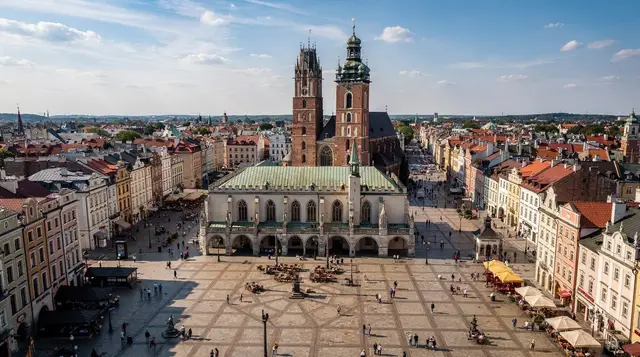
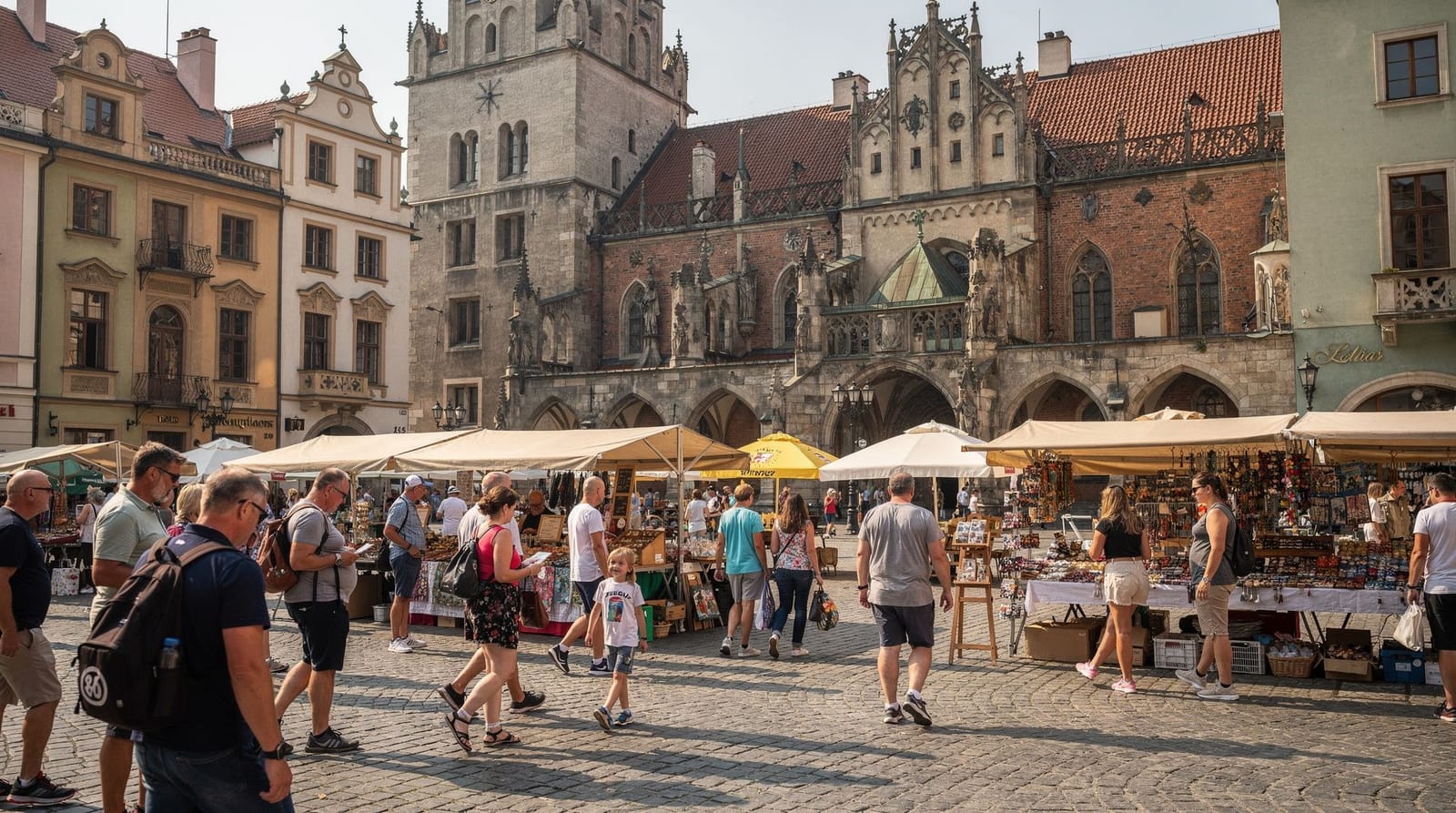
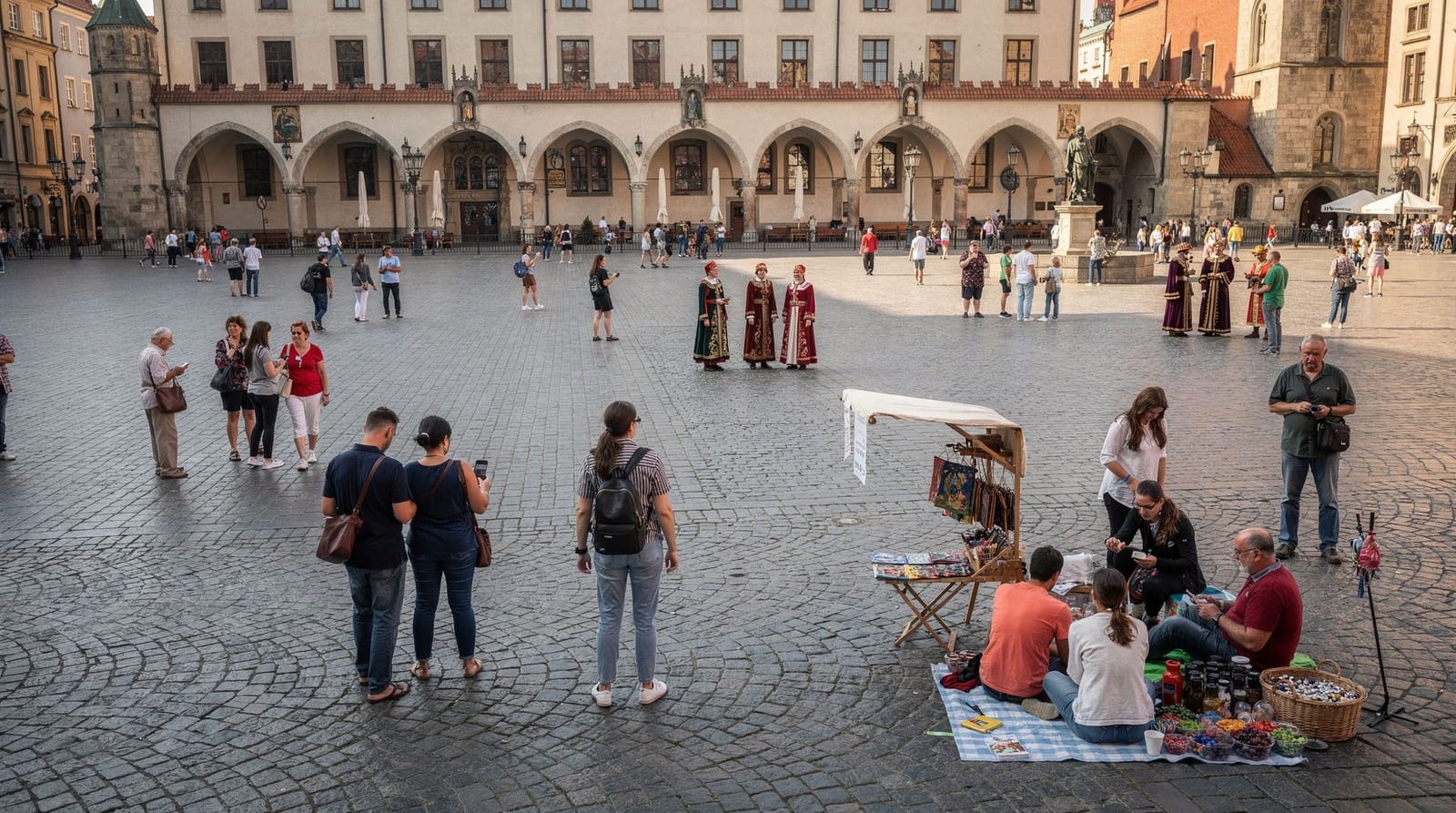
Old Town (Stare Miasto): The 200-metre Rynek Główny and the streets immediately around it receive the bulk of visitor pressure. In July and August, the Rynek is barely navigable at midday. The Sukiennice, Wawel Castle, and the route between them are consistently crowded. Short-term accommodation platforms (Airbnb, Booking.com self-catering) have displaced a significant proportion of residential housing in the Old Town, contributing to rent increases that have pushed long-term residents out.
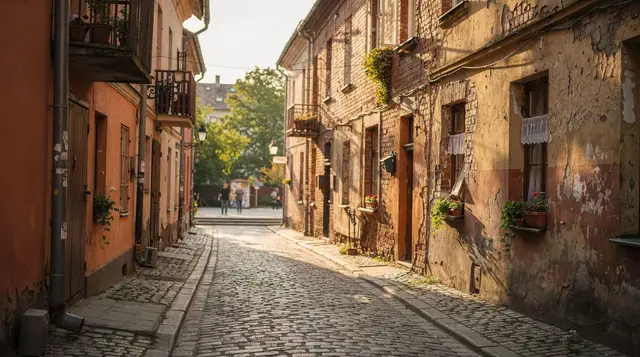
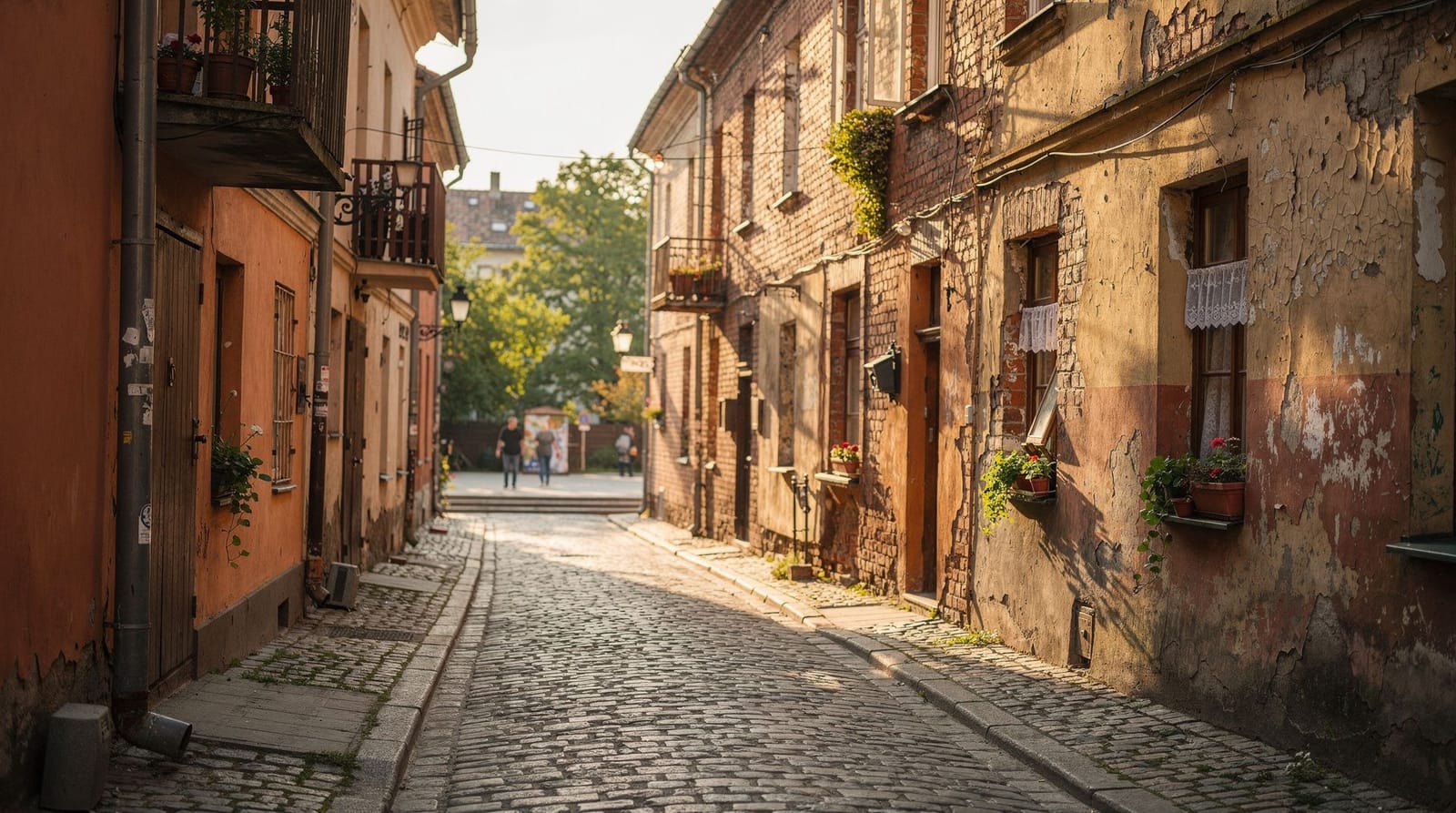
Kazimierz: The historic Jewish quarter has transformed over the past 20 years from a working-class neighbourhood into one of the most photographed areas in Poland. This transformation has cultural benefits (the area’s Jewish heritage receives international attention) and genuine costs (local residents displaced, a cluster of tourist-facing businesses replacing the ordinary commerce that made the neighbourhood liveable).
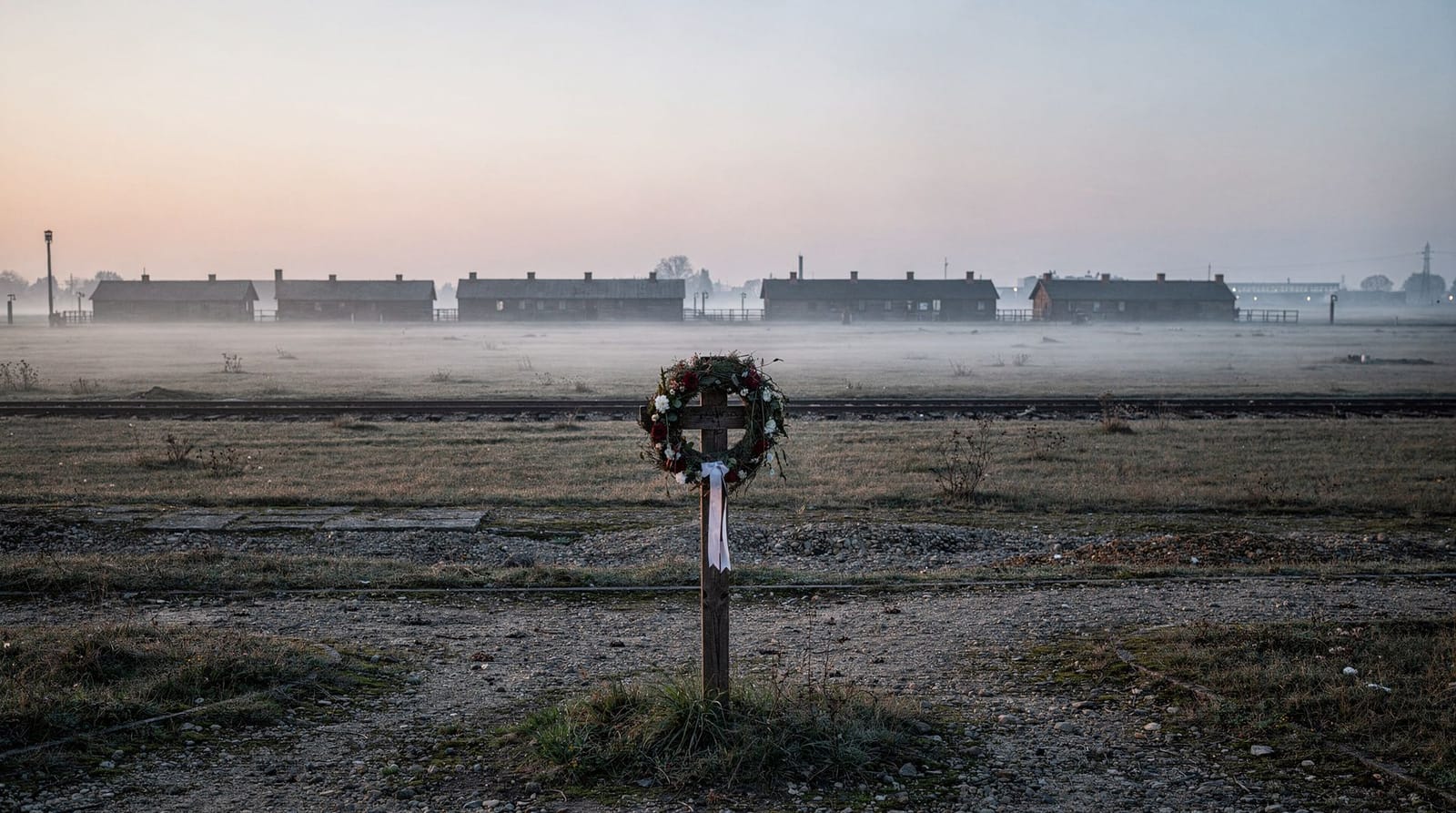
Auschwitz-Birkenau: The Memorial receives over 2 million visitors per year. The physical site — a preserved historical complex — has conservation implications at this volume. The Memorial’s timed-entry system is partly a response to this.
The stag-party economy
Kraków became a major European stag-party destination in the 2000s, driven by cheap flights, low prices (by Western European standards), and the Old Town’s compact layout. The stag-party economy brings revenue — but it also generates a specific set of problems:
- Behaviour in public spaces that other visitors and residents find unpleasant (loud groups at 2 AM, inappropriate dress in the historic centre)
- A cluster of commission-based venues (strip clubs, bars with aggressive pricing models) that have replaced ordinary commerce near the Rynek
- A social atmosphere in certain areas late at night that makes them uncomfortable for residents and many tourist groups
This is not a moral judgment on people who choose to celebrate this way. It is a factual observation about the effect. Many Kraków residents have strong feelings about the stag-party economy; it comes up consistently in conversations about tourism’s impact on the city.
What the honest picture looks like for residents
Housing: Short-term rental platforms have removed an estimated 8,000–12,000 apartments from the long-term rental market in the city centre (figures vary; local housing researchers have studied this). The rent increases in the Old Town and Kazimierz are not directly comparable to cities like Barcelona or Amsterdam — Kraków’s overall housing market is larger — but the concentration in the tourist core is real and tangible.
Noise: The Old Town’s medieval street layout channels sound efficiently. Resident complaints about nighttime noise from tourist groups are consistent across years.
Services: Pharmacies, hardware shops, and everyday service businesses have been replaced by souvenir stalls and tourist restaurants in the Old Town core. The neighbourhood that residents need for daily life has largely moved to Krowodrza, Grzegórzki, or Podgórze.
What responsible visiting actually looks like
Responsible travel is often framed at a high level of abstraction. Here are specific, practical things that make a real difference in Kraków:
Where you stay
Hotels and official accommodation: Hotels pay local taxes, employ local staff at regulated rates, and do not remove residential housing from the market. Staying in a hotel — particularly one that has been operating for years and has ties to the local economy — is more sustainable than a short-term rental in a residential building.
If you use short-term rentals: A property specifically built or licensed for short-term use (a guest house or aparthotel with a proper licence) is better than a regular apartment pulled from the residential market. Check that the property has appropriate licensing.
Where you eat
Restaurants that serve locals alongside tourists operate differently from pure tourist-facing venues. They have accountability to repeat customers, they pay fair prices for local produce, and their staff are often local residents. The milk bars (bar mleczny) throughout the city are the most economically local option. Restaurants in Podgórze, the Grzegórzki market area, and eastern Kazimierz serve more local clientele than the Rynek-adjacent restaurants.
Markets over souvenir shops: Shopping at Hala Targowa (ul. Grzegórzecka) or the Sunday market at Plac Nowy sends money directly to local vendors and producers.
When you visit
April–May and September–October (mid-shoulder season) are the best times for responsible visiting: visitor volumes are 20–30% lower than peak, weather is pleasant (15–22°C), prices are lower, and the experience of the city is substantially better. The stag-party economy is also less active in shoulder season, which matters for the overall atmosphere. See the best time to visit Kraków guide for a full month-by-month breakdown.
Avoiding July–August weekends reduces pressure on the most crowded periods. If your dates are fixed, the practical effect is smaller, but the principle is worth understanding.
| Season | Visitor pressure | Responsible-travel notes |
|---|---|---|
| Winter (Dec–Feb, outside Christmas markets) | Lowest | Best genuine low-footprint window; some venues reduce hours |
| Christmas markets (late Nov–early Jan) | High, concentrated on the Rynek | Spend beyond the market stalls to spread benefit |
| Spring (Mar–May) | Moderate, rising | Good balance of weather and lower crowds |
| Summer (Jun–Aug) | Highest | Book everything ahead; consider early-morning visits to major sites |
| Autumn (Sep–Nov) | Moderate, falling | Similar advantages to spring, arguably the best all-round window |
How long you stay
Multiple shorter visits spread across different neighbourhoods is better than one concentrated visit to the Rynek. Kraków has neighbourhoods — Podgórze, Nowa Huta, Krowodrza, Dębniki — that receive a fraction of Old Town visitor numbers and have genuine character to offer.
Neighbourhoods beyond the tourist core
The heaviest overtourism pressure is in the Old Town and Kazimierz. These are also the most historically significant neighbourhoods — there are good reasons to visit both. But Kraków has other areas worth time, and spending even half a day away from the tourist core noticeably changes how the city feels — less like a checklist, more like a place people actually live in:
Podgórze: The former Jewish ghetto, across the Vistula from Kazimierz. The Eagle Pharmacy, Schindler’s Factory Museum (which is in Podgórze, not Kazimierz as many assume), the Ghetto Heroes Square, and the quiet residential streets of the neighbourhood give a different perspective on the city’s history. See Podgórze.
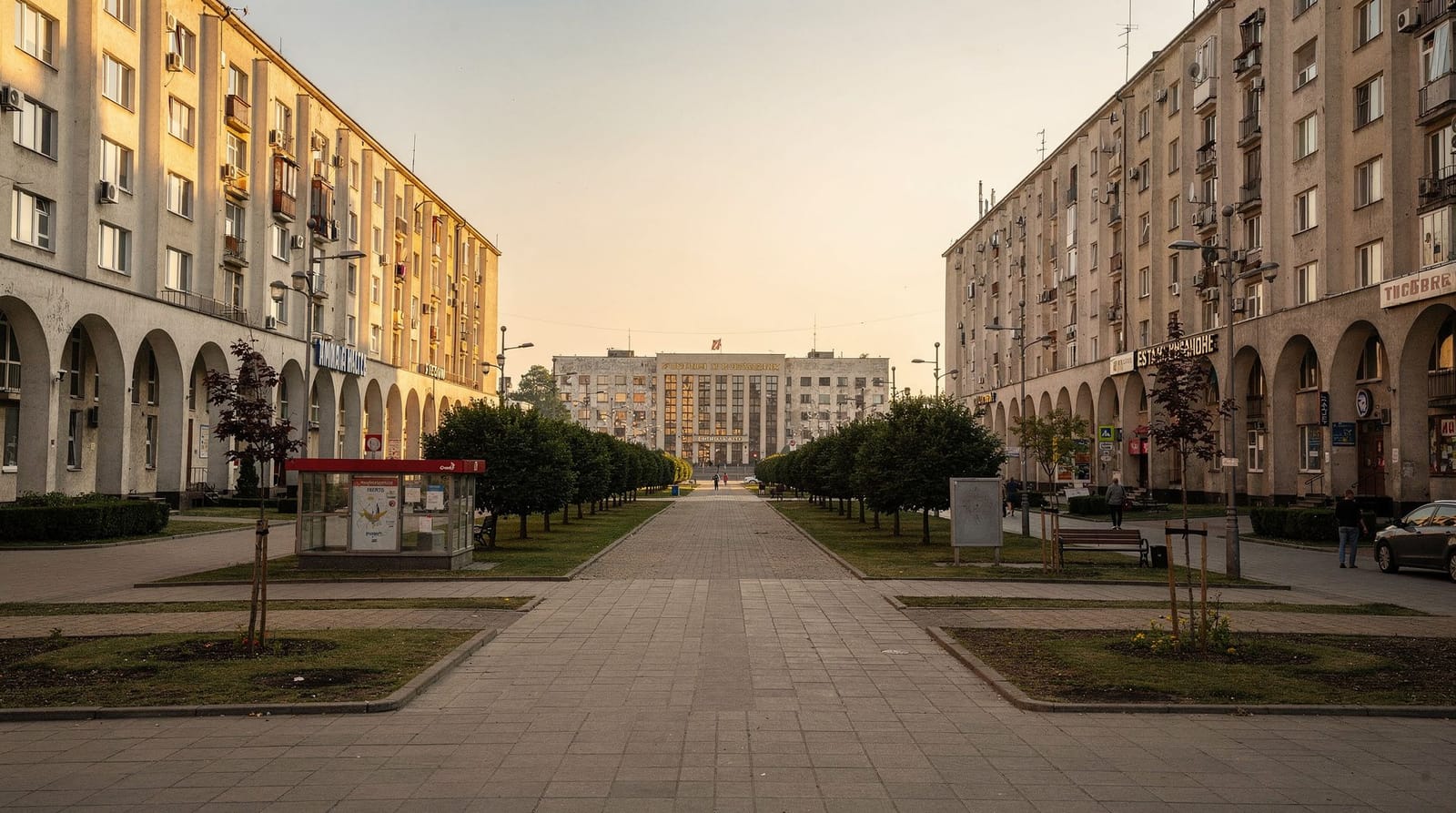
Nowa Huta: The Soviet-era planned district built from 1949 as a socialist utopia counterweight to bourgeois Kraków. The monumental architecture, the Lenin Steelworks (now ArcelorMittal), and the deliberate design of a workers’ city make for fascinating urban history. Tram 4 from the centre. See Nowa Huta.
Kazimierz south (ul. Józefa and the market square): The Jewish heritage sites are concentrated in the north of Kazimierz (Old Jewish Cemetery, Remuh Synagogue). The southern part of Kazimierz — Plac Nowy, ul. Józefa — is more restaurant and cafe focused, serving a mixed local-tourist clientele, and worth spending time in. The Kazimierz Jewish Quarter walking tour covers both the heritage sites and the neighbourhood context.
The Auschwitz visit in this context
Auschwitz-Birkenau’s 2+ million annual visitors create specific overtourism pressures at the Memorial. The site’s timed-entry system, conservation restrictions, and visitor management guidelines exist partly to manage this volume. Visiting in a way that respects these systems — booking in advance, arriving on time, not rushing through to check a bucket-list item — is the minimum expectation.
For a thoughtful approach to what the visit means and how to do it well, see Visiting Auschwitz with respect: ethics, behaviour, and how to prepare.
The specific case of Kazimierz
Kazimierz deserves extended treatment in the overtourism conversation because it is a neighbourhood with particularly complex dynamics.
Before 1939, Kazimierz was home to approximately 65,000 Jewish residents — the centre of Jewish life in Kraków and one of the most important Jewish communities in Poland. The Nazi occupation reduced this population to near zero through deportation and murder. The neighbourhood stood largely empty from the 1940s through the 1970s, its Jewish heritage physically present but culturally absent.
The transformation began in the 1990s, partly through Steven Spielberg’s filming of Schindler’s List in Kazimierz in 1993, partly through the establishment of the Jewish Culture Festival (which grew from a small gathering to Europe’s largest Jewish cultural festival), and partly through independent cultural investment. This is a genuine revival of interest in a heritage that nearly ceased to exist.
The complications: the revival is tourist-driven more than community-driven. The Jewish population of present-day Kraków is small (estimated 200–400 active community members). The restaurants serving traditional Jewish cuisine in Kazimierz are mostly owned by non-Jewish Poles; the Klezmer music performed at Jewish restaurants is often performed by Polish musicians learning a tradition rather than inheriting one. The question of authenticity and appropriation is genuinely complex, and the Memorial Institute of Kazimierz and the Galicia Jewish Museum have both addressed it in their programming.
What responsible visiting looks like in Kazimierz:
- Visit the Galicia Jewish Museum (ul. Dajwór 18) for a nuanced, community-informed account of the history
- Attend the Jewish Culture Festival (last week of June / first week of July) if your timing allows — it brings genuine international Jewish cultural artists to the city
- Eat at restaurants that are transparent about their relationship to the cuisine they serve
- Avoid treating Kazimierz as a theme park for Schindler’s List tourism — the sites have real historical significance beyond the film
- The Kazimierz Jewish Quarter walking tour with a licensed guide who addresses this complexity directly is worth seeking
Day trips and their footprint
Kraków’s day-trip economy is large and has its own overtourism dimensions:
Wieliczka Salt Mine: Receives approximately 1.7 million visitors per year in a mine with physical capacity constraints. The guided-tour-only policy limits the instantaneous visitor density, but the cumulative pressure on the mine infrastructure and the town of Wieliczka is real. Visiting on weekdays rather than weekends and booking timed entry in advance manages your contribution to peak pressure. See Wieliczka Salt Mine.
Auschwitz-Birkenau: As noted above — 2+ million visitors annually at a preserved historical site. The Memorial’s booking system exists specifically to manage this volume.
Zakopane: The mountain resort receives heavy visitor pressure in both summer (hiking) and winter (skiing). The town of Zakopane itself has been substantially commercialised, with the main pedestrian street (ul. Krupówki) dominated by souvenir stalls and tourist restaurants. Hiking into the Tatras, away from the town, is a better experience and distributes pressure more broadly across the national park. See Zakopane: Poland’s mountain capital and gateway to the Tatras and Tatra Mountains: hiking, cable cars, and alpine Poland.
Ojców National Park: Much lower visitor volumes than the above. A more genuinely immersive natural experience precisely because it is less crowded. See Ojców National Park: limestone valleys and Pieskowa Skała Castle.
Bochnia and Tarnów: Both lie within day-trip range and receive a fraction of Wieliczka’s or Kraków’s own visitor numbers, despite Bochnia having its own historic salt mine and Tarnów a genuinely well-preserved old town. For visitors who have already done Wieliczka and want a quieter equivalent, or simply want a day away from any crowd at all, either makes a worthwhile substitute or addition.
How tour operators fit into the responsible travel picture
Choosing an operator carefully is part of responsible visiting:
Local versus international operators: A locally-owned Kraków tour company keeps more of the tour revenue in the local economy than an international operator that channels revenue to headquarters abroad. When comparing similar tours, local operators are generally preferable.
Guide employment conditions: In Kraków’s competitive tour market, some operators use guides on very poor terms (per-tour pay without sick leave or benefits, pressured to sell upgrades). Others employ guides properly. This is difficult to verify from outside, but asking directly — “Do you employ your guides full-time?” — is a reasonable question, and the quality of the answer is informative.
Group size: Smaller-group tours create a qualitatively better experience and put less pressure on historic sites. Tours limited to 8–12 people are better for the site and for the visitor experience than bus-group tours of 40+.
Duration of visit: Short “highlights” tours that rush through major sites in half a day contribute to the superficial, checklist style of visiting that overtourism produces. Choosing longer, more in-depth experiences — including specific neighbourhood walks, food culture tours, and heritage-focused visits — is better for the city and better for you as a visitor.
Choosing between tour formats: a quick comparison
| Format | Local economic benefit | Site pressure | Best for |
|---|---|---|---|
| Small-group guided tour (8–12 people) | High — often independent local guides | Low | Most visitors wanting depth without crowding |
| Large bus-group tour (40+) | Lower — often international operator margins | Higher | Time-constrained visitors prioritising cost |
| Self-guided with public transport | Variable — depends on where you eat/shop | Lowest | Confident independent travellers |
| Private guide | Highest per person | Lowest | Families, those wanting a tailored pace |
None of these formats is wrong, and cost and time constraints are real. But when two options are similarly priced, the smaller-group or locally-guided option is consistently the better choice for both the site and the local economy.
What Kraków’s tourism brings
Balance is important here. Kraków’s tourism economy is real and significant. The city’s museums, restoration projects, cultural events, and infrastructure are funded partly by tourist revenue. The Jewish Culture Festival (July, the largest such festival in Europe) exists in part because of the international interest in Kazimierz’s heritage. Wawel Castle’s ongoing restoration, the maintenance of the Rynek Underground Museum, the preservation of the Galicia Jewish Museum — all depend on visitor revenue.
The people who work in Kraków’s hotels, restaurants, tour agencies, and transport sector — most of whom are Kraków residents — have jobs because tourism functions here. The goal of responsible travel is not to stop visiting but to visit in ways that support these local economies rather than extracting from them.
A guided tour by a local guide supports an independent professional in a way that a guidebook does not. Eating at a milk bar supports a local cafeteria worker. Buying salt crystals at the Wieliczka Mine gift shop supports the mine’s own commercial operation. These are small choices but they add up.
The guided Polish food and culture tour with tastings takes you to locally-owned spots that depend on tourist business done right. The Old Town guided walking tour puts money directly into the hands of a licensed local guide rather than a large international operator.
A practical one-day checklist
If you only have limited time to apply these principles, five actions cover most of the ground:
- Book a hotel or licensed guesthouse rather than a generic short-term rental in a residential building.
- Eat at least one meal at a milk bar or a Podgórze/eastern Kazimierz restaurant instead of the Rynek’s tourist-facing venues.
- Visit Wawel or the Rynek early (before 9am) to experience them without the midday crush.
- Spend at least half a day in a neighbourhood beyond Old Town and Kazimierz — Podgórze or Nowa Huta both work well.
- Book a smaller-group or locally-guided tour rather than a large bus-group “highlights” tour, especially for Auschwitz-Birkenau or Wieliczka.
None of this requires sacrificing the sights that brought you to Kraków — a well-timed guided walking tour still covers the Rynek and Wawel in full; it’s about how and when you experience them.
Frequently asked questions about responsible travel in Kraków
Is Kraków becoming like Venice — unsustainably overcrowded?
Kraków is not at Venice’s level of crisis, but shares some structural similarities: a historic UNESCO centre that is increasingly oriented toward tourism rather than residency, and a short-term rental market that has changed the housing landscape. The Polish government and Kraków city council have discussed but not yet implemented the kind of visitor-management measures seen in Venice, Amsterdam, or Barcelona. The situation is serious but not yet irreversible.
Does avoiding major attractions help with overtourism?
Avoiding Wawel Castle or the Rynek entirely is not necessary and would not significantly reduce overall visitor pressure. What helps more is timing (shoulder season, early morning visits to major sites), spreading spending to local businesses beyond the tourist core, and staying in appropriate accommodation. The concentration of visitors, not the total number, is the primary problem.
Are there specific practices the city asks visitors to avoid?
Kraków’s city council has issued guidelines around public behaviour in the Old Town, particularly regarding nighttime noise and alcohol consumption in public spaces. Large stag-party groups engaging in “pub crawl” behaviour on Rynek Główny at 2 AM is a specific and recurring friction point. Being aware of this — and behaving accordingly — is both respectful and practically sensible (Polish police do enforce public order rules).
Is Kraków cheaper than Western European cities?
Yes, significantly. In 2026: meal at a milk bar, 20–35 PLN (≈ €5–8); decent restaurant meal, 50–80 PLN per person (≈ €12–19); beer in a bar, 12–18 PLN; tram ticket, 4–8 PLN depending on duration. The cost advantage over comparable Western European cities (Prague, Vienna, Warsaw) is still meaningful even after recent inflation. This price difference is partly why the city attracts budget travellers and stag parties; it is also why you can eat well and stay comfortably without spending large amounts.
What is the best way to support local businesses in Kraków?
Eat at milk bars and restaurants with local clientele. Buy at Hala Targowa and Plac Nowy markets rather than Rynek souvenir stalls. Book walking tours with independent local guides. Stay at locally-owned accommodation where you can determine it. Tip generously (10–15%) at restaurants where service people are local residents doing seasonal work.
Top experiences
Bookable activities with verified prices and instant confirmation on GetYourGuide.