Dragon hunting with kids in Kraków
The fire-breathing statue that started it all
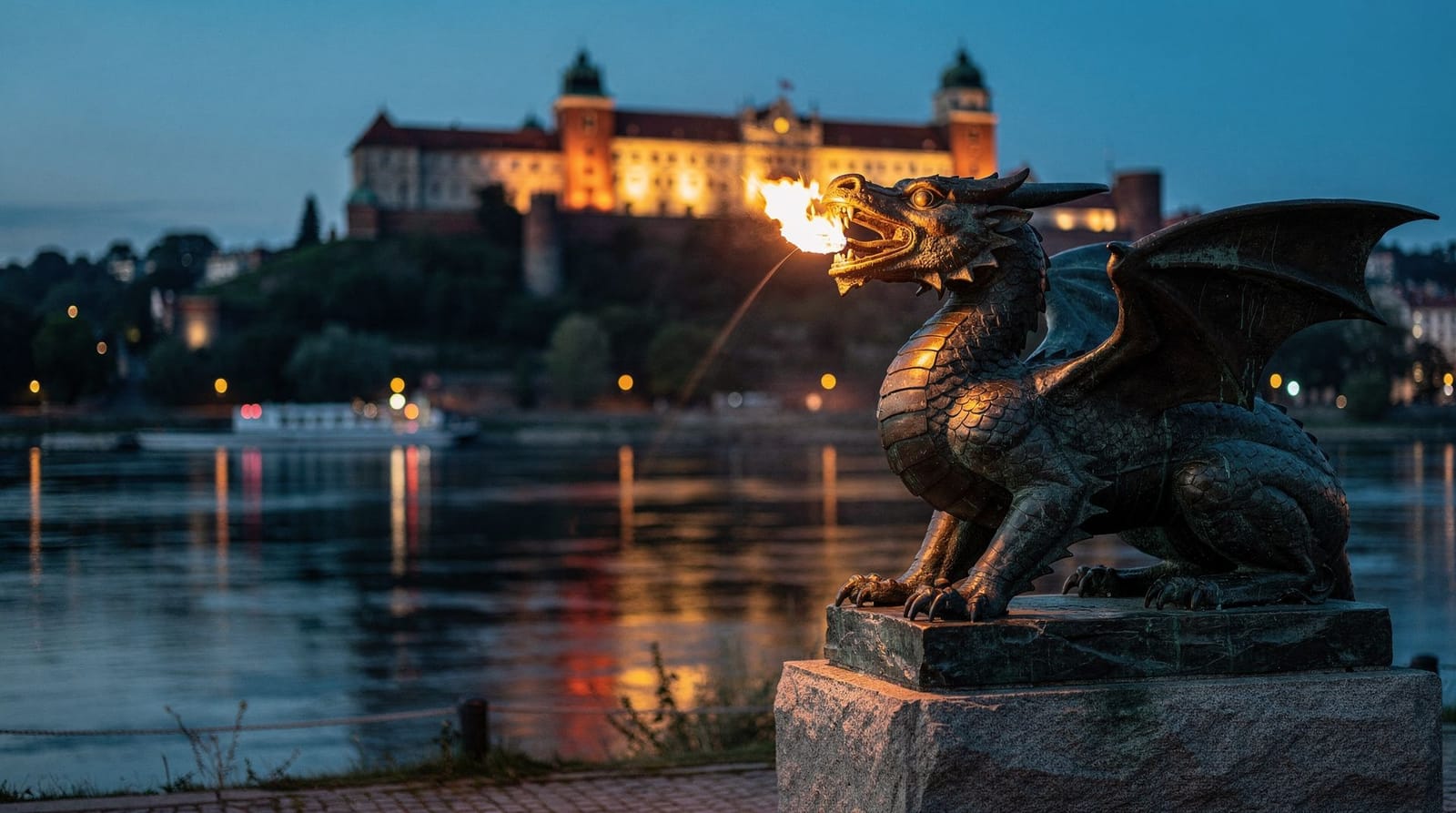
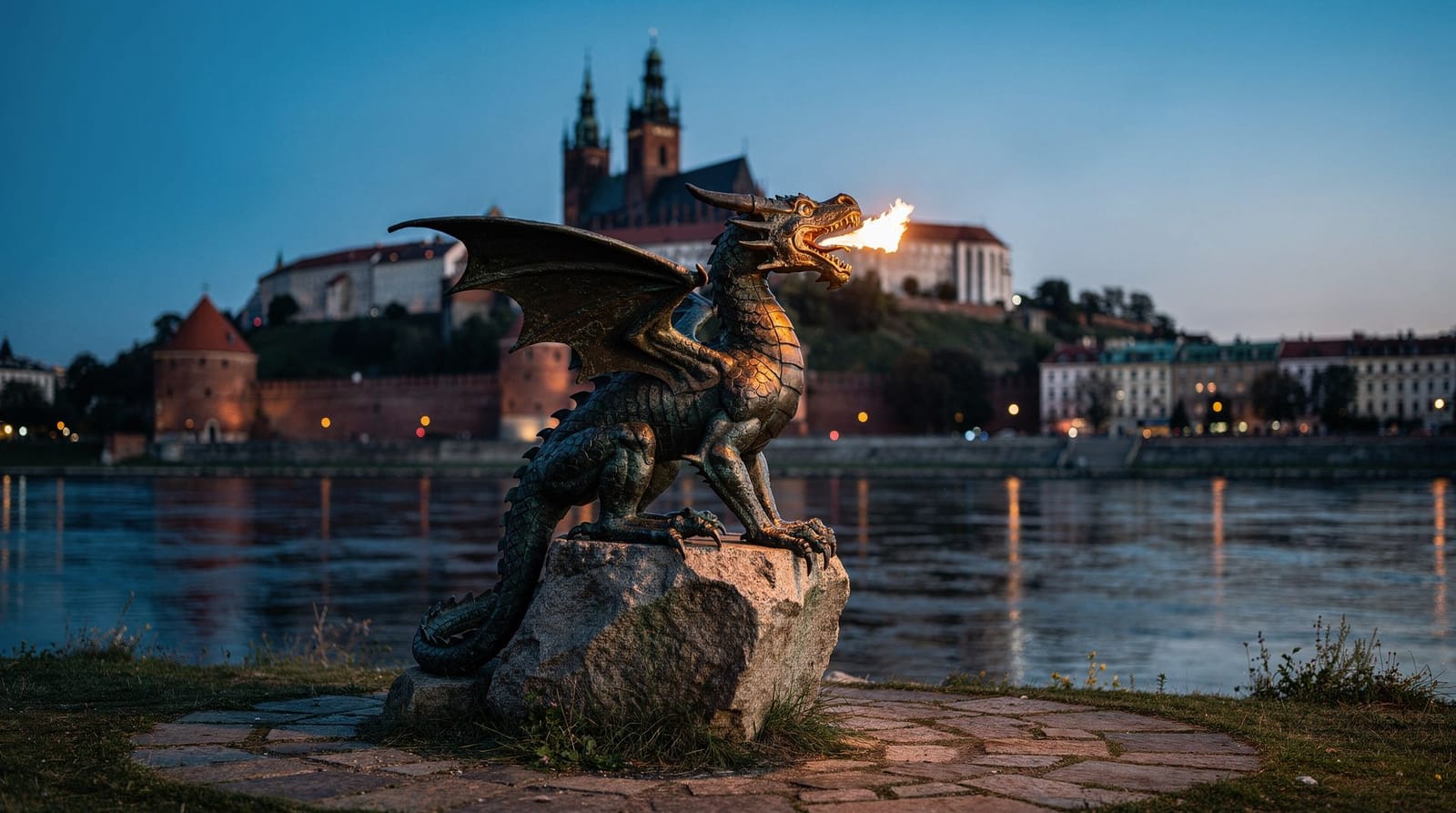
My daughter was six when she first saw it — a metal dragon crouched at the foot of Wawel Hill, green and scaled and utterly convincing, even before it opened its mouth and spat a column of actual flame into the Vistula-side air. She screamed, then laughed, then immediately demanded to go again. That evening she told anyone who would listen that she had survived a dragon attack in Poland.
That is, roughly, how a family trip to Kraków turns into something a child actually remembers.
The statue stands at the entrance to the Smocza Jama — the Dragon’s Den — on the riverbank side of Wawel Hill. It fires every few minutes (more often when someone texts the attached phone number, a detail that delights older kids immensely). It costs nothing to stand and watch. But the real adventure, the one worth planning your morning around, involves going inside.
| Where | Base of Wawel Hill, riverside entrance |
| Cost | 15 PLN per adult for the cave (reduced 10 PLN) |
| Time needed | 20-30 minutes for the cave; a half-day for the full dragon route |
| Open | Seasonal; closed 1 November to 31 December |
| Best age | Roughly 4 and up; younger kids may find the sounds startling |
What the legend actually says
Before you drag children through a cave, it helps to arm them with a story. Kraków’s dragon legend is one of the oldest in Poland, and it comes in several versions — the guides at Wawel Castle will tell you the official one, but here is the condensed version for the queue.
King Krak ruled the land, and beneath his hill lived Smok Wawelski, a dragon with an appetite for livestock and, depending on the teller, young women. The king’s knights failed one by one. Eventually a clever cobbler’s apprentice named Krakus (in some versions) stuffed a sheep carcass with sulphur and left it outside the cave. The dragon ate it, grew desperately thirsty, drank so much Vistula water that it exploded, and the city was saved. The cobbler won the princess and presumably retirement.
Children aged five and up tend to find the sulphur-stuffed-sheep part extremely funny. Lean into it.
Inside the Smocza Jama
The Dragon’s Den is a limestone cave that runs about 270 metres through the base of Wawel Hill. Entry costs 15 PLN (€3.55) for adults (reduced 10 PLN), and it is genuinely accessible — the path is paved, reasonably lit, and stroller-friendly in most sections, though you will want to carry a baby carrier for the narrower bits.
The cave is not particularly dramatic as caves go. There are no stalactites to speak of, no underground lakes. What it has is atmosphere: the limestone walls close in at certain points, the air is noticeably cooler, and the recorded dragon sounds played at intervals make younger children grip your hand and older ones grin with theatrical terror. A few sculpted bones and ancient-looking debris are placed along the route for effect. It works.
You exit at river level, directly next to the fire-breathing statue, which means you can time your exit to coincide with a flame burst. This requires no planning at all — just walk out and wait a moment.
Practical notes for families:
- Open seasonally and closed from 1 November to 31 December (check the official Wawel website if visiting off-season)
- Lines can be long in July and August; arrive before 10:00 to avoid the worst of it
- The exit dumps you outside the hill with no easy re-entry to Wawel proper — plan your castle visit before the cave, not after
Wawel Castle for kids
If your children have enough stamina — and this largely depends on their age and how much dragon adrenaline is still in their system — Wawel Castle itself is worth the climb. The Royal Chambers are the highlight: genuinely grand rooms hung with Flemish tapestries, armour that children can picture wearing, and enough gilded furniture to make the word “castle” feel earned.
Tickets are sold separately for different parts of the complex. For families, the State Rooms and the Crown Treasury (which contains actual swords and historical regalia) tend to hold attention better than the art exhibitions. Budget around 47-57 PLN per adult (11-14 €) for the State Rooms or the Crown Treasury; under-7s are free.
Book a skip-the-line Wawel Castle guided tour if you are visiting in peak season — the queues for self-entry tickets can eat an hour of family patience very quickly, and a guide who can pitch the stories at child level makes a significant difference to how much anyone retains.
The Royal Route: a walking story
The walk from the Rynek Główny (Main Market Square) down to Wawel Hill follows what historians call the Royal Route — the path that kings and their processions took through the medieval city. For families, it functions as a narrative thread: start at the square, walk south through narrow streets, and arrive at the dragon’s hill.
Along the way, stop at St. Mary’s Basilica on the main square. Every hour on the hour, a trumpeter plays the Hejnał Mariacki from the taller tower — the tune that cuts off mid-phrase, commemorating a medieval watchman who was shot by an arrow while warning the city of a Mongol raid. Children who have been told this story in advance tend to watch the tower windows with genuine suspense.
The full walk from the square to the dragon cave takes about fifteen minutes at a comfortable pace, longer if you stop to look at the Planty gardens that ring the Old Town like a green moat where the medieval walls once stood.
Where to eat near Wawel with kids
The restaurants directly on Rynek Główny are, bluntly, overpriced tourist traps — the food is frequently mediocre and the bills are startling. This is one of Kraków’s most reliably documented tourist pitfalls. Walk one or two streets away and prices drop by roughly a third.
For families with children, a milk bar is the most practical and honest option for lunch. Milk bars (bar mleczny) are Polish canteen-style cafeterias with communist-era roots, now beloved by locals and savvy travellers. Bar Mleczny Pod Temidą on ul. Grodzka is one of the closest to the Wawel route; the menu runs to pierogi, bigos, and soups, prices rarely exceed 25 PLN (6 €) per adult, and no one minds children making noise.
Pierogi — Poland’s stuffed dumplings — are universally popular with children and easy to eat without making a scene. Ruskie (potato and cheese) is the mild, crowd-pleasing version; meat and mushroom offer more flavour for adventurous eaters.
Timing your dragon day
The ideal family schedule for a dragon day looks roughly like this:
| Time | What | Notes |
|---|---|---|
| 9:00-12:00 | Royal Route walk, St. Mary’s trumpet, Rynek Główny, obwarzanki | 10:00 is the tidiest timing for the trumpet |
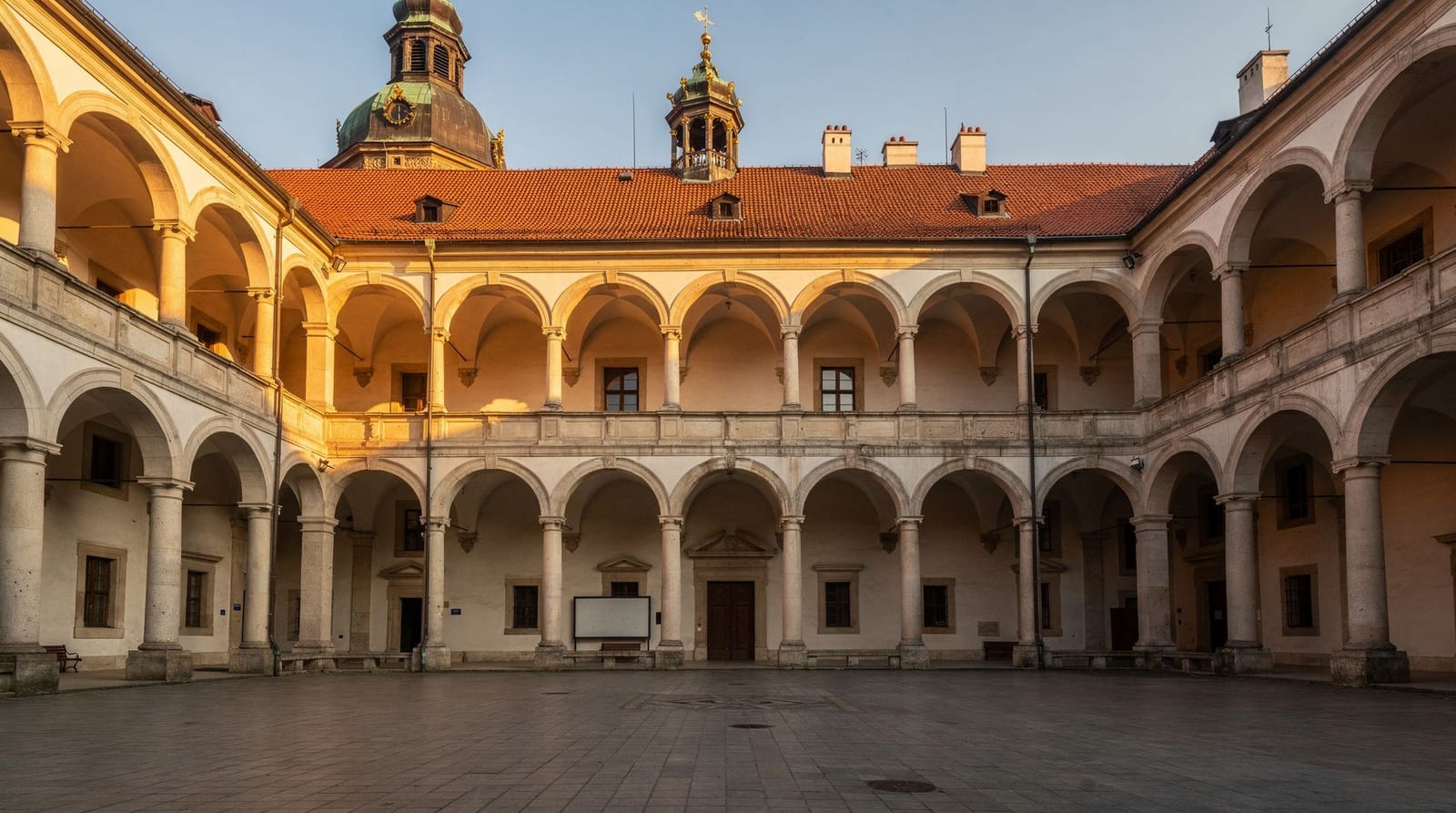
| 11:00-13:00 | Wawel Castle and Cathedral exteriors and courtyards | Free to enter; interiors need separate tickets |
| 13:00-14:00 | Lunch at a milk bar or one block back from the crowds | ul. Grodzka or ul. Kanonicza |
| 14:00-16:00 | Dragon’s Den cave, fire-breathing statue, riverbank | Visit the castle before the cave, not after |
This packs a full day without asking children to walk too far between stops. The Old Town is entirely pedestrianised in the historic centre, which helps enormously — no streets to cross mid-story, no trams to dodge.
Beyond the dragon: other kid-friendly stops
If your children are the kind who exhaust a dragon cave in twenty minutes and demand more, Kraków has backup options.
The Rynek Underground Museum beneath the Main Market Square sounds dry in description — medieval archaeological remains, trade routes, medieval history — but the presentation involves holographic projections, interactive maps, and atmospheric lighting that tends to work well for children over eight or so. The cave-like environment also helps.
For a full family day trip, Wieliczka Salt Mine is about 14 km from the city and easily accessible by shuttle or tour. The mine contains an underground chapel carved entirely from salt, sculptures, underground lakes, and chambers tall enough to host concerts. Children who liked the Dragon’s Den tend to be fascinated; children who found it claustrophobic may struggle, since the salt mine’s tunnels run considerably deeper and longer than the short riverside cave under Wawel.
Energylandia amusement park is about an hour from Kraków and operates as a full theme park with roller coasters and water rides. It requires a full day and a car or booked transport, but for families who have done the history and want a change of gear, it works well.
What to buy the dragon-obsessed child
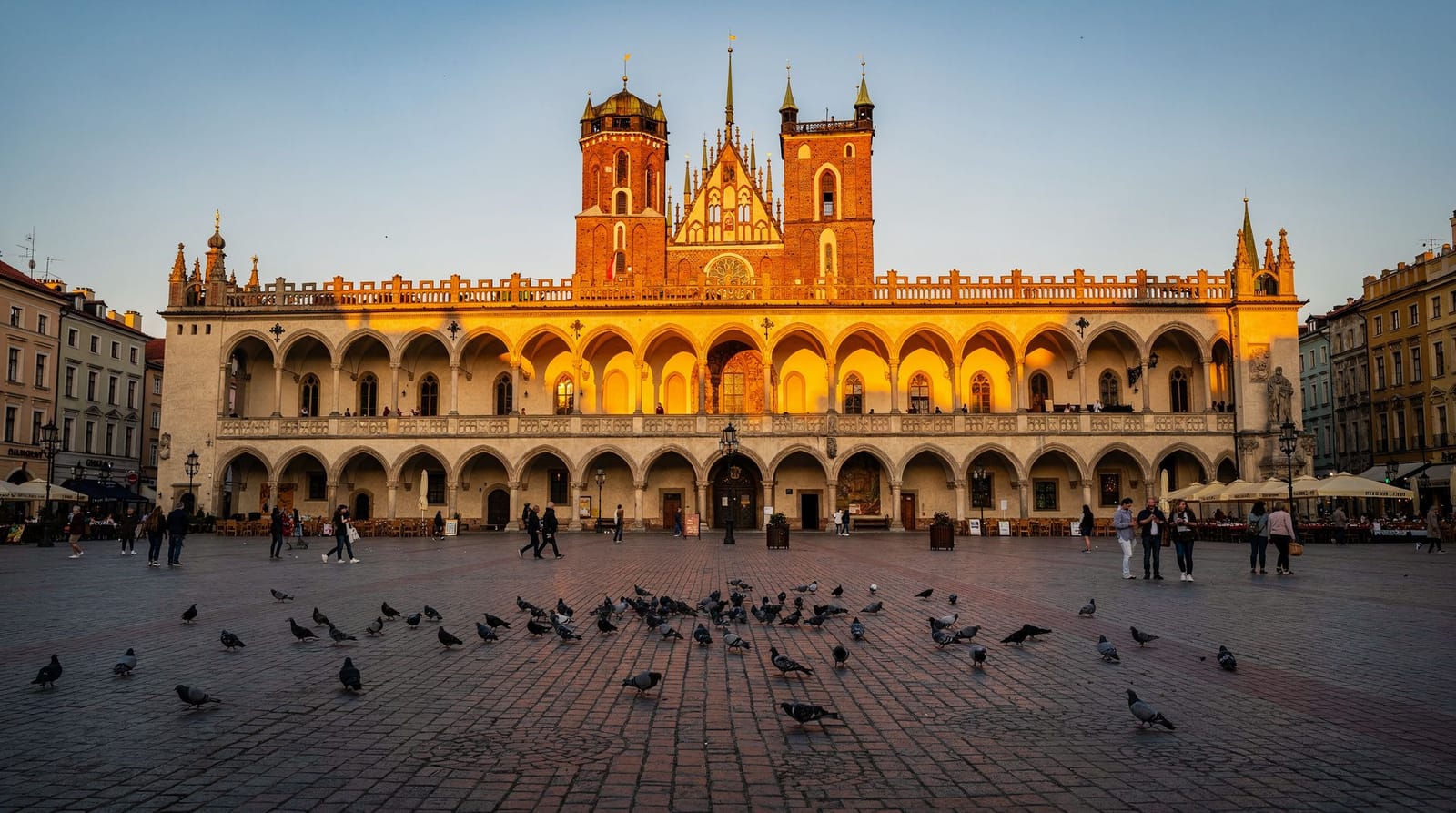
The gift shops around Wawel sell dragon memorabilia at fairly aggressive prices. The best value tends to be from the stalls in Sukiennice (the Cloth Hall) on the main square, which sell hand-painted ceramic dragons, wooden toys, and amber jewellery at negotiable prices. Fake amber is a known issue in Kraków — the real version floats in water and feels slightly warm to the touch; plastic copies sink and feel cold. If you are buying amber for a child who will simply lose it, this matters less.
A stuffed toy dragon from one of the street stalls around Wawel costs 25-40 PLN (6-10 €) and will almost certainly survive the trip home in better shape than your luggage.
Which parts suit which ages
Not every stop on this route works equally well across the full age range. Toddlers and very young children often find the recorded dragon sounds in the cave startling rather than fun, while the fire-breathing statue outside — loud but visible and predictable — tends to be a safer bet for that age group. School-age children (roughly 5-10) are the sweet spot for the whole route: old enough to follow the legend, young enough to be delighted rather than unimpressed by a metal statue. Older kids and pre-teens sometimes need the Rynek Underground Museum or Energylandia added in to hold their attention for a full day, since the dragon novelty wears off faster for them.
The honest verdict
Kraków is genuinely good for children, in a way that many history-heavy European cities are not. The dragon legend provides a narrative hook that makes the castle feel relevant rather than dutiful. The Old Town is walkable and safe. The food is cheap enough that ordering the wrong thing is not a catastrophe. And the fire-breathing statue — which was designed and installed in 1972 by sculptor Bronisław Chromy — remains one of the most reliably delightful things you can show a child anywhere in Central Europe.
For more on planning your time in the city, the Kraków with kids guide covers neighbourhoods, logistics, and seasonality in more detail. The family itinerary for four days maps out a full programme if you want structure. And if the children ask why the dragon needed water when it was thirsty rather than milk or something reasonable — there is no good answer. Legends do not do nutritional logic — but children rarely ask twice, and the ones who do usually settle for “dragons are complicated.”
Frequently asked questions about Dragon hunting with kids in Kraków
Is the Dragon’s Den cave scary for young children? Some find the recorded dragon sounds and enclosed limestone passages startling, particularly toddlers. Most children aged 4 and up handle it fine, and the option of skipping straight to the fire-breathing statue outside — which costs nothing to watch — works as a gentler alternative.
Do I need to book Wawel Castle tickets in advance for a family visit? In peak season (June-August), yes — queues for self-entry tickets can eat an hour of family patience. A skip-the-line guided tour is worth the extra cost at that time of year; outside peak season, walk-up tickets are usually manageable.