Kraków in summer: festivals, heat, and what to do in June–August
From Krakow: Morskie Oko lake tour in the Tatra Mountains
What is Kraków like in summer and when is the best time to visit?
Summer (June–August) is Kraków's busiest and warmest season, with temperatures reaching 25–32°C in July. June brings the Wianki midsummer festival on the Vistula; July hosts the Jewish Culture Festival in Kazimierz. Tatra hiking and Morskie Oko are at their best. Expect larger crowds and higher prices than spring or autumn — but the city's outdoor life, festivals, and day-trip options are unmatched. Book accommodation 2–3 months ahead.
| Where | Vistula embankment, Kazimierz, Tatra Mountains for day trips |
| Cost | Peak-season rates; accommodation highest of the year |
| Time needed | 3–4 days for the city; add a day for Morskie Oko or Dunajec |
| Getting there | Book Wawel, Auschwitz, Wieliczka and festival tickets 2–6 weeks ahead |
| Best time | June for warmth with lighter crowds; avoid late July if heat-sensitive |
Summer in Kraków: the peak season explained
June through August is Kraków’s high season, and the numbers reflect it: the city receives over 4 million tourists annually, with roughly 40% arriving in summer. Rynek Główny, which holds perhaps 15,000 people at comfortable capacity, can feel surpassed on a July Saturday afternoon. Wawel Castle timed-entry tickets sell out days in advance. Auschwitz, Wieliczka, and Zakopane all require booking.
And yet summer delivers things the other seasons cannot. The Tatra Mountains are fully open from mid-June onwards, Morskie Oko is glassy and blue under the alpine sun, the Vistula embankment fills with terraced bars and food stalls, and the city’s festival calendar is at its most intense. The Jewish Culture Festival in late June–early July and the Wianki midsummer celebrations are genuine cultural events — not tourist performances — that anchor the summer programme.
The honest advice: if you can visit in May or September instead, you’ll pay less and push less. If summer is your window, it is still one of the finest summer city-break destinations in Europe — just plan in advance.
June: the city awakens
June is arguably the best summer month. Temperatures hover between 18–24°C (occasionally touching 28°C), the days are very long (sunset after 21:00), and the crowds, while present, haven’t reached the July peak.
The headline event is Wianki — the midsummer festival on the Vistula River, tied to the pagan tradition of the summer solstice. It typically takes place on the weekend closest to 24 June (the Feast of St. John). Thousands of people gather along the Błonia meadow and the Vistula embankment to watch flower wreaths (wianki) float downstream. Live music performances — ranging from folk to rock — are staged across multiple riverside venues. Fireworks launch from Wawel Hill above the river. See the full guide at /guides/wianki-midsummer-krakow/.
Also in June: the Dragon Parade (Parada Smoków), usually early June, when participants in elaborate dragon costumes parade through the city to Wawel Hill — a family favourite referencing the Wawel Dragon legend. The parade is free and routes through the Old Town.
June nights in Kazimierz are particularly atmospheric. Szeroka Street fills with outdoor tables; Alchemia (ul. Estery 5) and Ogniem i Mieczem (ul. Józefa 34) host live music sets that pour into the street. The district’s courtyard bars and hidden garden cafes are at their most accessible in June, before the full crush of July.
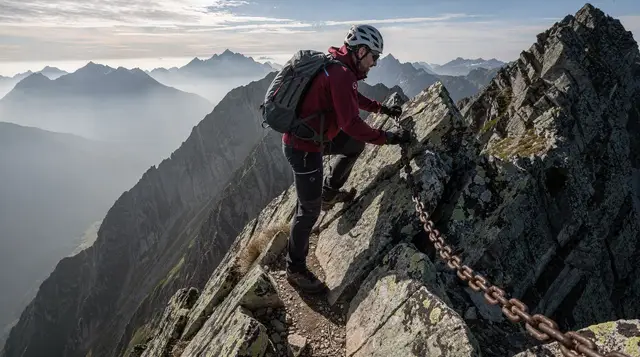
For Tatra hiking, June is excellent after mid-month — snowmelt is complete at most trail levels, the alpine meadows (hale) are flowering, and the mountain refuges are open. Morskie Oko is typically fully accessible by mid-June. The Morskie Oko lake tour from Kraków runs daily and includes transport from the city to the Palenica Białczańska trailhead, from which the 8 km trail to the lake takes approximately 2–2.5 hours each way.
July: festival peak
July is the most intense month. The city is at full capacity, but it is also the month of the Jewish Culture Festival — one of the largest celebrations of Jewish culture in the world.
The festival runs for ten days in late June / early July (check jewish-culture-festival.pl for exact dates each year). It is centred in Kazimierz, the historic Jewish quarter, and includes over 200 events: concerts in synagogues, klezmer workshops, film screenings, academic seminars, and the climactic open-air Shalom na Szerokiej concert on Szeroka Street. The finale draws 10,000–15,000 people to hear international headliners perform on a large outdoor stage. Entry to the finale is free; concerts in the synagogues require tickets (60–100 PLN / ≈€14–24). Book synagogue concert tickets as soon as they go on sale (usually April). The Kazimierz Jewish Quarter walking tour provides essential background for understanding the festival’s historical context.
Temperatures in July average 24–28°C, with occasional peaks above 32°C. The Rynek Główny can become oppressive in the midday heat. Practical adjustments:
- Schedule major outdoor sightseeing before 11:00 or after 17:00. The Wawel Hill climb is exhausting in full sun; the early morning light there is also the best for photography.
- Use the Old Town’s shade architecture. The Planty park (the green ring around the Old Town) provides tree cover. The arcaded passages of the Sukiennice interior are cool.
- The underground museums are ideal for hot days. The Rynek Underground Museum maintains a constant 14°C year-round — a welcome refuge.
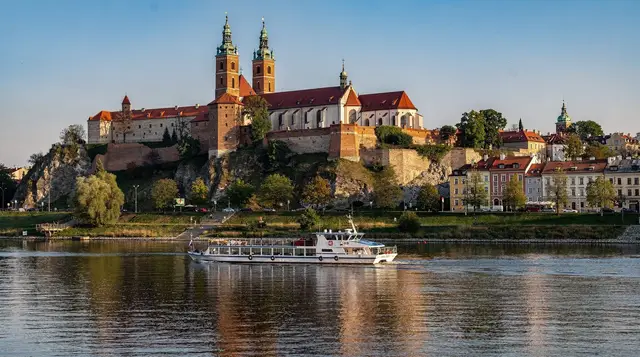
- The Vistula embankment becomes a social hub. The stretch from the Wawel dragon statue south toward Dębniki is lined with floating bar boats (tratwy), terrace restaurants, and impromptu concerts from 16:00 onwards.
July and August: getting around the crowds
Wawel Castle in peak summer requires a strategy. Timed-entry tickets for the State Rooms and Royal Private Apartments sell out 2–5 days ahead; book online at wawel.krakow.pl as soon as your travel dates are confirmed. The Dragon’s Den (Smocza Jama) — the cave at the base of the hill, accessed via a spiral staircase — is less capacity-restricted and can usually be accessed same-day (12 PLN / ≈€3).
For Auschwitz-Birkenau, summer means that the timed-entry system is in full operation. All visitors must book through visit.auschwitz.org. Guided tours (the standard option for foreign visitors) should be booked 4–6 weeks ahead in July. Our full logistics guide is at /guides/auschwitz-from-krakow-guide/.
Wieliczka Salt Mine is equally busy in summer. Book online at wieliczka-saltmine.com — tours sell out 1–2 weeks ahead in August. The mine is a constant 14°C underground; bring a layer.
If you want to avoid the queues entirely, the sightseeing cruise by the Vistula River offers a different perspective on Kraków that requires no advance booking and no indoor queuing. The cruise passes beneath Wawel Hill, along the embankment, and provides views of the city’s skyline that are genuinely worth experiencing.
August: hot and busy, but charming
August continues the July pattern but often delivers the most stable weather. Rain events do occur (afternoon thunderstorms are common in the Tatras, typically building from 13:00 and breaking by 18:00). The Kraków Jazz Summer festival and various open-air cinema events fill the calendar.
The hop-on hop-off bus is surprisingly useful in August when walking in full sun becomes tiresome. The hop-on hop-off bus tour with audio guide covers the major districts including the Old Town, Kazimierz, Wawel Hill, and Nowa Huta, with the audio commentary providing context as you travel. It is not the cheapest option but eliminates the heat and navigation burden.
Late August offers a gentle easing: European school holidays end in late August for many nationalities, and the final days of the month can feel noticeably calmer than mid-July.
Day trips in summer
Summer opens the full day-trip menu from Kraków:
Morskie Oko (8 km trail from Palenica Białczańska, Tatra Mountains): Accessible June–October, best in July–August when the lake ice has fully melted. The trail follows a paved mountain road (horse-drawn carriages also make the journey for 80 PLN/≈€19 return). Book from Kraków via the Morskie Oko lake tour for transport and a guide.
Dunajec River Gorge rafting (Pieniny Mountains, 2.5 hours from Kraków): Traditional wooden raft trips through the limestone gorge between Poland and Slovakia operate April–October, but summer is peak season. The 18 km route takes approximately 2.5 hours; landing at Szczawnica. See our Dunajec River rafting guide.
Zakopane and the Tatras: The cable car to Kasprowy Wierch (1,987 m) operates in summer; book tickets online (kolejkanakasprowy.pl) as queues are long. The Gubałówka funicular is easier to access and provides panoramic views of the Tatras and Zakopane valley.
Ojców National Park: Less visited but excellent for summer day trips — limestone cliffs, Pieskowa Skała Castle, and the Hercules Club rock formation. See the Ojców National Park day trip guide.
Wieliczka Salt Mine: Constant 14°C underground means it is genuinely refreshing in a heat wave. See /destinations/wieliczka/.
Eating and drinking in summer
Kraków’s food culture is at its liveliest in summer. Key recommendations:
Plac Nowy market (Kazimierz): The round building at the centre of Plac Nowy is the city’s original zapiekanka (open-faced baguette with toppings) bar. A zapiekanka costs 10–18 PLN (≈€2.5–4). The surrounding market stalls sell fresh produce, antiques, and street food. The action runs from morning (farmers’ market) through the evening (bars and food stalls open until late).
Hala Targowa (Grzegórzecka Street): A covered food market that fills with street food vendors and craft food producers on weekends, especially Sundays. Worth the 15-minute walk from the Old Town.
Milk bars in summer: The best budget eating in Kraków remains the bar mleczny system. Milk Bar Tomasza (ul. Tomasza 24) and Bar Mleczny pod Temidą (ul. Grodzka 43) are the most centrally located options. A full meal of soup plus main course is 20–35 PLN (≈€5–8). These are cash-only, queue-at-the-counter operations — functional, cheap, and genuinely delicious.
Outdoor terraces: In summer, Rynek Główny fills with restaurant terraces. These are primarily tourist-facing and charge a 20–30% premium over side-street equivalents. The view is real; the value is not. Better outdoor tables: Pod Złotą Pipą (ul. Floriańska 30), Metaforma (ul. Estery, Kazimierz), Propaganda (ul. Miodowa 20, Kazimierz).
Practical summer logistics
Book everything in advance. Wawel, Auschwitz, Wieliczka, Morskie Oko parking/transport, Jewish Culture Festival concerts — all require advance booking in July–August. Do not arrive in Kraków for a summer trip expecting to improvise major attractions.
Stay hydrated on Rynek Główny. There are drinking water fountains at the edges of the square and in the Planty. The Rynek’s cobblestones radiate heat; the fountain near the Mickiewicz monument provides some relief.
Tram access is reliable but crowded. Lines 1, 2, 6, 8, and 13 serve the Old Town ring road. Avoid trams during rush hours (07:30–09:00, 16:30–18:30) with luggage.
Photography tip: For Wawel and St. Mary’s Basilica exterior shots, arrive before 08:00 when the light is warm and the square is nearly empty. By 09:30 the tour groups arrive.
Summer month by month
| Month | Temp | Crowds | Highlight |
|---|---|---|---|
| June | 18–24°C (peaks 28°C) | Building, still manageable | Wianki, Dragon Parade, Tatras fully reopen |
| July | 24–28°C (peaks 32°C+) | Highest of the year | Jewish Culture Festival |
| August | 24–28°C, afternoon storms | High, easing late in the month | Kraków Jazz Summer, open-air cinema |
Summer vs the shoulder seasons: is it worth the crowds?
Summer is the only season that fully opens the Tatra Mountains, Morskie Oko, and Dunajec rafting without any access restrictions, and it’s the only time the Jewish Culture Festival and Wianki happen — genuine reasons to accept the crowds and higher prices. But if your priority is a calmer, cheaper trip and you don’t specifically need those festivals or high-altitude hiking, both the Kraków in spring guide and Kraków in autumn guide deliver comparable sightseeing with a fraction of the queue time and 20–30% lower accommodation costs. June is the best compromise within summer itself — full mountain access with crowds still short of the July peak.
Frequently asked questions about Kraków in summer
Is it too hot to enjoy Kraków in July?
Only during heat waves (above 35°C, which occur roughly 1–2 weeks per year). Temperatures of 24–28°C are comfortable for walking if you pace yourself: early mornings and evenings outdoors, afternoons in museums or underground attractions. The underground museum network (Rynek Underground, Schindler Factory basement, Wieliczka) is genuinely useful in extreme heat.
When exactly is Wianki in 2026?
Wianki falls on the weekend closest to the Feast of St. John (24 June). In 2026 this is the weekend of 20–21 June. Exact dates are confirmed by the city in April; check krakow.pl. Read the full guide at /guides/wianki-midsummer-krakow/.
When is the Jewish Culture Festival in 2026?
The 2026 festival dates are usually confirmed by spring. Based on the consistent late June / early July pattern, expect the festival around 26 June – 5 July 2026. Check jewish-culture-festival.pl. The Shalom na Szerokiej finale takes place on the final Sunday.
Should I skip the Old Town restaurants and eat elsewhere in summer?
We recommend supplementing Old Town dining with visits to Kazimierz (better food, lower prices, more authentic atmosphere) and Plac Nowy specifically. The Old Town’s Rynek-facing restaurants are overpriced relative to quality — this is not snobbery, it is a consistent finding across visitor reviews. Better Old Town options are on the side streets: ul. Grodzka, ul. Floriańska away from the square, and ul. Szewska.
Is the Vistula embankment worth visiting at night?
Absolutely. The floating bar boats (tratwy), the illuminated Wawel silhouette reflected in the river, and the informal music performances along the embankment make it one of the best free summer evening activities in the city. The stretch from the Smok Wawelski dragon statue (foot of Wawel Hill) south to the Dębniki bridge is the liveliest.
Should I visit Kraków in summer or wait for a quieter season?
If the Jewish Culture Festival, Wianki, or full Tatra access matter to you, summer is worth the trade-off. Otherwise, May or September deliver similar sightseeing with shorter queues and lower prices — compare the spring and autumn guides before deciding.
How far ahead should I book Wawel Castle and Auschwitz in summer?
Wawel Castle timed-entry tickets sell out 2–5 days ahead in July–August; book as soon as your dates are fixed. Auschwitz guided tours need 4–6 weeks’ notice in peak summer — this is the single most common booking mistake first-time summer visitors make.
Top experiences
Bookable activities with verified prices and instant confirmation on GetYourGuide.