Communist Kraków tours: Nowa Huta, Trabants, and what to actually book
Krakow: 3.5-hour communism deluxe tour by Trabant
Duration: 3.5h
What are the best communist-era tours in Kraków?
The most-visited communist experience in Kraków is Nowa Huta, the 1949 socialist-realist planned city 8 km east of the centre. You can explore it by walking tour, Trabant car, bike, or on foot independently. The Nowa Huta Museum provides essential context. Trabant tours are the most atmospheric; walking tours are best for depth.
| Where | Nowa Huta, ~8 km east of central Kraków |
| Cost | 80–250 PLN per person depending on tour type |
| Time needed | 2–3 hrs minimum; 3.5–4.5 hrs with the museum |
| Getting there | Tram 4, 10, 22 or 62 to Plac Centralny; ~35–40 min |
| Best time | Any season; book Trabant tours ahead April–October |
The communist history you can still see in Kraków
Poland was under communist rule from 1945 to 1989. For most of those 44 years, Kraków was defined in tension with the system: the medieval city that the regime tried to dilute with the workers’ district of Nowa Huta, the Catholic university that trained intellectuals the state needed but distrusted, the birthplace of Karol Wojtyła who became Pope John Paul II and inspired the Solidarity movement that finally broke communism’s grip.
That tension left a physical imprint on the city. Nowa Huta remains the most complete example of socialist urban planning in the world. Communist-era vehicles, propaganda architecture, abandoned steelworks infrastructure, and the still-contested memory of the period all offer a kind of historical tourism that is unusual in Europe: recent enough to be personally remembered by residents, distant enough to be examined historically.
This guide compares the main options for engaging with that history as a visitor to the Nowa Huta district.
The Trabant tour: best for atmosphere and couples
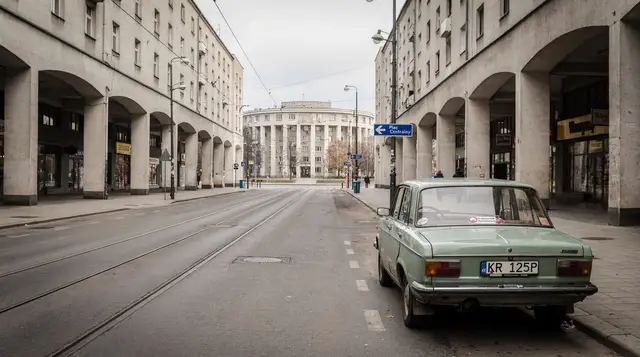
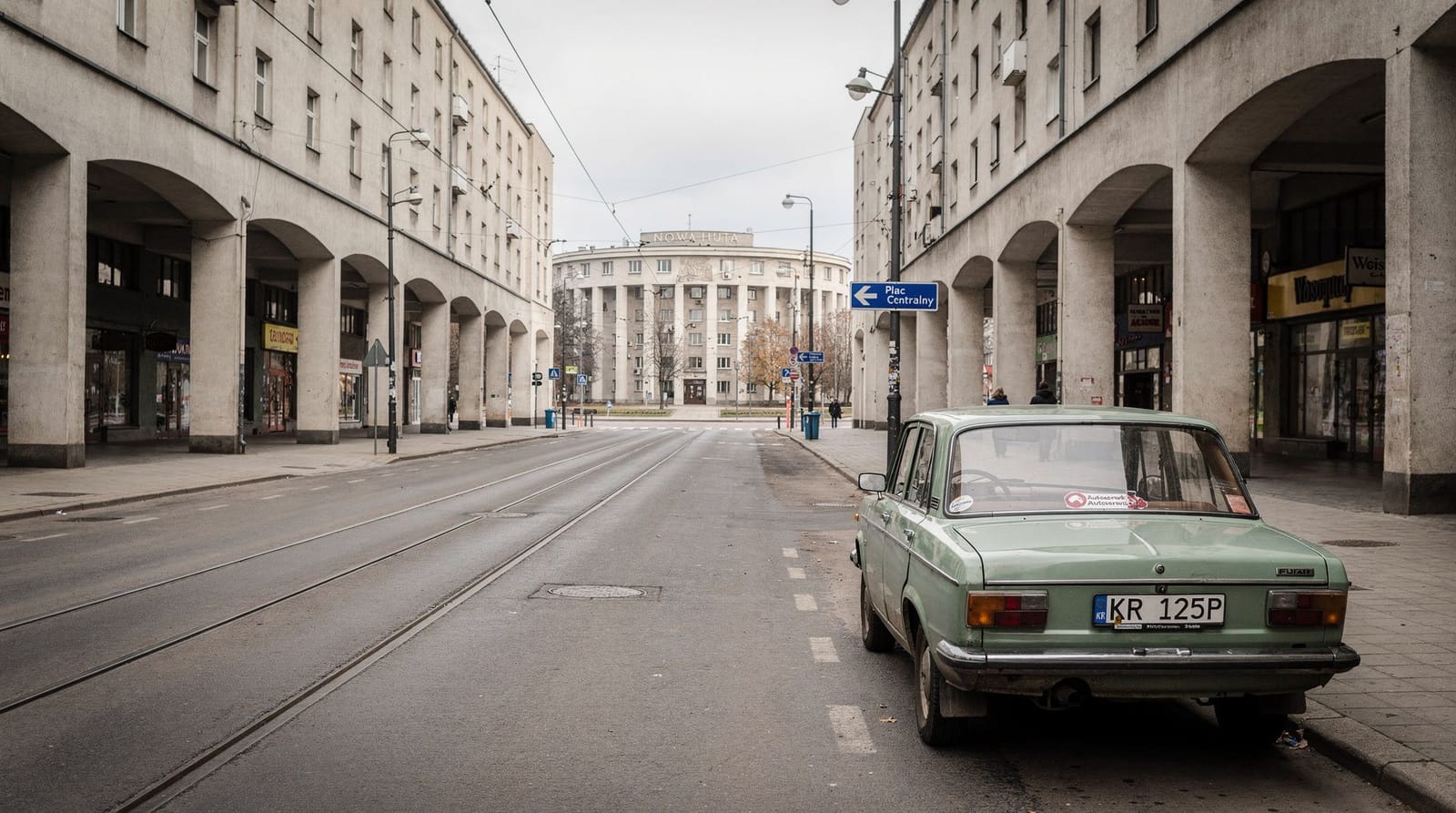
The 3.5-hour communism deluxe tour by Trabant is, by a wide margin, the most memorable single communist-era experience in Kraków. You ride in a restored Trabant — the East German two-stroke vehicle that became the symbol of socialist-bloc automotive production — through Nowa Huta’s main streets, with a guide who explains the architecture, history, and dark humour of the era.
Trabants were produced in East Germany from 1957 to 1991, largely unchanged throughout that period, and were the only car most communist-bloc citizens could realistically own — with waiting lists of up to 13 years. Their continued use in Kraków’s tourism is both historically apt and genuinely fun. The vehicles are basic, occasionally temperamental, and smell faintly of two-stroke exhaust — features, not bugs.
The tour covers Plac Centralny (the main square), Aleja Róż, Arka Pana church (built by Nowa Huta residents in defiance of communist authorities), the steelworks panorama, and typically a stop at a communist-era milk bar or café. Duration approximately 3.5 hours, including transport from central Kraków.
Best for: couples, anyone who enjoys period-atmosphere experiences, people who want to understand communism emotionally rather than academically.
The walking tour: best for historical depth
The Nowa Huta former communist neighbourhood walking tour provides the most historically substantive introduction to the district. A licensed guide covers the planning of Nowa Huta from 1949, the architectural principles of socialist realism, the church struggle (one of the great symbolic battles of the communist era), the role of Solidarity, and the post-1989 transformation.
Walking tours have the advantage of pace: you can stop in front of a building and ask questions, look at details at eye level rather than from a moving vehicle, and deviate from the standard route if something interests you. The main disadvantage is that you cover less ground — approximately 2–3 km — and the tour cannot reach the outer parts of the district.
Most walking tours of Nowa Huta run 2–3 hours and include transport to the district and back. They typically cover Plac Centralny, the main residential blocks, Arka Pana, and the museum if time allows.
Best for: historically-minded travellers, solo visitors, people who prefer questions and conversation over atmosphere.
The bike tour: best for coverage and flexibility
A communism bike tour allows you to cover significantly more ground than either the walking tour or the Trabant. Nowa Huta’s flat terrain and wide boulevards make cycling natural and relatively easy. The bike tour typically covers all the main sites — Plac Centralny, Arka Pana, the steelworks panorama, and residential streets away from the main tourist circuit — in 3–4 hours.
The cycling option is particularly good for those who want to see the residential parts of the district that don’t appear on walking-tour routes: the inner courtyards of apartment blocks (some still containing communist-era murals and tilework), the allotment gardens (działki) that border the steelworks site, and the eastern neighbourhoods where the original planning was less rigorously applied.
Best for: active travellers, those who want more of the district, people who find cycling easier than extended walking.
The museum: essential context for any visit
The Nowa Huta Museum at Aleja Róż 1 should ideally be visited in conjunction with any of the above tours — not as a substitute for them. The museum covers:
- The planning process and original blueprints for Nowa Huta
- Archive photographs and film footage of construction and early settlement
- Reconstructed interiors showing how workers actually lived
- The church struggle: documents, photographs, and artefacts from the 20-year campaign
- Solidarity in Nowa Huta: first-hand testimonies from participants in the 1980s strikes
- Post-1989 Nowa Huta: the transition and its uneven consequences
A skip-the-line Nowa Huta Museum communist Poland tour includes a guided commentary and priority entry. The museum is small enough that a self-guided visit with the audio guide is also satisfying; allow 1–1.5 hours.
The Museum of Krakow branch was temporarily closed for building renovation at the time of checking; check current opening status, hours and prices on the official website of the Museum of Krakow (muzeumkrakowa.pl).
Independent visit: the case for doing it yourself
If you have some grounding in communist-era history and are comfortable navigating in unfamiliar urban areas, visiting Nowa Huta independently is entirely feasible and costs virtually nothing beyond a tram ticket.
Take tram 4, 10, 22, or 62 from central Kraków to Plac Centralny (35–40 minutes). Walk south along Aleja Różana to the Arka Pana church (approximately 2 km), then north to Plac Centralny and visit the museum. Return by tram. This route covers the most important sites in about 3 hours.
The case for a guided option is primarily context: without knowing the history, it is possible to walk through Nowa Huta and appreciate the architecture without understanding why it was built, what it meant, and how its residents actually experienced it. The guided options above provide that understanding; the independent visit does not. For Polish history novices, a guide is strongly recommended.
Comparing the options at a glance
| Format | Duration | Price/person | Best for |
|---|---|---|---|
| Trabant tour | 3–3.5 hrs | 160–250 PLN | Atmosphere, couples, memorable photos |
| Walking tour | 2.5–3 hrs | 80–120 PLN | Historical depth, questions, solo travellers |
| Bike tour | 3–4 hrs | 100–150 PLN | Coverage, active travellers |
| Museum only | 1–1.5 hrs | See official website | Context alongside any of the above |
| Independent (tram + walk) | ~3 hrs | ~10 PLN tram fare | Budget travellers comfortable without a guide |
What you’ll actually see: the key sites
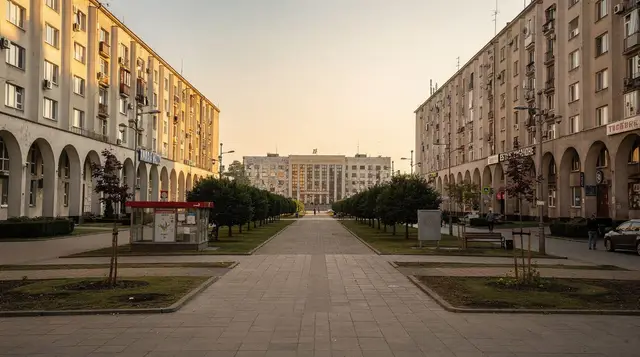
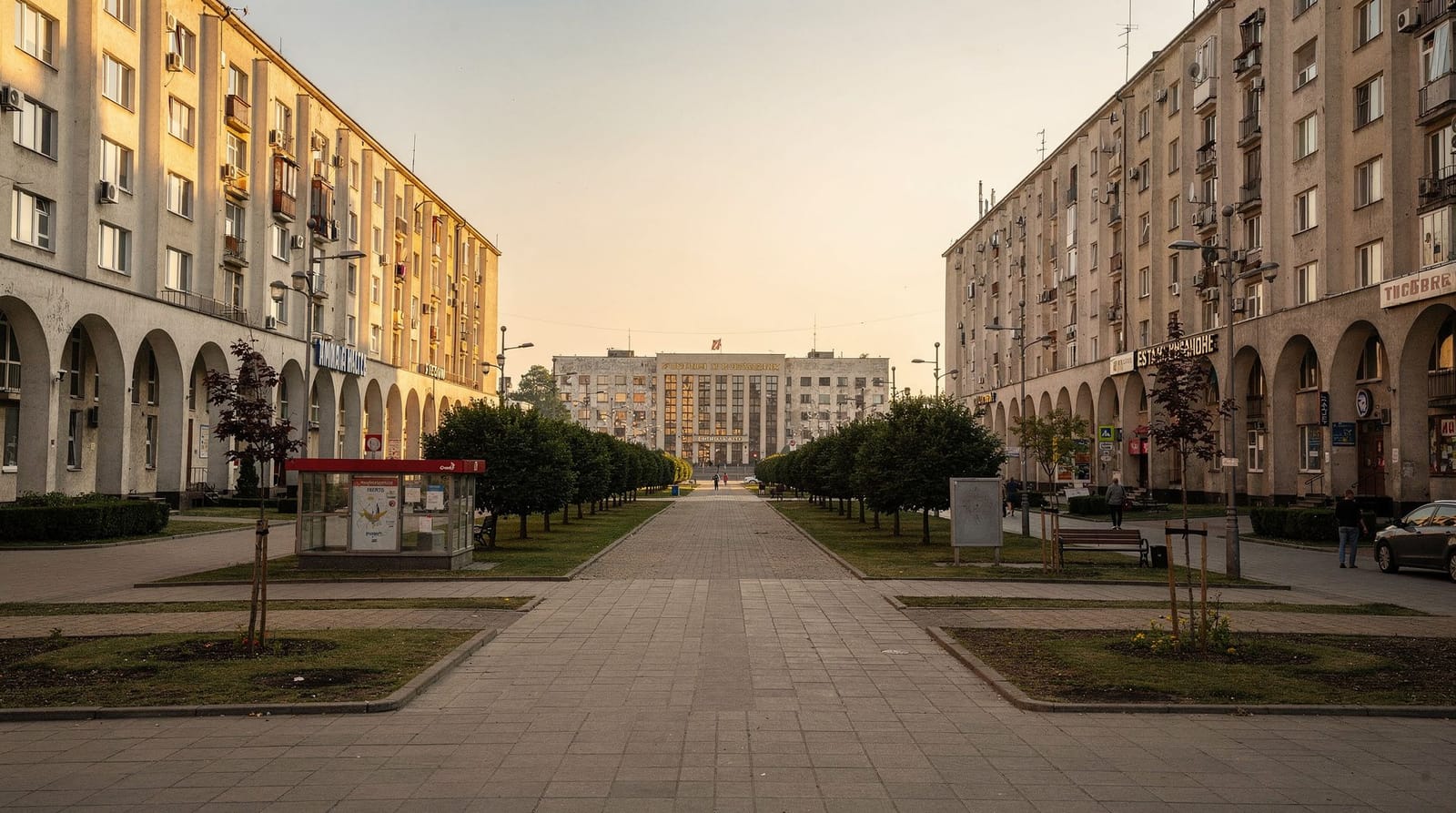
Plac Centralny (Plac Ronalda Reagana): The formal central square, ringed by limestone apartment blocks. Deliberately designed to echo Renaissance piazzas but with communist-era proportions. The renaming after Reagan in 2004 reflects Nowa Huta’s ironic relationship with its own history.
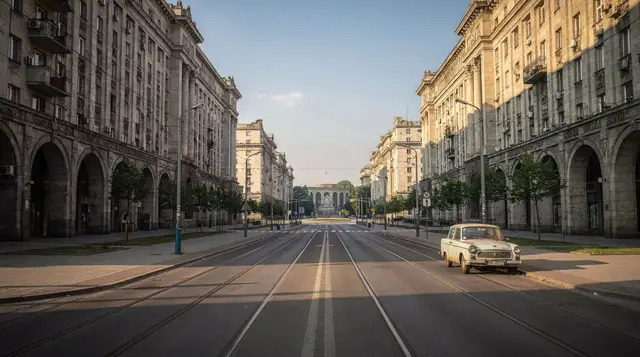
Aleja Róż: The main tree-lined avenue, grand and surprisingly pleasant. The buildings have been maintained better than comparable estates elsewhere in Poland.
Arka Pana Church: Built by residents over a decade against official opposition, consecrated by the future Pope John Paul II in 1977. One of the most architecturally significant buildings in Kraków and one of the most emotionally resonant.
Lenin Steelworks (Arcelor Mittal Kraków): Visible from multiple points in the district. At its peak the largest steelworks in Poland; now largely decommissioned. The scale of the industrial infrastructure is still astonishing from the outside.
Communist-era milk bar: Several original bars mleczne (communal canteens) survive in Nowa Huta. A meal here — żurek soup, pierogi, bigos — costs 15–25 PLN (≈ €4–6) and puts you in a space that has changed very little since the 1970s.
Combining communist Kraków with other history
A logical sequence for historically-focused visitors:
Day 1: Nowa Huta (morning Trabant or walking tour, afternoon museum). Evening: walking tour of the Old Town’s medieval history for contrast.
Day 2: Podgórze/WWII Kraków — Schindler’s Factory Museum, Ghetto Heroes Square, ghetto wall fragments.
Day 3: Full day at Auschwitz-Birkenau.
This sequence moves from medieval to World War II to communist-era, in roughly chronological order, and allows each period its appropriate weight. See the full overview in Polish history for visitors.
Prices, booking, and practical details
Trabant tour: Typically 3–3.5 hours. Price approximately 160–250 PLN per person (≈ €38–60), depending on group size and whether hotel pickup is included. The smaller the group, the more personalised the experience. Book in advance April through October; same-day availability is common November through March. The tour includes transport to and within Nowa Huta.
Nowa Huta walking tour: Typically 2.5–3 hours. Price approximately 80–120 PLN per person (≈ €19–28) on a group tour; private tours considerably more. Many operators include tram transport from central Kraków. Group sizes vary; smaller groups (under 12) provide more interaction.
Communism bike tour: Typically 3–4 hours. Price approximately 100–150 PLN per person (≈ €24–36), including bike rental. Most operators provide bikes; bring comfortable clothes and, in summer, water. The route is flat throughout.
Nowa Huta Museum: The branch was temporarily closed for renovation at the time of checking; check current hours and prices on the official website of the Museum of Krakow (muzeumkrakowa.pl).
The Trabant: a brief history of the car that became a symbol
The Trabant (commonly abbreviated to “Trabi”) was produced by the East German state manufacturer VEB Sachsenring Automobilwerke Zwickau from 1957 until 1991. Its design changed almost not at all during those 34 years — a feature that reflected both the rigidities of communist industrial planning and the philosophy that an adequate, standardised product was preferable to market-driven variation.
The car’s body was made from Duroplast — a hardened composite of wool fibre and phenol resin from the Soviet Union — because East Germany lacked the steel supply to manufacture conventional car bodies. Duroplast could not be welded; it had to be mechanically assembled. It was also non-biodegradable, which created an environmental problem after 1989 when millions of abandoned Trabants had to be disposed of.
The engine was a two-stroke, 600cc unit that produced approximately 26 horsepower. By any objective measure, it was technically obsolete by the 1960s; the car was an embarrassment to East German engineers who knew it but were prohibited from replacing it. Nevertheless, the waiting list for a new Trabant was typically 10–13 years through the 1970s and 1980s.
After 1989, hundreds of thousands of East Germans abandoned their Trabants at the West German border — the first new Western cars were more appealing than waiting for the family Trabi to be repaired again. Those that remain in working order are now collector’s items, maintained with a devotion that reflects both nostalgia and the appeal of objects that tell a story.
Riding in a Trabant through the streets of Nowa Huta is both practically convenient (they cover the district efficiently) and historically coherent (the car embodies the system that built the district). The combination is unusual in European tourism.
Nowa Huta’s cultural renaissance
Since approximately 2010, Nowa Huta has developed a growing arts and culture scene that sits in deliberate tension with its communist heritage. Several galleries, studios, and performance spaces have opened in the district’s former industrial and cultural buildings. The Teatr Ludowy (People’s Theatre), one of the original communist-era cultural institutions, continues to operate and has diversified its programming.
The annual Nowa Huta Cultural Weekend in September brings outdoor events, guided tours, and workshops to the district, attracting Kraków residents who might otherwise never visit. It is one of the better ways to see the district at its most animated.
For visitors interested in contemporary art, the Centre for Urban Art (Centrum Kultury Podgórze) also runs programs connected to the district’s transformation, though it is primarily based in Podgórze.
The presence of this newer cultural layer — arts, cafés, music venues — alongside the preserved communist-era architecture creates the most interesting version of Nowa Huta: not a museum, not a ruin, but a living neighbourhood processing its own history in real time.
The milk bar as communist institution
No account of communist Kraków is complete without the bar mleczny — the milk bar, a Polish institution that emerged from the communist-era commitment to providing affordable worker nutrition. These communal canteens served subsidised hot meals, primarily dairy-based dishes (hence “milk bar”): pierogi, bigos, żurek soup, kotlet schabowy (pork cutlet), and a rotating selection of soups and stews.
In communist Poland, the bars mleczne were more than eating places; they were social infrastructure. Queues moved quickly, prices were kept artificially low through state subsidy, and the clientele mixed workers, students, pensioners, and office staff in a genuinely egalitarian setting. The food was basic but honest.
After 1989, most bars mleczne closed as market pricing eliminated the subsidy that made them possible. A handful survived; those that remain are protected by a combination of nostalgia, utility (they remain cheap by any measure), and a customer base that cannot afford or does not want the cafés and restaurants that replaced them.
In Nowa Huta, Bar Mleczny Centralny on Plac Centralny is one of the most authentic surviving examples. The menu board is handwritten on paper; the counter service is brisk; the prices are approximately 15–25 PLN (≈ €4–6) for a full meal. It is not performing communism for tourists — it is communism’s most benign legacy, still functioning.
Milk Bar Centralny (at various addresses in the Old Town) and Bar Mleczny Pod Temidą near the courts are the most convenient central options. Both serve traditional food at prices that are genuinely useful for budget travellers.
Seasonal timing and what changes
Nowa Huta works year-round, but the experience shifts noticeably by season. In summer, Plac Centralny and Aleja Róż are green and full of life — families in the parks, outdoor seating at cafés, the steelworks visible under a clear sky — which can soften the district’s severity in a way that makes it feel less like a museum and more like a lived-in neighbourhood.
In winter, the opposite is true: bare trees, grey skies, and quiet streets bring out the socialist-realist architecture’s original intended mood far more effectively, and several visitors describe a winter Trabant ride through empty boulevards as the single most atmospheric version of the tour. Rain is common in Kraków’s spring and autumn; the museum and milk bar make good indoor fallback options if a walking or bike tour would be miserable in bad weather. Whichever season, allow slightly more time than the estimates above if you’re combining Nowa Huta with a full lunch, since the district’s best food stops reward lingering rather than rushing through.
Photography and etiquette in Nowa Huta
Photography is generally welcome throughout Nowa Huta’s public spaces — Plac Centralny, Aleja Róż, and the steelworks panorama are all frequently photographed and locals are used to it. Be more considerate around the milk bars and inside Arka Pana church: photograph the milk bar’s exterior and general atmosphere rather than close-ups of individual diners, and follow standard church etiquette (no flash, quiet voices, appropriate dress) inside Arka Pana as you would at any active place of worship. Residents of Nowa Huta’s apartment blocks live ordinary daily lives in a district that has become a tourist attraction almost by accident of its history; treating courtyards and residential entrances with the same respect you’d want for your own neighbourhood goes a long way, and most guided tours will model this behaviour for you if you’re unsure.
Related history: communism and Kraków’s churches
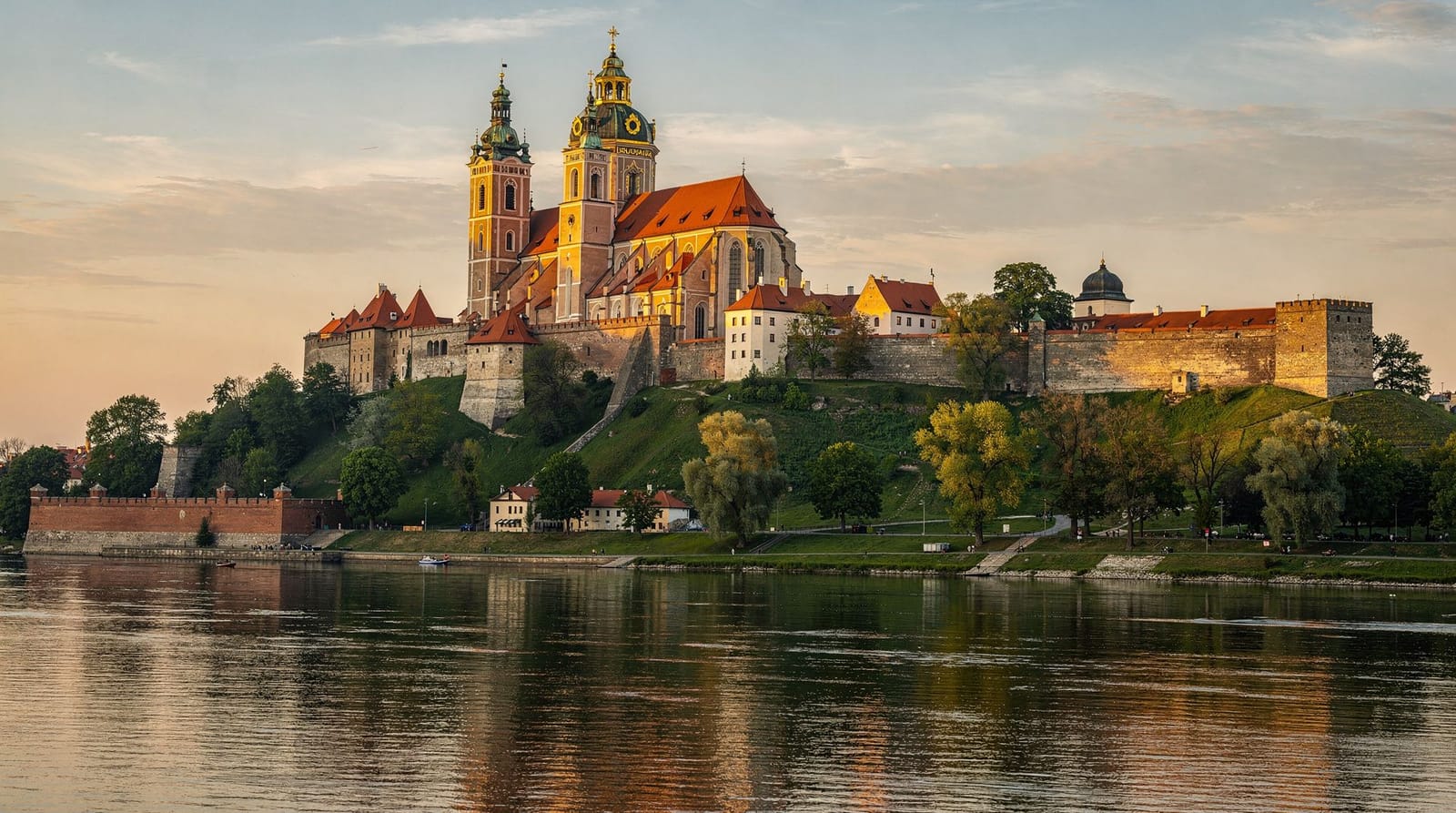
The most sustained confrontation between the communist state and the Church in Kraków played out not only in Nowa Huta but across the city. The Cathedral at Wawel, the Archbishop’s Palace on Franciszkańska Street, and the dozens of parish churches throughout Kraków were all sites of the quiet, persistent resistance that culminated in the Solidarity movement of 1980.
The Pope John Paul II connection is central: Karol Wojtyła, as Archbishop of Kraków from 1964 to 1978, was the Church’s most prominent public figure in communist Poland. His election as Pope in October 1978 transformed the political situation. When he returned to Poland in June 1979, the communist government had to permit a visit that would mobilise millions of Poles in ways the state could not match.
The Pope John Paul II guide covers the specific Kraków sites connected to his life and legacy. The Polish history for visitors guide places the communist period within the full arc of Polish national history.
Frequently asked questions about communist Kraków tours
How long does a Nowa Huta visit take?
A focused visit covering the main sites — Plac Centralny, Aleja Róż, Arka Pana — takes 2–3 hours on foot. Adding the museum extends this to 3.5–4.5 hours. A full day with a Trabant or bike tour, museum, and lunch gives you a genuinely thorough understanding of the district without rushing.
Is the Trabant tour gimmicky?
It can be, depending on the operator. The best Trabant tours use the vehicle as a hook into a substantive historical experience — the guides are knowledgeable and the route covers genuinely important sites. Lesser operators treat it as pure tourist entertainment. The tour available via GetYourGuide is well-reviewed and historically grounded.
Can children enjoy the communist Kraków tours?
Yes, with the right tour type. The Trabant tour is particularly good for children — the vehicles are novel and the pace is engaging. The walking tour requires sustained attention that younger children may not maintain. The museum, with its reconstructed interiors and period objects, is accessible to teenagers. Younger children may find the museum slow.
Is it in poor taste to make communist history into tourism?
This is a question worth taking seriously. The communist period in Poland involved real suffering: political prisoners, economic deprivation, suppressed culture, and the violence of martial law in 1981. The best communist-era tourism in Kraków — the museum, the serious walking tours — treats this history with appropriate gravity. The Trabant tours tend toward the lighter end, but they do not trivialise the history. As with all dark tourism, the quality of engagement depends largely on the visitor’s own seriousness.
Should I visit Nowa Huta before or after the Old Town?
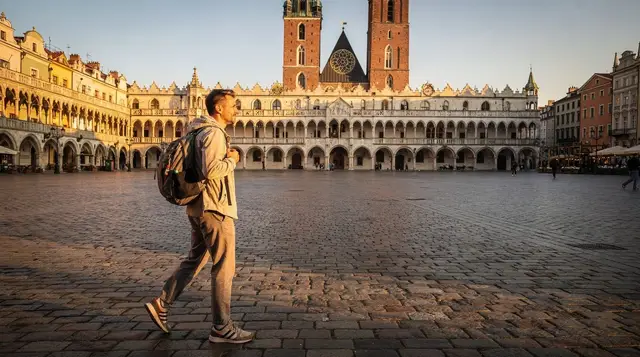
Either works, but many visitors find the contrast more striking when Nowa Huta comes after a morning in the medieval Old Town — the shift from Gothic spires to socialist-realist boulevards lands harder that way. If your trip is themed around 20th-century history specifically, though, it can also work as a standalone half-day paired with Auschwitz-Birkenau or Podgórze’s WWII sites on separate days, following the sequence outlined above. Either way, treat Nowa Huta as its own half-day rather than a rushed add-on at the end of an Old Town day — the tram journey alone takes 35–40 minutes each way.
Top experiences
Bookable activities with verified prices and instant confirmation on GetYourGuide.