48 hours in Kraków on a business trip: a compressed itinerary that actually works
Arriving Thursday night, leaving Saturday morning
The conference ran Wednesday through Friday noon. I had booked a Saturday morning flight, which meant approximately 48 hours of free time beginning Friday afternoon. This is not an ideal configuration for seeing a city — no full days, one afternoon plus a day plus a morning — but it is the configuration that business travel frequently produces.
Kraków, it turned out, is exceptionally well-suited to this kind of compressed visit. The Old Town is entirely pedestrianised and walkable within a 1km radius. The city’s major sites are dense and connected. The transport infrastructure is reliable. And the food is inexpensive enough that bad meal choices do not financially sting.
What follows is what I actually did, with honest assessments of what worked, what I would skip, and what I wished I had done instead.
| Free time | About 48hrs — one afternoon, one full day, one morning |
| Total spend | Varies with ticket prices; check each venue’s official website |
| Getting around | Everything walkable; one Bolt ride to the airport |
| Booking ahead | Schindler Factory Museum tickets, especially outside off-season |
| Best fit | Conference or work trips with a fixed, non-negotiable flight |
Friday afternoon: the orientation
I had four hours before dinner and used them for an orientation walk that I would recommend to anyone arriving in Kraków for the first time with limited time.
The walk starts at the Floriańska Gate — the medieval northern entrance to the Old Town, connected to the Barbican round tower — and follows ul. Floriańska south to the Rynek Główny. This street is medieval in its layout and 19th-century in most of its facades; it runs directly to the main square and gives a clear sense of the city’s scale before you reach the square’s openness.
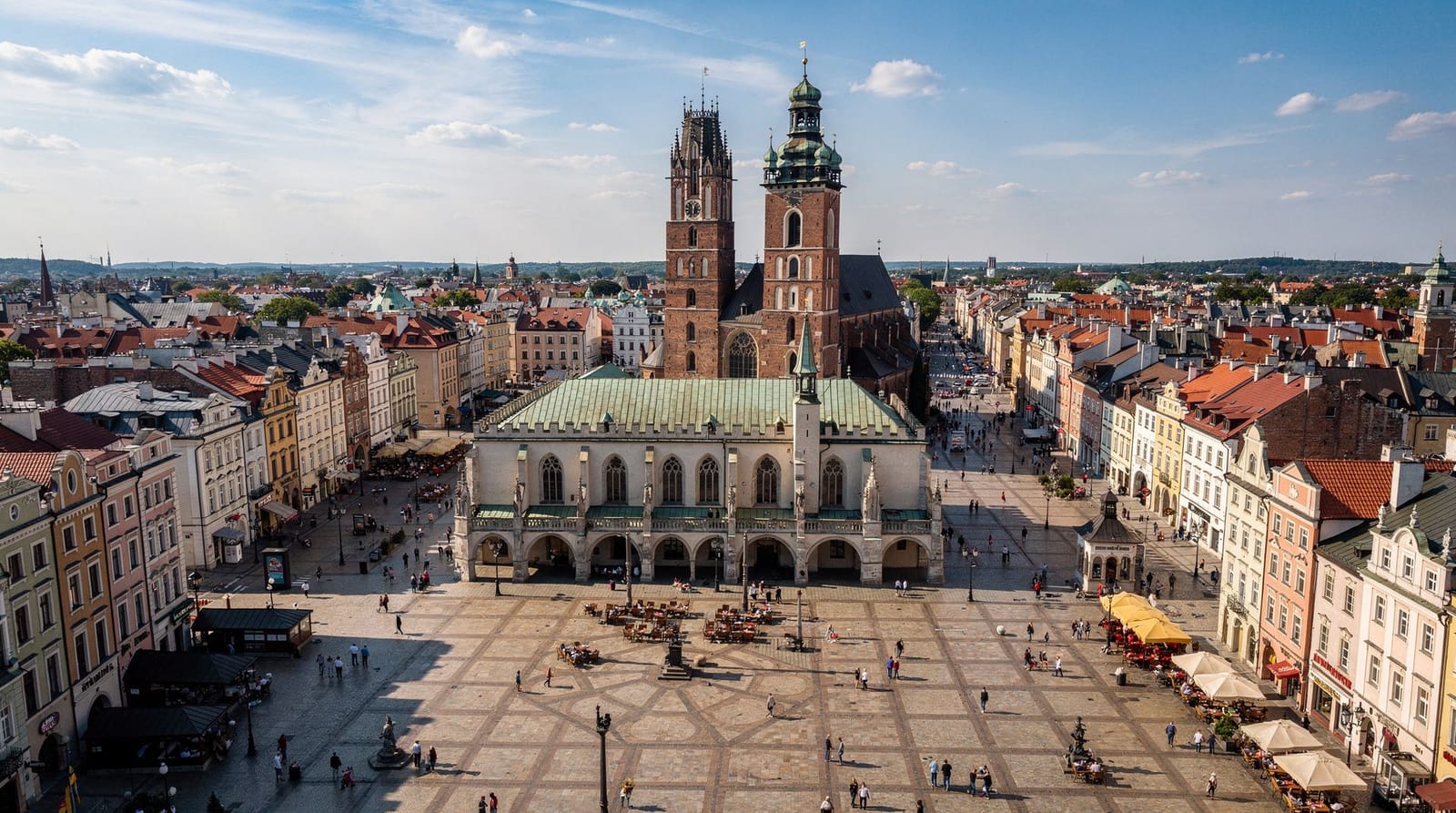
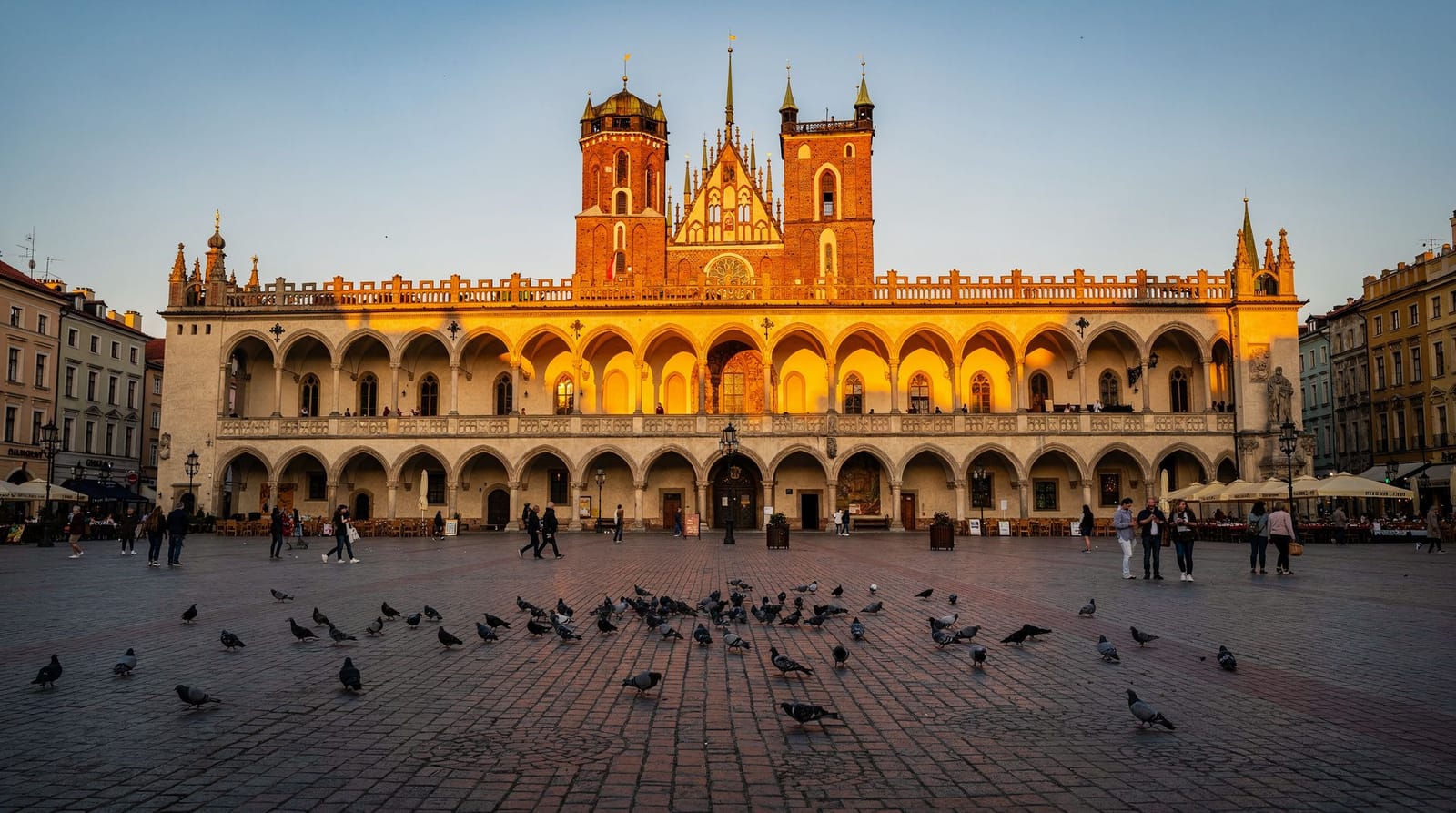
The main square itself: I walked the perimeter of the Sukiennice (Cloth Hall), went inside briefly to look at the amber and folk craft stalls on the ground floor and the gallery of 19th-century Polish painting on the upper floor (a paid ticket, free on Tuesdays; underrated collection, almost no queue in October), and climbed the Town Hall Tower for the view. Twenty minutes up, twenty minutes to look, twenty minutes down. Total time: one hour.
From the square, I walked the Royal Route south — ul. Grodzka — to Wawel Hill. I did not go into the castle on this visit (it was after 15:00 and the ticketed rooms were closing). I walked the exterior, looked at the dragon statue, spent fifteen minutes on the Vistula embankment below the hill, and returned to the hotel via the Planty gardens.
Total walking: about 5km over three hours. Total spend: the Tower ticket (22 PLN today), 5 PLN on an obwarzanek from a street cart, nothing else. The city had been introduced.
Friday evening: dinner and one drink, not three
For dinner I made the classic visiting-professional’s mistake of accepting a restaurant recommendation from the hotel, which turned out to be one of the Rynek Główny establishments — moderately good food, aggressively mediocre pricing (130 PLN / 31 € for a main course and glass of wine). This is not a catastrophe, and I am not going to make a drama of it. It is, however, exactly the situation the honest Kraków restaurant guide warns about.
The lesson for future compressed visits: walk one street back from the square in any direction, find a restaurant with a menu in Polish as well as English, and the price immediately adjusts by 30-40%.
After dinner I walked to Kazimierz — twenty minutes south from the main square — and had one drink at a café on ul. Józefa before returning to the hotel. Kazimierz in October on a Friday evening is alive in the way that city neighbourhoods should be: local, unhurried, not performing itself for tourism. The bars and cafés around ul. Miodowa and ul. Józefa are worth more than a single visit, but a single visit confirms that the neighbourhood is real.
Where I stayed, and why it mattered
The conference hotel was near the Old Town’s northern edge, a five-minute walk from the Floriańska Gate, and this turned out to matter more than I expected for a compressed visit. Every site I wanted — Rynek Główny, Wawel, Kazimierz, even Podgórze — was reachable on foot in under 25 minutes, which meant zero time lost to public transport logistics or taxi waits between a work day and an evening walk. If your conference hotel sits further out, near the airport corridor or a suburban business park, budget an extra 20-30 minutes each way and consider whether a compressed 48 hours is still realistic. For anyone choosing where to base themselves on a similar trip, the Old Town vs Kazimierz guide covers the trade-offs — Old Town wins decisively for this kind of schedule, purely on walking distance.
Saturday: a full day with a plan
This was the only complete day, and I had designed a plan the previous evening.
Morning: Wawel Castle and Cathedral. I arrived at the ticket office at 9:30, thirty minutes after opening. There was a queue for the State Rooms (Komnaty Królewskie) of about twenty minutes — tolerable. The Crown Treasury and Armory have a separate ticket; I bought both.
The State Rooms are genuinely impressive — the scale of the Royal Apartments, the Flemish tapestries commissioned by the Jagiellonian kings, the sequence of painted ceilings, the accumulated grandeur of a building that was the centre of a significant European power for three centuries. I had one hour here before my attention was exhausted and honest.
The Cathedral takes another forty minutes, including the climb to the Sigismund Bell in the tower (the largest bell in Poland, cast 1520). The view from the tower is the best high point in the city — better than the Town Hall Tower on the Rynek because the perspective includes the full panorama of Kraków’s red rooftops, the Planty belt, the distant Soviet blocks of Nowa Huta, the Tatras on a clear day.
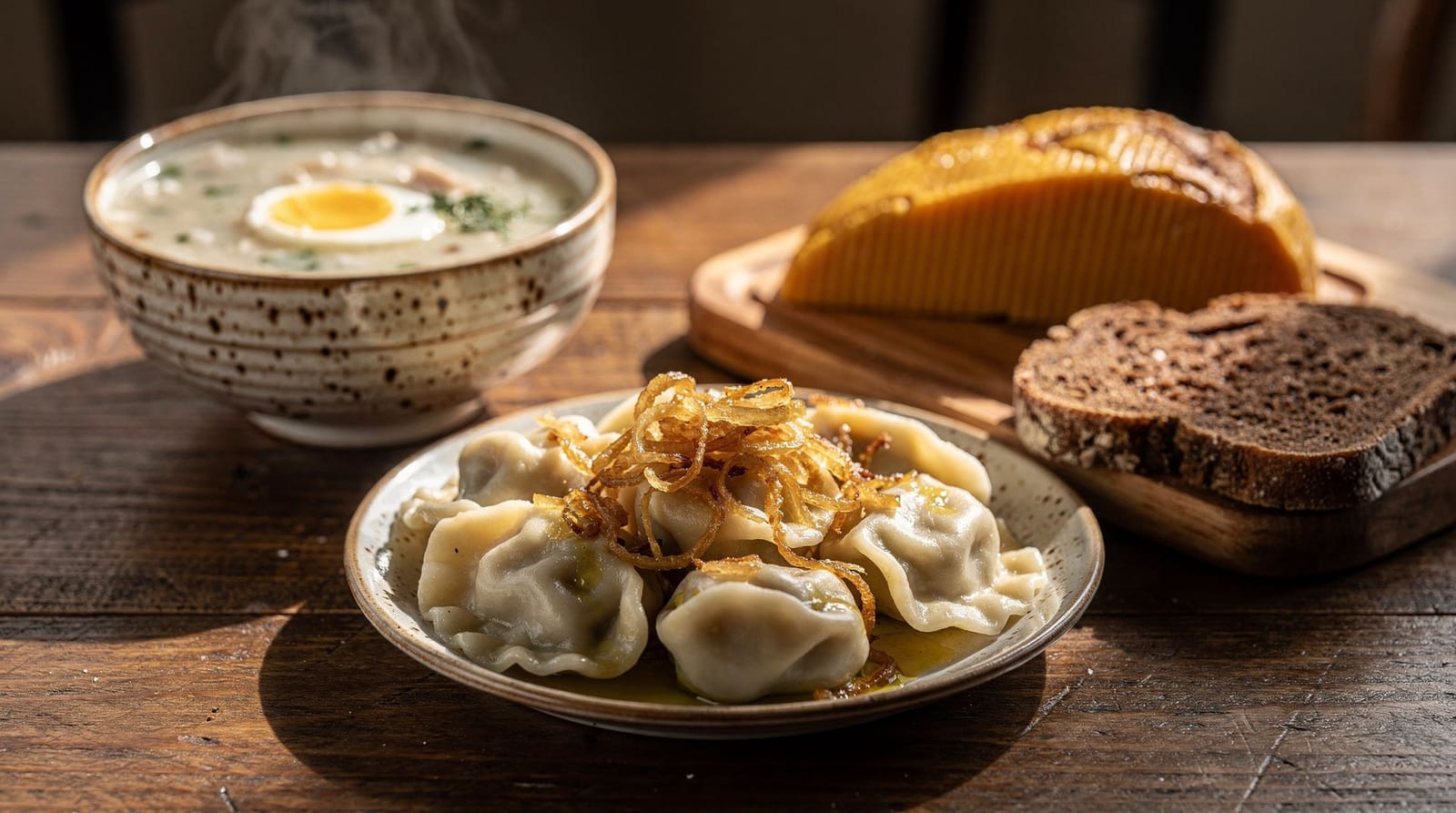
Lunch: a milk bar. After the Cathedral, I was at the foot of Wawel Hill at 12:30. I walked to Bar Mleczny Pod Temidą on ul. Grodzka, two minutes from the hill, and had żurek and pierogi for 22 PLN (5.20 €). This was the correct decision and made me feel significantly better about the previous night’s dinner.
Afternoon: Schindler’s Factory Museum. The Schindler Factory Museum in Podgórze is across the Vistula from Kazimierz, about twenty minutes’ walk from the Old Town. I went in October 2022 with no pre-booking; there was a ticket available. In peak season this would not be the case — book online at least a week in advance.
The museum is built within the factory that Oskar Schindler used to shelter Jewish workers during the Nazi occupation. The exhibition covers the occupation of Kraków from 1939 to 1945, using the physical space of the factory as its setting. It is meticulously done and requires approximately two hours if read carefully, one hour if moving at pace. I read it carefully. It was one of the more affecting museum experiences of several years of European travel.
For context: the Schindler’s Factory Museum guide covers booking, logistics, and the exhibition content in detail.
Early evening: Kazimierz properly. Having seen the Schindler Museum, I was in the correct geographical position to walk directly into Kazimierz — the Podgórze bridge delivers you to the south edge of the neighbourhood. I spent two hours walking: ul. Szeroka (the old Jewish quarter’s main street), the Old Synagogue exterior, Plac Nowy, and the café strip on ul. Józefa.
I ate dinner at a restaurant in Kazimierz — a proper sit-down meal, significantly better value than the previous evening’s Rynek choice, around 70 PLN (17 €) including a beer. The Kazimierz food scene covers the specific options; the summary is that almost anywhere on ul. Józefa or the surrounding streets is a better choice for honest Polish food than anywhere facing the main square.
Sunday morning: the bit most people waste
I had a 12:30 flight, which meant leaving the hotel by 10:30 at the absolute latest. This left Sunday morning as a window.
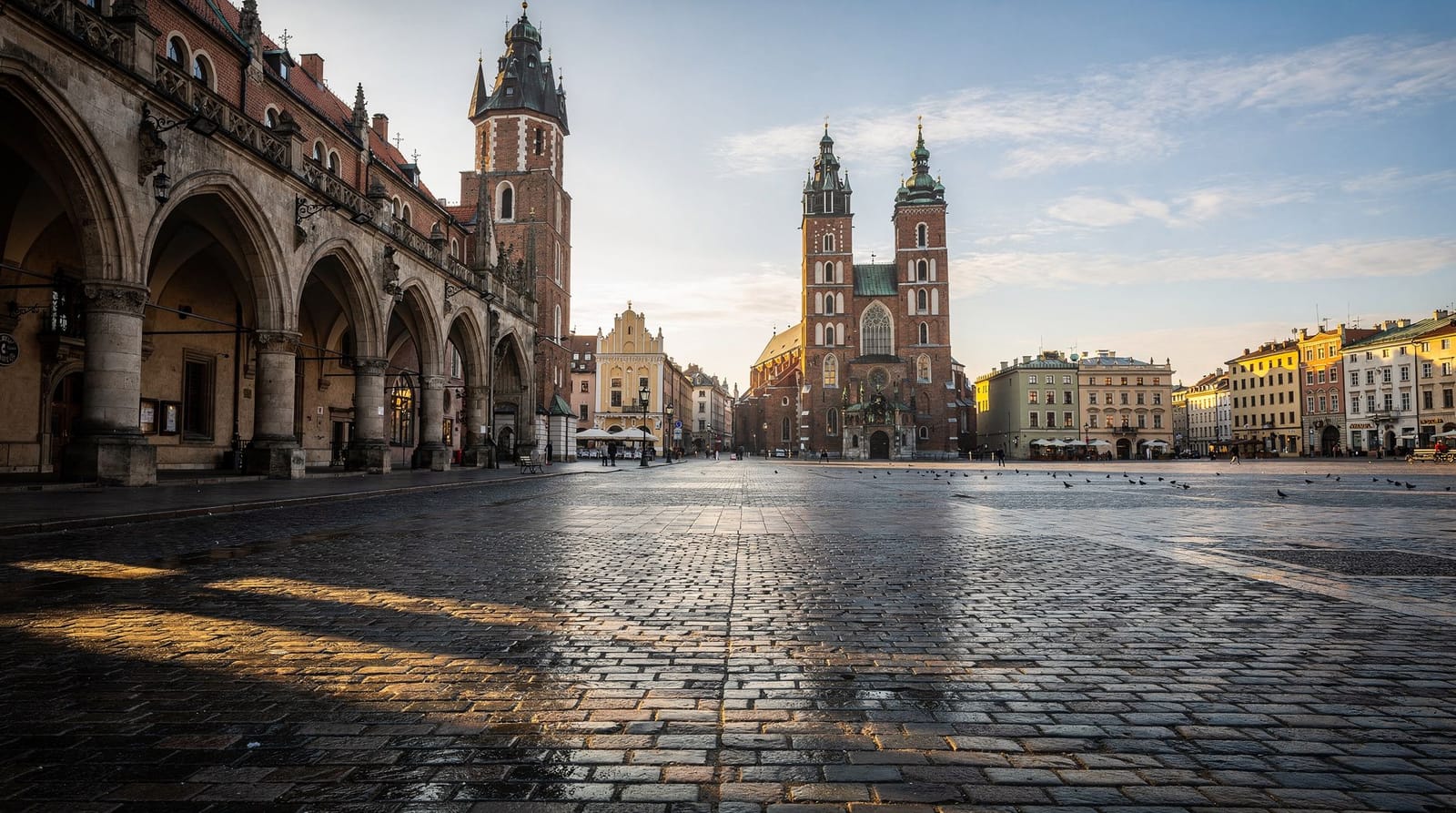
I used it for the Rynek Główny at 8:00, when the market square has almost no tourists. The space in the early morning light, without the competing human motion of midday, is comprehensible in a way that the busy-hours version is not. The Sukiennice in early light. The horse-drawn carriages waiting for passengers who have not arrived yet. The single espresso from a café just opening, drunk standing up. This is a Kraków morning as locals experience it, and it is available to any visitor willing to set an alarm for 7:30.
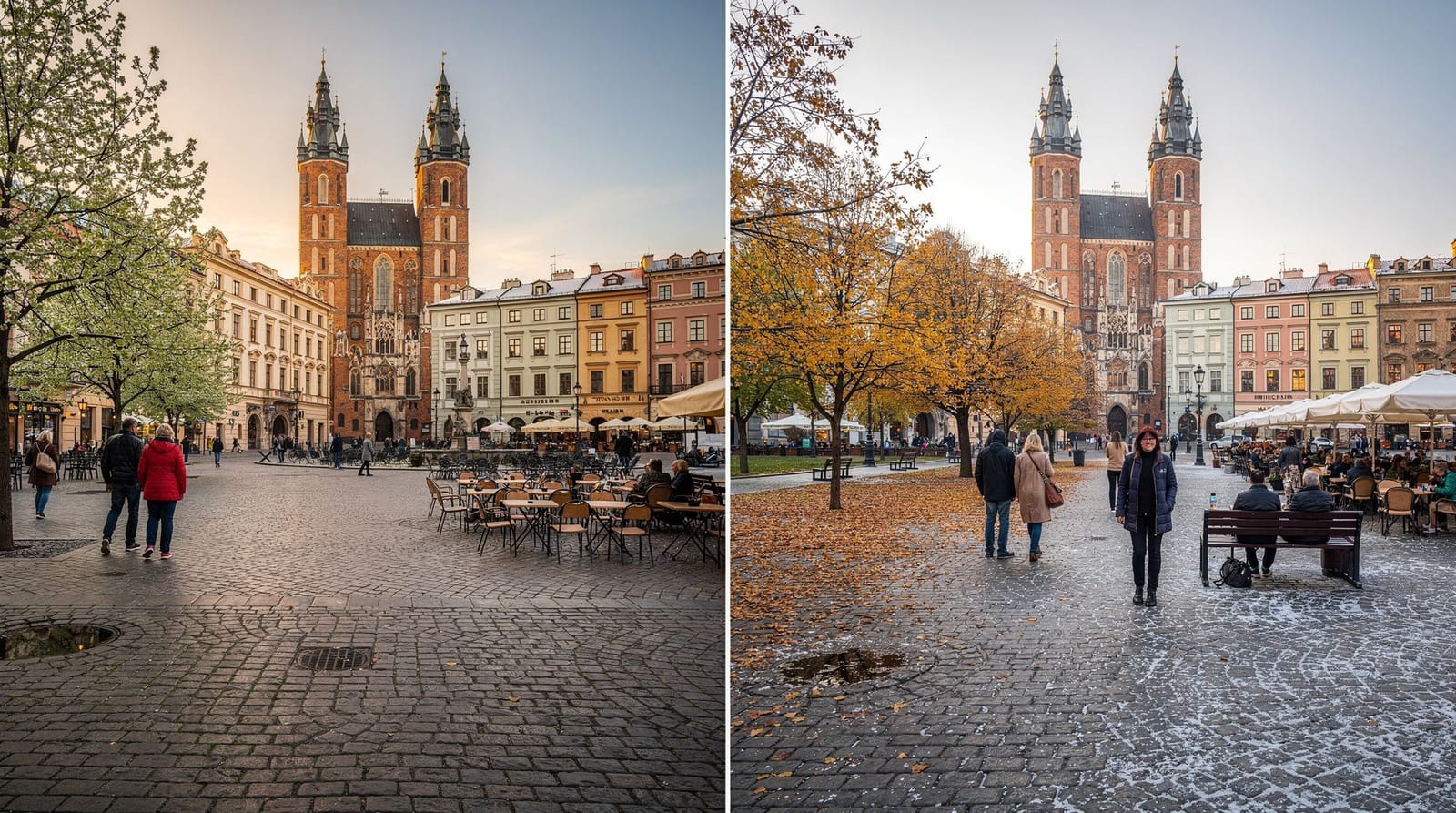
I walked back through the Planty, which in October had the coloured leaves that make those gardens genuinely beautiful, and was at the hotel by 9:15. A Bolt to the airport (40 PLN / 10 €, twenty minutes) had me at departures by 10:00.
Making the schedule bend around your work
Business trips rarely run to plan, so it helps to treat each block above as movable. If a meeting overruns on Friday, the orientation walk can shrink to the Rynek and the Town Hall Tower, and the rest slides to Saturday without much loss. The Rynek Główny guide and the Town Hall Tower guide are useful for deciding what to keep when time is short.
If you would rather not improvise, the Royal Route walking guide gives a ready-made line from the Floriańska Gate to Wawel, and the Wawel Castle guide explains how the ticketed parts of the hill are divided, which matters when you only have one morning for it. For getting around, the public transport guide is worth a quick read, even though on this schedule almost everything stays on foot.
For the evenings, the Kazimierz Jewish Quarter guide and the milk bar guide cover the kind of unfussy, local places that suit a tired traveller after a day of meetings. If the Schindler museum affected you as it did me, the Schindler’s List locations guide is a natural follow-up for a return visit, and the Podgórze ghetto guide covers the part of the city I only touched. Anyone planning a longer return can start from the 3-day itinerary.
If you would rather hand the planning to someone else for a few hours, a guided option can replace the improvised walk. On a tight Friday afternoon, a two-hour guided walk through the Old Town gives the orientation without any map-reading, and for the Saturday evening, a guided walk through the Jewish Quarter adds context that a self-guided stroll along ul. Szeroka does not. Neither is essential, but both suit a traveller whose attention is already spent after a day of meetings. The Old Town walking tour guide and the Kazimierz history overview help you decide whether a guide is worth it, and the first-timers guide covers the basics before you land.
The 48 hours, summarised
| Block | What I did | Time spent |
|---|---|---|
| Friday afternoon | Old Town orientation walk, Sukiennice, Town Hall Tower | ~3hrs |
| Friday evening | Dinner near Rynek, drink in Kazimierz | ~2.5hrs |
| Saturday morning | Wawel Castle State Rooms, Wawel Cathedral and tower | ~2.5hrs |
| Saturday midday | Milk bar lunch near Wawel | 45min |
| Saturday afternoon | Schindler Factory Museum, Podgórze | ~2hrs |
| Saturday evening | Kazimierz on foot, dinner on ul. Józefa | ~2.5hrs |
| Sunday morning | Rynek Główny at 8:00, Planty walk, airport transfer | ~2hrs |
The honest 48-hour verdict
What I saw: Rynek Główny, Sukiennice gallery, Town Hall Tower, Wawel Castle (State Rooms), Wawel Cathedral, Schindler Factory Museum, Kazimierz. What I missed: Wieliczka, Auschwitz, Nowa Huta, the Czartoryski Museum, and approximately everything in Podgórze beyond the Schindler Museum.
The ratio is acceptable. The things I saw are among the city’s most significant. The things I missed are reasons to return.
For anyone with the same configuration — a conference trip with two free days — the 1-day Kraków itinerary and weekend city break itinerary give more specific hour-by-hour options. The city is honest about rewarding efficiency: you can see its major monuments in 48 hours, understand its character, and leave with a real impression rather than a merely checked box. Not every city allows this.
Book a guided golf cart tour of 4 districts with audioguide for an efficient first-day overviewA guided golf cart tour is a legitimate option for a compressed visit — it covers four districts of the city with an audioguide and saves your legs after a day of meetings. I did not use it on this trip but would consider it if returning for a single full day; it is a close alternative to a bus-style sightseeing ticket, with a guided route rather than the freedom to get on and off wherever you like.
The city itself: more interesting than I expected. More emotionally significant, via the Schindler Museum, than I had prepared for. Considerably better value for food than anywhere in Western Europe. Worth the full version — a proper five-day visit rather than a compressed forty-eight hours. I have it on a future itinerary.
Frequently asked questions about 48 hours in Kraków on a business trip
Is 48 hours enough to see Kraków properly? No, but it’s enough to see its major monuments and leave with a genuine impression rather than a checked box. Wawel, the Old Town and Kazimierz fit comfortably; Wieliczka, Auschwitz and the Tatras do not — those need a dedicated day each and are reasons to plan a longer return trip.
What should I skip if my conference schedule only allows one evening free? Skip the sit-down Rynek dinner and go straight to Kazimierz — a single evening there, walking ul. Józefa and ul. Miodowa with a casual meal, gives a far better sense of the city than an expensive main-square restaurant does in the same window.