Kayaking near Kraków: Dłubnia River guide and river trip options
Krakow Nowa Huta: Dłubnia River 3-hour kayak tour
Duration: 3h
Where can I go kayaking near Kraków?
The Dłubnia River in Nowa Huta — 8 km east of the city centre — is the main kayaking option close to Kraków. A guided 3-hour kayak tour runs on the Dłubnia through a nature reserve corridor, costs around 140–180 PLN (€33–43) per person, and suits beginners and families. For more challenging whitewater, the Dunajec River gorge in the Tatras area is 2 hours south by car.
| Where | Dłubnia River, Nowa Huta (8km east); Dunajec gorge, Pieniny (2h south) |
| Cost | 140–180 PLN/person Dłubnia; 130–160 PLN/person Dunajec |
| Time needed | Half a day for Dłubnia; a full day for the Dunajec |
| Getting there | Dłubnia by tram/tour transfer; Dunajec needs a booked transfer or car |
| Best time | April–October; May–June for the lushest Dłubnia scenery |
Kayaking near Kraków: an underrated active option
Kraków sits in a river valley and is surrounded by waterways, but the city itself (and the Vistula in the urban section) is not set up for kayaking. The practical options for paddling close to Kraków divide into two categories: easy day-trips on calm rivers near the city, and more adventurous options requiring 2+ hours of travel to the foothills.
The closest guided kayaking option is the Dłubnia River tour from Nowa Huta — a 3-hour paddle through a nature reserve on a small, calm river 8 km east of the city centre. For something more scenic and dramatic, the Dunajec River gorge in the Pieniny Mountains (traditionally done on wooden rafts, but kayaks are also possible) is the best long-distance option.
Neither option is extreme. The Dłubnia is a beginner-friendly gentle river; the Dunajec gorge, while dramatic in scenery, is not whitewater kayaking. Kraków is not a base for serious paddling adventures — it’s a base for accessible, scenic water experiences that require no technical skills.
The Dłubnia River: kayaking in Nowa Huta
About the Dłubnia
The Dłubnia is a 95 km left-bank tributary of the Vistula that flows through the Nowa Huta district on Kraków’s eastern edge. In the section used for kayak tours — a 10–15 km stretch through the Dłubnia Valley Landscape Park — the river is narrow (15–25 metres wide), shallow, and slow-moving, flowing through a mature riparian forest with minimal development on the banks.
This is not dramatic scenery, but it is genuinely peaceful. The forest canopy closes overhead in places; kingfishers and grey herons are common; the sound of the city disappears almost immediately. For visitors who have spent several days in Kraków’s dense historic centre, a morning on the Dłubnia feels like a real escape.
The guided tour
The Krakow Nowa Huta Dłubnia River 3-hour kayak tour is the primary guided kayaking option near Kraków. The tour operates in kayaks or Canadian canoes, typically in groups of 8–12 people. A guide accompanies the group on the water and explains the ecology of the Dłubnia Valley nature reserve.
Duration: 3 hours on the water, plus transfer time. The full experience is 4–5 hours from a central Kraków meeting point.
Difficulty: Easy. No previous kayaking experience is required. The river has no significant rapids or obstacles in the toured section. Children from approximately 7 years can participate.
Typical price: 140–180 PLN (€33–43) per person. Paddle, life jacket, and dry bag provided.
Season: April to October. Peak season is May–September; spring (April–May) may have higher water levels from snowmelt in the Tatras, which makes the current slightly faster but still safe for beginners.
Combining with Nowa Huta
The kayak tour starts in Nowa Huta, making it easy to combine with a visit to the Soviet-era district before or after paddling. Nowa Huta’s Plac Centralny (now Plac Ronalda Reagana) is 10 minutes from the river access point, and the district’s communist-era architecture and history are fascinating in the same way that the Dłubnia nature corridor is peaceful.
The contrast between the brutalist Soviet blocks of Nowa Huta’s streets and the birdsong of the Dłubnia forest 500 metres away is one of the stranger juxtapositions Kraków’s wider area offers.
The Dunajec River: wooden rafts and kayaks in the Pieniny gorge
About the Dunajec
The Dunajec River gorge in the Pieniny Mountains is 110–120 km south of Kraków — approximately 2 hours by road. This is emphatically not a day trip for the casual visitor; it requires planning and ideally a car or booking onto a guided day tour.
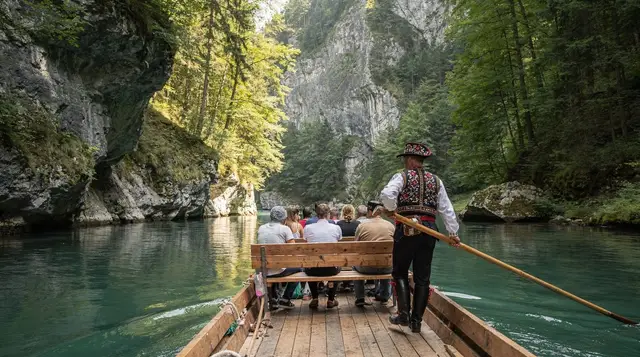
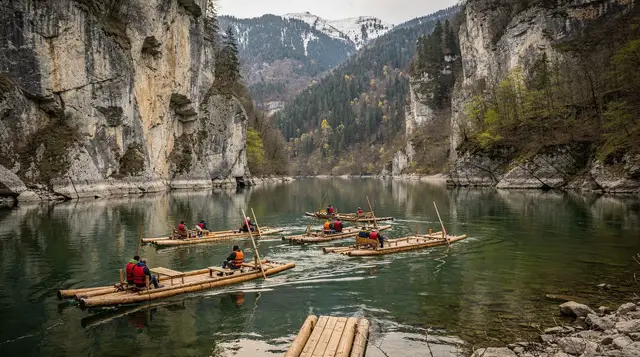
The traditional way to experience the Dunajec gorge is on a wooden raft (not a kayak). Rafts carry 12 passengers and are poled by two rafters in traditional Podhale dress. The journey covers 18 km from Sromowce Niżne (Kąty) to Szczawnica through a dramatic 300–350 metre limestone gorge.
The Dunajec River rafting day trip from Kraków is the most convenient option — guided day tours from Kraków include return transport and cost 130–160 PLN (€31–38) per person. A separate Dunajec River rafting guide covers this experience in full detail.
The Dunajec River Gorge wooden raft river cruise emphasises the traditional raft experience with the hand-built pine log craft and highland raftsman dress — the historical dimension of Pieniny rafting.
Season: April to October. Best months: May–September. The gorge is beautiful year-round but rafting does not operate in winter (ice risk, low water).
Kayak options on the Dunajec
Independent kayaking is permitted on sections of the Dunajec above and below the Pieniny gorge. The gorge section itself is reserved for the traditional wooden raft operators by regulation. For kayak-specific tours on the Dunajec, you would need to contact specialist outdoor operators in Szczawnica or Krościenko — these are not currently bookable via the GYG listings and are recommended only for visitors with dedicated paddling experience.
Other water activities near Kraków
Deepspot diving (35 km north of Kraków)
Not kayaking, but worth mentioning for the adventurous: DeepSpot at Mszczonów (near Warsaw, not actually near Kraków despite its marketing) is the world’s deepest diving pool at 45.5 metres. There is a diving tour bookable from Kraków — suitable for certified divers or those wanting an introductory dive in a controlled environment.
Vistula River cruise (city centre)
The Vistula River through Kraków is navigable but fast-moving after rainfall; casual kayaking is not recommended without experience and equipment. For water-based sightseeing in the city, the commercial Vistula River cruise is the appropriate option.
Thermal baths near Zakopane
After a day of active pursuits near Kraków — kayaking, hiking, or rafting — the Chochołów thermal baths near Zakopane provide a restorative contrast. The geothermal water pools (36–38°C) are open year-round and can be reached from Kraków in 2 hours.
Planning a kayaking day near Kraków
If you have half a day
Book the Dłubnia River kayak tour from Nowa Huta. The 3-hour paddle plus transfer takes a half-day and can be combined with lunch in Nowa Huta or an afternoon walk along the Vistula promenade in the centre.
Budget: 140–180 PLN (€33–43) per person.
If you have a full day
Combine the Dłubnia morning kayak with an afternoon exploring Nowa Huta’s communist history — the Nowa Huta Museum (skip-the-line tickets recommended in high season), Plac Centralny, and the Steelworkers’ Parish Church (built by workers in defiance of the communist authorities in the 1970s).
If you want something more dramatic
Book a day trip to the Dunajec River gorge, staying overnight in Zakopane and combining with a hike in the Tatras the next day. See the Tatra Mountains destination guide for logistics.
Practical tips for kayaking near Kraków
What to wear: Quick-dry clothing — you will get wet, particularly if conditions are breezy. Synthetic base layers rather than cotton. A waterproof outer layer is useful in spring and autumn. Sandals or water shoes for the kayak; bring a change of footwear for after.
Sunscreen: The Dłubnia tour has sections in open sun — apply generously before departure.
Waterproof your phone: A dry bag (provided) or a waterproof phone case. The Dłubnia is calm but accidental immersion of electronics is possible on any water-based activity.
Children: The Dłubnia tour is suitable for children from approximately 7 years who can follow safety instructions. Younger children can sit in a tandem canoe with a parent. Life jackets are provided and mandatory for all participants.
Dłubnia vs Dunajec: which to choose
| Dłubnia River | Dunajec Gorge | |
|---|---|---|
| Distance from Kraków | 8 km (Nowa Huta) | 110–120 km (2h) |
| Craft | Kayak or Canadian canoe | Traditional wooden raft |
| Difficulty | Easy, beginner-friendly | None — passive, poled by rafters |
| Scenery | Calm forest river, wildlife | Dramatic 300m limestone gorge |
| Time commitment | Half-day | Full day |
| Best for | A relaxed morning close to the city | A scenic full-day excursion |
If you only have a spare morning or afternoon, the Dłubnia is the obvious pick. If you’re already planning a full day trip south toward the Tatras or Pieniny, add the Dunajec — the scenery is a different order of dramatic and pairs naturally with Zakopane or a night in the mountains.
Fitness and safety notes
Neither the Dłubnia tour nor the Dunajec raft trip requires swimming ability to be tested, but life jackets are mandatory and provided on both. The Dłubnia’s calm, shallow water and slow current make it genuinely low-risk for nervous first-timers; guides stay with the group throughout. On the Dunajec, passengers sit in the raft rather than paddle, so the physical demand is minimal — the main consideration is dressing for spray on cooler days and being comfortable sitting for roughly 2.5 hours. Neither activity is appropriate for those with limited mobility without discussing accessibility with the operator in advance.
Frequently asked questions about kayaking near Kraków
Do I need kayaking experience for the Dłubnia River tour?
No. The Dłubnia River in the toured section is calm and slow-moving. The guide briefs you on basic paddle technique at the start, and the group moves at a pace comfortable for all participants. This is a beginner-friendly option.
Is the Dunajec River rafting the same as kayaking?
No — the traditional Dunajec experience uses wooden rafts poled by local rafters in highland dress, not kayaks. Passengers sit passively and enjoy the scenery. It’s a distinct and historically rooted experience, not a paddling sport activity. See the Dunajec River rafting guide for full details.
When is the best season for kayaking near Kraków?
May and June for the Dłubnia: the river is at a good level, vegetation is at its most lush, and birdlife (including kingfishers and grey herons) is abundant. July and August are also excellent but can be hot. September offers pleasant temperatures and the first autumn colours on the riverside trees.
Are there whitewater kayaking options near Kraków?
Not within easy day-trip range. The Dunajec below Szczawnica has some more active sections, but true whitewater kayaking requires travel to the Dunajec headwaters in the Slovak Tatras or to rivers in the Bieszczady Mountains (far south-east Poland). Kraków is not a whitewater destination.
Can I kayak on the Vistula River in Kraków?
Technically yes, but it requires your own equipment and experience. The Vistula through the city centre is wide and can have fast currents after rainfall. Commercial kayak hire for independent use on the Vistula is not well-established in the city centre. The Vistula is better enjoyed via the commercial river cruise.
Which kayaking option is better for families with young children?
The Dłubnia River tour is the better choice for families — it’s calm, guided, and suitable for children from around age 7, with younger children able to sit in a tandem canoe with a parent. The Dunajec raft trip is also family-friendly since passengers sit passively, but the longer day and travel time suit slightly older children better.
Do I need to book kayaking near Kraków in advance?
Yes, especially in peak season (June–August), when both the Dłubnia tour and Dunajec day trips can sell out a few days ahead. Shoulder season (April–May, September–October) usually allows booking 1–2 days ahead.
Top experiences
Bookable activities with verified prices and instant confirmation on GetYourGuide.