My milk bar experience in Kraków: eating communist-era food for 5 euros
Here is what I actually spent, ate, and learned across three visits to Kraków’s milk bars — the good, the confusing, and the genuinely excellent.
| Cost | around 20-30 PLN for a full sit-down meal (roughly 5-7 €) |
| Best for | budget lunch, authentic local food, solo travellers |
| Where | Old Town, Kazimierz, near the main station |
| Payment | cash preferred; some now take cards |
| Best time | weekday lunch, around 11:30-13:30, for the full local crowd |
What is a milk bar, exactly?
Before I arrived in Kraków, I had read the phrase “bar mleczny” in approximately forty travel articles, each of which mentioned it as an essential experience without quite explaining what it is. I will try to be more useful.
A bar mleczny — literally “milk bar” — is a Polish institution dating from the communist era, when the state subsidised inexpensive canteen-style restaurants to ensure workers could eat affordably. The name comes from the original restriction to dairy-based and vegetarian dishes (meat was too expensive and too scarce to subsidise). The restriction eventually relaxed, and today’s milk bars serve meat dishes alongside the original eggs, dairy, and vegetables. The subsidy, at least partial, continues for some establishments through local government support; for others it is simply a tradition that has survived on its own economic merits.
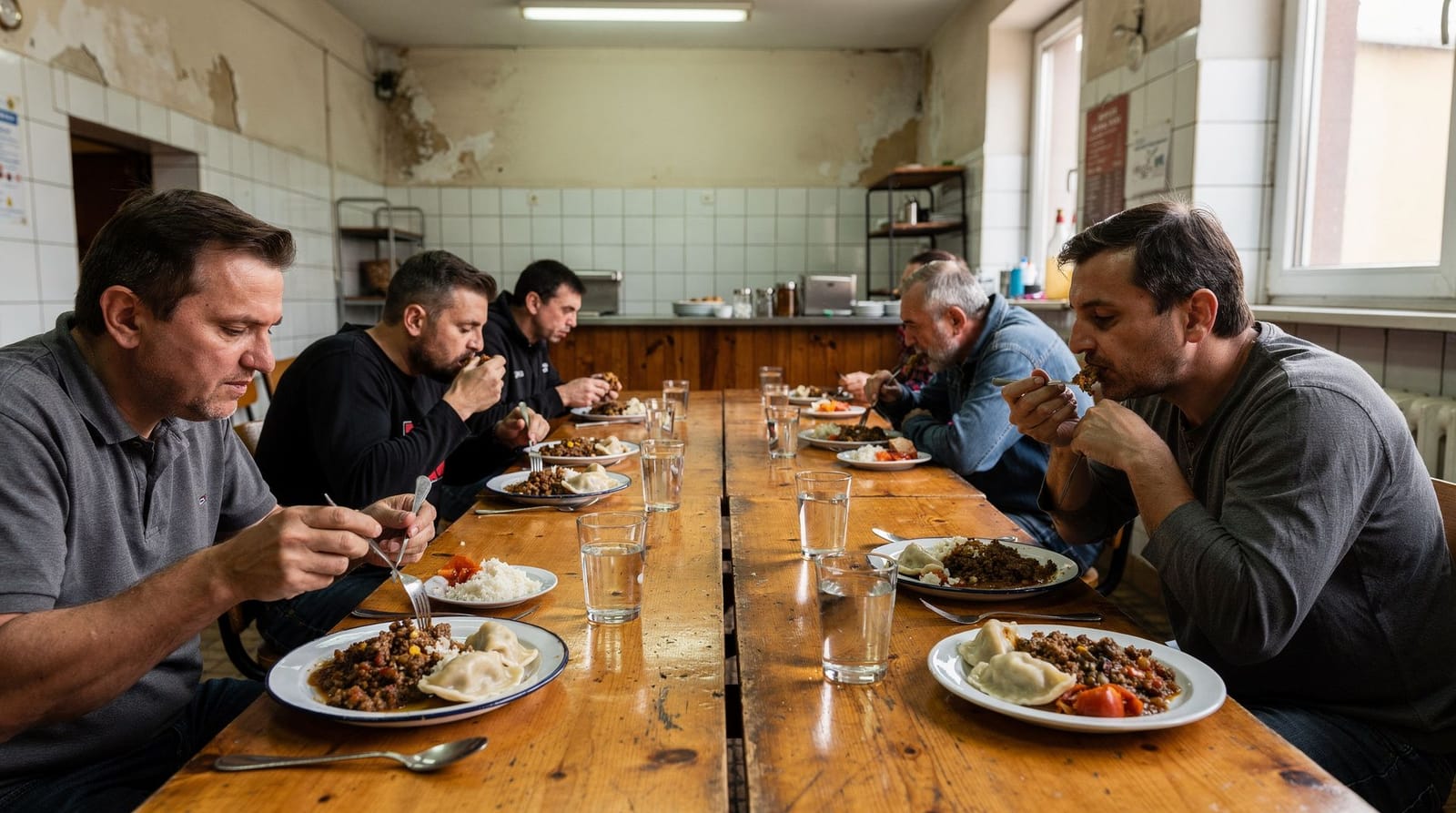
What you get, in practical terms, is a cafeteria-style restaurant with a blackboard or printed menu, a counter where you order and pay (sometimes before, sometimes after), a tray that you carry to a table yourself, and prices that in February 2022 ranged from 8-15 PLN per dish (2-3.50 €). Main courses, not snacks. Actual food.
The atmosphere is somewhere between a school canteen and your grandmother’s kitchen. The lighting is usually fluorescent. The staff are brisk and not unkind. Other diners are predominantly local — pensioners, students, people on lunch breaks from nearby offices — with a scattering of tourists who have done their research.
Choosing a milk bar: the Kraków options
Kraków has several milk bars with varying characters and reputations.
Bar Mleczny Pod Temidą, on ul. Grodzka (one of the main streets between the Rynek Główny and Wawel), is perhaps the best-known. Its location makes it unusually accessible to tourists, and it shows — the queues at noon in tourist season can be substantial. The food is reliable; the atmosphere slightly less authentic than the more out-of-the-way options.
Bar Mleczny Centralny, closer to the main station on ul. Jagiellońska, draws a more genuinely local crowd. This is where I ended up on my first day, following a recommendation from a man at my guesthouse who seemed mildly amused that I was asking about milk bars specifically.
There are also smaller, neighbourhood versions throughout Kazimierz and Podgórze that lack English signage or tourist-facing menus but can be navigated with a phone camera pointed at the blackboard and Google Translate running. These are worth the slight effort.
My first meal: a translation adventure
The menu at Bar Mleczny Centralny was printed on a laminated sheet in Polish, with no English translation visible. I photographed it with my phone and used Google Translate’s camera function, which produced results ranging from accurate to entertainingly wrong.
I ordered:
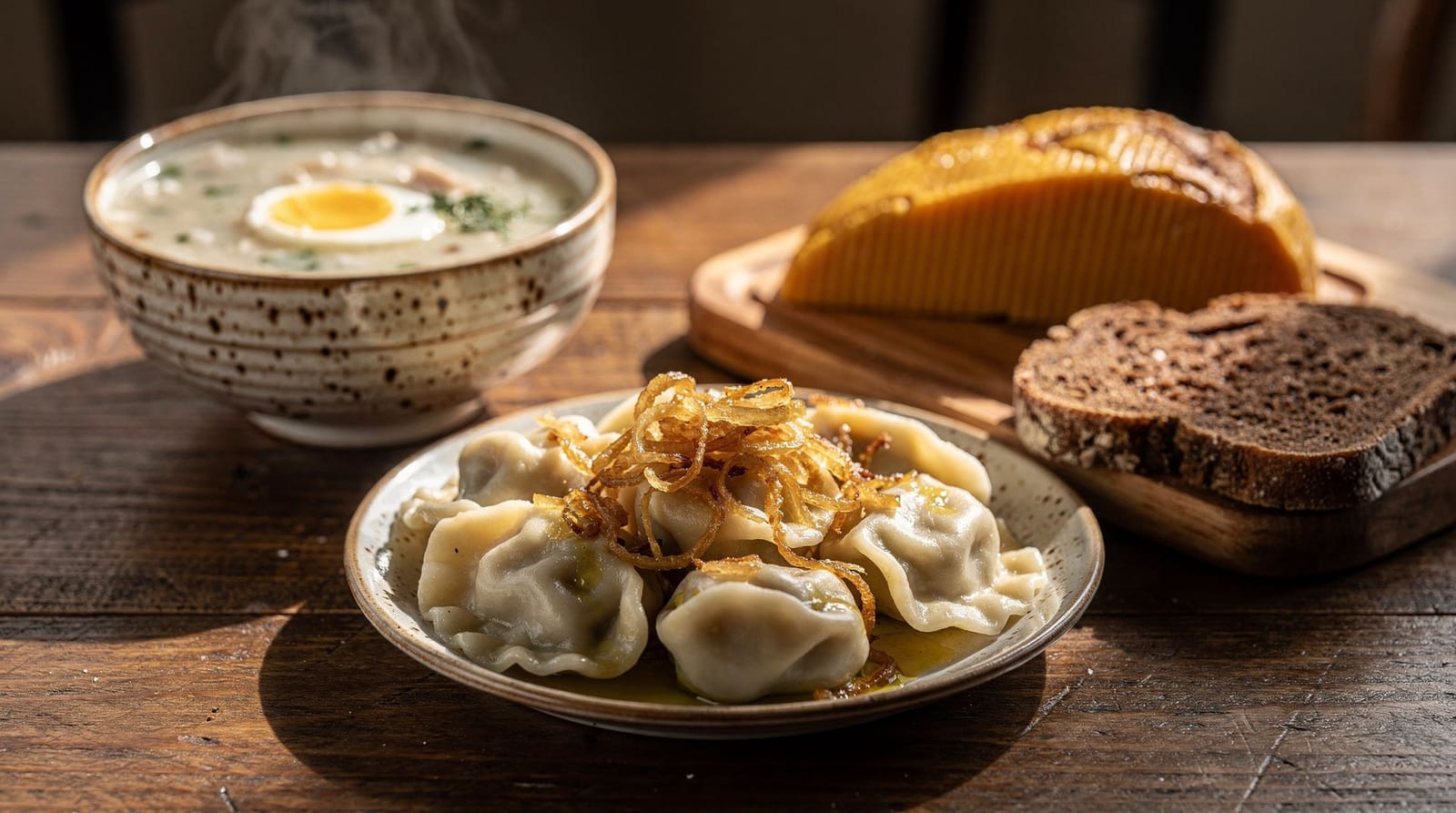
- Żurek (żurek) — a sour rye soup, translating reasonably well as “sour soup with egg and sausage” — 9 PLN (2.15 €)
- Pierogi ruskie — potato and farmer’s cheese dumplings — 12 PLN (2.85 €)
- Kompot — a lightly sweetened fruit drink, the standard milk bar beverage — 3 PLN (0.70 €)
Total: 24 PLN (5.70 €). For a sit-down lunch with soup, main course, and a drink. This was not a mistake on my part — this was the price.
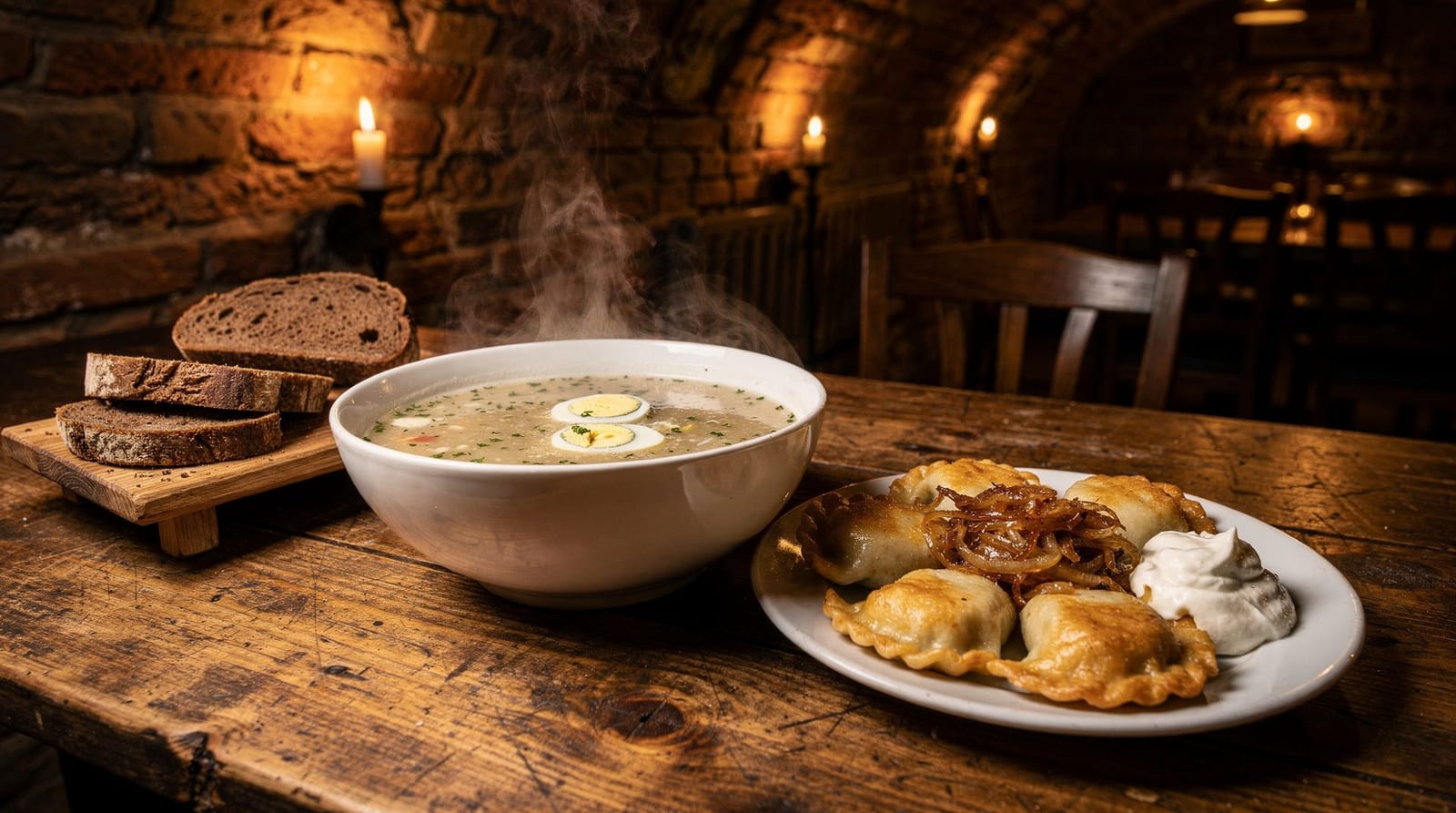
The żurek arrived in a deep bowl with a halved hard-boiled egg and two slices of kielbasa floating in it. The broth was sour and smoky and tasted like something that had been simmering since Tuesday in a way that was entirely positive. The sourness came from fermented rye flour; the depth from the sausage and whatever the kitchen had been doing to it for the past several hours.
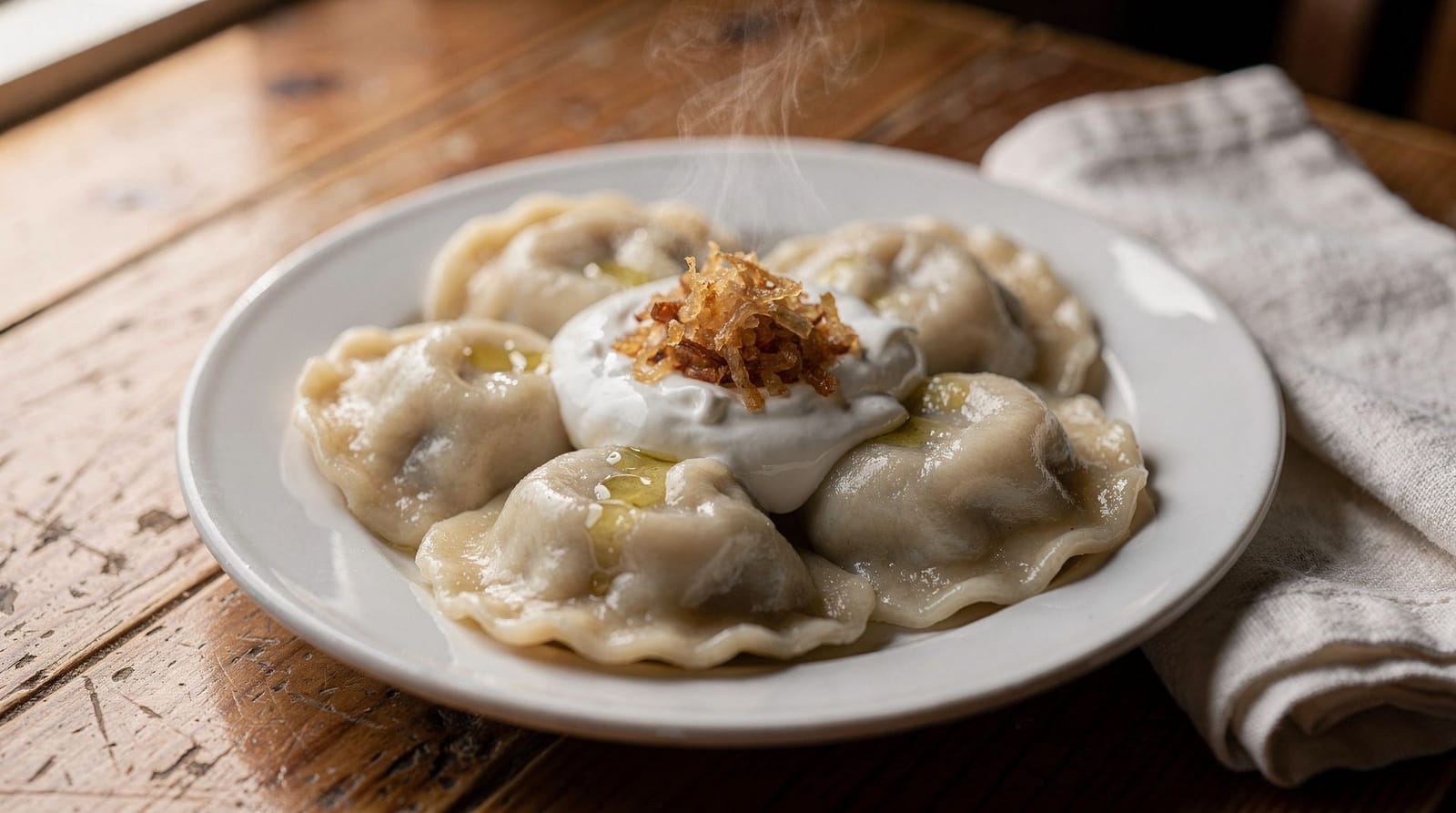
The pierogi ruskie were eight dumplings, slightly crispy on the bottom from the griddle, served with a small dish of sour cream (śmietana) for dipping. The filling was mashed potato and white cheese — twaróg — seasoned simply. They were excellent. The comparison point I kept returning to was that they tasted like something genuinely intended to feed someone, not to perform a cultural identity.
What to order if you don’t know where to start
The milk bar guide on this site covers the full menu landscape, but here is the practical shorthand for a first visit:
Safe starting points:
- Żurek — the definitive Polish soup, available everywhere, rarely disappointing
- Barszcz czerwony — clear beetroot broth, beautiful colour, light and slightly sweet
- Pierogi ruskie — the universal crowd-pleaser; potato and cheese filling, widely available
- Kotlet schabowy — a breaded pork chop, basically Poland’s schnitzel, served with potatoes and sauerkraut salad (kapusta)
- Naleśniki — thin pancakes, sweet (with jam or cheese) or savoury (with meat filling)
- Kopytka — potato dumplings, denser than pierogi, often served with a sauce
What to avoid if you’re uncertain:
- Flaczki (tripe soup) — an acquired taste
- Czernina (duck blood soup) — genuinely polarising; not always on menus, but worth knowing
The drink situation: Kompot is correct. It is a lightly sweetened drink made by simmering fruit (usually sour cherry or dried prunes) in water — not a juice, not a cordial, something of its own. Tea is available. Coffee is sometimes Nescafé. Mineral water is mineral water.
The ordering mechanics
Different milk bars handle payment differently, and this is the thing most likely to trip up a first-timer.
At some bars, you order at a counter, receive a ticket with a number, pay, and collect your food when called. At others, you collect a tray and point at dishes behind glass. At others still, you sit, a server comes to take your order, and you pay after. There is no universal system, and the signage explaining which approach applies is usually in Polish only.
The approach that works in all cases: observe what other people are doing when you walk in and replicate it. Queue where others queue. Take a tray if others take trays. This sounds obvious but the anxiety of not knowing the protocol is what puts people off milk bars, and the solution is genuinely that simple.
A word about ambiance expectations
Milk bars are not restaurants in the experience-economy sense. They do not offer service in the contemporary hospitality meaning of that word. The counter staff are efficient and will answer questions if asked, but they are not there to create an experience — they are there to feed people efficiently at low cost.
The tables are often communal or close-set. The acoustics are hard. At noon, the noise level is considerable. In February (when I visited), I was one of three non-Polish customers I could identify across two milk bar visits. By July, the ratio shifts, but milk bars maintain their character because their primary customers are not tourists.
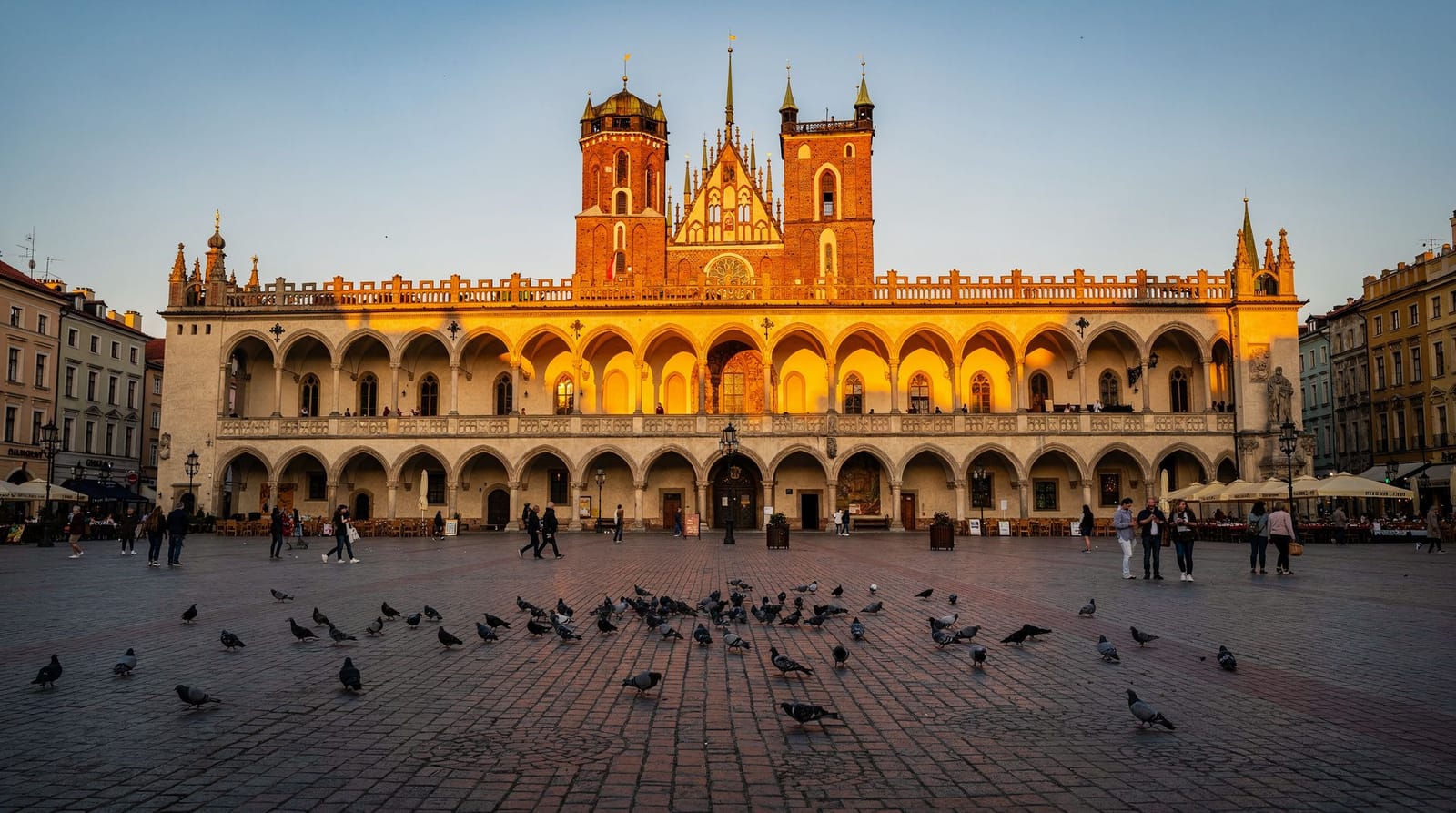
This is the point. They are real things, not recreations of real things. The Sukiennice restaurant on the main square charges 80-100 PLN for a main course and targets precisely the audience that finds the milk bar daunting. The tourist trap is not the milk bar — it’s the alternative.
Comparing to the food tour option
For travellers who want to understand Polish food more systematically, a guided food tour provides context that a solo milk bar visit cannot. A good guide will explain the history of bar mleczny culture, compare different regional dishes, and bring you to places you would not otherwise find.
Book a 4-hour Polish food tour of KrakówIf you prefer a tour built around tastings and a bit of local history, a guided Polish food and culture walk with tastings covers similar ground at a relaxed pace.
The food tour is the more expensive option (100-150 PLN, 24-36 €, versus a milk bar meal at 20-30 PLN). It is not better food — it is a different kind of value. The milk bar is the raw thing; the food tour is the explained thing. Both are legitimate ways to engage with traditional Polish cuisine in Kraków.
Budget travel implications
A milk bar lunch at 20-25 PLN and an obwarzanek (ring bread from a street cart, 3 PLN) for breakfast puts daily food spend at around 50-70 PLN (12-17 €) including a sit-down dinner somewhere modestly priced in Kazimierz. This is not self-deprivation — it is eating well by any standard, in food that represents the city’s actual culinary tradition rather than its tourist-facing version.
For more on managing a Kraków budget, the planning section of this site has realistic numbers by accommodation category.
Vegetarian and dietary considerations
Milk bars have a genuine advantage for vegetarians, ironically given the “milk” in the name: because the original wartime-era menus were built around dairy and vegetables rather than meat, most milk bars still carry a strong vegetarian backbone. Pierogi ruskie, placki ziemniaczane (potato pancakes), naleśniki with cheese, and various barszcz-based soups are reliably meat-free, though it is worth asking specifically, since broths are sometimes made with meat stock even when the visible ingredients look vegetarian. Vegan options are thinner on the ground — sour cream and egg appear in a lot of dishes — but a plain kompot, bread, and a vegetable-forward barszcz can work in a pinch. Staff rarely speak fluent English, so a translation app pointed at the blackboard remains the most reliable way to check.
Milk bars beyond Centralny and Pod Temidą
The two milk bars I ate at sit close to the Rynek Główny and the main station, which makes them the obvious first stop, but they are not the only ones. Kazimierz has its own smaller, quieter milk-bar-style canteens tucked among the district’s cafés and bars, worth a look if you are already exploring the Jewish quarter. Further out, in Podgórze and around Nowa Huta, milk bars lean even more local — the socialist-era planned suburb of Nowa Huta in particular still has canteen-style eateries that feel like a genuine extension of its history rather than a preserved curiosity for visitors. If you want the history behind those canteens, a walking tour of the former communist neighbourhood explains why they exist at all. None of these need advance planning; you simply walk in, observe, and queue.
Milk bar vs. restaurant vs. food tour
If you’re deciding how to spend a food-focused afternoon in Kraków, here is how the three main options actually compare:
| Milk bar | Sit-down restaurant | Guided food tour | |
|---|---|---|---|
| Price | around 20-30 PLN | around 80-120 PLN | around 100-150 PLN |
| Setting | cafeteria, self-service | table service | small group with a guide |
| Best for | budget, authenticity | occasion dining | context, variety, no guesswork |
| English menu | rare or limited | usually available | always explained in English |
| Pace | fast, functional | leisurely | structured, multiple stops |
None of these is objectively “better” — they answer different questions. If you want to understand the food rather than just eat it, the food tour earns its higher price; if you want the closest thing to how Kraków actually eats lunch, the milk bar wins every time.
Useful phrases for ordering
A handful of Polish words make milk bars far less intimidating. “Poproszę” (I would like, please) is the single most useful phrase — point at the item and say it. “Na wynos” means to take away, “na miejscu” means to eat in. “Rachunek, proszę” asks for the bill if you are paying at the table rather than the counter. Numbers help too, since dishes are usually ordered by pointing at a numbered menu line. None of this is essential — pointing works fine — but the staff visibly relax when you attempt even one word of Polish, and it smooths over the ordering-system confusion described above.
Building a day around a milk bar lunch
A milk bar lunch fits easily into a day of sightseeing, because it asks for little time and no planning. If you are walking the Old Town in the morning, the Rynek Główny and the Royal Route leave you well placed to eat before heading up to Wawel Castle in the afternoon. Eating cheaply at midday also frees up the budget for a museum ticket or a proper dinner later on.
If you are still shaping your trip, the first-timers guide and the one-day itinerary show where a lunch stop naturally falls. Those staying longer can fold milk bars into the three-day itinerary or into a budget-focused plan.
Other cheap and local food worth pairing with it
A milk bar is not the only way to eat well without overspending. Between meals, a street snack such as an obwarzanek or a zapiekanka from the stalls around Plac Nowy keeps you going. For the full picture of the city’s eating, the Kraków food guide and the best pierogi round things out. If you would rather learn to cook what you ate, the Polish cooking classes are a natural next step, and my pierogi class diary tells how that went. Compare the milk bar experience with the pricier central restaurants in the guide on avoiding Rynek overpricing.
Two days later: I went back
I returned to Bar Mleczny Centralny on my third day. I ordered the same żurek. I also tried bigos — hunter’s stew with sauerkraut, various meats, and mushrooms, dense and deeply savoury — and a glass of kompot from what seemed like a different batch of fruit. The stew cost 14 PLN (3.30 €).
At the table next to mine, a woman was eating alone and reading a paperback. At the next table, three men in construction clothes were having a heated conversation over kotlet schabowy. No one was performing anything. The milk bar, in February, in Kraków, was simply where some people ate their lunch.
That is the whole honest recommendation.