Zalipie painted village day trip from Kraków: folk art guide
From Krakow: Malopolska, Bochnia, Zalipie & Tarnów tour
How do I visit Zalipie, the painted village, from Kraków?
Zalipie is about 90 km north-east of Kraków, roughly 1.5 hours by road. There is no direct bus — driving or joining a tour is the most practical option. The village is open to visitors at all times (the exteriors are visible from the road and paths), and the Felicja Curyłowa Museum cottage and Dom Malarek are the main indoor venues (museum cottage closed on Mondays). The best time to visit is early June during the Malowana Chata (Painted Cottage) competition, when buildings get freshly painted.
Zalipie: a village unlike any other in Europe
Somewhere on the flat agricultural plain north-east of Kraków, the village of Zalipie decided to paint everything. Not in a single burst of eccentric inspiration, but continuously, over more than a century — generation after generation of women (and some men) painting flowers, birds, and geometric patterns on the exterior walls of cottages, barns, wells, footbridges, beehives, dog kennels, and fences. Every surface that can hold paint has been painted. The tradition is still alive: new paintings are added each year.
Zalipie is not a theme park, not a reconstruction, not a tourist invention. It is a genuine living village where folk painting tradition has evolved and deepened over 150 years. Coming from Kraków, it represents one of the most singular and least predictable day trips available — a reminder that Małopolska has layers of cultural distinctiveness that go far beyond the standard itinerary.
| Where | ~90 km north-east of Kraków, Małopolska |
| Cost | Curyłowa cottage 12 PLN (free on Wednesdays), plus transport |
| Time needed | 2–3 hours in the village, half-day with Tarnów or Bochnia |
| Getting there | car, guided tour, or no practical direct bus |
| Best time | early June, Malowana Chata competition week |
The history of the painted tradition
The flower-painting tradition in Zalipie is believed to have originated in the late 19th century as a way to cover soot stains above hearths — in a period before metal chimneys were common, cottages had simple openings above the hearth, and soot stained the whitewashed walls in rings. Women began painting over the stains with lime-based paints mixed from natural pigments, initially in simple rosette patterns, later expanding into elaborate floral designs.
By the early 20th century, the practice had moved from interior walls to exterior façades. The critical figure in transforming Zalipie’s painted tradition into a recognised art form was Felicja Curyłowa (1904–1974), whose painted cottage became legendary within Polish folk art circles. Her home — now the Felicja Curyłowa Museum — was entirely decorated inside and out with her characteristic blue-and-white floral designs. She won the Malowana Chata (Painted Cottage) competition, established in 1948, multiple times.
The Communist period was ambivalent toward folk arts — the regime was attracted to the propagandistic possibilities of “authentic peasant culture” but simultaneously pushed collectivisation and modernisation that undermined the material conditions in which the tradition flourished. Zalipie survived this period largely intact, partly because the painted tradition was adopted as a symbol of Polish national folk art identity.
Today the painting tradition is maintained primarily by women, organised through the local Dom Malarek (Painters’ House), which serves as a community centre, gallery, and meeting point.
Distance and transport from Kraków
Zalipie is approximately 85–90 km north-east of Kraków city centre.
By car: The most practical option. The route via DK94 and then local roads to Zalipie takes about 1h20–1h30. The village itself is small — you can drive through the main street and park at the Dom Malarek or near the Curyłowa Museum. Combining with Tarnów (30 km south of Zalipie) or Bochnia (40 km south-west of Zalipie) is easy by car.
By guided tour from Kraków: The Małopolska, Bochnia, Zalipie and Tarnów tour from Kraków covers all four destinations in one day — the most efficient way to experience the region without a car. The tour includes the Bochnia Salt Mine, Zalipie village, and Tarnów Old Town, giving you a rich cross-section of eastern Małopolska.
By public transport: There is no direct bus from Kraków to Zalipie. The nearest town with reasonable bus connections is Dąbrowa Tarnowska (about 15 km away), but getting from there to Zalipie requires a local bus or taxi. This is technically possible but quite complex — a car or tour is strongly recommended.
What to see in Zalipie
Dom Malarek (Painters’ House)
The Dom Malarek is the community and exhibition centre for Zalipie’s painting tradition. The building itself is extensively painted — exterior walls covered in the characteristic large floral compositions in blue, red, yellow, and green on white backgrounds. Inside, an exhibition presents the history of the tradition, examples of work by key artists, and the tools and techniques used.
The Dom Malarek also hosts the annual Malowana Chata (Painted Cottage) competition each year in the week following Corpus Christi (typically early June). During this period, buildings across the village receive fresh paintings, and the atmosphere is exceptional — the most colourful and alive the village gets all year. If you can time your visit to early June, do so.
Opening hours and any admission fee are not published by the Tarnów Museum; check locally before you go.
Felicja Curyłowa Museum Cottage
The preserved cottage of Felicja Curyłowa (1904–1974), the most celebrated of Zalipie’s painters, is now a branch of the Tarnów Museum. The interior is as she left it — every wall, ceiling, furniture piece, and decorative object painted in her characteristic style. Curyłowa’s paintings have a folk naivety that is somehow also sophisticated: the colours are vivid but harmonious, the floral compositions intricate but not fussy.
The cottage is a 5-minute walk from the Dom Malarek. Admission: 12 PLN adults (≈ €2.90), 9 PLN reduced, 28 PLN family; entry is free on Wednesdays. Check opening hours on the official website of the Tarnów Museum (muzeum.tarnow.pl).
The village itself — a self-guided walk
Beyond the two main venues, the painted tradition is on display throughout the village. Walk the main street and side paths to see:
- Painted garden fences and gate posts
- Flower paintings on barn walls and shed doors
- Painted beehives in cottage gardens
- Some houses with full exterior paintings covering every surface from foundation to roofline
- The painted footbridge over the small stream on the village’s northern edge
The quality and density of painting varies — some cottages are spectacular, others have only token flower motifs. The most painted buildings tend to be near the Dom Malarek. Do not enter private property without invitation, but most exterior painting is clearly visible from paths and roads.
Combining with other eastern Małopolska destinations
Tarnów
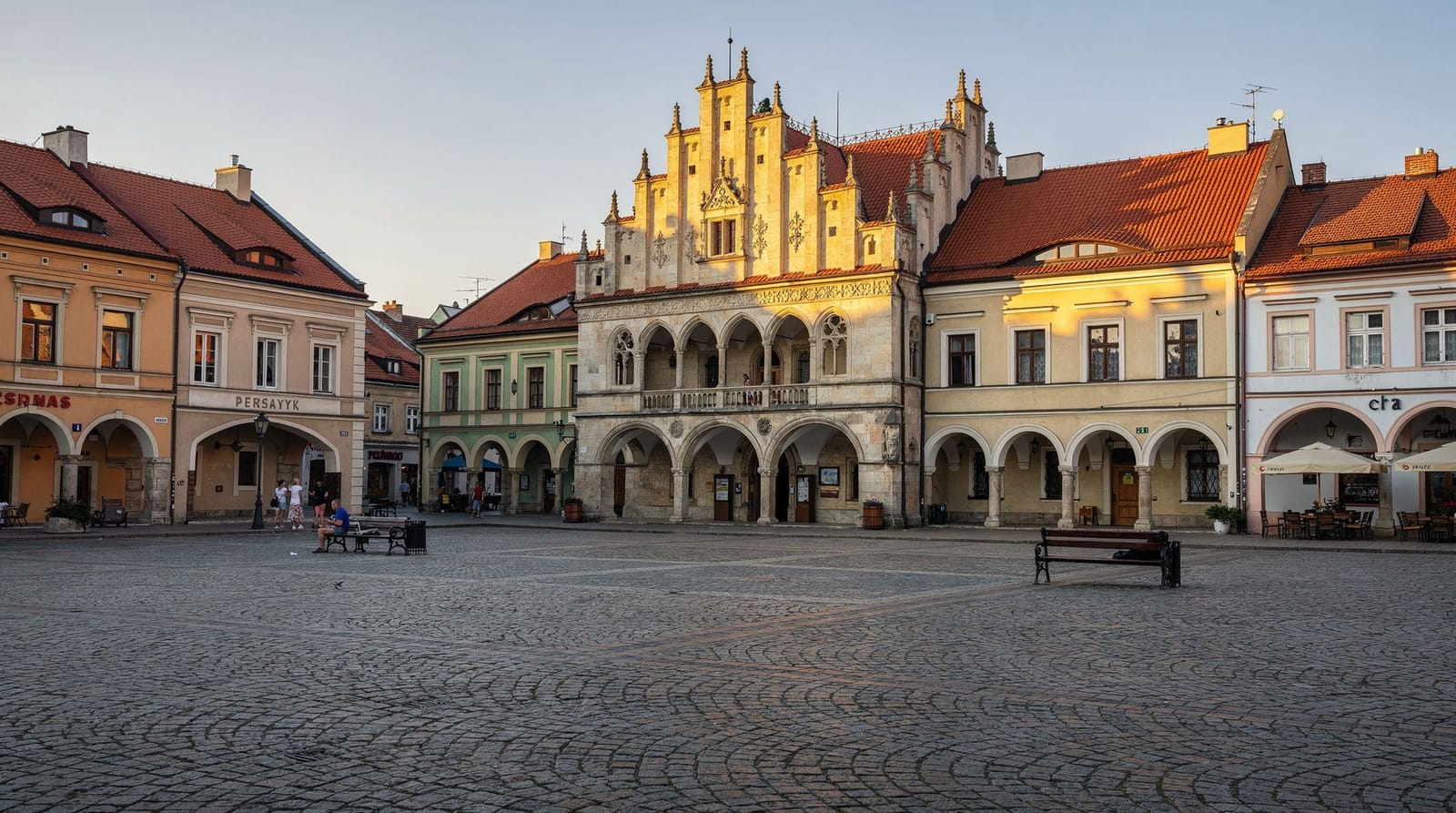
Tarnów is 35 km south of Zalipie and one of Poland’s most underrated cities — a complete Renaissance Old Town with an intact 16th-century market square and extraordinary Jewish heritage sites. The town survived World War II relatively intact, making it a genuine historical treasure that most Kraków visitors never discover. Allow 2–3 hours. By car from Zalipie: 35–40 minutes.
Bochnia Salt Mine
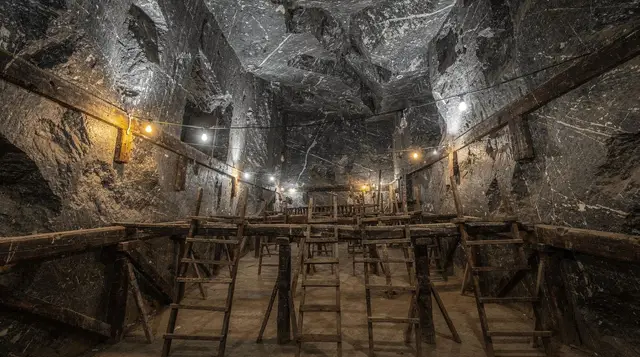
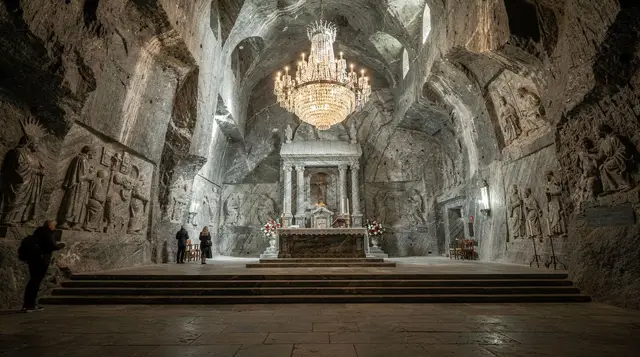
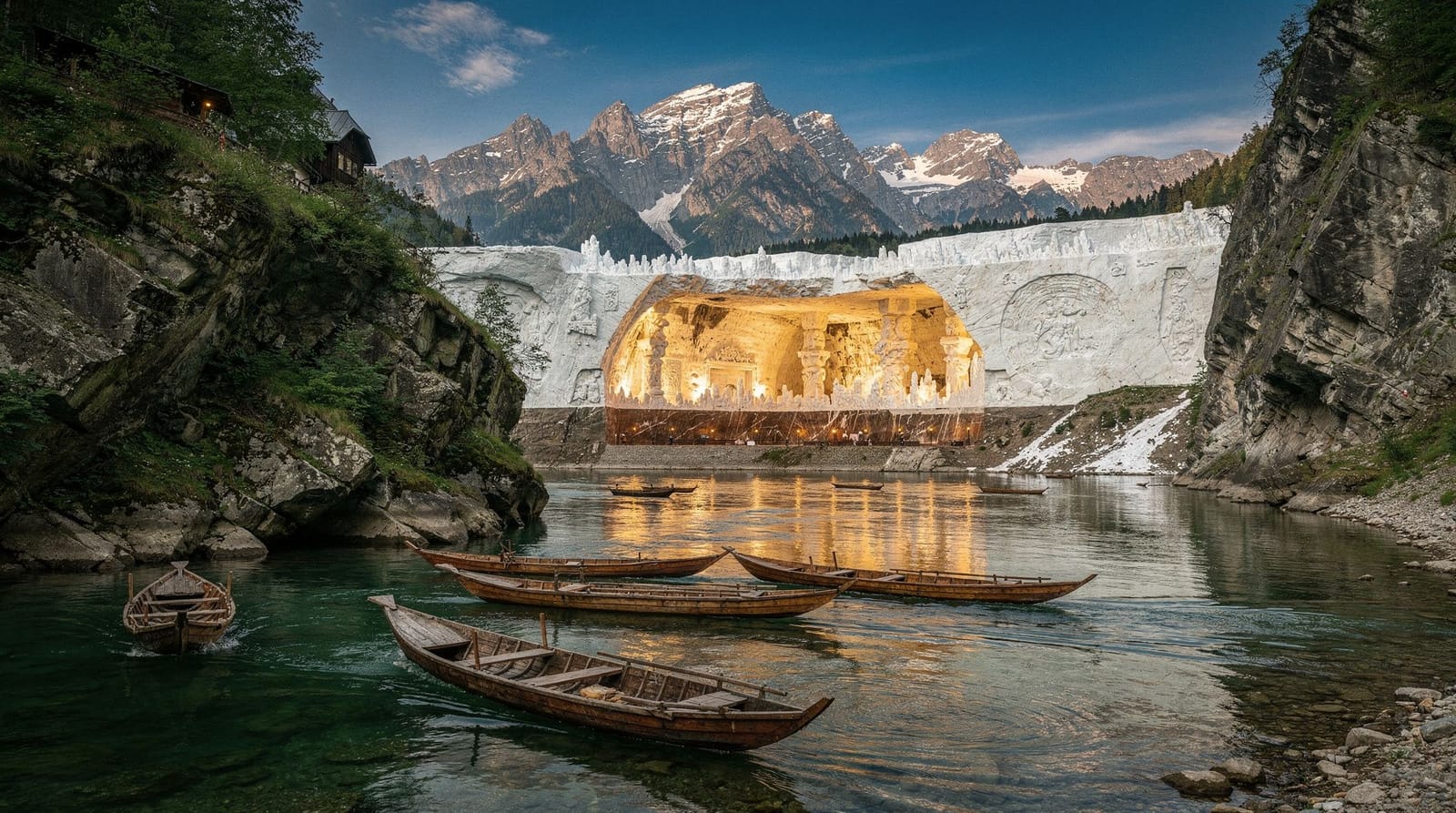
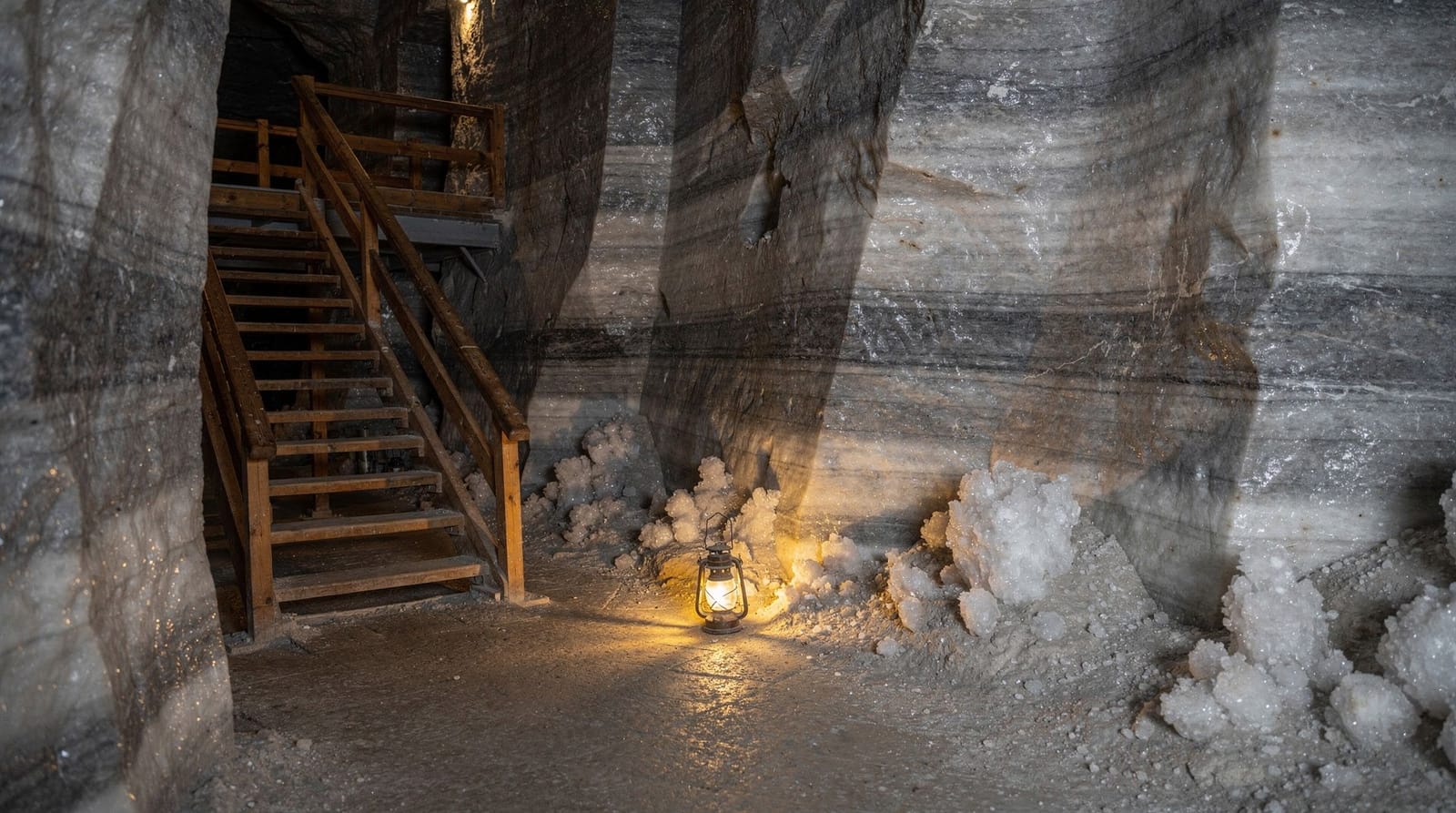
The Bochnia Salt Mine is Poland’s oldest documented salt mine (first recorded in 1248, older than Wieliczka) and UNESCO-listed. Unlike Wieliczka, which has become very tourist-oriented, Bochnia has a more adventurous character — the tourist route includes an underground boat trip through flooded chambers and a miniature mine train. Admission: 65–95 PLN (€15–23) depending on route chosen.
The Bochnia Salt Mine boat expedition tour from Kraków is a good standalone option if you want a unique underground experience less visited than Wieliczka.
The Malowana Chata competition: the best time to visit
The Malowana Chata (Painted Cottage) competition takes place annually in the week following Corpus Christi — typically the first or second week of June. During the week leading up to the competition, the village comes alive: women and families refresh the paintings on their buildings, add new compositions, and sometimes create entirely new façades. The competition itself awards prizes in several categories (best cottage, best outbuilding, best interior).
Visiting during competition week means:
- Every painted building is at its freshest and most colourful
- Doors may be opened to visitors, including normally private interiors
- There is a genuine festive atmosphere — food stalls, folk music, large numbers of Polish visitors
- The Dom Malarek has special programming
The trade-off is significant crowds on competition day itself. Visiting the few days before or after competition day gives you fresh paintings with fewer people.
Practical information
Opening hours (Curyłowa Museum cottage): closed Mondays; Thursday and Sunday 9:00–17:00; Tuesday, Wednesday, Friday and Saturday 10:00–18:00 from 1 May to 30 September and 8:00–16:00 from 1 October to 30 April. Check the Tarnów Museum website (muzeum.tarnow.pl) for current times; hours for the Dom Malarek are not published there.
Admission: Curyłowa Museum cottage 12 PLN adults, 9 PLN reduced, 28 PLN family; free on Wednesdays. Visitor numbers are capped at 25 at a time.
Where to eat: Very limited options in Zalipie itself — a small seasonal café occasionally operates near the Dom Malarek in summer. Plan to eat in Dąbrowa Tarnowska (15 km, basic milk bars), Tarnów (if combining), or pack food.
What to bring: Camera — the village is extraordinarily photogenic. Cash for admission (card acceptance not guaranteed). Water. Walking shoes for the village paths.
Understanding the art: what you are seeing
The Zalipie painting style uses a distinctive visual vocabulary:
- Background: White or pale blue exterior walls
- Compositions: Large floral bouquets, individual blooms (carnations, roses, daisies), branches with leaves and berries
- Colours: Strong primaries — cobalt blue, crimson red, sunflower yellow — with green foliage, often outlined in contrasting colours
- Technique: Originally lime-based mineral paints applied with brushes made from cow hair; now often acrylic or latex exterior paints that last longer through Polish winters
Different painters have distinct styles: some prefer tight, symmetrical compositions; others work more loosely with flowing organic designs. Curyłowa’s work is recognisable for its restrained use of colour — predominantly blue-and-white with accents — compared to some contemporary painters who work with a fuller palette.
The paintings are not purely decorative — they carry meanings in the folk tradition. Specific flowers have associations: carnations for celebration and love, roses for beauty, tulips (though not historically native to the region) adopted from Baroque decorative traditions. The folk meaning has become less precise over time, but painters are generally aware of the symbolic vocabulary they work within.
Costs in PLN
| Item | Approx. cost |
|---|---|
| Guided day tour from Kraków (Bochnia + Zalipie + Tarnów) | 130–165 PLN (€31–39) |
| Car fuel from Kraków (return) | 60–90 PLN (€14–21) |
| Curyłowa Museum cottage admission | 12 PLN (≈ €2.90), free on Wednesdays |
| Lunch in Tarnów (if combining) | 35–60 PLN (€8–14) |
Frequently asked questions about Zalipie painted village
Is Zalipie worth visiting if I can’t time it for the Malowana Chata competition?
Yes — the painted buildings are visible year-round, and the Curyłowa Museum cottage is open Tuesday through Sunday throughout the year (closed Mondays). The competition week is the peak experience, but even a quiet weekday visit in September or October offers a genuinely unique experience that you will not find anywhere else in Europe.
Can I photograph inside the cottages?
In the Dom Malarek and Curyłowa Museum, photography is permitted (check for any restrictions on flash inside the museum cottage). For private homes, ask permission before photographing interiors — many residents are hospitable toward respectful visitors, but it is their home, not a museum.
How long should I spend in Zalipie?
2–3 hours is usually enough to walk through the village, visit the Dom Malarek and Curyłowa Museum, and photograph the painted buildings. If visiting during the Malowana Chata competition, allow 3–4 hours.
Is Zalipie accessible for people with mobility limitations?
The Dom Malarek is accessible at ground floor level. The Curyłowa Museum cottage has a step entry and limited interior space. The village walk involves unpaved paths between cottages — manageable but not smooth. A car is essential for visiting independently.
Is there a painted village tradition anywhere else in Poland?
The painted building tradition exists in scattered villages across Małopolska and Silesia, but Zalipie is unique in both the density and continuity of the tradition. Nowhere else in Poland — and nowhere else in Europe — has maintained this intensity of painted folk decoration on inhabited village buildings over such a long period.
How does Zalipie compare to Kraków’s other day trips?
Zalipie is a genuinely different kind of day trip from the region’s big names — it has no historical monument, no museum of Auschwitz’s weight, and no natural wonder like the Dunajec Gorge. What it offers instead is a rare, still-living folk-art tradition you cannot see anywhere else in Poland. The best day trips from Kraków guide ranks it alongside Wieliczka, Auschwitz and the Tatras for visitors deciding how to spend limited time, and the Kraków day trips ranked blog post gives a more personal, opinionated take on where it sits in that list.
Should I combine Zalipie with the Bochnia Salt Mine instead of Wieliczka?
If you are already visiting Wieliczka separately, Bochnia is worth adding to a Zalipie day precisely because it offers a different underground experience — the boat trip through flooded chambers that Wieliczka doesn’t have. The Bochnia Salt Mine day trip guide has full logistics, and the Wieliczka vs Bochnia comparison explains the practical differences if you are deciding between the two mines rather than visiting both.
Photography tips for visiting Zalipie
Bring a wide-angle lens or phone if possible — many of the most striking painted façades cover an entire wall and are hard to frame from the narrow village paths. Overcast light actually suits the flower paintings better than harsh midday sun, which can wash out the colours and create heavy shadows from the roof eaves. Early morning (before 10am) gives the softest light and the fewest other visitors in your shots. If you are visiting during Malowana Chata week, expect other photographers and tour groups around the most famous cottages; arriving right when the Dom Malarek opens at 9am gives you a window of relative quiet before coach groups arrive.
Fitting Zalipie into your wider Kraków plan
Zalipie rewards travellers who already have the basics of the city behind them. If this is your first visit, start with the Kraków for first-timers guide and the Old Town walking tour guide, then come back to Zalipie once you want something quieter and more local. The how many days in Kraków guide helps you decide whether a day in the countryside fits your schedule, and the Kraków 4-day itinerary is a natural frame if you want to slot in a rural day without rushing the main sights.
Because the village is best enjoyed at an unhurried pace, it pairs well with a lighter day before or after. If you are also considering the region’s other excursions, the Małopolska nature near Kraków guide shows what else sits outside the city, and the Kraków travel itinerary planning guide explains how to space big days and slow days so you do not arrive at Zalipie tired. Anyone choosing between a car and a tour can also read the getting around Kraków guide for a sense of how local transport works before leaving the city.
Is Zalipie a good day trip for families?
Zalipie works well for families with an interest in art or a love of bright colours, but it is a slow, contemplative day trip rather than an activity-packed one — there are no rides, no interactive exhibits beyond the two small museums, and younger children may tire of the walking after an hour. Combining Zalipie with Bochnia’s underground boat ride (a genuine adventure for children) balances the day better than Zalipie alone. The family-friendly day trips from Kraków guide rates Zalipie and Bochnia against other options for different age groups if you are weighing several destinations.
Top experiences
Bookable activities with verified prices and instant confirmation on GetYourGuide.