Tarnów day trip from Kraków: the Renaissance city the tourists miss
From Krakow: Malopolska, Bochnia, Zalipie & Tarnów tour
How do I visit Tarnów from Kraków?
Tarnów is 80 km east of Kraków and one of the easiest independent day trips — direct trains from Kraków Główny run frequently (about 1 hour; check current fares on the official websites of Koleje Małopolskie and PKP Intercity). The Old Town is 15 minutes' walk from the station. The city has one of Poland's best-preserved Renaissance market squares, significant Jewish heritage sites, a fascinating Romani history museum, and very few tourists. A full day comfortably covers all highlights.
Tarnów: the Renaissance city that the tourist itineraries skip
There is something slightly bewildering about Tarnów’s obscurity on the international tourist circuit. The city’s Rynek (market square) is one of the finest Renaissance urban spaces in Poland — arguably second only to Kraków’s own Rynek Główny — complete with an intact 16th-century town hall, arcaded Renaissance townhouses in every direction, and a coherence of historical architecture that survived both the First and Second World Wars almost miraculously. The cathedral is Romanesque-Gothic with Renaissance additions and extraordinary medieval frescos. The Jewish heritage is substantial and largely unvisited. The Romani history museum is one of only a handful in Europe dedicated specifically to Roma history.
The reason for the obscurity is, ultimately, Kraków. Located just 80 km to the west, Kraków overshadows every city in Małopolska — including one that, in any other region of Central Europe, would be a major stop on the grand tour.
The payoff for visitors is significant: Tarnów is an excellent day trip precisely because so few tourists go there. The historic core is quiet, prices are local rather than tourist-inflated, and you can walk the Renaissance market square without anyone trying to sell you a velvet dragon or amber necklace.
| Where | 80 km east of Kraków |
| Cost | train fares on the operators’ official websites; around 130–165 PLN for a guided tour with Zalipie and Bochnia |
| Time needed | full day, or a 2–3 hour afternoon if combined with Zalipie or Bochnia |
| Getting there | direct train from Kraków Główny, around 1 hour |
| Best time | May–September, though the Old Town is pleasant year-round |
Distance and transport from Kraków
Tarnów is 80 km east of Kraków, making it one of the most accessible independent day trips from the city.
By train from Kraków: Direct InterCity and regional trains from Kraków Główny run frequently throughout the day — roughly every 30–60 minutes. Journey time: 55–75 minutes depending on the service. Check current fares on the official websites of Koleje Małopolskie and PKP Intercity. The main train station (Tarnów) is 15 minutes’ walk from the Old Town.
By road: About 1 hour via the A4 motorway east. Good road; check the current toll rules before you travel. Parking in Tarnów is easy and inexpensive near the Old Town.
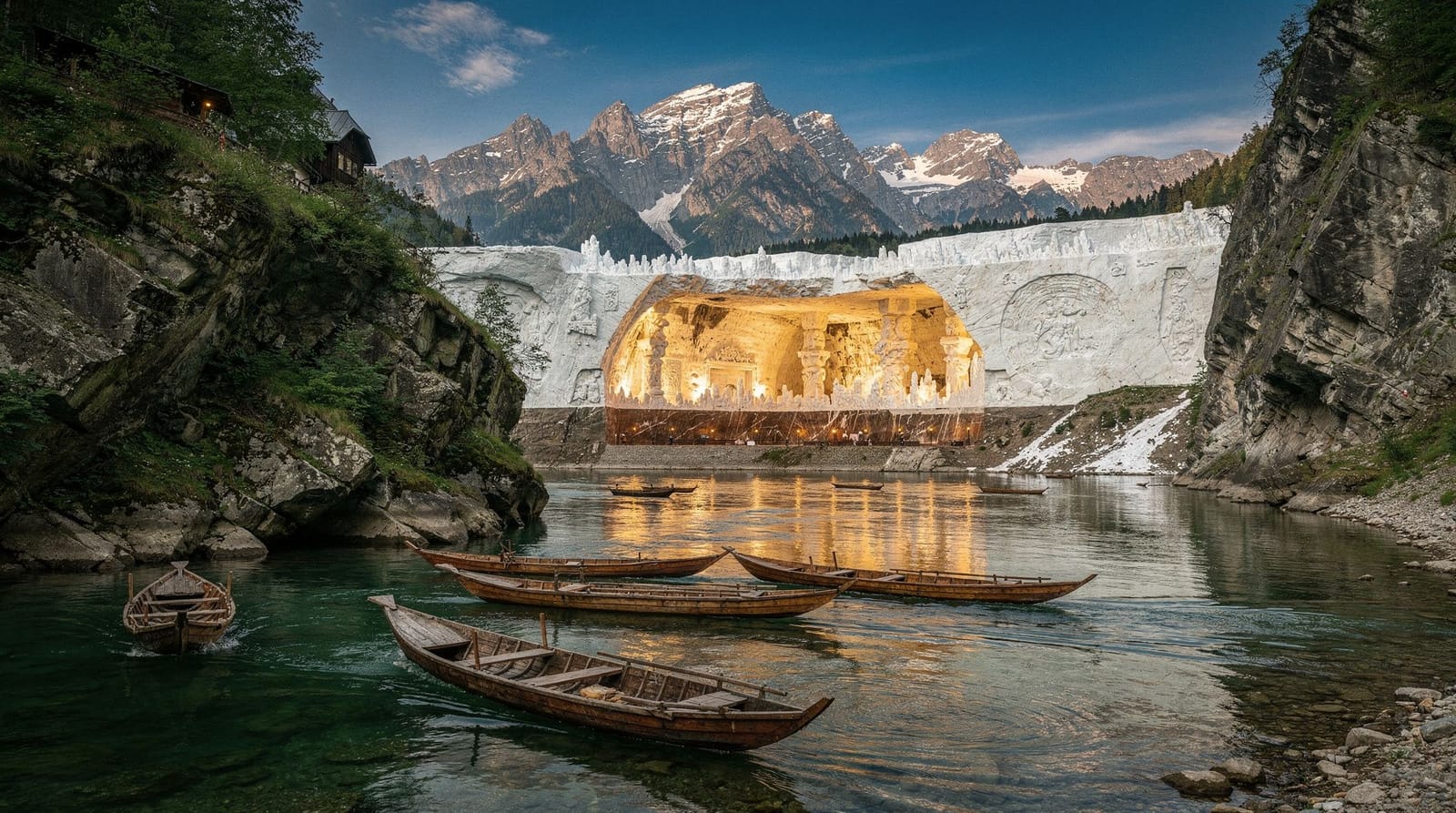
By guided tour: The Małopolska, Bochnia, Zalipie and Tarnów tour from Kraków combines Tarnów with the painted village of Zalipie and the Bochnia Salt Mine — an excellent circuit of eastern Małopolska for those who prefer guided logistics. This is particularly useful if you also want to visit Zalipie, which has very limited public transport access.
What to see in Tarnów
Rynek Główny (Old Market Square)
The main market square is the heart of Tarnów and the reason to come. It is a large, rectangular Renaissance square — substantially larger than it appears on maps — with the Ratusz (Town Hall) at its centre and arcaded townhouses on all four sides. Key features:
The Ratusz (Town Hall): Built in the Gothic style and rebuilt in Renaissance Mannerist style after a fire in 1569. The clock tower, with an elaborate Renaissance attic, is one of the finest examples of Polish Renaissance civic architecture. Currently housing the District Museum — worth entering for the regional history collections (check current admission prices on the museum’s official website).
The arcaded townhouses: On the north and west sides of the Rynek, several 16th–17th century townhouses retain their Renaissance stone arcades at street level — the kind of ground-floor colonnades associated with Kraków’s Sukiennice, but here as private houses. Numbers 1, 2, and 3 on the Rynek are particularly well-preserved.
The Hetman’s House (Dom Hetmański): A late Renaissance palace on the south side of the Rynek, now a branch of the Diocesan Museum. The early-Baroque polychrome ceiling inside is remarkable.
Katedra Świętych Apostołów Piotra i Pawła (Cathedral of SS. Peter and Paul)
Tarnów’s cathedral is a few minutes’ walk from the Rynek and significantly older than the Renaissance market square around it — the core is early Gothic (14th century), with later additions in various periods. The interior contains:
- A remarkable sequence of late-medieval Gothic frescos in the northern aisle — rare survivals in such good condition
- The Renaissance tomb of Jan Amor Tarnowski (d. 1561), Polish Grand Hetman, attributed to Giovanni Maria Mosca “Il Padovano” — one of the finest Italian Renaissance sculptural works in Poland
- The Ostrogski Chapel (late Renaissance, early 17th century) with extraordinary polychrome and marble
Free entry. Check opening hours locally.
The Jewish Quarter and Cemetery
Tarnów had one of the largest Jewish communities in Galicia before World War II — approximately 25,000 Jews, comprising nearly half the city’s population. The community was almost entirely murdered during the Holocaust. The city holds particular historical significance as the site from which, on 14 June 1940, the first transport of prisoners departed for Auschwitz — 728 Polish political prisoners, mostly young men.
The Old Jewish Cemetery (Stary Cmentarz Żydowski), established in the 16th century, is one of the oldest and most significant Jewish cemeteries in Poland. It contains around 3,000 matzevot (gravestones), the oldest dating to 1581. Access is via the caretaker at ul. Szpitalna 2 (small donation expected).
The New Cemetery (Nowy Cmentarz) nearby contains a Holocaust memorial. Ohel (covered grave enclosure) of Rabbi Chaim Elazar Wax is a pilgrimage site for Orthodox Jews.
The Old Town area around ul. Żydowska (Jewish Street) retains some pre-war townhouses from the former Jewish quarter.
The Romani History Museum (Museum of the History of Polish Roma)
Tarnów is home to the only museum in Poland (and one of only a few in Europe) dedicated to the history of the Romani people. Located in a historic building near the Old Town (ul. Limanowskiego 4), the museum documents the origins and migrations of Roma, their traditions and culture, and above all the Romani Holocaust (Porajmos) — the systematic genocide carried out by Nazi Germany in which an estimated 500,000–1.5 million Romani people were killed.
The museum is small but thoughtfully curated, with exhibitions in Polish and English. Check current admission prices and opening hours on the museum’s official website.
This is genuinely important history that receives almost no coverage in standard Polish tourism — the Romani genocide is far less widely known than the Jewish Holocaust despite its comparable scale and brutality. Visiting is an act of acknowledgment. Tarnów has a documented Romani presence going back centuries, and the museum’s permanent exhibition traces Roma migration into Poland, traditional crafts and music, and the community’s treatment under both Nazi occupation and later communist policy — context that isn’t covered anywhere else on a typical Kraków-based itinerary. Allow at least 45 minutes if you want to read the panels properly rather than walk through quickly.
The Diocesan Museum (Muzeum Diecezjalne)
The Diocesan Museum in the cathedral complex (entrance from ul. Katedralna) holds a collection of medieval and Renaissance sacred art, including some exceptional carved and polychrome altarpieces from Małopolska churches. The collection is less well known than Kraków’s corresponding institutions but of high quality. Check current admission prices on the museum’s official website.
Eating and drinking in Tarnów
Tarnów has a good selection of restaurants in and near the Rynek at prices significantly below Kraków tourist levels.
Restauracja Orbita (Rynek Główny): Traditional Polish cooking in a central location with good value lunch menus (zupa + danie: 25–35 PLN / €6–8). The żurek (rye soup) and bigos (hunter’s stew) are reliable.
Kawiarnia Ratuszowa (Rynek Główny, in the town hall): A café in the historic town hall cellars — good for coffee and cake between sightseeing (coffee 10–15 PLN / €2.40–3.60).
Pierogarnia Tatrzańska (ul. Wałowa): Dedicated pierogi restaurant a few minutes from the Rynek — a Tarnów institution for locals. Expect to pay 28–40 PLN (€6.70–9.50) for a portion.
Milk bar (bar mleczny): Check the area around ul. Krakowska and ul. Wałowa for traditional milk bars serving soup, pierogi, and kotlet schabowy (pork cutlet) for 15–25 PLN (€3.60–6). These operate weekdays, typically 8:00–17:00.
Combining Tarnów with other eastern Małopolska destinations
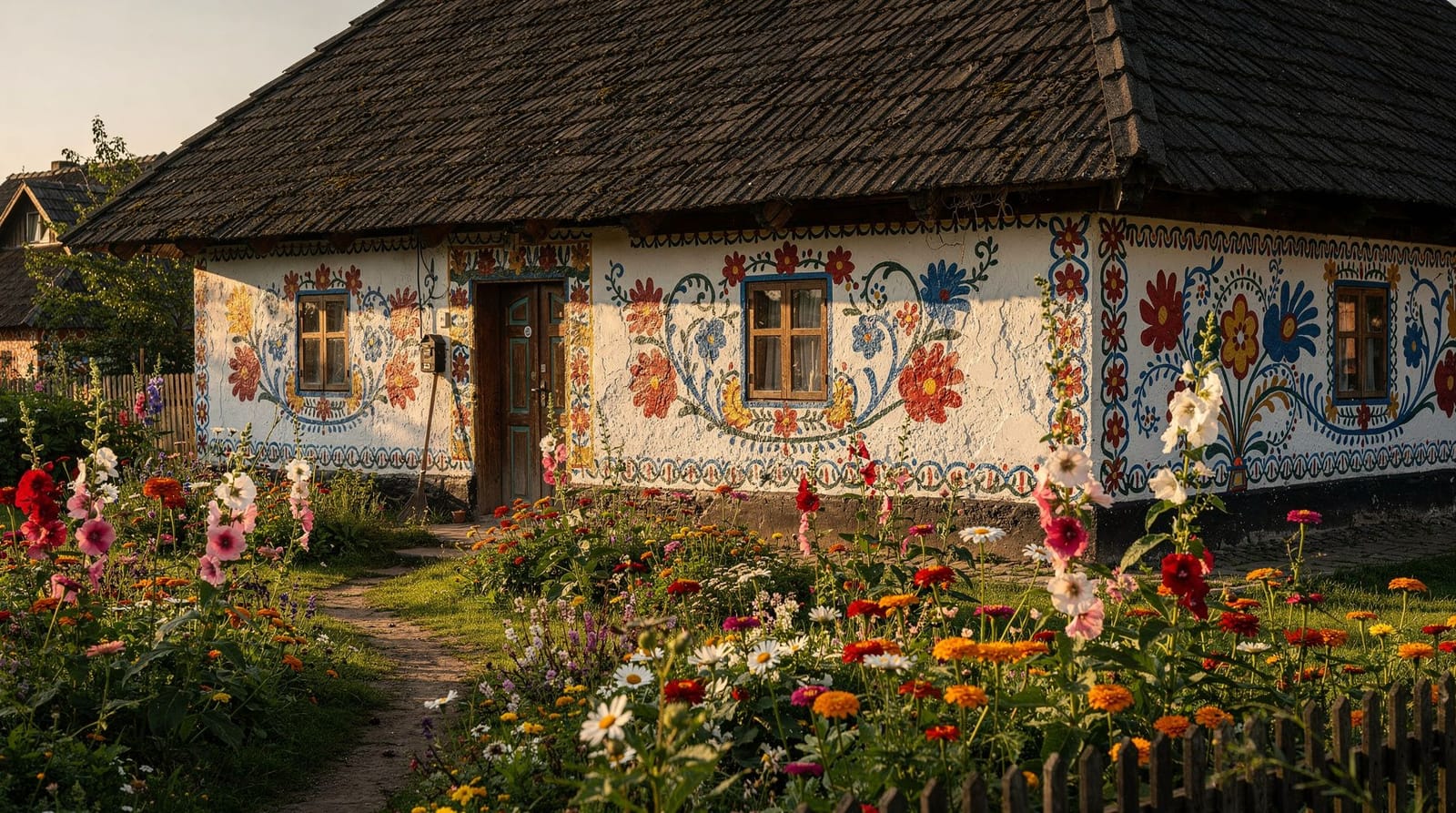
Tarnów + Zalipie: An excellent combination by car. Zalipie is 35 km north of Tarnów (35–40 minutes). Visit Zalipie in the morning (painted village open Tuesday–Sunday), then Tarnów in the afternoon, returning to Kraków via the A4 motorway. The Zalipie painted village guide covers the folk art village in detail.
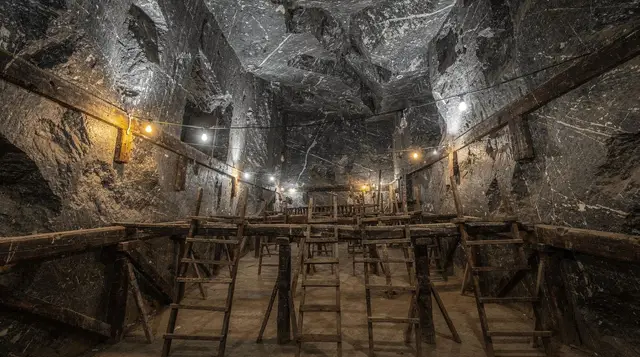
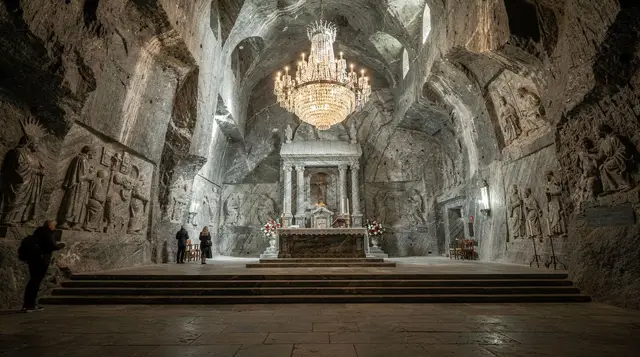
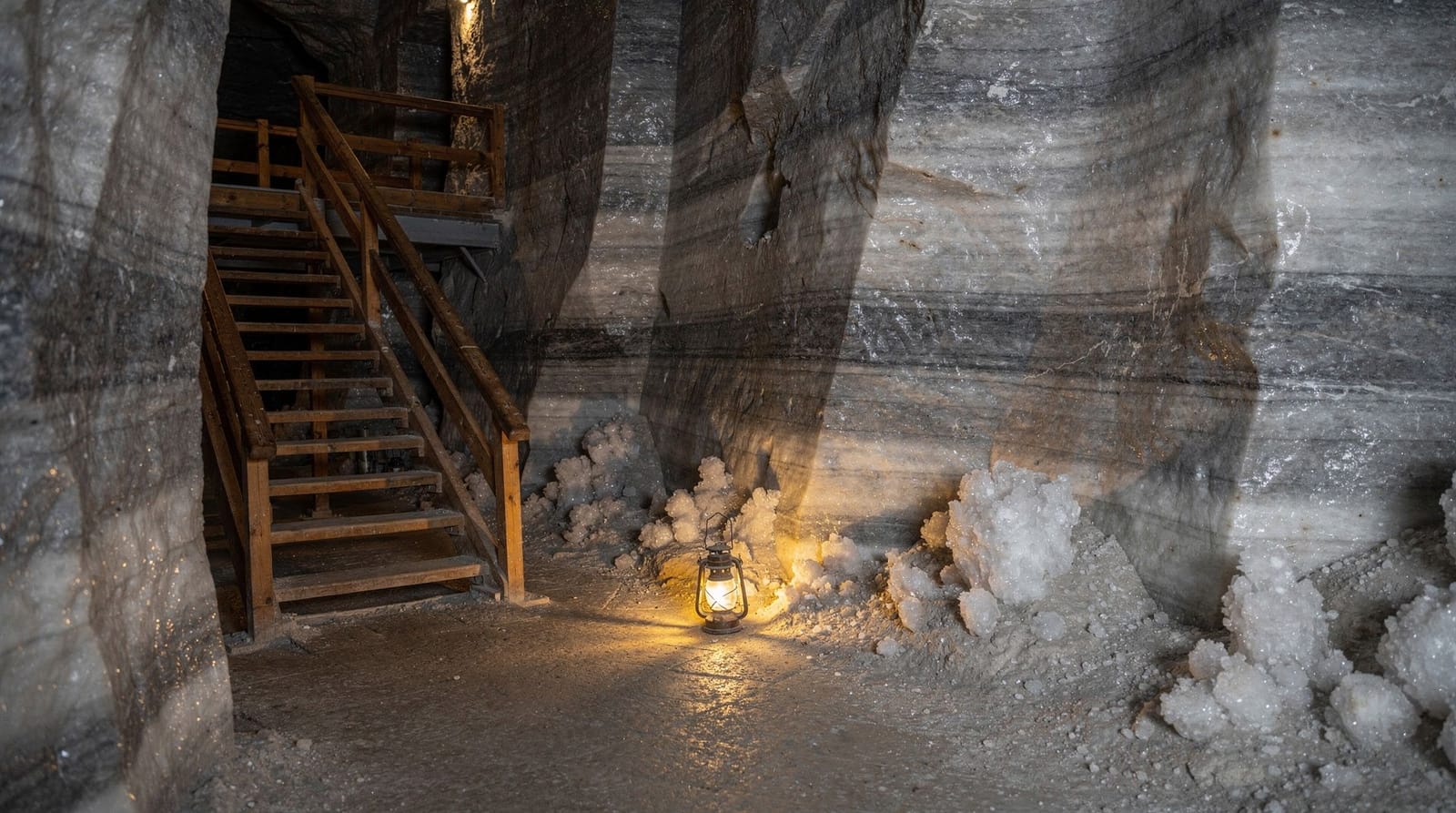
Tarnów + Bochnia Salt Mine: Bochnia is 40 km west of Tarnów (40 minutes by car). A morning at Bochnia underground and an afternoon in Tarnów is a full but very rewarding day — two UNESCO sites, both largely missed by Kraków tourists. The Bochnia mine is less crowded than Wieliczka and has an adventure-oriented route with underground boats.
All three: Bochnia + Zalipie + Tarnów: This is what the Małopolska tour does — and it works well as a guided day. Tight but achievable.
How Tarnów compares to Kraków’s other day trips
If you’ve already done the classics — Auschwitz-Birkenau, the Wieliczka Salt Mine, Zakopane — Tarnów offers something none of them do: a Polish town with almost no tourist infrastructure built around visitors. There are no souvenir stalls hawking amber on the Rynek, no queue-jumping ticket sellers, no restaurant menus translated into six languages with photos. It rewards a different kind of traveller — one who wants to see what a mid-sized Polish city actually looks like day to day, layered with genuinely important history. For a broader sense of how it stacks up against Kraków’s other easy day trips, see the best day trips from Kraków overview.
What makes Tarnów historically significant
Beyond its architectural preservation, Tarnów holds a special place in 20th century Polish history:
First Auschwitz transport: On 14 June 1940, 728 Polish political prisoners — students, teachers, professionals, many from Tarnów and the surrounding region — were transported from Tarnów station to Auschwitz. This was the first transport to arrive at Auschwitz and marked the beginning of the camp’s operation as a place of systematic killing. A memorial at the station marks the fact.
Tadeusz Kościuszko connection: The national hero and military commander who fought for both Polish and American independence has connections to Małopolska; Tarnów holds various commemorative exhibitions related to the period.
World War I: The Gorlice-Tarnów offensive of 1915 was one of the decisive operations of the Eastern Front — the German-Austrian breakthrough here shattered Russian lines and temporarily stabilised the eastern situation for the Central Powers. The battlefields are in the hills east of Tarnów.
Practical costs in PLN
| Item | Approx. cost |
|---|---|
| Train from Kraków (each way) | see operators’ official websites |
| Guided tour from Kraków (with Zalipie + Bochnia) | 130–165 PLN (€31–39) |
| District Museum (Town Hall) | see official website |
| Romani Museum | see official website |
| Diocesan Museum | see official website |
| Lunch in Tarnów (restaurant) | 35–60 PLN (€8–14) |
| Milk bar lunch | 15–25 PLN (€3.60–6) |
Frequently asked questions about Tarnów day trip
Is Tarnów worth visiting over other day trips from Kraków?
For visitors with more than 2–3 days in Kraków who have already done the major hits (Auschwitz, Wieliczka, Zakopane), Tarnów is an excellent choice. It offers genuine Renaissance architecture, important Jewish and Romani heritage, and the rare pleasure of exploring a Polish Old Town without tourist crowds. The train connection from Kraków is fast and frequent.
How long should I spend in Tarnów?
A full day — 5–7 hours on the ground — comfortably covers the Old Town, cathedral, Jewish cemetery, and Romani Museum. If combining with Zalipie or Bochnia, Tarnów works as a 2–3 hour afternoon portion of the day.
Is Tarnów accessible by public transport from Kraków?
Tarnów is the easiest independent day trip from Kraków by train — direct connections run every 30–60 minutes from Kraków Główny, journey time around 1 hour. The train station in Tarnów is 15 minutes’ walk from the Old Town. No car required.
Is the Jewish heritage in Tarnów documented in English?
The Romani Museum has English labelling throughout. The Jewish cemetery has a small English guidebook available from the caretaker. The cathedral has English-language information sheets for the major monuments. The District Museum (Town Hall) is primarily in Polish. Overall, sufficient English-language information is available for independent visitors.
What is the best season to visit Tarnów?
May through September is ideal — good weather for the outdoor market square and Jewish cemetery. The Old Town is pleasant year-round; winter offers quiet streets and good light for photography. There is no strong seasonal variation in what is open, unlike outdoor sites in the region.
Can I visit Tarnów and Zalipie in the same day without a car?
It’s difficult without a car or tour — public transport between Tarnów and Zalipie is sparse and not designed for day-trip timing. The Małopolska tour combining Tarnów, Zalipie and Bochnia solves this by handling all transport, or rent a car in Kraków if you want full independence for the loop.
Is Tarnów safe and easy for solo travellers?
Yes — Tarnów is a quiet, low-crime provincial city with straightforward navigation from the train station to the Rynek. English is less widely spoken than in Kraków, but signage at the main sites (cathedral, Romani Museum) includes English, and the compact centre is easy to explore without a guide.
Top experiences
Bookable activities with verified prices and instant confirmation on GetYourGuide.