Zakopane tour from Kraków vs DIY: which is better value?
Krakow: Zakopane, funicular, cheese & highland day trip
Duration: 9h
Should I book a Zakopane tour or go independently from Kraków?
Independent travel to Zakopane costs 30–50 PLN return by bus and gives you total freedom to explore at your own pace. A guided tour (120–200 PLN) saves planning, includes stops at viewpoints and the Gubałówka funicular, and is much better value for visitors who want the Tatra Mountains experience without navigating highland transport. Both work — the choice is really about freedom vs convenience.
Zakopane: Poland’s mountain capital, 2 hours south
Zakopane sits at the foot of the Tatra Mountains, 100 km south of Kraków — Poland’s highest town and its unofficial mountain capital. The Tatras themselves straddle the Polish-Slovak border, offering some of the most dramatic walking in Central Europe. Morskie Oko lake, the Gubałówka ridge, Kasprowy Wierch peak: these are landscapes that justify a full day away from Kraków.
The day-trip question is real: go independently by bus or book a guided tour? Both are genuinely viable, and the right choice depends on what you want from the day.
| Where | Zakopane, ~100 km south of Kraków, ~2–2.5 hrs by road |
| DIY cost | around 100–145 PLN per person, full day |
| Guided tour cost | around 120–200 PLN per person (standard) |
| Time needed | full day, 10–12 hours door-to-door either way |
| Best for DIY | hikers heading to Morskie Oko or Giewont |
Cost breakdown: DIY vs guided tour
Going independently
| Cost element | Amount |
|---|---|
| Bus (Kraków Główny → Zakopane, return) | ~28–40 PLN (€7–10) |
| Gubałówka funicular (return) | ~39 PLN (€9) |
| Oscypek cheese tasting at highland stall | ~10–20 PLN (€2–5) |
| Lunch in Zakopane (milk bar or restaurant) | ~25–45 PLN (€6–11) |
| Total DIY (full day) | ~102–144 PLN (€24–34) |
Guided tour from Kraków
| Tour type | Cost |
|---|---|
| Standard guided day tour (includes funicular, cheese) | ~120–180 PLN (€29–43) |
| Private guided full-day tour | ~300–500 PLN (€71–119) |
The cost difference between DIY and a standard guided tour is often 20–80 PLN per person — a meaningful but not dramatic gap. The question is what you get for that premium.
The case for a guided tour
Transport handled, time maximised
The bus from Kraków Główny to Zakopane takes approximately 2–2.5 hours each way. Guided tours in minibuses typically drive faster routes and may stop at viewpoints on the way, but the real advantage is not speed — it is that you arrive with the day already planned.
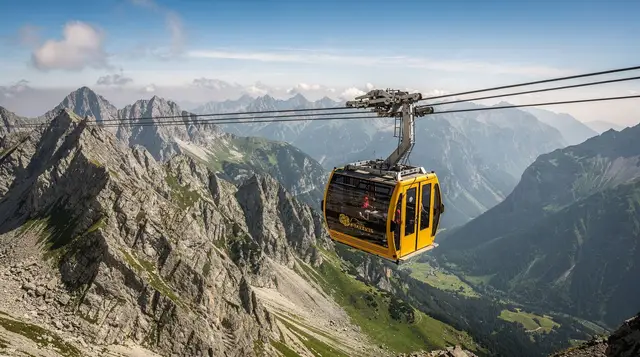
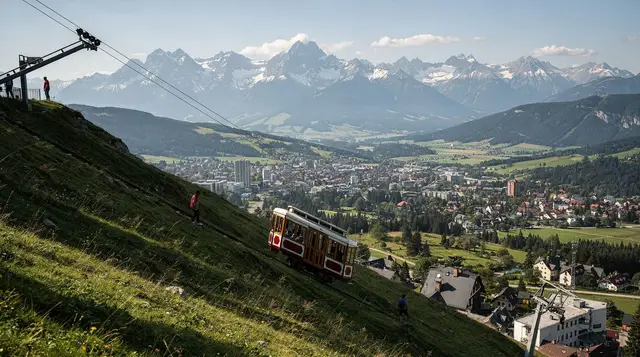
The Zakopane day trip with funicular, cheese, and highland highlights is the most popular guided option from Kraków. It includes the Gubałówka funicular ride up to the ridge viewpoint (panoramic views over the Tatras), a stop for the obligatory oscypek (smoked highland sheep’s cheese) tasting, and time in Krupówki, Zakopane’s main pedestrian promenade.
Local knowledge makes the Tatras more legible
Zakopane can be confusing for first-timers. Which bus stop for Morskie Oko? Which cable car is worth the queue? What is Gubałówka vs Kasprowy Wierch? A guide handles these decisions and explains the landscape — the górale (highland culture), the architecture of the wooden Zakopane Style buildings, the significance of the Tatra National Park.
Winter access
From December to March, Zakopane transforms into a ski destination. Road conditions to Zakopane in winter can be poor, and navigating mountain transport in snow is not straightforward for unfamiliar visitors. A guided tour handles all of this — the driver manages the mountain roads, and the guide adjusts the itinerary to conditions.
The case for DIY
Total freedom to go where you want
Zakopane itself is fine for an afternoon — Krupówki promenade, Gubałówka, the old wooden Zakopane-style villas. But if your interest is actually in the mountains, a guided tour rarely takes you hiking.
Most guided day tours from Kraków do not include Morskie Oko — the stunning glacial lake in the Tatras that is among Poland’s most beautiful natural sights. Getting to Morskie Oko requires taking a bus to Palenica Białczańska (the road is closed to private vehicles), then walking 8 km each way on a marked trail. That takes 4–5 hours round trip and requires comfortable footwear.
If Morskie Oko is your priority, DIY is the only realistic option on a day trip. See our Morskie Oko page for detailed logistics.
Kasprowy Wierch cable car
Similarly, the Kasprowy Wierch cable car (rising to 1,985 m, the highest point accessible by cable car in Poland) is rarely included in standard guided tours. The queue for the cable car can be 1–2 hours in peak season — more time than most tours have to spare. Independent visitors can queue early or book online.
Budget travellers
At ~28–40 PLN return by bus, independent travel to Zakopane is very cheap. If your budget is tight, the cost savings of DIY (avoiding the tour markup) make a real difference, especially for a family.
Day-trippers based longer than one day
If you have 3+ days in Kraków and plan to visit Zakopane independently rather than as a tour, you can take an early morning bus, spend the full day in the mountains or on Morskie Oko, and return on an evening bus. This is not practical on a single day trip from Kraków for most people, but excellent for those with more time.
Bus logistics from Kraków (DIY route)
From Kraków Główny station bus terminal: Direct PKS/Lajkonik buses run frequently throughout the day. Journey time: approximately 2–2.5 hours. Tickets: ~14–20 PLN (€3–5) each way; book at kasa (ticket office) or on the bus. Return buses run until late evening.
From Kraków MDA (Małopolska bus service): Additional connections, worth checking for earlier or later services.
Arrive by 9 am in Zakopane for the best experience — morning views are clearest before afternoon clouds build over the Tatras (a daily pattern in summer). Arriving before 10 am also means shorter funicular and cable car queues.
Return: Evening buses run frequently back to Kraków. The last bus is typically around 9–10 pm; check the schedule on dziendobry-krakow.pl or PKS Nowy Sącz website.
What to do once you’re in Zakopane
Whether you arrive by tour or independently, the day looks similar:
Morning (9–12 am): Gubałówka funicular (39 PLN return, queues start building by 10 am) for panoramic mountain views, then explore the ridge viewpoint. In clear weather, the view of the High Tatra peaks is genuinely memorable.
Midday: Krupówki pedestrian street for lunch. Good options include Karczma Zapiecek (traditional górale food, 30–60 PLN for a meal) or the Gazdowo Kuźnia restaurant (local specialities, slightly posher). Avoid tourist-trap restaurants near the main square with laminated menus in 10 languages — quality drops sharply.
Afternoon options: Tatra Museum (Muzeum Tatrzańskie) for context on highland culture; the wooden Zakopane-style chapel at Jaszczurówka (beautiful, often empty); shopping for oscypek cheese at stalls along ul. Krupówki (pay ~10–20 PLN for a full cone, not the €5 tourist price from street hawkers near tour bus parks).
For hikers: Trails leave directly from Zakopane towards Giewont peak (1,894 m, marked red trail, 3–4 hours return, moderate). A closer option is the trail to Sarnia Skała viewpoint (~1.5 hours each way). Both require proper footwear — do not attempt in flip-flops.
Our recommendation
| Visitor profile | Recommendation |
|---|---|
| First time in Zakopane, no hiking planned | Guided tour — handles logistics, includes funicular |
| Hiker planning Morskie Oko or Giewont | DIY — tours do not cover this |
| Family with young children | Guided tour — transport handled |
| Budget traveller | DIY by bus — saves 80–130 PLN |
| Winter visitor | Guided tour — mountain driving experience |
| Multiple days in Kraków | DIY — go early, come back late |
Our overall lean: Guided tours are best value for visitors who are primarily interested in the Zakopane experience (funicular, cheese, highland culture, mountain panorama) without hiking. DIY is better if you want the actual mountains — trails, Morskie Oko, real Tatra landscape — which tours generally cannot provide within their time constraints.
For more Kraków day-trip options, see our day trips from Kraków hub and Tatra Mountains destination guide.
Zakopane beyond the tourist trail
The Krupówki promenade and Gubałówka funicular are Zakopane’s most visited elements, and they appear in virtually every guided tour. But Zakopane has a richer character that extends beyond these highlights. Whether you visit by tour or independently, knowing what else exists shapes a better day.
Zakopane Style architecture
The distinctive Zakopane architectural style was codified by Stanisław Witkiewicz (father of the expressionist painter Witkacy) in the late 19th century: wooden buildings with steep triangular roofs, carved ridge beams, and decorative highland folk motifs. The Villa Koliba on ul. Kościeliska (now a museum of Zakopane Style, open Tuesday–Sunday, ~15 PLN/€4 entry) was the first building designed specifically in this style in 1893. The wooden villas along ul. Kościeliska and ul. Krupówki are worth examining individually — many date from the early 20th century.
The Old Cemetery (Stary Cmentarz na Pęksowym Brzyzku) on ul. Kościeliska is one of the most atmospheric spots in Zakopane — a small wooden church and a cemetery full of hand-carved highlands gravestones, some extraordinary examples of folk art. Buried here are many of the artists, writers, and climbers who made Zakopane Poland’s mountain capital. Entry free. Quiet and often overlooked by tour groups.
The Tatra Museum (Muzeum Tatrzańskie)
Located on ul. Krupówki (the main promenade), the Tatra Museum covers the natural history of the Tatra range, the ethnography of the górale (highland people), and the cultural history of Zakopane as an artistic colony. Admission approximately 25 PLN (€6). The folk art and costume collection is excellent; the geological section explains the formation of the Tatra peaks in accessible terms. Allow 45–60 minutes.
Górale culture and food
The górale (highlanders) are a distinct ethnic group within Polish culture, with their own dialect, music, costumes, and culinary traditions. Several elements are worth seeking out:
Oscypek: The smoked sheep’s cheese available from stalls along Krupówki and at the foot of the Gubałówka funicular. It is produced only from May to September (when sheep graze in the mountain pastures) — visiting in this window gives access to genuinely fresh oscypek. Grilled oscypek with cranberry jam (żurawina) is the definitive snack; expect to pay 10–15 PLN (€2.50–3.60) for a full piece. Beware of stalls near coach parking areas that overprice for tourist convenience.
Bundz: A younger, milder sheep’s cheese, less smoked, more fresh — available at the same market stalls and worth trying alongside oscypek.
Gazpacho, not gazpacho: The regional soup kwaśnica (sauerkraut soup with ribs) and żurek (sour rye soup with sausage and egg) are the highland winter staples. Barszcz górski (highland beet soup) and grillowane jadło (grilled highland platter with kiełbasa, oscypek, and bread) appear on most decent restaurant menus.
For lunch: Avoid the tourist-facing restaurants at the top of the Gubałówka cable car (expensive, mediocre). Better options: Karczma Sabała on Krupówki (traditional interior, reliable food, 40–70 PLN for a main), or U Wnuka on ul. Zaruskiego (local favourite, slightly off the tourist path, lower prices).
The Tatra National Park and hiking reality
Visitors who want to experience the Tatras themselves — not just look at them from Gubałówka — need to understand the logistics before deciding on tour vs DIY.
The trail network
The Tatra National Park (Tatrzański Park Narodowy) maintains an excellent network of colour-coded trails. The most accessible from Zakopane without further transport:
Giewont (1,894 m): The most iconic Tatra peak visible from Zakopane — the distinctive silhouette that locals call the “Sleeping Knight.” The ascent from Kondratowa valley via Kondracka Przełęcz is a 3–4 hour round trip from Zakopane town. Marked red trail. Involves steep sections and exposed ridge at the summit (chains fixed to rock for safety). Do not attempt in poor visibility or without proper footwear.
Sarnia Skała viewpoint: A 2.5-hour return walk from Zakopane via the Dolina Białego valley. Easy to moderate; excellent panoramic views. Good option for hikers not ready for Giewont.
Dolina Kościeliska (Kościeliska Valley): A beautiful gorge valley accessible by bus from Zakopane (stop: Kościelisko Kiry), then a 5 km walk into the valley. Wide, flat path along a stream between limestone cliffs. Accessible for all fitness levels. Caves to explore (paid entry). One of the most beautiful day walks available in the Tatras without technical difficulty.
Why guided tours rarely include real hiking
Most guided day tours from Kraków are built around accessible highlights that work for all fitness levels — funicular, town walk, cheese tasting. Giewont or a serious valley walk requires a minimum 3–4 hours of hiking time that simply cannot fit into a day trip structure alongside the 2.5-hour drive each way.
This is the fundamental limitation of tours: they optimise for the maximum number of experiences visible in available time, which means they favour viewpoints (Gubałówka: 15 minutes up and down by funicular) over actual hiking (Giewont: 3–4 hours round trip). If the Tatras themselves are your goal, plan a DIY trip with the hiking as the centrepiece.
Winter Zakopane: a separate consideration
Zakopane in winter (December to March) is one of Poland’s most popular domestic destinations. The mountain character transforms entirely: snow on the peaks, horse-drawn sleds on the streets, ski slopes on Kasprowy Wierch and Gubałówka, and the thermal baths at Chochołów and Białka Tatrzańska drawing visitors from across Poland and Central Europe.
For winter visitors, guided tours from Kraków are particularly practical:
- Mountain road conditions require experience; guided tour drivers handle winter driving
- Kasprowy Wierch cable car queues can be extreme (1–2 hours in February school holidays) — local knowledge of timing helps
- The Chochołów thermal baths require a car or specific bus to reach independently; tour operators handle this
The Zakopane day trip with funicular and cheese operates year-round and is excellent value in winter when the mountain views are at their most dramatic (clear winter days, snow-covered Tatra peaks). For the thermal bath experience specifically, look for tour operators offering the Chochołów or Bukowina Tatrzańska bath combination — not always listed on GYG, but available from Kraków operators during winter months.
Frequently asked questions about Zakopane tours vs DIY
How long is the bus from Kraków to Zakopane?
Approximately 2–2.5 hours by direct PKS or Lajkonik bus from Kraków Główny. On weekends in summer, traffic on the mountain road (DK47) can add 30–45 minutes. Guided tours use the same roads and face the same traffic — no meaningful advantage there.
Is Morskie Oko reachable on a day trip from Kraków by bus?
Yes, but it is a long day. Take the earliest bus to Zakopane (~6 am), then the local bus to Palenica Białczańska (about 25 km from Zakopane, bus or minivan from Zakopane bus station), then walk 8 km to the lake and 8 km back. You will be back in Zakopane by 5–6 pm for an evening bus to Kraków. Doable but requires planning. See Morskie Oko for full logistics.
Does the Gubałówka funicular require advance booking?
No advance booking is required for the Gubałówka funicular (it runs continuously), but queues can be 45 minutes in peak summer (July–August). Arrive before 10 am or after 3 pm to avoid the worst waits. Cost: ~39 PLN (€9) return adult.
What is oscypek and where should I buy it?
Oscypek is a traditional smoked sheep’s cheese from the Podhale region, shaped into a double-pointed oval. It is genuinely delicious — smoky, slightly salty, often served grilled with cranberry jam. Buy from stalls along Krupówki or from vendors near the Gubałówka funicular. Pay ~10–15 PLN for a standard piece. Avoid stalls near coach/minibus parking areas which price-gouge tourists. The guided Zakopane tour includes a cheese tasting stop.
Is Zakopane suitable in winter?
Very much so — the town is a major ski destination from December to March. Kasprowy Wierch has good skiing from late November. The thermal baths at Chochołów and Bukowina are popular in winter. The town itself is busiest between Christmas and February (school holidays). For a winter visit, a guided tour is especially practical given mountain road conditions.
Should I add thermal baths to my Zakopane day, tour or DIY?
Either way works. Guided tours combining Zakopane sightseeing with a thermal bath session exist and handle transport to Chochołowskie Termy, which is otherwise awkward without a car. Going DIY, you can still fit in Aqua Park Zakopane (walkable from the centre) but reaching Chochołowskie Termy independently needs a taxi leg. The Zakopane thermal baths guide covers both options and how to combine them with the rest of the day.
Is skiing better arranged as a tour or independently?
For a dedicated ski day, DIY (self-drive or PKS bus) is generally more practical — standard sightseeing tours rarely include lift access or ski time, and you need flexibility to chase snow conditions across Kasprowy Wierch, Nosal and Harenda. The Zakopane winter skiing guide has ski pass prices, rental costs and a full breakdown of which area suits which ability level.
Group size and how it changes the maths
The DIY-vs-tour cost gap narrows or widens depending on how many people are travelling. A solo traveller or couple pays the same per-person tour price regardless of group size, so the savings from going DIY stay roughly constant at 20–80 PLN per person. Families and small groups see the maths shift: a private guided full-day tour priced at 300–500 PLN total becomes proportionally cheaper per head once you are four or five people, sometimes undercutting the per-person cost of several individual standard tour tickets while still giving a dedicated vehicle and flexible stops. For a family with young children weighing Zakopane against other options, it is worth cross-checking against the family-friendly day trips from Kraków guide, which rates how manageable each day trip is for different age groups — Zakopane’s funicular and gentle valley walks generally score well, but a long DIY bus journey with tired children is a real consideration.
Which option for which visitor: a quick reference
Beyond the profile table above, it helps to see how tour-vs-DIY plays out for the two main non-sightseeing goals — thermal relaxation and skiing:
| Goal | Best approach | Why |
|---|---|---|
| Sightseeing only (Krupówki, Gubałówka) | Either — tour is simpler | Both cover the same ground; tour saves planning |
| Serious hiking (Morskie Oko, Giewont) | DIY | Tours rarely allow enough time |
| Thermal baths at Chochołów | Tour, or DIY with a taxi budgeted | Chochołów needs transport beyond the PKS bus |
| Skiing at Kasprowy Wierch | DIY (self-drive or bus) | Tours rarely include lift access or ski time |
| Winter mountain atmosphere, no activity | Tour | Road conditions favour an experienced driver |
For the standard sightseeing version of the day without the tour-vs-DIY decision baked in, see the main Zakopane day trip guide. If you have more than a single day to give the mountains, the 5-day Kraków, Zakopane and Tatras itinerary removes the trade-off entirely — and reviews of the standard guided option are on the Zakopane and Tatras day tour review page if you want a sense of what to expect before booking.
Top experiences
Bookable activities with verified prices and instant confirmation on GetYourGuide.