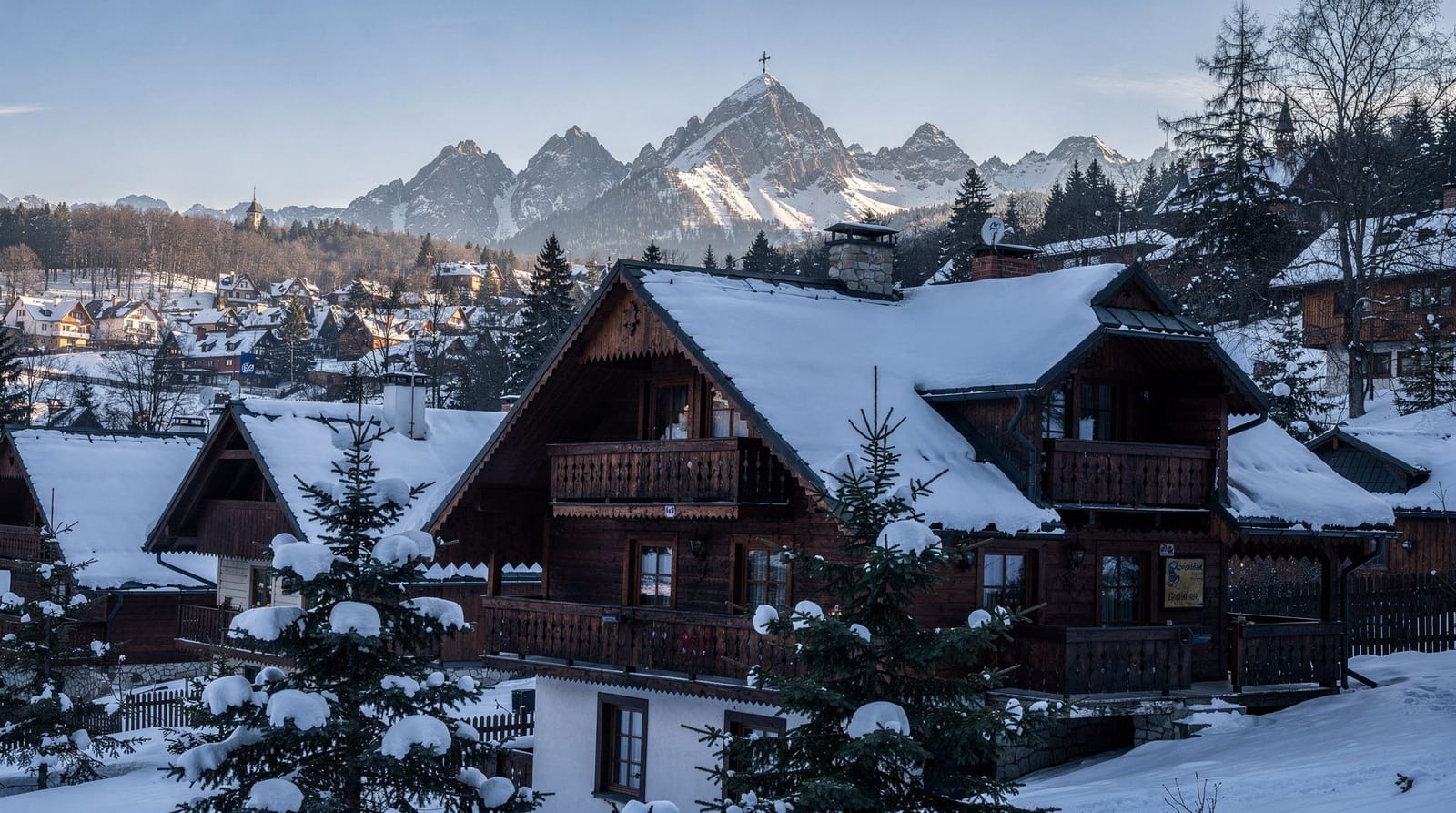
Oscypek and Góral highlander food: the taste of the Tatras
Krakow: Zakopane, funicular, cheese & highland day trip
Duration: 9h
What is oscypek and where can I buy it in Kraków?
Oscypek is a smoked sheep's milk cheese from the Tatra highlands, produced only in the Podhale region under EU protected designation of origin. It is sold by Góral (highlander) vendors on ul. Floriańska and near the Rynek, and at markets. A grilled piece with cranberry jam costs 8–14 PLN (≈ €2–3.30).
What is oscypek?
Oscypek (pronounced: os-TSIH-pek) is a smoked sheep’s milk cheese produced exclusively in the Podhale region — the highland area at the foot of the Tatra Mountains, centred on Zakopane. It has been made there by Góral (mountain shepherd) communities for centuries, using milk from the Polska Owca Górska (Polish mountain sheep) that graze on the Tatra meadows from May to September.
Since 2008, oscypek has held EU Protected Designation of Origin status, meaning that only cheese made in the Podhale region following specific traditional methods can legally carry the name. The production follows a strictly defined process: raw sheep’s milk (occasionally with a small proportion of cow’s milk) is curdled, hand-pressed into oval wooden moulds carved with traditional floral and geometric patterns, brined, and then cold-smoked over a pine or spruce fire for several days.
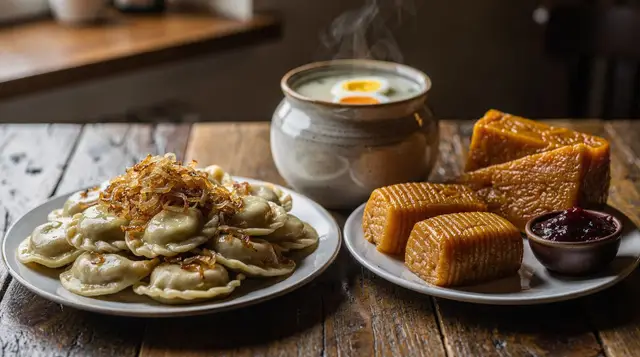
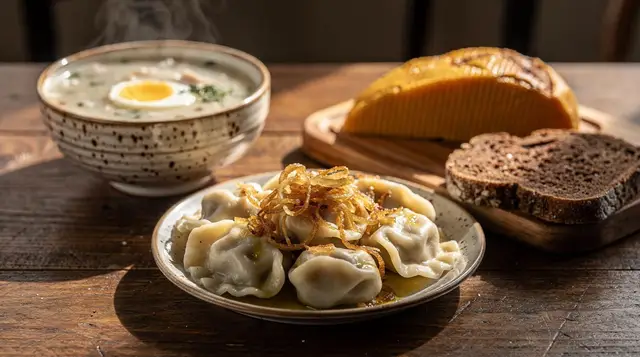
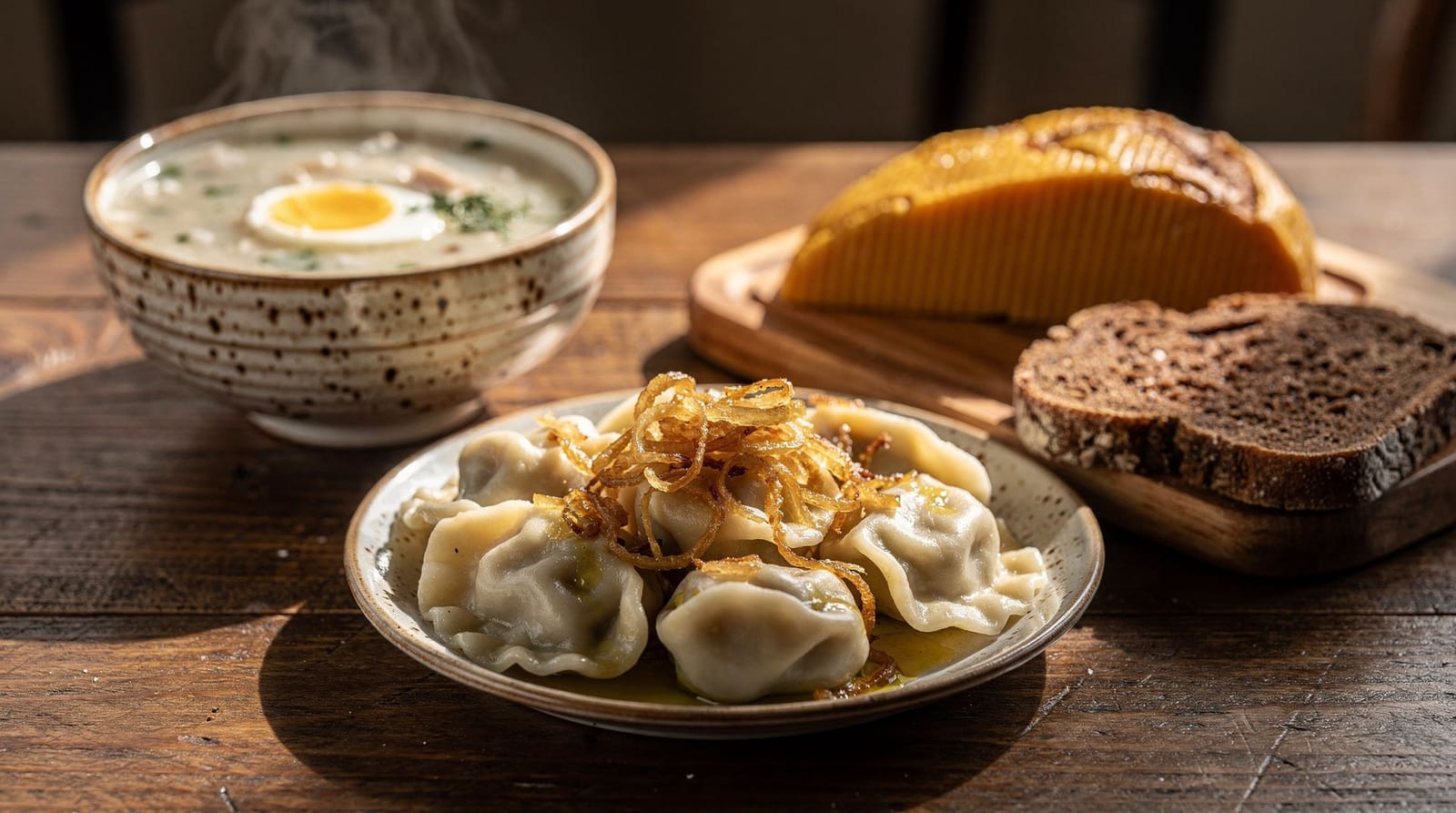
The result is distinctive: a firm cheese, ivory-yellow on the inside, dark amber from the smoking on the outside, with a characteristic oval shape typically 17–23 cm long. The surface carries the pattern of the mould. The flavour is mildly salty, faintly sour, with a clean smokiness from the pine smoke. Texture is slightly rubbery when cold; becomes softer and more complex when grilled.
| Where | Ul. Floriańska, Rynek perimeter, Hala Targowa market |
| Cost | Grilled piece 8–14 PLN; whole cheese 18–28 PLN |
| Best time | May–August for peak freshness; available year-round |
| Pairing | Cranberry jam (żurawina), cold śliwowica plum brandy |
| Full experience | A highland tavern (karczma) in Zakopane or the Tatra Mountains |
Where to buy oscypek in Kraków
Góral vendors sell oscypek directly at several points in central Kraków, typically from small wooden stalls or from the back of vans. The most reliably stocked locations:
Ul. Floriańska (the main tourist walking street north of the Rynek): usually 2–3 Góral vendors selling oscypek, bundz (fresh sheep’s cheese), smoked highlander sausage and other regional products. Vendors are traditionally dressed and the products are genuine — this is a real trade route, not a tourist performance.
Rynek Główny perimeter: occasional vendors near the Sukiennice (Cloth Hall) entrance.
Hala Targowa (ul. Grzegórzecka): the covered market has a small dairy/cheese section where oscypek and similar highland products appear regularly.
Price: a whole oscypek (approximately 300–400g) costs 18–28 PLN (≈ €4–7). A single grilled piece (100–150g, served hot with cranberry jam) costs 8–14 PLN.
How to eat oscypek: the standard and the options
Grilled with cranberry jam (żurawina): the standard and the best. The oscypek is sliced and grilled on a small iron grill until the outside browns and chars slightly, the inside softens and develops a stronger, more complex flavour. Served with a spoonful of sweet-tart cranberry preserves on the side. The contrast of smoky, salty, slightly bitter cheese against the sweet, acidic jam is one of the best flavour combinations in Polish food. Cost at street stalls and market vendors: 8–14 PLN.
Cold, sliced: the raw cheese has a denser, more rubbery texture. Eaten as a snack with dark bread, pickles or mountain sausage (kiełbasa górska). This is the traditional shepherd’s meal.
In cooking: some modern Polish restaurants in Kraków and Zakopane use oscypek melted into pierogi filling, grated over dishes, or incorporated into soups. Interesting, though purists argue the smoking flavour is best left on its own.
With vodka: the traditional Góral accompaniment is śliwowica — plum brandy, typically 50–70% ABV, produced in the Łącko valley near the Tatras. A small glass of very cold śliwowica alongside grilled oscypek is the highland combination. Expect to pay 20–30 PLN for a shot of quality śliwowica.
What is bundz?
Bundz is the fresh, unsmoked version of the cheese that will eventually become oscypek. White, soft, mildly salty and lactic — closer to fresh mozzarella in texture than to aged cheeses. It is extremely fresh when sold (often same-day or next-day production) and needs to be eaten immediately. Sold by the same Góral vendors as oscypek; costs 12–18 PLN for a piece.
Less widely known than oscypek but worth trying alongside it to understand the transformation that smoking creates.
Góral food beyond cheese: the highland cuisine
Oscypek is the most widely known element of Góral cuisine but the highland food tradition is considerably broader.
Moskole
Potato pancakes fried in lard — dense, crisp on the outside, served hot with soured cream (śmietana) and sometimes grated cheese. The Góral equivalent of the pierogi: simple, filling, made from the staple crop of the highlands. Found at highland taverns (karczmy) in Zakopane and occasionally at Kraków restaurants with mountain menus.
Kiełbasa górska (highland sausage)
Smoked and dried sausage made from highland lamb or pork, seasoned with garlic, pepper and marjoram. Sold alongside oscypek at street vendors; served grilled in Zakopane taverns. Denser and more intensely flavoured than lowland kiełbasa.
Jagnięcina and baranina (lamb and mutton)
The Tatras are sheep country; the meat is excellent. Roasted leg of lamb, lamb stew with cabbage, mutton in mushroom sauce — these are Zakopane tavern staples. Rarely found in central Kraków outside specialist highland restaurants.
Bryndza
A soft, pungent, crumbly cheese made from sheep’s milk (or sheep-cow mix), related to but distinct from Romanian brânza. Sharp, salty, used as a spread on bread (chleb góralski — dark highland bread) or as a dip. Available at Góral vendors and at specialty cheese shops.
Śliwowica łącka
The highland distilled plum spirit produced in the Łącko valley. Protected regional product. Very strong (50–72% ABV), artisanal, drunk in very small glasses at very cold temperature. This is a spirit that rewards slowness.
Getting the full highland food experience: Zakopane
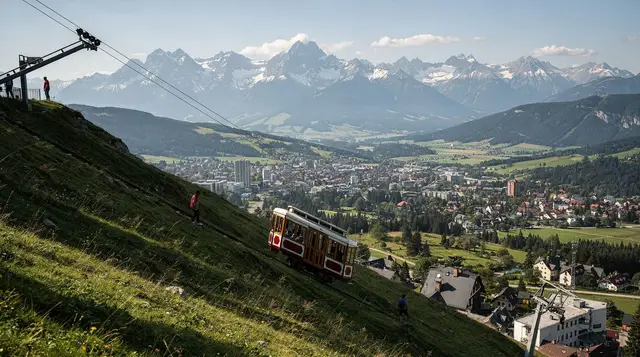
For the full Góral food culture, Zakopane: Poland’s mountain capital and gateway to the Tatras is the place to go. The town’s karczmy (traditional highland taverns) serve complete meals: moskole, jagnięcina, oscypek, highland soup with potato and sour cream, and śliwowica to finish. The karczma atmosphere — heavy wood, folk instruments, sometimes live music — is part of the meal.
The Zakopane, funicular, cheese and highland day trip from Kraków includes a visit to a highland farm or producer with cheese tasting — a good combination of the landscape and the food.
For the food culture context, the Polish food and culture tour with tastings in Kraków includes highland food as one section of the broader Polish culinary narrative.
If you want to go beyond a single day trip, the Zakopane from Kraków guide covers transport and planning in full, and the Zakopane thermal baths guide pairs well with a highland food evening — a soak followed by grilled oscypek and śliwowica is a genuinely popular local combination.
Building a highland food afternoon in Kraków
You do not need a full day to taste the highlands. A sensible plan is to start on Floriańska, where the Góral vendors set up, and order a grilled piece with cranberry jam as a first stop. From there it is a short stroll to the Rynek, where the Rynek Główny guide and the Cloth Hall guide help you fill the rest of the walk with something other than eating. Oscypek is best enjoyed as a snack in the middle of sightseeing, not as a full meal, so it slots easily into an Old Town walking tour.
If you want to follow the cheese with a proper sit-down meal, the traditional Polish dishes guide and the milk bar guide show where to find hearty, plain cooking that sits well alongside highland flavours. For a lighter day, the Kraków food tours guide explains how a guided tasting can fold oscypek into a wider route through the city.
Vendors tend to work the busiest walking streets, so the experience changes with the crowds. Early in the day you can usually watch the grilling at your own pace and ask questions about the cheese; at peak hours the queue moves faster and the conversation is shorter. Either way, it is worth watching how the vendor handles the grill: a well-judged oscypek is browned and lightly charred on the outside, not burnt through.
Tasting notes: what to look for
When you try oscypek for the first time, give it a moment before judging. The first impression is salt and smoke; the sweetness of the jam then pulls the milky, slightly sour character of the sheep’s milk forward. Eaten hot, the cheese has a gentle squeak against the teeth, and the outer skin offers a little resistance before the softer centre gives way.
If you are travelling with others, share one piece first and compare reactions. Some people find the smoke assertive, others find the salt the main event. Bundz makes a useful reference point, since tasting the fresh cheese beside the smoked one shows exactly what the smoke and the brine contribute. Pairing choices matter too: dark bread and pickles lean toward the shepherd’s snack, while jam turns it into something closer to a dessert course.
For travellers building a wider eating plan, the Kraków food guide and the Kazimierz food scene guide place oscypek among the city’s other flavours, and the Zakopane vs DIY guide helps you decide whether the full highland experience is better done on a tour or on your own.
Identifying genuine oscypek
With protected status comes the risk of impostors — and they exist. Several things to check:
Smell and smoke: genuine oscypek has a distinctive pine smoke aroma. Industrial copies often have a liquid smoke treatment that smells more chemical and less complex.
Shape and pattern: the traditional oval shape (not round) with a carved wooden-mould pattern. Smooth or perfectly uniform cheeses are not the real product.
Colour: dark amber from smoking, not painted or dyed. The interior should be light ivory-yellow.
Price: genuine oscypek is priced at 18–28 PLN per piece (300–400g). Significantly cheaper versions are not the real thing.
Seller: the Góral vendors on ul. Floriańska and at Hala Targowa are reliable. Souvenir shops selling individually wrapped “oscypek” at low prices are likely selling impostors.
Oscypek in context: the street food landscape
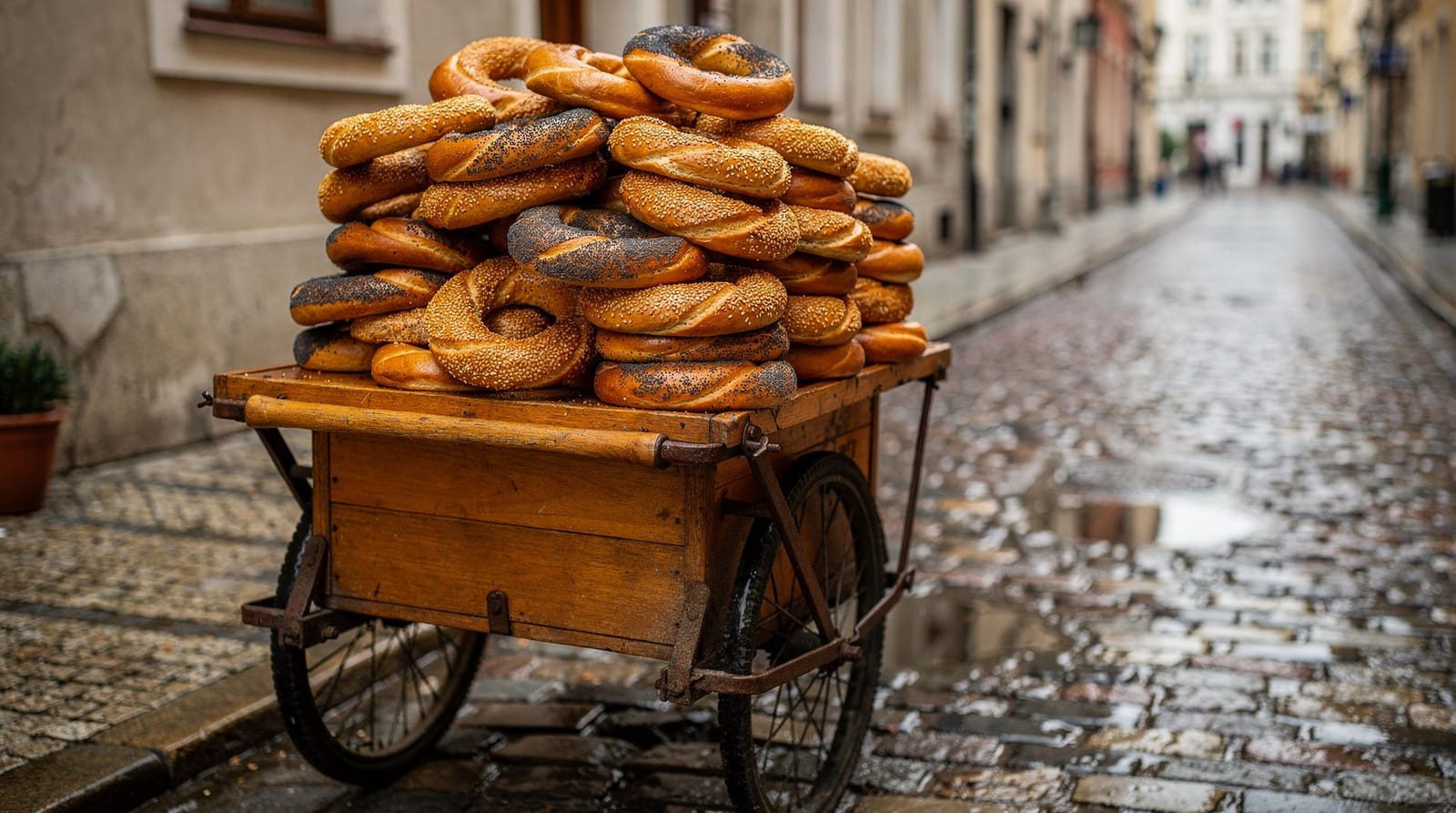
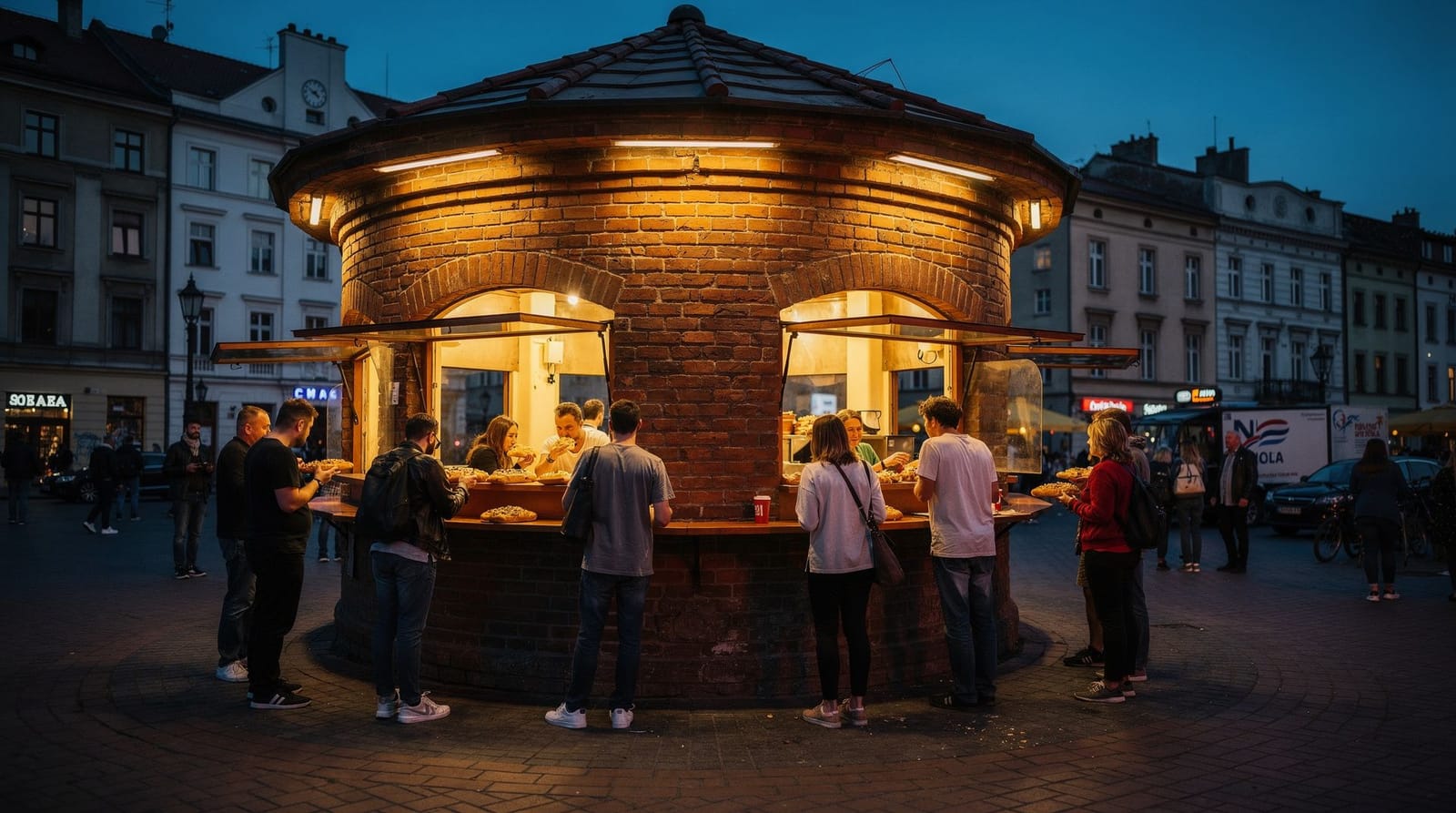
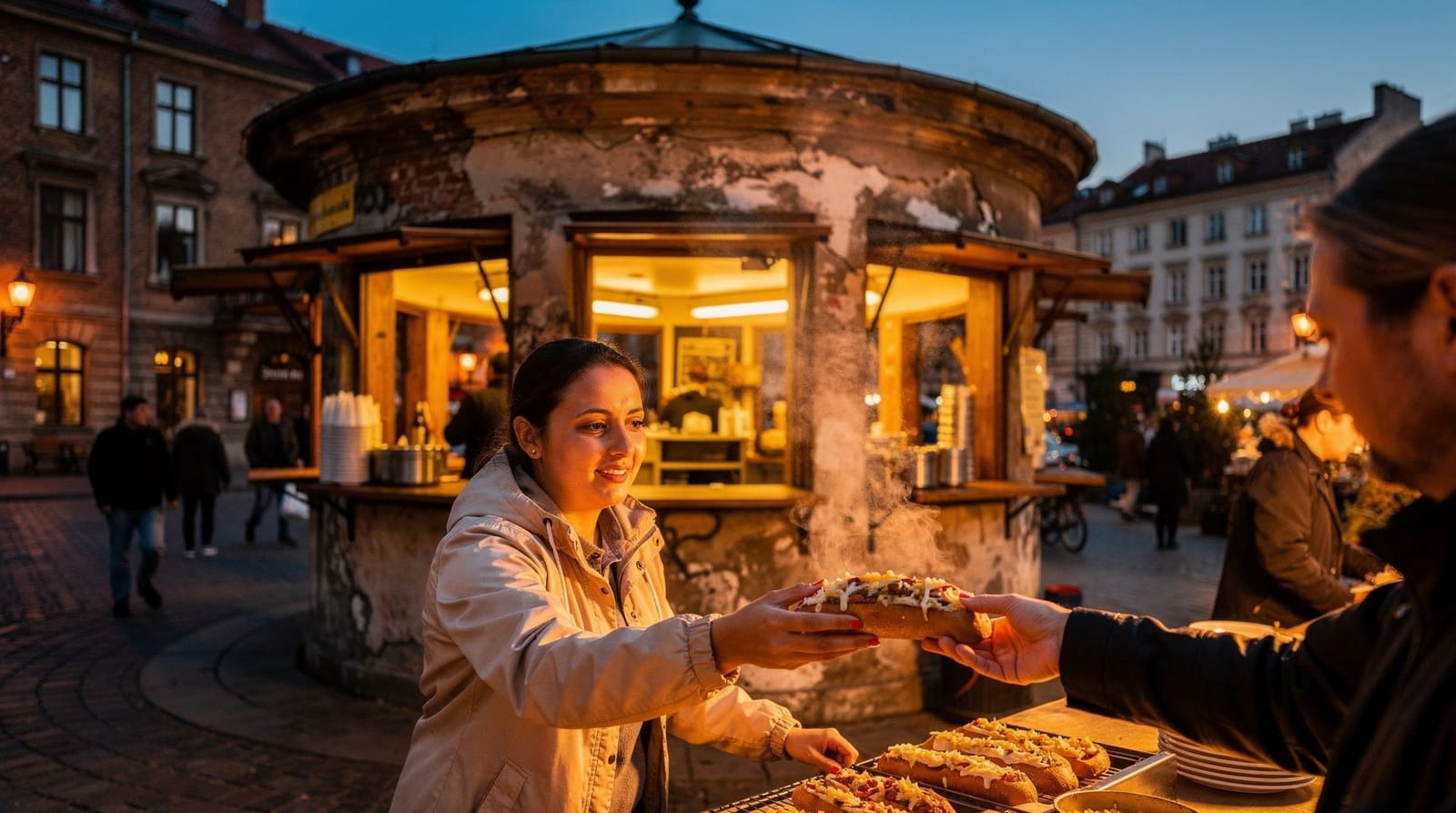
Oscypek is one of Kraków’s four great street foods, alongside the obwarzanek ring bread (see Obwarzanek krakowski: the ring bread of Kraków), the zapiekanka at Plac Nowy (see Zapiekanka: Kraków’s street food icon at Plac Nowy), and grilled kiełbasa. Together they define what you eat standing up in Kraków’s streets. The full food picture is at Krakow food guide: the honest eater’s handbook.
Frequently asked questions about oscypek and highland food
Can I take oscypek home?
Within the EU: yes, no restrictions. A whole smoked oscypek lasts 7–10 days unrefrigerated (longer is better in cool weather) and significantly longer refrigerated. Check your country’s import rules for bringing cheese from the EU. Oscypek travels better than fresh cheese; vacuum-packed versions (sometimes available from better vendors) last longer.
Is oscypek made from 100% sheep’s milk?
Traditional and legally required: at least 60% sheep’s milk. The remainder can be cow’s milk. 100% sheep’s milk versions exist and are considered superior by connoisseurs; ask the vendor specifically (“czysto owcze?” — “pure sheep’s?”).
When is the best time to eat fresh oscypek?
The sheep graze from May to October; fresh oscypek production is highest in late spring and summer. The smoked cheese can be purchased year-round, but the May–August season yields the freshest and most flavourful product. Winter oscypek is still good; spring is the peak.
Are there other highland cheeses besides oscypek?
Yes — bundz (fresh, unsmoked), bryndza (soft and pungent), and the lesser-known redykołka (a small, cow-shaped smoked version made with the same sheep’s milk as oscypek, traditionally given as gifts). Look for all of them at the Góral vendors.
What does Góral food taste like compared to lowland Polish food?
Saltier, smokier, heavier on dairy and lamb. Less reliant on pork (though pork appears). More use of fresh dairy in cooking (śmietana, bundz) and a greater emphasis on the smoke and fermentation that preserves food through highland winters. The flavours are bolder and more rustic than central Polish cooking.
Can I try oscypek without going to Zakopane?
Yes — the Floriańska Street and Hala Targowa vendors in central Kraków sell genuine, PDO-protected oscypek without needing to leave the city. Going to Zakopane adds the full karczma tavern atmosphere and a wider range of highland dishes, but it’s not required to taste real oscypek.
Top experiences
Bookable activities with verified prices and instant confirmation on GetYourGuide.