National Museum in Krakow: branches, collections and visitor guide
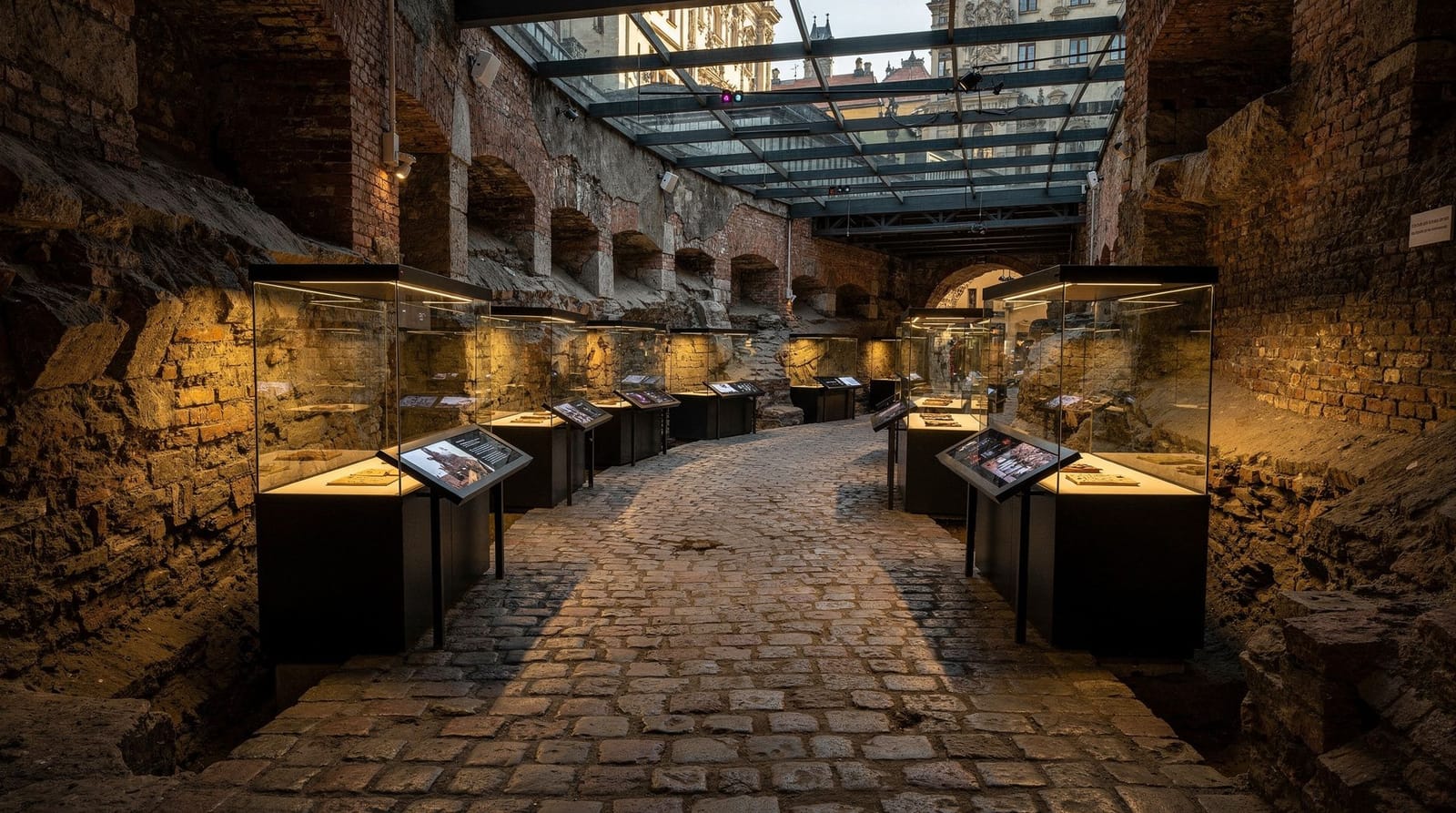
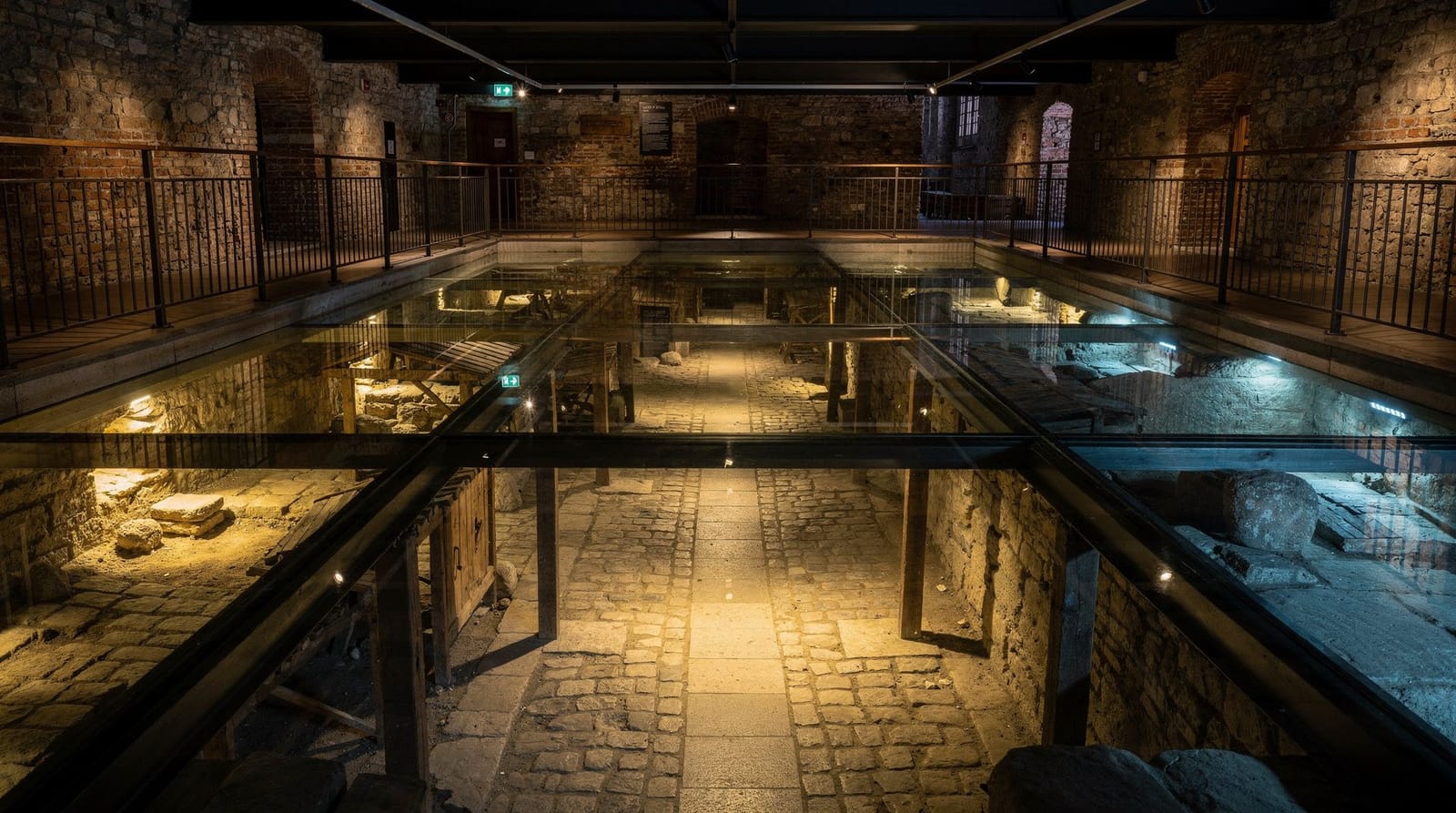
Krakow: Rynek Underground Museum tour with ticket & guide
Duration: 1.5h
Which branch of the National Museum in Kraków is best to visit?
For first-time visitors, the Sukiennice Gallery (19th-century Polish painting inside the Cloth Hall on Rynek Główny) is the most central and visually rewarding. The Czartoryski branch holds the Leonardo da Vinci. For design and applied arts, the main building on Al. 3 Maja is excellent. Each branch requires 1–2 hours separately.
| Branches | 5, scattered across the Old Town and beyond |
| Cost | 18–65 PLN per branch; check mnk.pl for combined options |
| Time needed | 1–2 hours per branch |
| Most famous branch | Czartoryski (Leonardo’s Lady with an Ermine) |
| Free entry | Tuesdays (permanent exhibitions); Czartoryski needs a timed ticket collected the same day |
Understanding the National Museum in Kraków
The Muzeum Narodowe w Krakowie (MNK) is not a single building. It is a network of five principal buildings across Kraków, each housing a distinct collection. This confuses visitors who arrive at the wrong branch, or who buy a ticket at one branch and wonder why it does not cover all the others.
Here is the structure:
- Main building — Al. 3 Maja 1 (modern and applied arts, Arms and Uniforms Gallery)
- Sukiennice Gallery — inside the Cloth Hall on Rynek Główny (19th-century Polish painting)
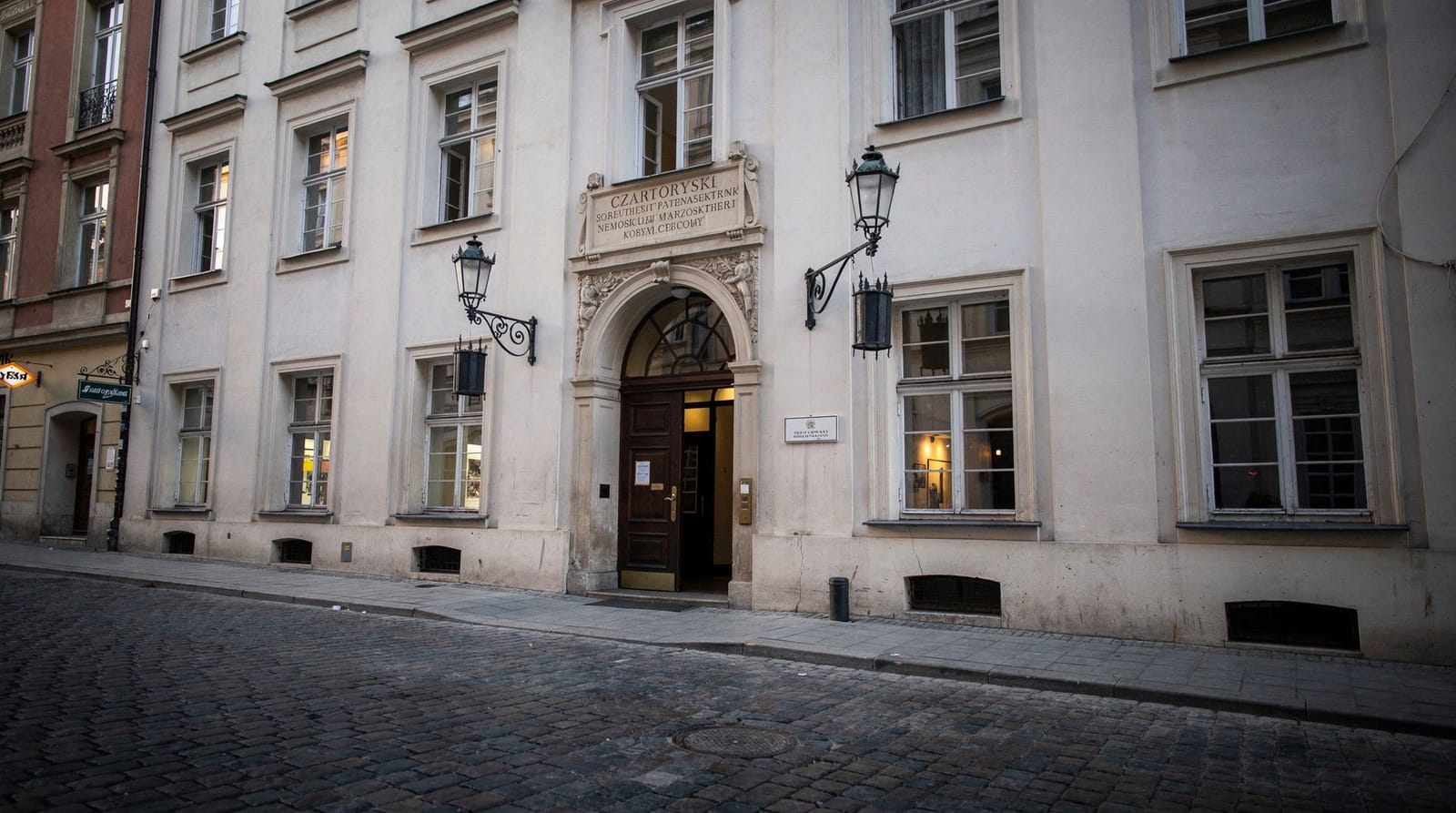
- Czartoryski Museum — ul. Świętego Jana 19 (Leonardo da Vinci, Rembrandt, ancient collections)
- Szołayski House — Plac Szczepański 9 (medieval art, temporary exhibitions)
- Europeum — Plac Sikorskiego 6 (European painting from the 15th–18th centuries)
A combined ticket covers all branches and represents good value if you plan to visit more than two. Individual branch tickets are available for single-branch visits.
Branch 1: the main building
The main building on Al. 3 Maja houses the permanent 20th-century Polish art collection and the decorative arts wing. It is the least visited by foreign tourists and arguably the most interesting to those who want to understand Polish visual culture beyond the Romantic period.
Gallery of 20th-century Polish painting and sculpture: an extensive chronological survey from Young Poland (Młoda Polska) through interwar modernism, WWII-era art, Socialist Realism, and post-1956 avant-garde. Artists such as Olga Boznańska, Jacek Malczewski and Tadeusz Kantor are shown in depth. This gallery is the best place in Kraków to understand how Polish art responded to 20th-century upheaval.
Arms and Uniforms Gallery: an internationally significant collection of Polish military memorabilia, armour, swords, pistols and ceremonial dress spanning six centuries. The collection reflects Poland’s turbulent military history — the Battle of Grunwald (1410), the Polish-Swedish wars, the partitions, WWI and WWII are all represented. More accessible than it sounds; the craftsmanship of the armour alone rewards an hour.
Gallery of Applied Arts: furniture, ceramics, glass, textiles and silverware from medieval times to the early 20th century. The Biedermeier and Art Nouveau sections are particularly strong.
Opening hours: Tuesday–Sunday 10:00–18:00. Closed Mondays. Adult entry 45 PLN (≈ €10.70); reduced 35 PLN. Free on Tuesdays (permanent exhibitions).
Branch 2: Sukiennice Gallery
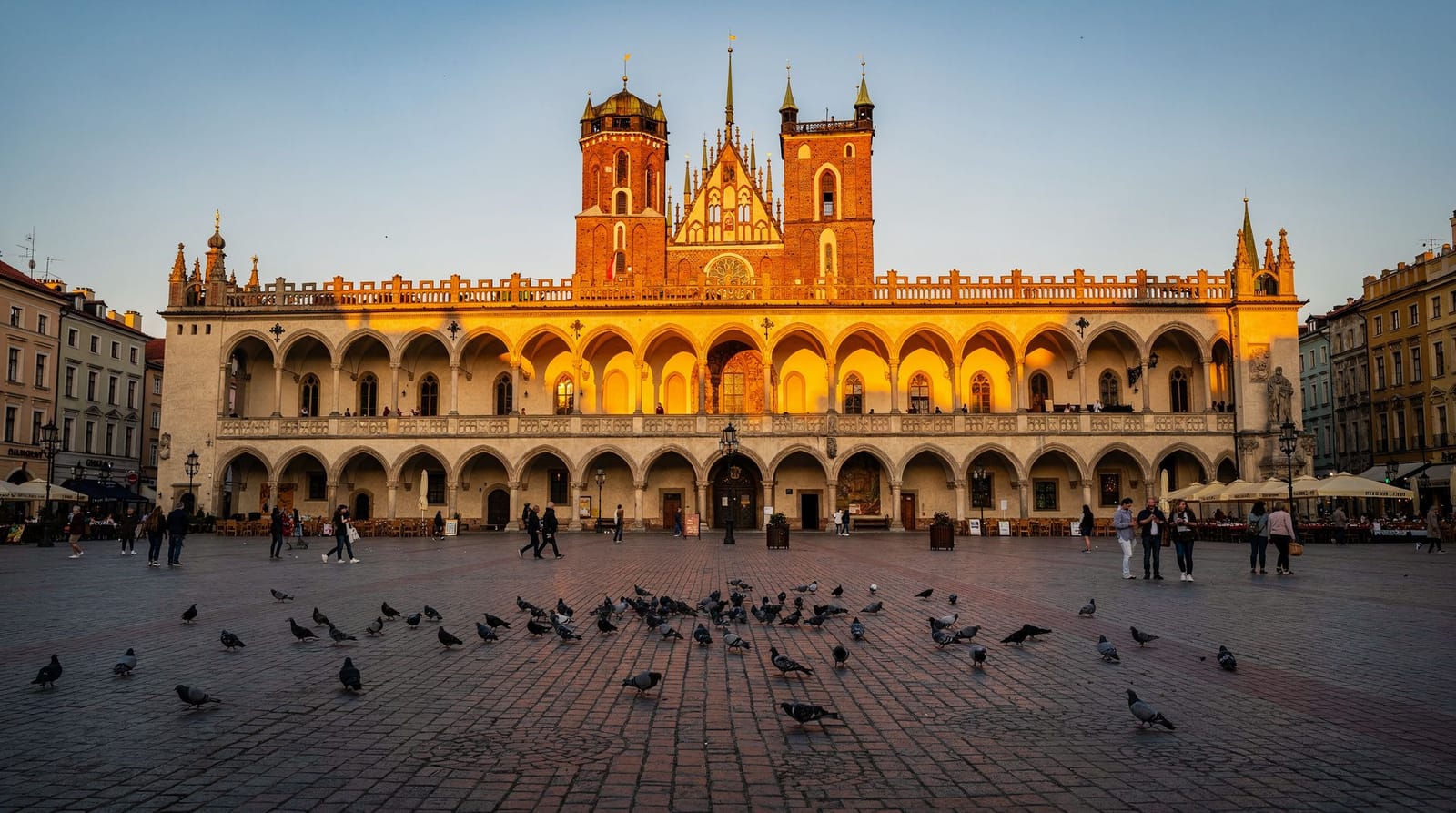
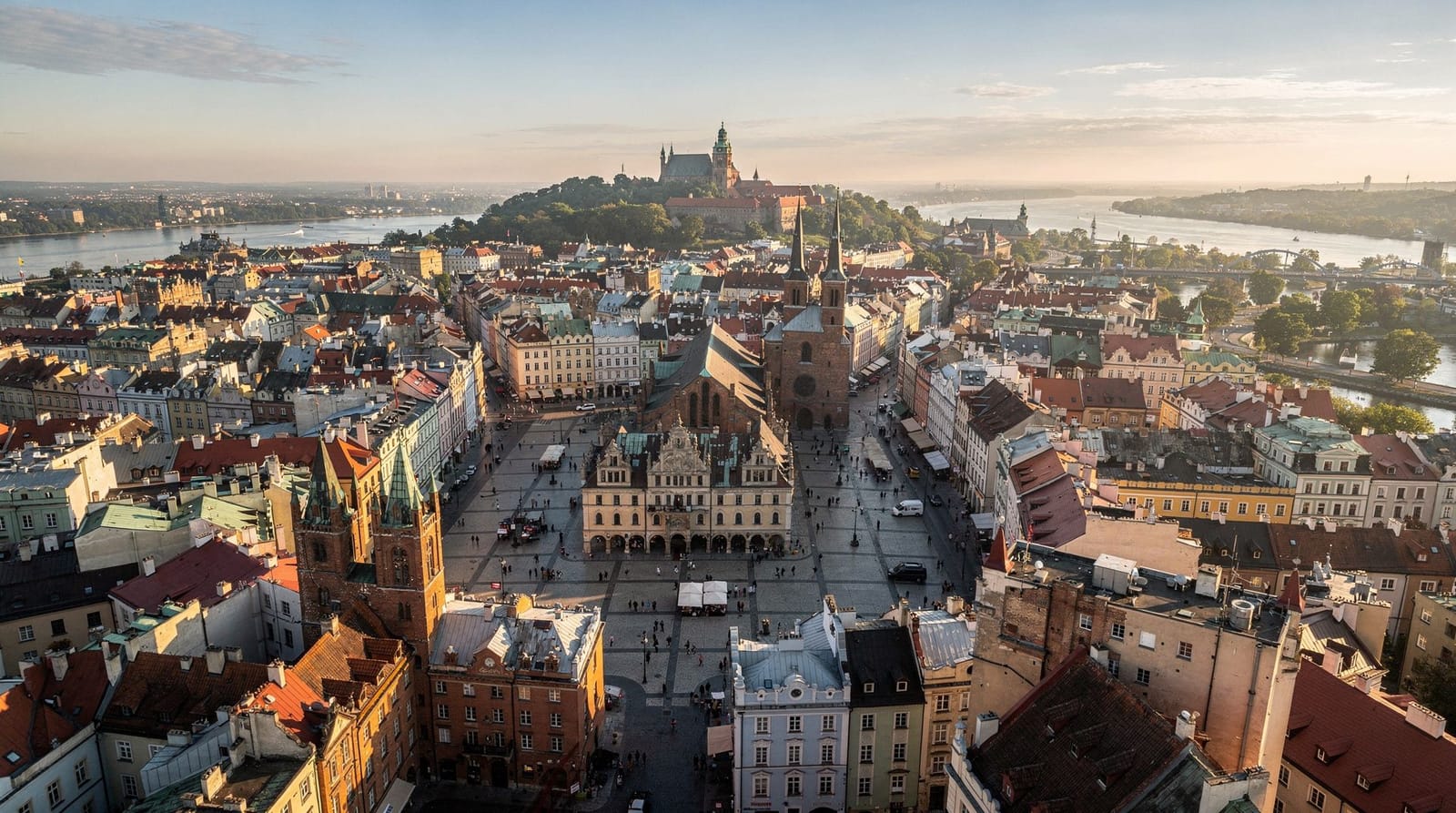
The Sukiennice Gallery (Galeria Sukiennice) occupies the entire first floor of the Cloth Hall — the long Renaissance arcaded building at the centre of Rynek Główny. This is the most conveniently located of the five branches and the one most visitors stumble into without planning.
The collection is 19th-century Polish academic and Romantic painting, and it is exceptional. This is not regional historical curiosity — it includes some of the most technically accomplished and emotionally powerful large-format paintings in Polish history.
Jan Matejko’s works: Matejko (1838–1893) is the dominant figure — his vast historical canvases showing decisive moments in Polish history (the granting of the Jagiellonian Academy charter, the Battle of Grunwald, the First Partition) are nationalist epics of the highest craft. Seeing them in Kraków — where Matejko spent his career — has a different weight than encountering them in reproduction.
Józef Chełmoński and the realists: scenes of the Polish countryside that are simultaneously documentary and emotionally intense. Storks in a field, peasants in snow, horses in a thunderstorm — straightforward subjects rendered with such observation that they bypass the intellect entirely.
Jacek Malczewski: the symbolist painter whose strange, mythologically layered visions of Polish identity and fate do not have direct equivalents elsewhere. His large canvases require time to unpack.
The Sukiennice Gallery entrance is on the south side of the Cloth Hall, first floor. Opening hours: Tuesday–Sunday 10:00–18:00. Closed Mondays. Adult entry 35 PLN (≈ €8.30); reduced 25 PLN; free on Tuesdays.
Branch 3: Czartoryski Museum
The Czartoryski Museum at ul. Pijarska 15 is the most internationally famous branch, containing Leonardo da Vinci’s Lady with an Ermine. It deserves its own guide, which you will find at the link above, but in brief:
Entry 65 PLN (≈ €15.50), reduced 50 PLN, free on Tuesdays with a timed ticket collected on the day. Skip-the-line entry tickets are worth booking in summer. Beyond the Leonardo, the collection includes a Rembrandt, significant ancient Greek and Roman artefacts, medieval armour, and Polish historical memorabilia.
Branch 4: Szołayski House
Plac Szczepański 9, one block north of the Rynek. The permanent collection here covers medieval art — Gothic altarpieces, Romanesque fragments, carved wooden figures — and temporary exhibitions of significant size. The building is a 15th-century townhouse, which gives it a different atmosphere from the modern purpose-built galleries.
The Szołayski House is under-visited relative to its quality. The Gothic collection is the most comprehensive in Kraków; pieces that would be the centrepiece of a provincial museum are here given their proper context. Adult entry 18 PLN (≈ €4.30).
Branch 5: Europeum
Plac Sikorskiego 6, southwest of the Old Town near the Botanical Garden. The Europeum houses European painting from the 15th to 18th centuries — Dutch, Flemish, German, French and Italian — in a compact building that allows genuine attention to individual works. The collection is strongest in Northern European painting; several works of genuine museum quality are here largely undiscovered by tourism.
This is the branch for visitors who want to see European art without crowds. Adult entry 18 PLN (≈ €4.30).
Combined ticket and practical planning
Tickets are sold per branch; check mnk.pl for current combined tickets and passes.
Alternatively, the Kraków City Card with public transport and museum entry may include MNK branches — check current inclusions.
For those combining the Rynek Underground with National Museum branches in one day, this option combines a Rynek Underground tour with a guide and ticket — practical for a morning visit before the Sukiennice Gallery in the afternoon.
Planning a one-day National Museum visit
Half day (Old Town focus): Sukiennice Gallery (90 minutes) + Czartoryski Museum (90 minutes) = a satisfying morning walking distance. Lunch on or near the Rynek, afternoon for Wawel Castle.
Full day (serious museum visit): Czartoryski morning (arrive 10:00, 2 hours) + lunch break + main building afternoon (2 hours). This covers the international masterpieces and the strongest Polish collection.
Multiple days: spread the branches across your stay. Sukiennice + Czartoryski on day one; main building + Szołayski on day two; Europeum as a half-morning addition any day.
Building a museum day around the branches
The branches sit close enough to the Old Town that you can stitch them into a walking day without much planning. The Cloth Hall guide explains the building that houses the Sukiennice Gallery, and it is worth reading before you climb to the first floor: knowing what the ground-floor arcade was built for makes the paintings upstairs feel less like an afterthought. The Rynek Główny guide covers the square outside, which is where most of these routes begin and end.
Between branches, the green ring of the Planty park is a pleasant way to walk from one collection to the next, particularly when the weather is kind and you want a break from gallery lighting. If you would rather fold the museums into a larger walk, the Old Town walking tour guide gives you the surrounding streets, and the Royal Route guide takes you toward Wawel, where the museum day can end.
Some background helps the Polish collections land. The 19th-century canvases in the Sukiennice and the Arms and Uniforms Gallery in the main building both refer to events that most foreign visitors know only vaguely, so a quick read of the Polish history for visitors guide pays off. For the university side of the same story, the Collegium Maius guide is a good companion, since the Jagiellonian Academy appears in Matejko’s work.
Museums also make a sensible plan for bad weather. The rainy day activities guide lists indoor options when the forecast turns, and the Kraków with kids guide helps if children are along. If you are still deciding how many days to give the city, the two-day itinerary shows where a museum or two can sit without crowding out the main sights.
Honest assessment
The National Museum in Kraków is seriously good. It is undervisited relative to its quality, particularly the main building and the Szołayski House, because Kraków’s international reputation focuses on the Rynek, Wawel and the Schindler Factory.
The Czartoryski’s Leonardo is the obvious headline, but the 19th-century Polish painting in the Sukiennice is — for those who spend time with it — the most sustained emotional experience in the MNK system. Polish Romantic and realist painting was shaped by a nation that spent 123 years partitioned out of existence (1795–1918), and the art carries that weight in ways that transcend cultural specificity.
The five branches compared
| Branch | Focus | Time needed | Entry |
|---|---|---|---|
| Main building | 20th-century Polish art, arms | 2 hours | 45 PLN |
| Sukiennice Gallery | 19th-century Polish painting | 90 min | 35 PLN |
| Czartoryski | Leonardo, Rembrandt, antiquities | 90 min | 65 PLN |
| Szołayski House | Medieval Gothic art | 60 min | 18 PLN |
| Europeum | 15th–18th c. European painting | 60 min | 18 PLN |
How the National Museum fits your wider museum day
Kraków’s museum landscape is dense enough that the National Museum’s branches are usually one part of a bigger plan rather than a destination on their own. The Rynek Underground Museum pairs naturally with the Sukiennice Gallery since both sit on Rynek Główny — start underground, finish upstairs in the Cloth Hall. If you’re trying to prioritise across Kraków’s many museums with limited time, the best museums in Kraków guide ranks the National Museum branches against the Czartoryski, MOCAK, and Schindler Factory.
And if a multi-day museum-heavy trip is the plan, the Kraków museum pass guide is worth checking before buying the MNK combined ticket separately — some passes overlap or beat it on value. For a different flavour of collection entirely, the Archdiocesan Museum guide covers Kraków’s dedicated religious art collection, a natural add-on for anyone drawn to the Szołayski House’s Gothic altarpieces.
Frequently asked questions about the National Museum in Kraków
Does one ticket cover all five branches?
The combined ticket covers all five and represents good value for multi-branch visits. Individual branch tickets are cheaper for single-branch visits. The Czartoryski Museum has its own separate booking system for timed-entry slots.
Which branch has the longest queues?
The Czartoryski Museum, by far — because of the Leonardo da Vinci. Book ahead or use skip-the-line tickets in summer. The other branches rarely have queues longer than 10 minutes.
Is the National Museum suitable for children?
Yes, with strategic planning. The Arms and Uniforms Gallery in the main building is reliably engaging for children aged 8+. The Sukiennice’s large historical paintings have a visual drama that older children respond to. The Czartoryski’s ancient artefacts section also works well for families.
How does the National Museum compare to the Rynek Underground?
They are different experiences. The Rynek Underground is an archaeological site with multimedia; the National Museum branches are traditional art and history collections. Both are excellent; the Underground is more viscerally immediate while the National Museum requires more prior engagement to get the most from it.
Is there a restaurant in any of the branches?
The main building and the Czartoryski Museum both have cafés. The Sukiennice Gallery does not have its own café, but you are in the middle of Rynek Główny with countless options on all sides — avoid the tourist-trap restaurants facing directly onto the square and walk one block in any direction for better value.
Should I visit the National Museum or MOCAK if I only have time for one?
They cover very different periods and moods, so the choice depends on interest rather than quality. The National Museum’s strongest branches (Sukiennice, main building) cover Polish art through the 20th century; MOCAK is exclusively contemporary. If your trip already includes the Schindler Factory Museum in Podgórze, MOCAK’s proximity makes it the more efficient add-on; otherwise the National Museum’s central branches are easier to combine with an Old Town day.
Is the National Museum in Kraków part of a national network with branches elsewhere?
No — despite the name, Muzeum Narodowe w Krakowie is a Kraków-specific institution with five branches all within the city, distinct from Poland’s other national museums in Warsaw and elsewhere. The “National” in the name reflects its status and founding mission (established 1879) rather than a multi-city structure.
Top experiences
Bookable activities with verified prices and instant confirmation on GetYourGuide.