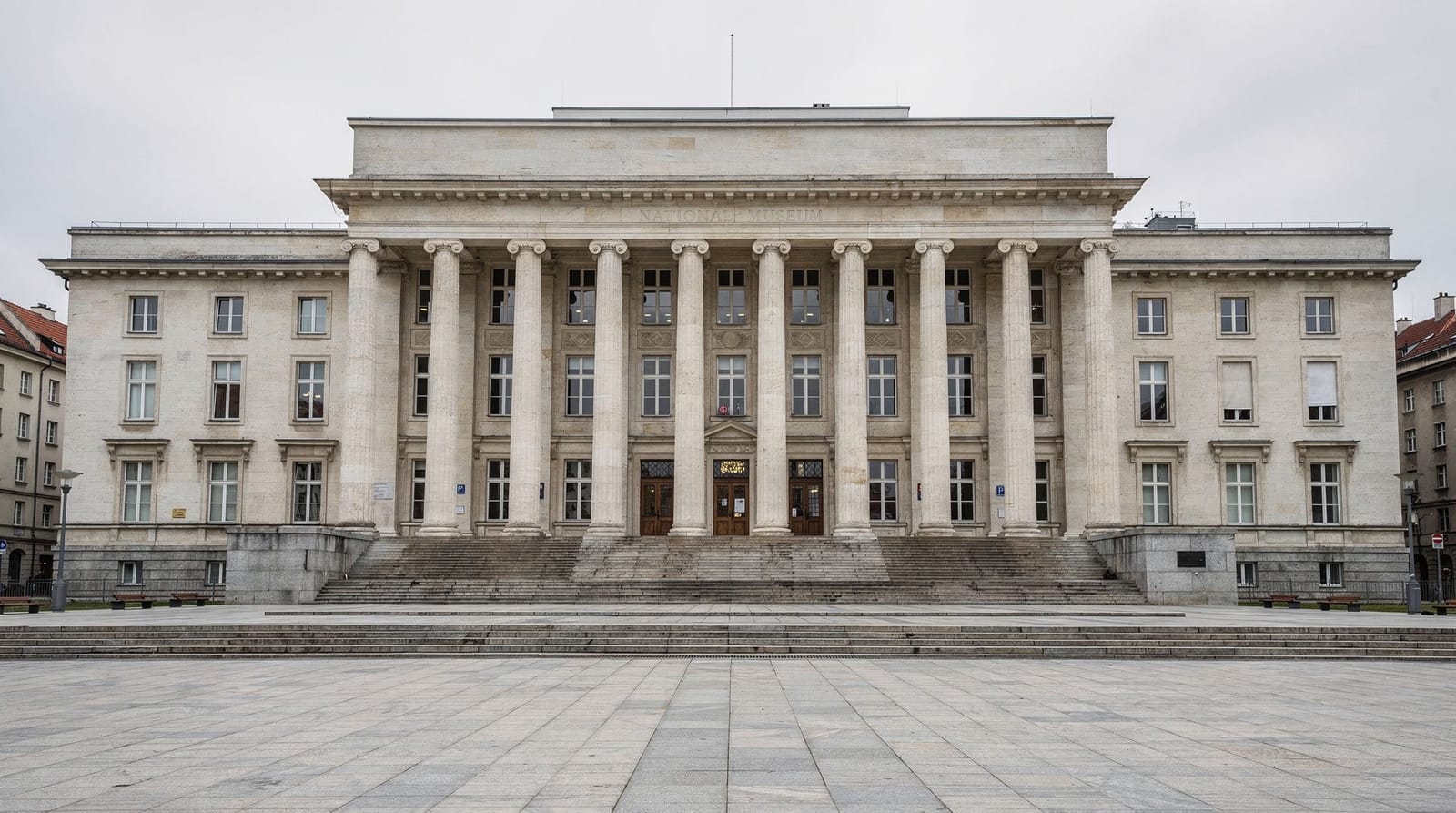
MOCAK Museum of Contemporary Art Krakow: visitor guide
Krakow: MOCAK Museum of Contemporary Art entry ticket
Is MOCAK worth visiting in Kraków?
Yes, especially if you are visiting the Schindler Factory Museum next door. MOCAK is one of Poland's best contemporary art museums with strong temporary exhibitions and a serious permanent collection. Combined, the two museums make an outstanding full-day cultural itinerary in Podgórze.
| Where | ul. Lipowa 4, Podgórze, next to Schindler Factory |
| Cost | around 30 PLN adult, 20 PLN reduced, collection free Thursdays |
| Time needed | 90 minutes to 2 hours |
| Getting there | Tram 3 or 24 to Zabłocie, or 15 min walk from Kazimierz |
| Best paired with | Schindler Factory Museum (visit MOCAK second) |
What MOCAK is
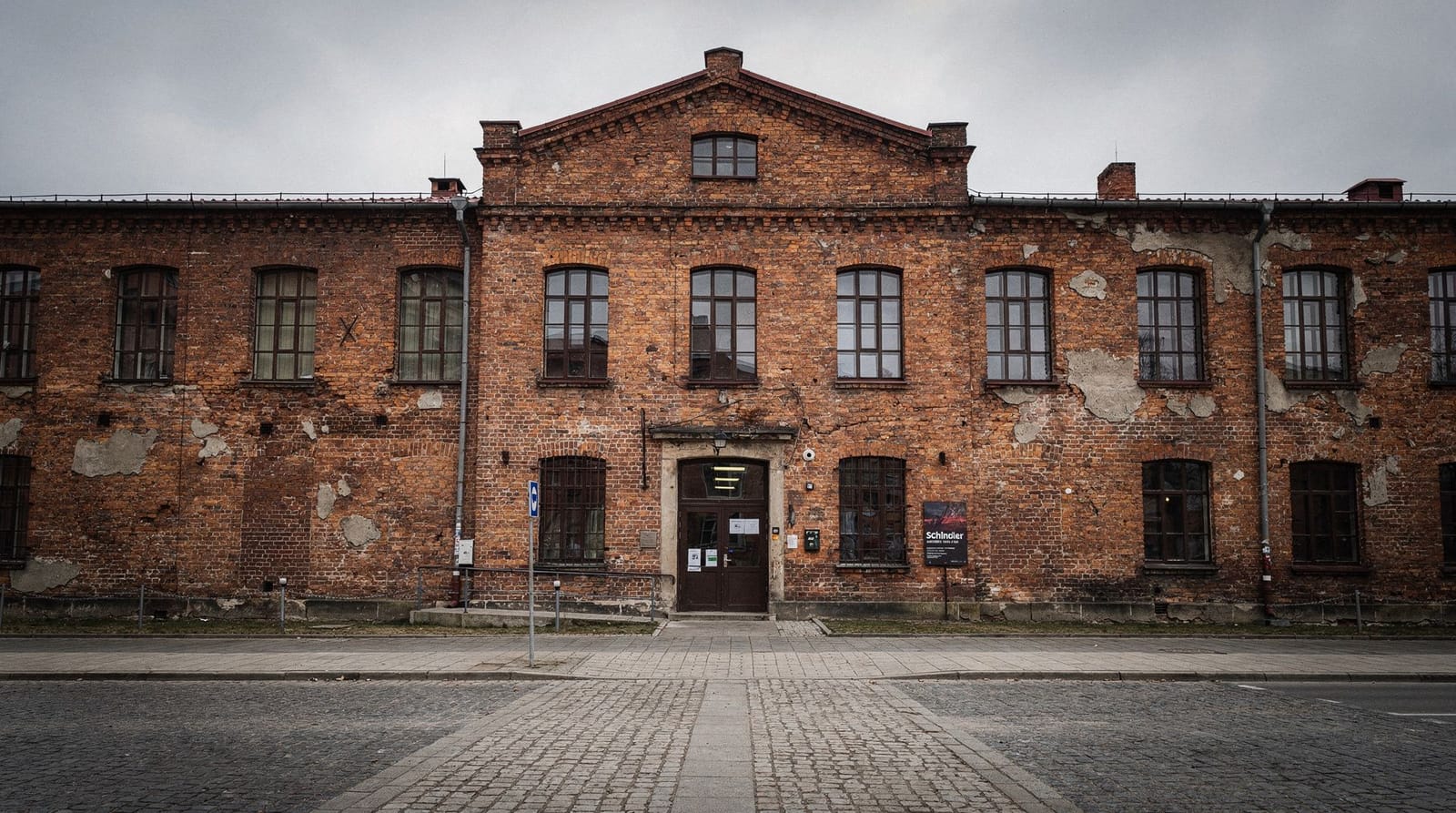
The Museum of Contemporary Art in Kraków (Muzeum Sztuki Współczesnej w Krakowie — MOCAK) is the most significant contemporary art institution in southern Poland. It opened in 2011 in a converted industrial building in Podgórze, the district south of the Vistula that was also home to the Nazi-era Jewish Ghetto and Oskar Schindler’s enamel factory.
The location is not coincidental. MOCAK was built on the grounds of Schindler’s factory complex, and the physical proximity to the Schindler Factory Museum next door creates one of the most intellectually coherent cultural pairings in any European city: the historical weight of WWII memory directly adjacent to contemporary art that, in many of its programmes, engages explicitly with memory, trauma and Polish identity.
The building itself — designed by architect Claudio Nardi — is a converted ramp building from the original factory, extended with glass and steel. The space is generous, well-lit and flexible enough to host large-scale installations.
The permanent collection
MOCAK’s permanent collection runs to over 1,500 works by Polish and international artists, with particular strengths in:
Polish artists after 1989: the collection traces the development of Polish contemporary art through the post-communist transition and into the EU era. Artists such as Mirosław Bałka, Zofia Kulik and Paweł Althamer are represented — figures who shaped how Polish visual art engaged with history and politics in the late 20th century.
Video and new media: MOCAK has invested seriously in acquiring video art and digital works, an area where many older European museums are still catching up. Several rooms are dedicated to video installations that can require 20–30 minutes to experience fully.
Photography: documentary and art photography of a consistently high standard, with recurring focus on social and political themes.
Works engaging with the Holocaust: given the location, this is unsurprising and handled with intelligence. Several major works in the collection address WWII memory not as documentary recreation but as artistic exploration of how we inherit and transmit trauma.
The permanent collection is displayed across roughly half the museum’s floor space; the remainder houses rotating temporary exhibitions.
Temporary exhibitions
MOCAK runs 4–6 major temporary exhibitions per year, with an international programme that brings in works and artists that would otherwise not be seen in Poland. The quality is consistently high. Exhibitions have included solo shows of major names (Christian Boltanski, Olafur Eliasson, Yoko Ono) alongside important Polish retrospectives.
Check mocak.pl for the current programme before visiting. The temporary exhibitions are the primary reason for repeat visits.
Tickets and practical information
Entry tickets for MOCAK can be purchased online in advance (recommended in summer) or at the museum box office. Adult entry is 30 PLN (≈ €7.15). Reduced rate (students, seniors, children 7–18) is 20 PLN (≈ €4.75). Children under 7 enter free. The collection exhibitions on level -1 are free on Thursdays.
The museum is open Tuesday to Sunday, 11:00–19:00 (ticket office until 18:30). Closed Mondays.
Allow 90 minutes to 2 hours for a thorough visit combining permanent collection and one major temporary exhibition. If both rooms of temporary shows are strong, budget 2.5 hours.
If you are visiting Kraków for several days and plan to see multiple museums, compare whether the Kraków Museum Pass or the Kraków City Card with public transport and museums covers MOCAK entry.
Location: Podgórze and how to get there
MOCAK is at ul. Lipowa 4 in Podgórze, approximately 3 km southeast of the Rynek Główny.
Tram: Line 3 (towards Kurdwanów) or line 24 (towards Mały Płaszów) from the centre; alight at Zabłocie stop. The museum is a 3-minute walk from there.
On foot from Kazimierz: cross the Bernatek footbridge over the Vistula and continue east along ul. Lipowa — about 15 minutes from the heart of Kazimierz.
Taxi/Bolt/Uber: 10–15 minutes and 12–18 PLN (≈ €2.85–4.30) from the Old Town depending on traffic.
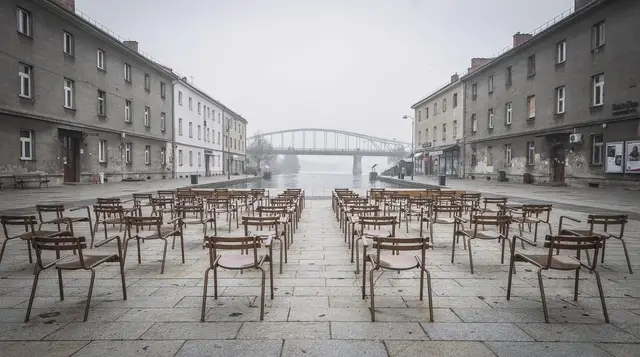
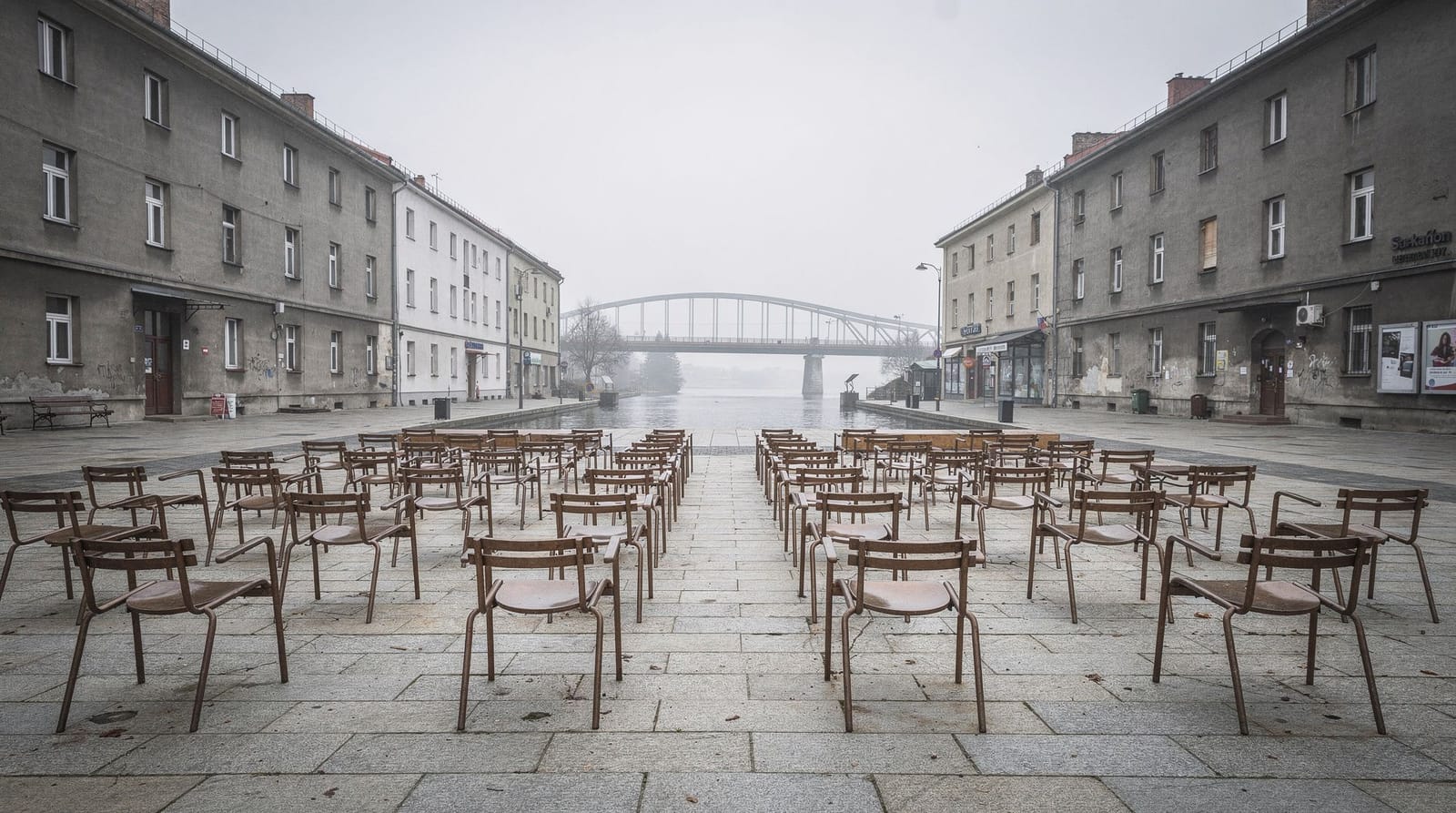
The neighbourhood of Podgórze is worth the detour independently of the museums. The Plac Bohaterów Getta (Heroes of the Ghetto Square) — where the ghetto liquidation took place and which is now marked by a memorial of 33 empty metal chairs — is a 5-minute walk from MOCAK.
Combining MOCAK with the Schindler Factory
This is the recommended combination for almost any visitor. The two museums are literally next to each other (separate entrances on the same complex, about 80 metres apart).
The Schindler Factory Museum is the more historically demanding experience: a 2–3 hour documentary journey through Nazi occupation of Kraków between 1939 and 1945, housed in Schindler’s actual factory building. It requires emotional energy.
MOCAK is the counterbalance: a breathing space in which contemporary art addresses related themes through imagination rather than documentation, without the same intensity. Visiting the Schindler Factory first and then MOCAK works better psychologically than the reverse.
A full day starting at 10:00 at the Schindler Factory, breaking for lunch at one of the cafés on ul. Lipowa, then visiting MOCAK from 13:30, gives you time to finish by 16:00–17:00 and return to the centre.
The MOCAK bookshop and café
The bookshop is one of the best-stocked art bookshops in Kraków, with a strong selection of Polish contemporary art publications and international exhibition catalogues. Worth browsing even if you are not buying.
The ground-floor café is a pleasant, architecturally interesting space that works well for lunch between the two museums. The food is above museum-café average — soups, salads, open sandwiches — at 15–28 PLN (≈ €3.60–6.70) per dish.
MOCAK for different types of visitor
Serious contemporary art visitors: this is the strongest contemporary art institution between Warsaw and Vienna. The permanent collection rivals many Western European museums of similar size; the temporary programme is ambitious. Worth making a specific trip for.
Visitors with a general interest in museums: the combination with the Schindler Factory makes MOCAK a natural addition to what is already a compelling half-day. The collection is accessible — MOCAK curates for engagement, not just connoisseurship.
Visitors short on time: if you can only do one museum in Podgórze, make it the Schindler Factory. But MOCAK requires only 90 minutes and is directly adjacent, so “only one museum” in this case is a missed opportunity unless time is genuinely tight.
Families with children: MOCAK runs occasional family programmes on weekends and school holidays. The video installations engage some children; others find the museum abstract. Children under 12 are generally better served by the nearby Schindler Factory (which has more narrative clarity) or, if staying in Old Town, the Rynek Underground Museum.
MOCAK against Kraków’s other art museums
Kraków has several strong art institutions, and it’s worth knowing where MOCAK sits among them before deciding how to spend a museum day. The National Museum in Kraków covers a vastly longer historical span — Polish painting, decorative arts, and archaeology across centuries — and is the better choice if your interest is Polish art history broadly rather than contemporary practice specifically. The best museums in Kraków guide ranks MOCAK alongside the Czartoryski, Rynek Underground, and the National Museum, useful if you’re trying to prioritise across a short trip. For anyone building a multi-museum itinerary, the Kraków museum pass guide explains which passes actually cover MOCAK entry versus which only cover the city-run museums.
Making the most of the visit
Start with the permanent collection while your attention is fresh, then move to the temporary exhibition. Video rooms reward patience: sit down, let the work run, and resist the urge to move on after a minute. If the museum feels abstract at first, read the text panels before looking at a piece; they are written to help, not to intimidate.
Contemporary art can be a good way to process what you have just seen elsewhere in Podgórze. Many visitors find that the quiet, light-filled galleries give them room to think after the intensity of the Schindler’s Factory museum, and works touching on memory take on a different meaning when you have just walked through the history behind them. For the wider historical background, the WWII Kraków guide and the overview of Kraków under Nazi occupation are useful reading before you go.
Building a Podgórze day around MOCAK
Podgórze rewards more than a single museum stop. Before or after MOCAK, the Kraków ghetto and Podgórze guide lays out the streets and memorials worth seeing on foot, and the Ghetto Heroes Square pharmacy guide covers one of the most moving small museums in the district. If you want the human story of the neighbourhood in a broader frame, the Jewish Kraków history overview connects Podgórze with nearby Kazimierz.
For a wider plan, the Schindler’s List locations guide and the WWII history itinerary fit naturally with a MOCAK visit. Travellers with only a short stay can slot it into the two-day itinerary or the three-day itinerary, and those still deciding how long to stay can read how many days to spend in the city in this planning guide.
Practical comfort and planning notes
Museum visits are tiring, so plan a pause in the middle rather than pushing through. The café is the obvious place, and the walk back toward the river makes a good reset. If you are unsure how to reach the area from your hotel, the getting around Kraków guide explains the options, and the public transport guide goes into trams in more detail. Anyone with mobility needs should check the accessibility guide before choosing the order of the day.
On a rainy day, MOCAK is an easy indoor choice, and the rainy day activities guide has more ideas if the weather keeps you inside. For a final overview of what else deserves your time, the best museums in Kraków is the place to compare.
Frequently asked questions about MOCAK
Is MOCAK only about Polish art?
No — the collection and programme are genuinely international. Polish art is the core of the permanent collection, but major temporary exhibitions regularly feature internationally recognised artists from across Europe and beyond.
Do I need to be a contemporary art expert to appreciate MOCAK?
No. MOCAK’s curatorial approach prioritises accessibility. Text panels are thorough, and the works in the permanent collection are selected for their capacity to communicate to a broad audience. That said, if you are entirely new to contemporary art, having some context helps — the guided art tour through GetYourGuide covers the Czartoryski and contemporary art scene and may be useful background.
Does MOCAK have works that address the Holocaust?
Yes. The museum’s proximity to the Schindler Factory and the former Ghetto is not coincidental. Several significant works in the collection engage directly with WWII memory, the Holocaust, and Poland’s complex relationship with that history. These are handled with artistic and ethical care.
Can I visit MOCAK on the same day as the Schindler Factory?
Yes, and this is the recommended approach. See the section above on combining the two. Both are open the same days and hours. Buy MOCAK tickets in advance online to avoid any queue at the box office, especially if your Schindler visit runs longer than expected.
Is there parking near MOCAK?
There is street parking on ul. Lipowa and in the immediate neighbourhood, though availability varies. Given the good tram connection (Zabłocie stop) and the ease of Bolt/Uber from the centre, driving is rarely necessary.
What language are the wall texts in?
Wall text throughout the permanent collection is in Polish and English. Temporary exhibitions are increasingly providing German translations as well, given the large number of German-speaking visitors.
How does MOCAK compare to the National Museum in Kraków?
They serve different purposes. MOCAK is exclusively contemporary — art from roughly 1989 onward — in a compact, modern building. The National Museum spans a much wider historical range across multiple branches around the city, including major Polish paintings and decorative arts. If you only have time for one, choose based on whether you want contemporary or historical art; both are excellent within their remit.
Is MOCAK worth visiting without also seeing the Schindler Factory?
Yes, though it’s a different, lower-priority trip. Serious contemporary art visitors will find MOCAK worthwhile as a standalone destination — it’s genuinely one of the strongest contemporary art institutions in Central Europe. For a general visitor with limited time, the combination with the Schindler Factory next door is what makes the detour to Podgórze clearly worthwhile.
Top experiences
Bookable activities with verified prices and instant confirmation on GetYourGuide.