Kraków in winter: what to expect and how to plan your visit
From Krakow: Zakopane and thermal baths with optional lunch
Is Kraków worth visiting in winter?
Yes — winter is one of Kraków's most atmospheric seasons. Christmas markets run from late November to 1 January, museums are uncrowded, hotel rates drop after the New Year, and Zakopane thermal baths are at their best in the cold. Temperatures average -4 to +4°C in December–February; pack proper layers and waterproof boots. January and February offer the best prices and the fewest tourists.
| Where | Rynek Główny (Christmas market), museums, Zakopane for thermal baths |
| Cost | December prices peak; January–February rates drop 30–40% |
| Time needed | 3–4 days for the city; add a day for Zakopane thermal baths |
| Getting there | Same year-round access; trains and trams run through winter |
| Best time | December for the Christmas market; January for value and empty museums |
Winter in Kraków: the honest picture
Kraków in winter is cold, atmospheric, and frequently underrated. The tourist industry tries hard to sell every month as the “best time to visit,” but winter has genuine specific strengths that suit a particular kind of traveller: those who want museum access without queues, affordable accommodation, and a slower pace — interrupted by very specific highlights (the Christmas markets, New Year’s Eve on Rynek Główny, thermal baths in the Tatras).
The honest weaknesses: January and February can feel bleak when the Old Town’s Christmas decorations come down. Morskie Oko and high Tatra trails are inaccessible or dangerous without mountaineering gear. Dunajec River rafting closes. Days are short — sunrise around 07:30, sunset by 15:30 in December. Some outdoor attractions reduce hours.
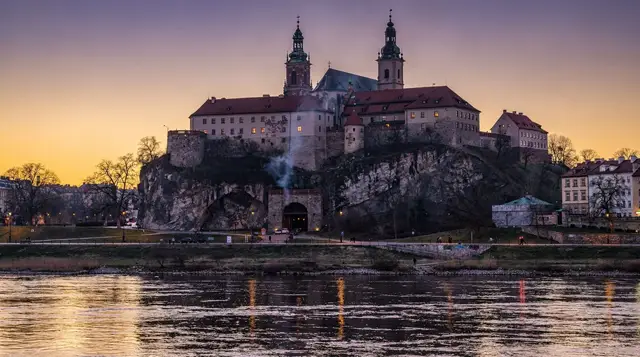
The genuine strengths: you will have Wawel Castle to yourself on a Tuesday in January. A table at Pod Wawelem milk bar at noon without waiting. Kraków underground museums at their quietest. And a day trip to Zakopane for thermal baths in snow-framed mountains that looks like a painting.
December: the best and busiest month
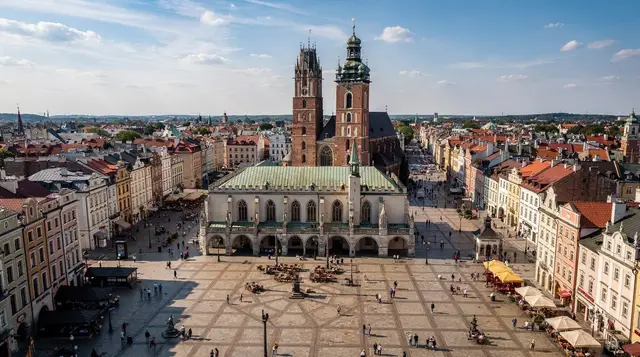
December is winter’s centrepiece. The Christmas market on Rynek Główny (running approximately 28 November – 1 January) transforms the Old Town into one of Europe’s most beautiful seasonal settings. Roughly 100 wooden stalls sell oscypek (smoked sheep’s cheese), grzaniec (mulled wine), pierogi, mead, szopki krakowska (nativity scenes), and handmade crafts. See the full market guide at /guides/krakow-christmas-markets-guide/.
Beyond the market, December is the month to:
Visit Wawel Cathedral for Advent concerts. The Capella Cracoviensis and other ensembles perform in the cathedral and in St. Peter and Paul’s Church on ul. Grodzka. Tickets from 50–80 PLN (≈€12–19); check Krakow’s cultural event aggregator at krakow.pl.
See the Szopka competition. On the first Thursday of December, master craftsmen parade their elaborate nativity tableau miniatures to Rynek Główny. These szopki krakowska — architectural models blending Kraków’s Gothic spires with tinfoil and beads — are a UNESCO Intangible Cultural Heritage. The winning pieces are then exhibited at the Historical Museum in the Krzysztofory Palace.
Watch New Year’s Eve on Rynek Główny. Kraków hosts a large outdoor celebration with live music, fireworks launched from Wawel Hill above the Vistula, and midnight revelry on the square. It is free and spectacular — though very cold. Dress accordingly.
December accommodation prices spike around the Christmas market period (particularly 5–31 December). Book 2–3 months ahead. Rates ease significantly from 2 January.
January: the quiet reset
After the market stalls come down in the first week of January, Kraków enters its quietest month of the year. This is the moment for:
Museum deep-dives without crowds. The Rynek Underground Museum, Schindler Factory (Fabryka Schindlera), Czartoryski Museum (home to Leonardo da Vinci’s Lady with an Ermine), and the National Museum on al. 3 Maja are all at their least busy. The Schindler Factory normally has 40-minute timed-entry queues in summer; in January you can walk in.
Best restaurant access. The milk bars (bar mleczny) that define authentic Kraków eating — Milk Bar Tomasza (ul. Tomasza 24), Bar Mleczny Centralny (ul. Jagiellońska 1) — are at their most accessible. So are the better mid-range restaurants: Restauracja Szara (Rynek Główny 6) and Pod Baranem (ul. Szewska 25) have no weekend queues.
Cheap accommodation. January prices at three-star hotels near the Old Town can drop 30–40% from December peaks. A double room that costs 450 PLN/≈€107 in December may be 280 PLN/≈€67 in January.
One cultural note: 6 January is Trzech Króli (Three Kings’ Day / Epiphany), a Polish public holiday. Krakow hosts a large festive parade — the Trzech Króli parade — through the Old Town, with costumed participants, carols, and free celebrations. Most shops and some restaurants close on the holiday itself.
February: cold but manageable
February is statistically Kraków’s coldest month, with averages of -4 to +1°C. Snowfall is more reliable in February than December (which can be grey and wet rather than properly snowy). A snowy Rynek Główny — the Sukiennice and the church towers dusted white — is genuinely beautiful and produces excellent photographs.
Shrove Tuesday (Tłusty Czwartek — Fat Thursday, the Thursday before Ash Wednesday) is a beloved Polish tradition: bakeries across the city sell pączki (deep-fried doughnuts filled with rose jam and dusted with icing sugar) by the thousand. The queues outside Cukiernia Karmela (ul. Starowiślna 14) and Piekarnia Mojego Taty can stretch around the block. One pączek costs 5–8 PLN (≈€1.2–1.9). This is not a tourist activity — it is genuinely how Kraków celebrates.
The thermal baths option: Zakopane in winter
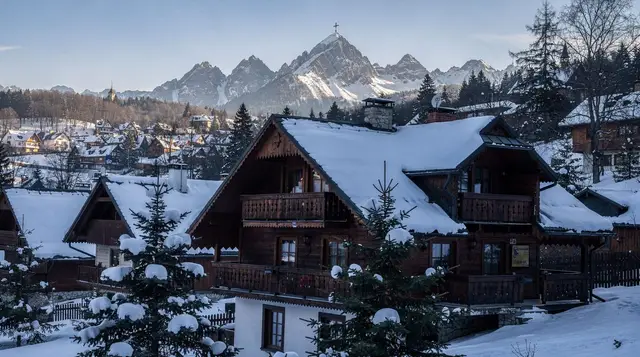
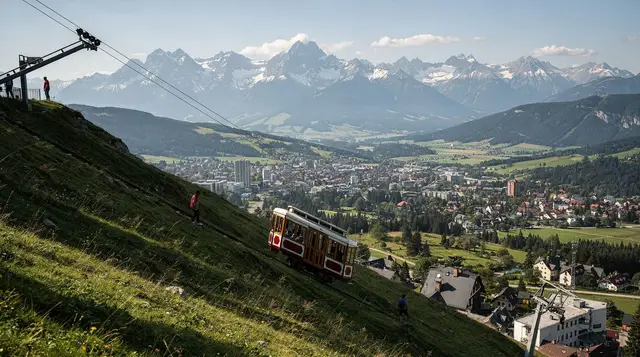
The strongest argument for a winter visit to Kraków is the combination with Zakopane’s thermal baths. The mountain resort town sits 100 km south in the Tatra foothills (approximately 2 hours by road), and its geothermal pools operate year-round. In winter, soaking in 34–36°C mineral water while snow falls around you and the Tatras rise in the background is among the most pleasurable experiences in southern Poland.
The main complexes:
Termy Chochołowskie — Located in the Chochołów valley (35 km from Zakopane), these are the largest and most developed thermal baths in the region, with 14 outdoor and indoor pools, wave pool, slides, and wellness zones. Entry 50–80 PLN/≈€12–19 for adults depending on the session. Open daily. The Zakopane and Chocholowskie thermal bath full-day trip from Kraków includes transport and a stop in Zakopane town; ideal if you don’t have a car.
Termy Szaflary and Termy Zakopane (Aqua Park) — Closer to Zakopane town centre; smaller but still excellent. Aqua Park Zakopane has additional water park facilities popular with families.
If you want the full mountain experience alongside the baths, the Zakopane and thermal baths with optional lunch day trip from Kraków combines a guided walk through Zakopane’s wooden górale architecture, a taste of oscypek and smoked meats at the mountain market, and an afternoon at the thermal baths. Transport is included from Kraków.
Indoor Kraków: museums and culture
Winter’s short days make Kraków’s exceptional museum offering particularly appealing.
Wawel Royal Castle and Cathedral — The castle interiors (State Rooms, Royal Private Apartments, Treasury and Armoury, Dragon’s Den) are all open in winter. Note reduced hours: Tuesday–Saturday 09:30–16:00, Sunday until 15:00, closed Monday. The Dragon’s Den outdoor path closes in severe frost. Combined castle and cathedral tickets cost 55–85 PLN (≈€13–20).
Rynek Underground Museum — Situated 6 metres below Rynek Główny, this multimedia museum traces Kraków’s medieval history. January and February: effectively no queues. Tickets: 26 PLN (≈€6). Book online at podziemiarynku.com for the small remaining entry window.
Schindler Factory (Fabryka Schindlera) — The Emalia factory on ul. Lipowa 4 in Podgórze, now an immersive WWII history museum chronicling German occupation of Kraków. One of the best museums in Poland. Tickets: 36 PLN (≈€8.5); timed entry, book online. In January you rarely need to book more than a day ahead.
Czartoryski Museum — Home to the Lady with an Ermine (Leonardo da Vinci, c. 1490), a Rembrandt landscape, and major collections of decorative arts. Admission 30 PLN (≈€7). Uncrowded in winter.
National Museum (Muzeum Narodowe) — Sprawling permanent collection including Matejko’s enormous historical paintings and 20th-century Polish art. Free on Sundays. Located on al. 3 Maja, 15 minutes’ walk from Rynek Główny.
Practical winter planning
Getting around: Kraków’s tram network runs throughout winter. The Old Town itself is pedestrianised — footpaths are gritted after snow but can be slippery. Wawel Hill’s cobbled approach can be icy; wear boots with grip.
Daylight: December and January offer around 8 hours of daylight (sunrise ~07:30, sunset ~15:30). Plan outdoor sightseeing — Wawel Hill, Kazimierz streets, Planty park — for 10:00–14:00. Use evenings for museums and restaurants.
Dress code: The rule is layers. A base thermal layer, mid-layer fleece, and a proper down or wool coat. Gloves, hat, and scarf are non-negotiable. Waterproof ankle boots (not fashion ankle boots) are the correct footwear for Kraków’s cobblestones in winter.
What closes: The Planty park is open but bare. Morskie Oko is accessible but requires snowshoes or poles in heavy snow conditions; the horse-drawn sleigh to the lake operates in winter and is genuinely charming (around 80 PLN/≈€19 per person). Dunajec River rafting: closed November through March. Most Wawel outdoor areas are open but with shorter hours.
Visa note: As of mid-2026, ETIAS (European Travel Information and Authorisation System) has not yet launched. US, UK, Canadian, Australian, and New Zealand citizens continue to enter Poland visa-free. Check the EU’s ETIAS portal for launch updates before your visit.
Getting to Kraków in winter
Kraków airport (KRK — John Paul II International, Balice) is 11 km west of the city centre. The train runs every 30 minutes to Kraków Główny station (20 minutes, 22 PLN/≈€5). Bus lines 208 and 252 are slower but cheaper (6 PLN/≈€1.4). Bolt or Uber from the airport: 35–50 PLN (≈€8–12); avoid unofficial taxis which charge 3–5x more.
Winter flights are cheaper than summer — check LOT Polish Airlines (Warsaw hub), Ryanair (London Stansted, Dublin, Edinburgh, Manchester), and Wizz Air (numerous UK, German, and French routes). December departures are expensive around Christmas; 10–20 January flights are often the cheapest of the year.
Winter month by month
| Month | Temp | Crowds | Highlight |
|---|---|---|---|
| December | -3 to +4°C | High around the Christmas market, easing after 26th | Christmas market, Advent concerts, New Year’s Eve |
| January | -4 to +1°C | Lowest of the year | Empty museums, cheapest hotels, Trzech Króli parade |
| February | -4 to +1°C, more snow | Low, rising slightly toward month’s end | Snowy Rynek, Tłusty Czwartek pączki |
Winter versus the Christmas market crowds
There’s a genuine trade-off within winter itself: the Christmas market period (late November–1 January) is Kraków’s most atmospheric stretch but also its most crowded and expensive winter window, with hotel rates spiking and Rynek Główny genuinely busy on weekend evenings. If your priority is the market itself, accept the crowds and book 2–3 months ahead. If your priority is a quiet, cheap trip with the museums to yourself, wait for January or early February — you trade the market lights for near-empty galleries and 30–40% lower hotel rates. Either way, winter beats summer for one specific thing: Wawel Castle without a queue.
Frequently asked questions about Kraków in winter
Is Kraków safe to visit in winter?
Yes. Kraków is a safe European city year-round. Winter weather is the main practical concern: ice on cobblestones and short days require some adjustment. The city centre is well-lit and well-trafficked in the evenings throughout December; less so in January, but still safe.
Can I visit Auschwitz-Birkenau in winter?
Yes — the Memorial is open year-round (closed 24 December and 1 January). Winter visits have a particular historical weight; the grounds were liberated by Soviet troops in January 1945. The site is cold and exposed; dress warmly. Timed-entry reservations are required (visit.auschwitz.org). Groups and foreign visitors need a licensed guide outside of the July–August peak period free-entry window. See our Auschwitz day trip guide for full logistics.
How cold does it actually get?
Average December low: -3°C. Average January low: -4°C. Average February low: -3°C. However, cold spells can push temperatures to -15°C. Snow is not guaranteed but common, particularly in January and February. The wind chill on Rynek Główny can make it feel significantly colder than the thermometer reading.
Are restaurants and shops open during Christmas?
Most restaurants in the Old Town and Kazimierz are open on 25–26 December (Christmas Day and Second Christmas Day). The Christmas market itself closes on the evening of 1 January. Shops are closed on 25 December and 1 January; most are open on 26 December and New Year’s Eve.
Is December or January better for a winter Kraków trip?
December wins for atmosphere — the Christmas market, Advent concerts, and New Year’s Eve on Rynek Główny are genuinely special. January wins for value and solitude — hotel rates drop 30–40% and the major museums are essentially queue-free. Neither is wrong; it depends whether you’re chasing festive atmosphere or a quiet, budget-friendly trip.
Can I combine Kraków’s winter city sights with the Tatra Mountains?
Yes, but adjust expectations: high-altitude hiking and Morskie Oko’s full trail are not realistic without proper winter mountaineering gear. Zakopane’s thermal baths, however, are at their best in winter — soaking in warm mineral water with snow falling around you is one of the best day trips of the season. See the Zakopane from Kraków guide for full logistics.
Top experiences
Bookable activities with verified prices and instant confirmation on GetYourGuide.