The Home Army and Polish resistance in Kraków: underground war 1939–1945
Krakow: Schindler Factory Museum guided tour
Duration: 2h
What was the Polish resistance in Kraków during World War II?
Kraków was a major centre of the Polish Underground State, led by the Home Army (Armia Krajowa — AK). The resistance ran clandestine education, underground publishing, intelligence operations feeding information to Britain, and sabotage campaigns against German infrastructure. One of the most extraordinary individual acts was Witold Pilecki's voluntary entry into Auschwitz to report on the camp from the inside.
| Where | Sites across Kraków; deepest context at Schindler’s Factory Museum |
| Cost | 60 PLN adults, 45 PLN reduced for the Factory Museum exhibition |
| Time needed | 2.5–3 hours for the Factory Museum’s occupation exhibition |
| Best starting point | Kraków under Nazi occupation |
| Best time | Weekday mornings, booked a few days ahead |
The scale of Polish underground resistance
Poland’s resistance to Nazi occupation was the most extensive in occupied Europe. By the war’s end, the Home Army (Armia Krajowa, AK) had approximately 400,000 members — a force comparable in size to the armies of many sovereign states. It operated a parallel government, a clandestine justice system, underground schools and universities, and a comprehensive intelligence network. It was not a guerrilla force making do; it was a state operating without territory.
Understanding the Polish underground requires setting aside the stereotype of World War II resistance as primarily a matter of bombs and sabotage. The AK conducted military operations, certainly — but the backbone of the Polish Underground State was cultural survival: keeping the language, the education, the publishing, and the institutional memory of Polish society alive under occupation.
Kraków was one of the three major centres of underground activity in Poland (alongside Warsaw and Lwów/Lviv). Its university, its established professional class, its Church institutions, and its pre-war civil society infrastructure all contributed to an unusually dense resistance network.
The formation of the underground, 1939
Polish military resistance began even before the German campaign of September 1939 was over. General Michał Tokarzewski-Karaszewicz established the first underground military organisation in Warsaw on 27 September 1939 — the same day the city surrendered. Within months, multiple resistance groups were operating; the Polish government in exile, established in France and later in London, worked to unify them under a single command.
The AK formally came into existence under General Stefan Rowecki (codename “Grot”) in February 1942, consolidating the earlier Service for Poland Victory (ZWZ) and most other underground military structures. By 1944, the AK had units operating across the country, including a substantial Kraków region command.
In Kraków specifically, the underground was complicated by the city’s status as the General Government capital: the concentration of German administrative and security services made overt military operations riskier than in provincial cities, but also meant that resistance networks had access to better intelligence about German operations.
The clandestine university: education as resistance
One of the most distinctive forms of resistance in Kraków was the continuation of the Jagiellonian University in secret. Following the arrests of professors in November 1939 (covered in the Kraków under Nazi occupation guide), the university was formally closed by the Germans. It immediately continued underground.
Lectures took place in private apartments, church buildings, and occasionally in the university buildings themselves (where some German offices were located, providing a degree of cover). Students carried notes in false book covers. Professors who had been arrested and released resumed teaching; some continued while in hiding.
The underground university awarded degrees throughout the occupation — degrees that were recognised by the Polish Government in Exile and, ultimately, by post-war Polish institutions. An estimated several hundred students completed their studies and graduated during the occupation years. The fact that this was possible at all speaks to the depth of the social infrastructure that the underground drew on.
The same pattern repeated across professional categories: underground medical training, underground law courses, underground teacher training. The occupation attempted to destroy Polish intellectual life; the underground response was to maintain it at the cost of individual lives.
Underground publishing
A comprehensive underground press operated in Kraków throughout the occupation. Daily bulletins, weekly newspapers, literary journals, and academic publications were printed on clandestine presses, often in basements and back rooms, and distributed through trusted networks.
The scale was remarkable. The underground press across Poland is estimated to have produced approximately 1,400 different titles during the occupation, with some papers reaching circulations of tens of thousands. In Kraków, underground publications included cultural and literary journals that maintained the continuity of pre-war intellectual life alongside the news bulletins and military information sheets.
Possession of underground publications was punishable by death. Distribution was carried primarily by women, who were somewhat less likely than men to be stopped and searched, and by young teenagers. Many were caught; some were executed; the press continued regardless.
Intelligence operations and the connection to Britain
Polish intelligence provided the British government with some of its most valuable wartime intelligence. The AK’s Sixth Bureau (intelligence) ran networks across occupied Poland that fed information about German military movements, V-weapon research, and industrial production to the Polish government in exile in London, which passed it to British intelligence.
Several intelligence achievements stand out. In 1944, AK intelligence obtained a complete V-2 rocket that had crashed during a test flight and not exploded. A team of engineers disassembled it, documented its components, and arranged for RAF aircraft to extract the key components and the engineers themselves from a field in eastern Poland — one of the most audacious intelligence operations of the war. The documentation enabled British scientists to prepare countermeasures against V-2 attacks.
The Kraków region’s intelligence networks were particularly active because of the concentration of German administrative infrastructure in the city. Information about German officer movements, logistics, and internal communications was regularly obtained and passed to London.
Witold Pilecki and Auschwitz
The single most extraordinary act of individual resistance connected to the Kraków-area occupation was Witold Pilecki’s voluntary infiltration of Auschwitz.
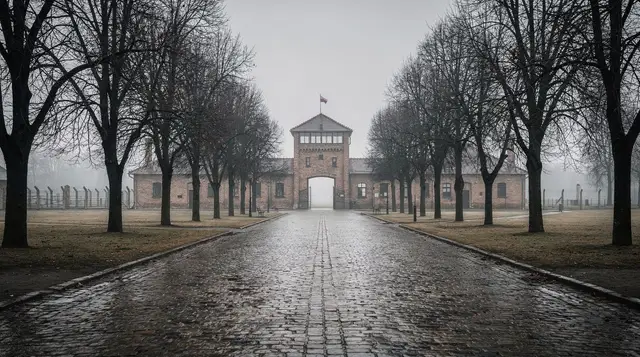
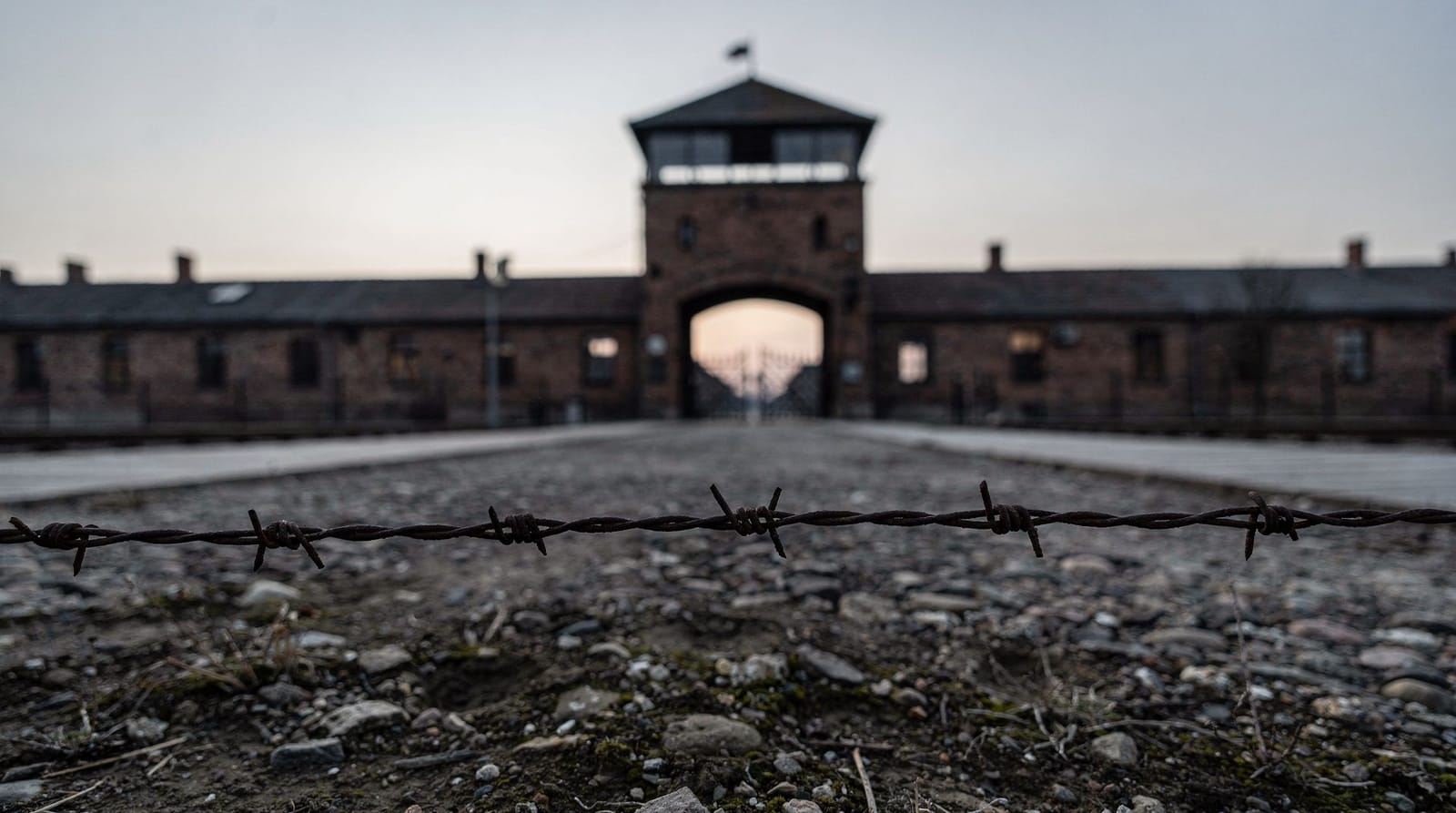
Pilecki, born in 1901, was a cavalry officer and AK operative. In September 1940, he deliberately allowed himself to be caught in a German street roundup (łapanka) in Warsaw and was transported to Auschwitz-Birkenau as prisoner number 4859. His mission: to organise underground resistance inside the camp and gather intelligence about what was happening there.
For nearly three years, Pilecki organised resistance networks inside Auschwitz, smuggled reports out through contacts outside the wire, and built up a detailed picture of the systematic murder that was developing in the camp. His reports — the first detailed accounts of the extermination process to reach the Allied governments — were largely disbelieved in London and Washington as too extreme to be credited.
Pilecki escaped from Auschwitz in April 1943 by breaking out of a bakery where he worked, crossing an electrified fence, and walking to safety with a small group of prisoners. He continued AK operations, including participation in the Warsaw Uprising of 1944. After the war, he remained in Poland to gather intelligence about Soviet-imposed communism — and was arrested by the communist security services (UB) in 1947, tortured, and executed on charges of espionage in May 1948.
His story was suppressed under communist rule (he had worked for the pre-war Polish state and the London-aligned government in exile, both of which the communist regime rejected). Full public rehabilitation came only after 1989.
The Auschwitz-Birkenau history guide covers his reports’ content and historical significance. The Auschwitz-Birkenau Memorial and Museum includes material on the camp’s prisoner resistance, including Pilecki’s network.
Armed resistance: operations in Kraków
The AK’s armed operations in Kraków included sabotage of railway infrastructure (disrupting German troop movements), targeted assassinations of Gestapo informers and particularly brutal German officials, and prison breaks to free arrested resistance members.
The most famous operation was the 1944 assassination of SS-Hauptsturmführer Franz Kutschera, the commander responsible for mass street executions in Warsaw — but Kraków’s AK units conducted comparable operations on a smaller scale throughout the occupation.
The AK also maintained secret arms caches across the city, organised military training for members, and planned for an eventual Warsaw Uprising-style national rising. That rising was planned to coincide with Allied advances from the west; the military calculations involved the timing of the Soviet advance and the question of whether a national uprising would serve Polish political interests in the post-war world. It was one of the most agonising strategic dilemmas of the war.
The underground press and cultural resistance in Kraków
One of the most remarkable aspects of Polish resistance was the maintenance of cultural life under conditions of systematic suppression. In Kraków, several underground institutions operated throughout the occupation with varying degrees of continuity.
Underground theatre: Theatrical performances took place in private apartments and occasionally in larger spaces obtained through trusted networks. The actors and directors who participated were risking deportation or death; the audiences were engaged in an act of cultural defiance as much as entertainment. The repertoire favoured Polish classics — Mickiewicz, Słowacki, Norwid — whose nationalist themes were explicitly subversive in the context of occupation.
Underground literature: Several literary journals circulated in Kraków during the occupation. Czesław Miłosz, later Nobel laureate, was active in Warsaw’s underground cultural scene but maintained connections to Kraków; the poet Tadeusz Różewicz, who later became one of Poland’s most important post-war writers, was in the underground.
Underground news: Daily bulletins with news from the BBC Polish Service and reports on the military situation circulated widely. The “Biuletyn Informacyjny” (Information Bulletin), published by the AK’s press bureau, was the most widely read underground publication in occupied Poland; Kraków had its own local editions and supplements.
The collective purpose of all these activities was the same: to maintain the continuity of Polish cultural and intellectual life against an occupation that aimed at its destruction. The metaphor commonly used by participants was “keeping the flame alive” — a phrase that became almost literal in the clandestine conditions of occupation.
The Żegota network and rescue of Jews
Among the most significant resistance activities in Kraków was the operation of Żegota — the Council to Aid Jews — a unique organisation established in 1942 specifically to provide hiding places, false documents, and financial support to Jews escaping the ghetto.
Żegota was established by Polish civilians (notably the writer Zofia Kossak-Szczucka, whose 1942 pamphlet “Protest” publicly condemned the deportations when public condemnation was extremely dangerous) and operated as a joint Polish-Jewish organisation. It was the only organisation of its kind in occupied Europe — a government-backed (via the underground state) programme for systematic aid to Jews.
In Kraków, Żegota’s activities were concentrated in placing Jewish children with Polish families, providing forged documents (the “Aryan papers” that gave Jewish survivors a false non-Jewish identity), and maintaining a financial support network. The risks for those involved were extreme: harbouring a Jew was a capital offence in Nazi-occupied Poland, punishable by death for the entire household.
The complicated moral reality is that Żegota could only help a relatively small number: the scale of the deportations overwhelmed any possible rescue network. Of Kraków’s 68,000 Jews, Żegota assisted hundreds; the tens of thousands who died were beyond reach.
Signals intelligence: the AK’s radio networks
The AK’s intelligence operation included an extensive radio network that transmitted reports to London using clandestine shortwave transmitters. Operating a radio transmitter in occupied Poland was an immediate death sentence if discovered; the Gestapo employed directional-finding equipment to triangulate transmitter locations. AK radio operators typically transmitted for only minutes at a time and changed locations constantly.
The information transmitted covered German military movements, industrial production, troop dispositions, and increasingly from 1942 onwards, reports about the extermination camps. The “Witold Reports” — Witold Pilecki’s accounts from inside Auschwitz — were transmitted through this network to the Polish government in London, which forwarded them to the British and Americans.
The British response to these reports — largely scepticism, followed by unwillingness to divert bombing resources from military-industrial targets to the Auschwitz crematoria — is one of the most debated questions of Allied conduct during the war. Polish underground fighters, who risked their lives to transmit the information, found the Allied response incomprehensible.
The AK after liberation: communist persecution
Liberation by Soviet forces in January 1945 did not end the persecution of AK members. The communist authorities installed in Warsaw by the Soviets considered the AK — loyal to the London government in exile — a political and military threat. Beginning in 1944 and accelerating after 1945, former AK members were arrested, tortured, and executed by communist security services.
Thousands of AK veterans were imprisoned; those who refused to cooperate with the new authorities faced death sentences. The AK was officially disbanded in January 1945, but individual members continued guerrilla operations against the communist state into the early 1950s — the last of the so-called “cursed soldiers” (żołnierze wyklęci) continued resistance until as late as 1963.
The rehabilitation of AK veterans, the “cursed soldiers,” and the underground state is a complex political topic in Poland today. A public holiday (1 March, National Day of Remembrance of the Cursed Soldiers) was established in 2011. The historiography continues to develop as archives become accessible and living witnesses age.
Turning the history into a visit
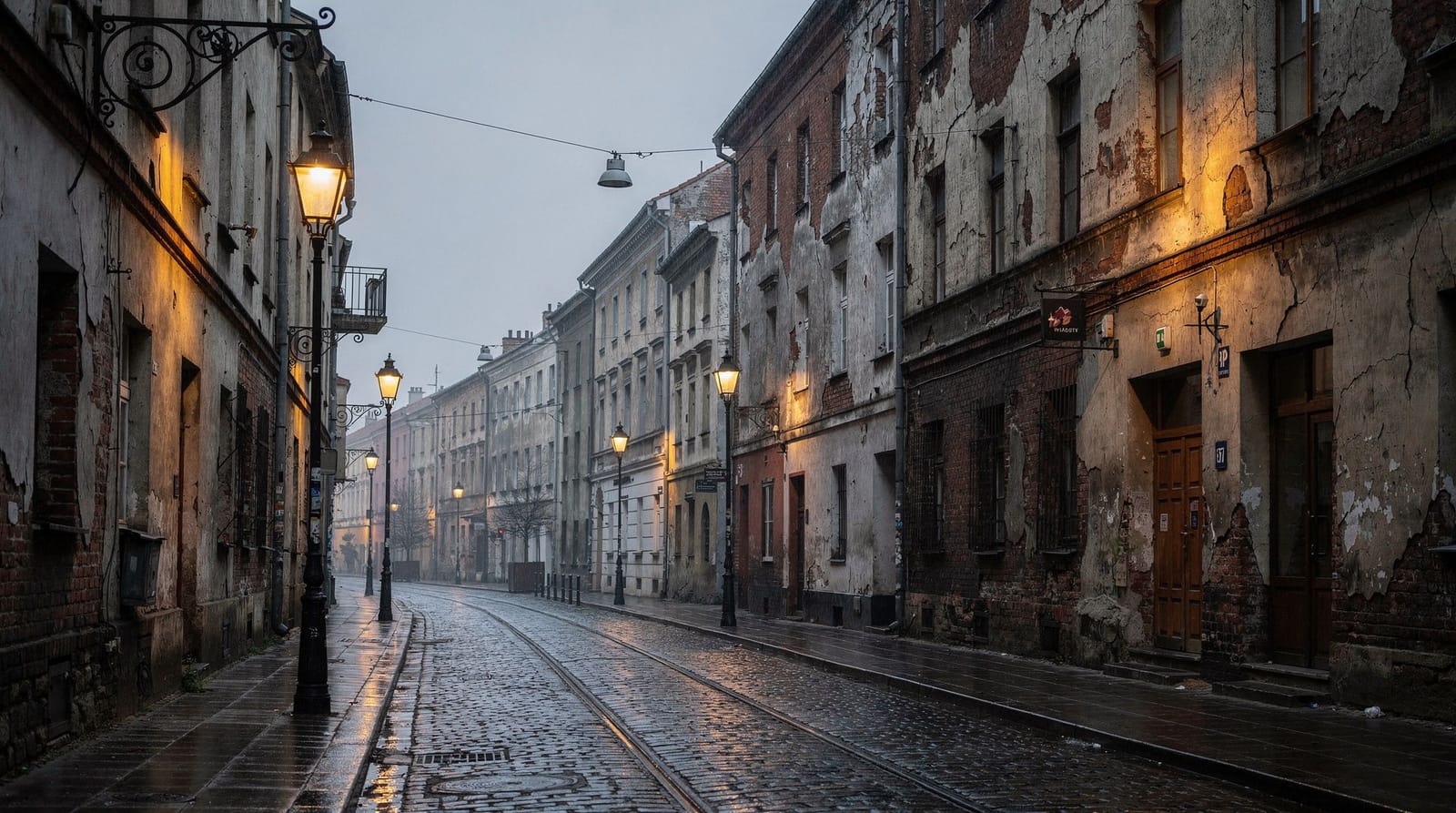
Resistance history in Kraków is mostly invisible: there are few monuments to a clandestine lecture or a hidden printing press, and the courtyards where students once gathered look like any other courtyard today. That is why it helps to pair this guide with places that give the story a physical anchor. The Collegium Maius guide explains the university whose teaching went underground, and the Podgórze ghetto guide covers the district where rescue and resistance met the persecution of the city’s Jews.
For the wider setting, the Jewish Kraków history overview shows who Żegota was trying to save, and the Pharmacy Under the Eagle guide describes a small museum where the ghetto’s daily reality is told through one building. If you prefer a structured plan, the WWII history itinerary links these stops in a sensible order.
Visitors who want the story of Schindler alongside the Polish underground will find the Schindler’s List locations guide a useful companion, because it shows how rescue by individuals and organised resistance sat side by side in the same city. Readers who want the longer sweep of Polish history before the war can start with Polish history for visitors, and those who want to see how the communist period reshaped the city afterwards can continue with the communist Kraków tour guide.
Pilecki’s story leads many visitors on to the camp itself. If you plan that trip, read how to visit Auschwitz with respect first, and use the Auschwitz from Kraków guide for the practical side. Take the history slowly: this is not a subject that rewards a rushed checklist, and a quieter pace lets the individual stories register.
Where to learn more in Kraków
The most comprehensive account of Kraków’s wartime occupation is the Schindler’s Factory Museum exhibition “Kraków Under Nazi Occupation 1939–1945.” A guided Schindler Factory Museum tour provides the historical narrative within which resistance operations are placed.
The AK Museum in Warsaw (Muzeum Powstania Warszawskiego) is the most extensive in Poland for the Home Army specifically, but requires a separate trip. For visitors remaining in Kraków, the Jagiellonian University’s Collegium Maius museum touches on the underground university period, and the Pharmacy Under the Eagle in Podgórze covers the experience of the ghetto that resistance activity intersected with.
The medieval history city walking tour provides context for the physical city within which all of this history took place — the streets, buildings, and courtyards that resistance members navigated daily.
Frequently asked questions about the Polish resistance
Why wasn’t the Polish underground better known during the war?
Several factors limited international awareness. Polish government in exile communications had to go through British intelligence, which filtered and sometimes suppressed information that complicated Allied diplomacy. The scale of the underground’s intelligence contribution was classified for decades. And the catastrophic failure of the Warsaw Uprising in 1944 — when the AK rose, the Soviets stopped their advance, and the Germans destroyed the city — ended with a military defeat that overshadowed earlier achievements.
What was the “Polish Underground State”?
The Polish Underground State (Polskie Państwo Podziemne) was a comprehensive shadow government operating in occupied Poland, loyal to the government in exile in London. It included not just the AK military command but also civilian departments covering education, justice, social welfare, and civil administration. It ran clandestine courts that prosecuted collaborators under Polish law. It was arguably the most sophisticated underground state apparatus in occupied Europe.
Did women participate in the resistance?
Extensively. Women served as couriers (essential for information transmission), as liaison agents between resistance cells, as staff of underground publications, and as intelligence operatives. Some participated in armed operations. The stereotypically male image of the partisan fighter misrepresents the actual composition of the Polish underground, in which women’s roles were essential rather than auxiliary.
What happened to the AK after the war in Western historiography?
The AK’s reputation suffered in Western accounts partly because of Cold War politics: acknowledging the AK’s role required acknowledging that the Soviets, who were Western allies, had suppressed and executed Polish resistance fighters. Full recognition of the AK’s wartime role in Western scholarship came primarily after 1989, with the opening of archives and the post-Cold War reassessment of Allied wartime politics.
Where should I start if I want to understand the occupation before visiting the resistance sites?
The Kraków under Nazi occupation guide is the best entry point — it covers the administrative reality of the General Government capital that the resistance operated against. From there, the WWII Kraków guide gives the fuller chronological picture, and the Schindler’s Factory Museum exhibition brings both together in a single physical visit.
Top experiences
Bookable activities with verified prices and instant confirmation on GetYourGuide.