Hiking to Morskie Oko at sunrise: what the guidebooks don't tell you
This is what actually happened when I decided, at 11pm, to hike to Morskie Oko for sunrise instead of sleeping — the taxi, the dark road, and whether it was worth losing a night’s sleep over.
| Where | Palenica Białczańska, 22km from Zakopane |
| Distance | 9.4km each way, ~450m elevation gain |
| Cost | around 60-80 PLN taxi (split), plus a small park entry fee |
| Time needed | 3hrs up, 2.5hrs down, plus time at the lake |
| Best time | 3:30am gate opening for sunrise; otherwise avoid midday in July/August |
The plan that nearly didn’t happen
The original idea was to hike to Morskie Oko at a reasonable hour, in reasonable light, like a reasonable person. That plan dissolved sometime around 11:00 the previous evening, when I discovered the parking lot at Palenica Białczańska — the official starting point for the hike — opens at 3:30 in the morning, and that people use this fact.
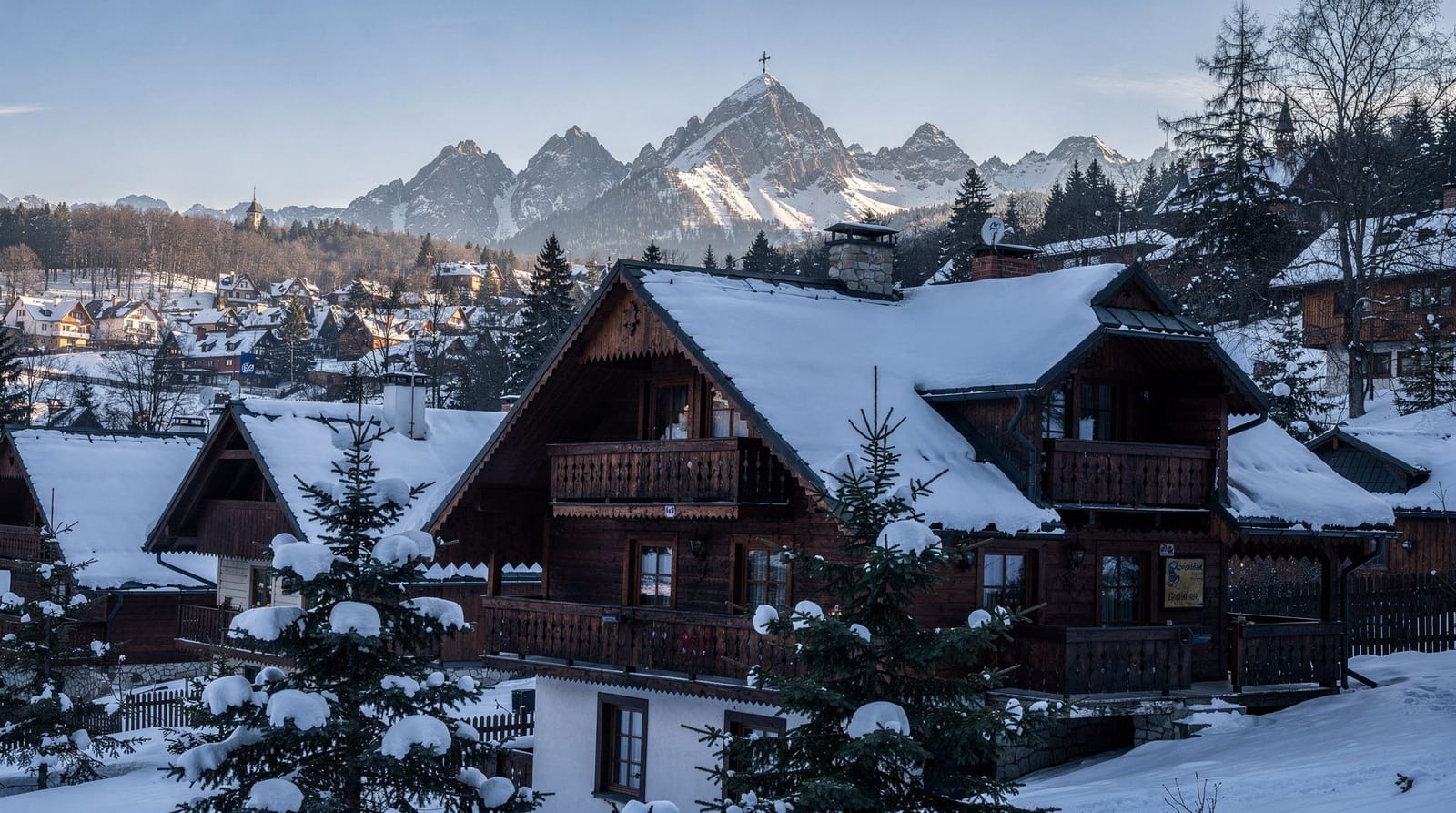
The decision to try for sunrise was made quickly and probably rashly. I was staying in Zakopane, the mountain resort town at the foot of the Tatras, having taken the bus from Kraków the previous day. My alarm was set for 2:45.
Getting to Palenica Białczańska before dawn
Zakopane is about 22 km from Palenica Białczańska by road. Taxis exist and charge around 60-80 PLN (14-19 €) for the early run. I shared one with two Danish hikers I had met at the hostel, which brought it to about 25 PLN each. The drive takes roughly thirty minutes on a completely empty mountain road.
We arrived at 3:20. The lot was already busy — not completely full, but with perhaps thirty vehicles and people moving around with headlamps in the darkness. This felt both reassuring (we were not doing something uniquely mad) and slightly alarming (this many people have the same idea at 3:20 AM).
The gate opens officially at 3:30. The road beyond it is closed to private vehicles in season — this is important. You walk the paved road from the gate to the lake; the alternative is a horse-drawn carriage that begins operating much later. At pre-dawn, you walk.
The hike itself: nine kilometres of darkness
The path from Palenica Białczańska to Morskie Oko lake is 9.4 km each way, gaining about 450 metres in elevation. On paper, this is a moderate hike. In practice at 3:30 in the morning, with a headlamp and no visible horizon, it is a specific kind of physical meditation that rewards preparedness and penalises wishful thinking.
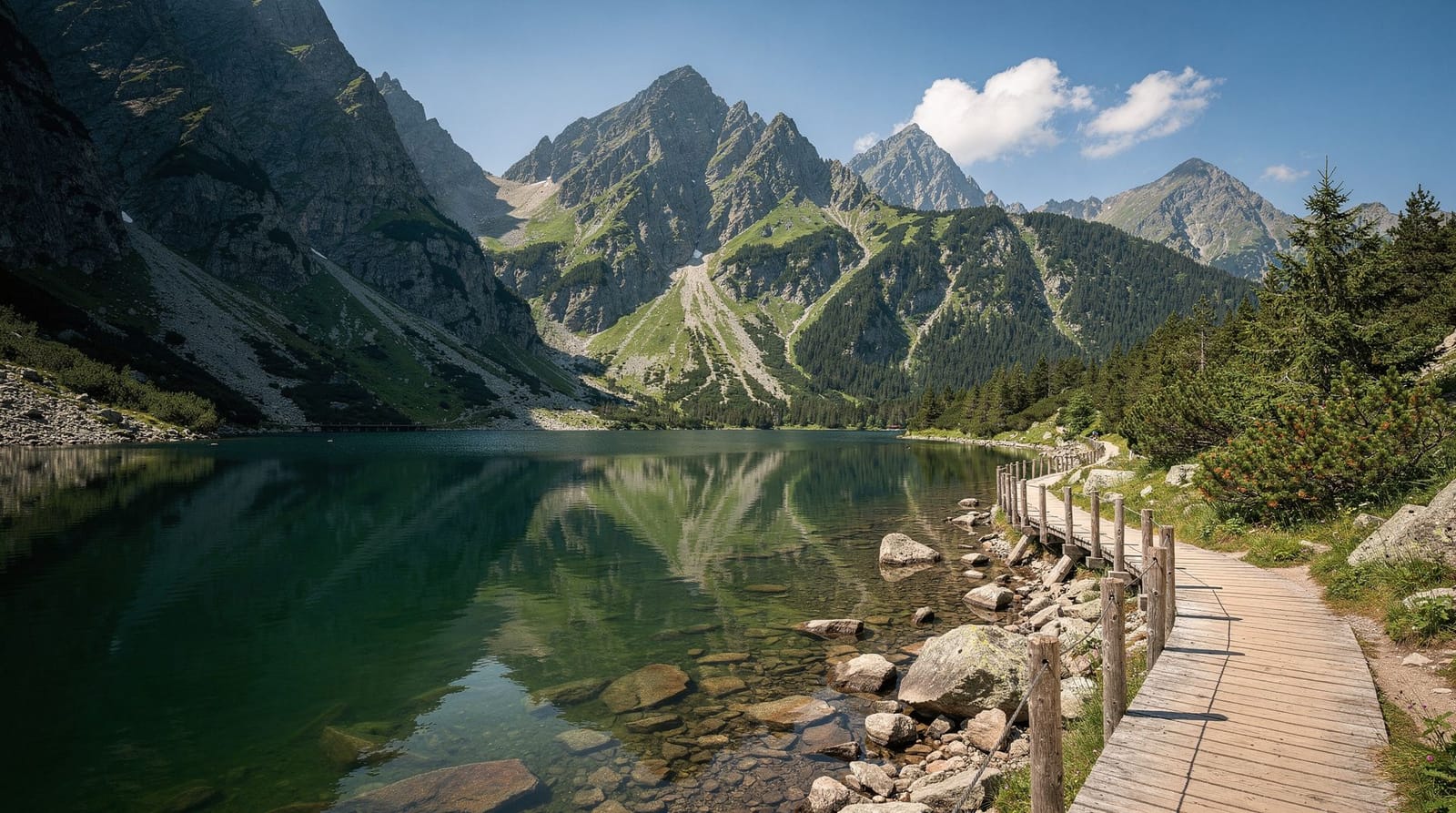
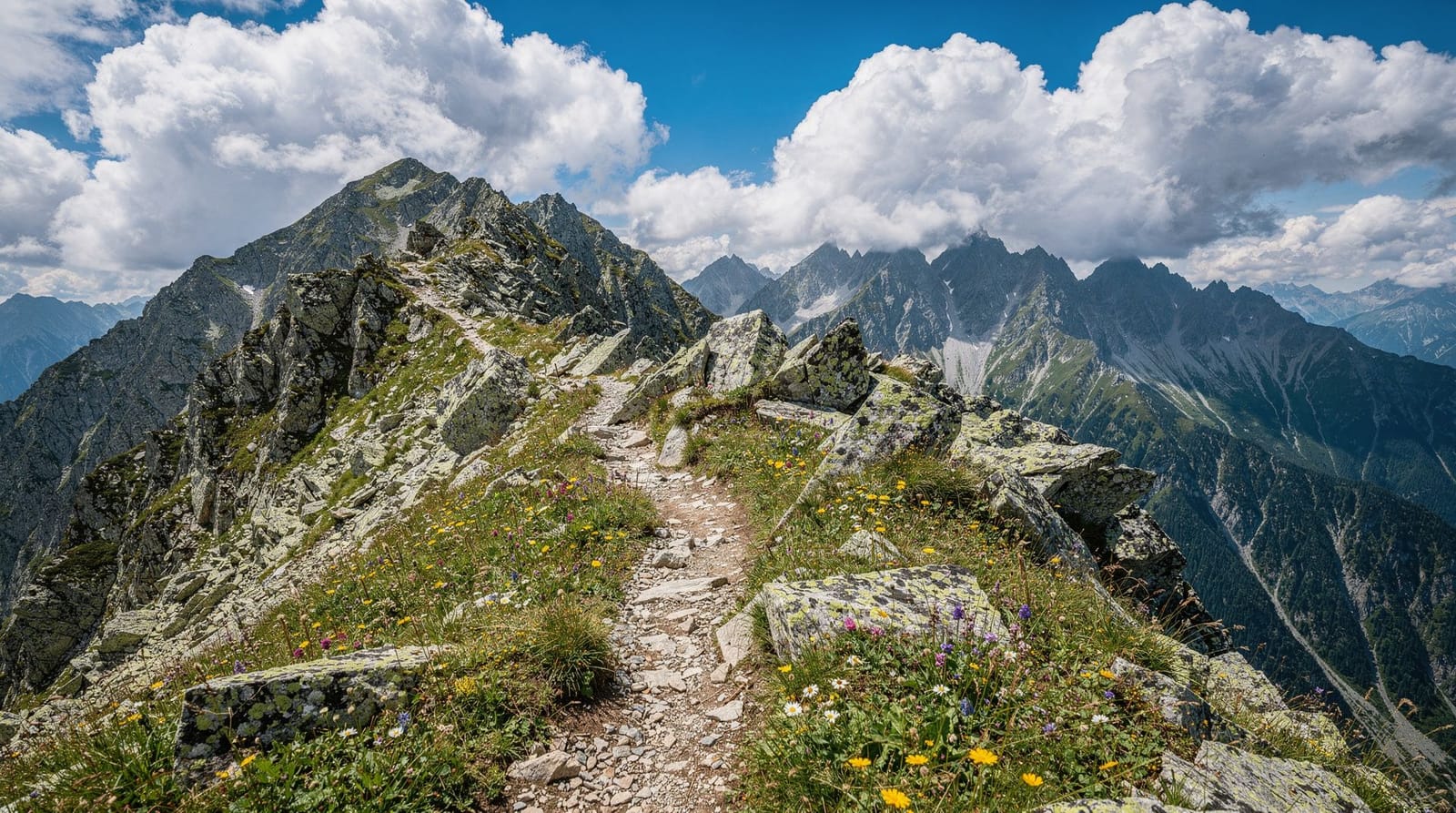
The road is paved for most of its length, which is both a help (no route-finding required) and a slight disappointment (it is literally a road, not a mountain path). After about 4-5 km, the surface becomes a proper trail. The forest on either side is dense pine and spruce; at pre-dawn there is almost nothing to see beyond the cone of the headlamp and the shapes of the people ahead of you.
I had brought:
- Layers. More than I thought I needed. The temperature at 3:30 was about 8°C in late June and dropped to around 4°C near the lake.
- A proper headlamp, not a phone torch
- Water and snacks (the kiosk at the lake does not open at 4:30)
- Trekking poles, which I was glad of on the return descent
The two Danes were better equipped than me and moved faster. I reached the lake just as the sky was beginning to lighten at the eastern horizon — approximately 4:45.
Morskie Oko at first light
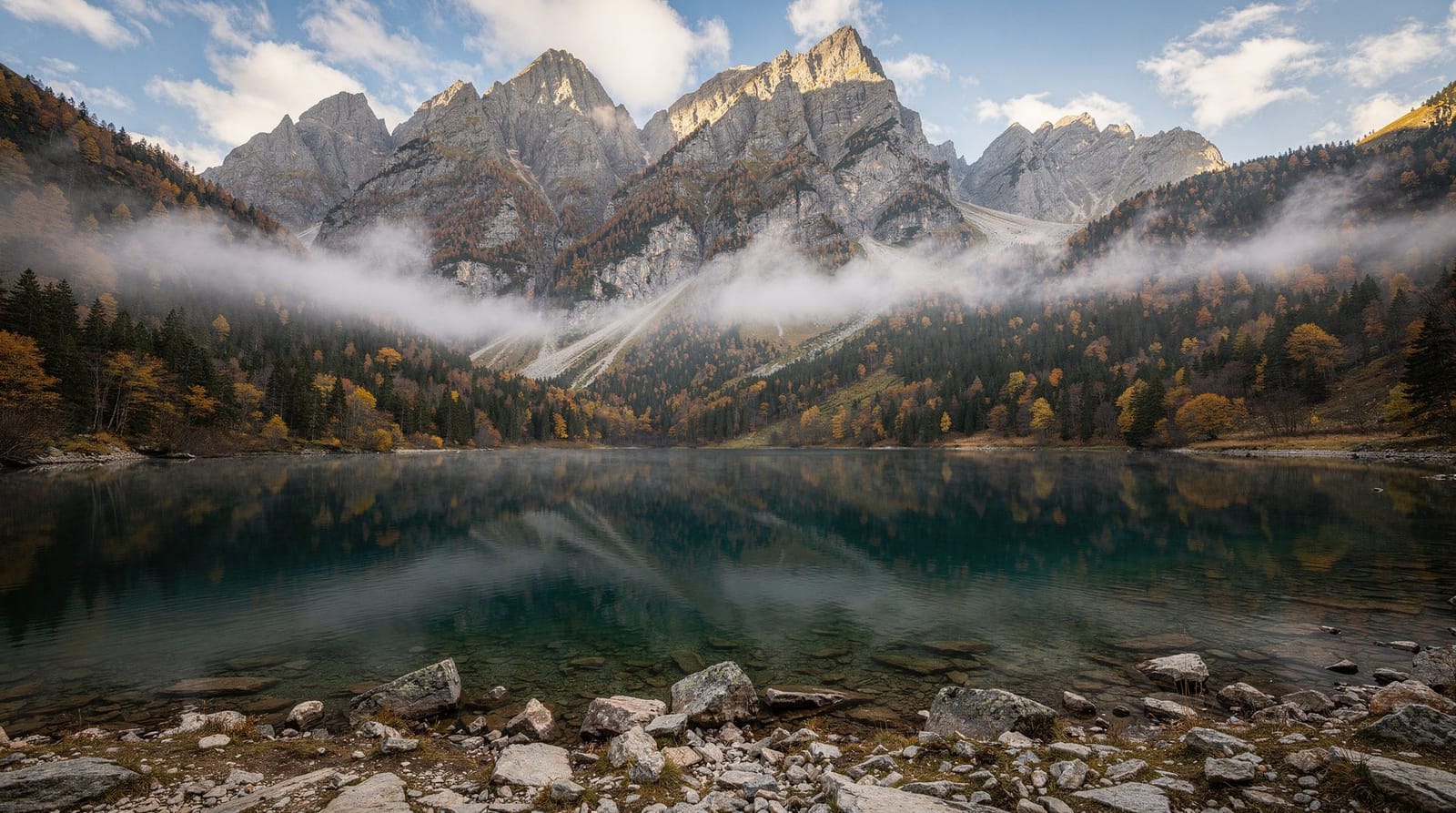
The lake sits in a natural rock cirque at 1,395 metres. On three sides, limestone walls rise to over 2,000 metres. The water, when I arrived, was black-blue and completely still. The reflection of the peaks on the surface was so precise it took a moment to distinguish from the mountains themselves.
There were perhaps forty people at the lake when I arrived. By 6:00 there would be two hundred. By 10:00, this figure is measured in thousands on a clear summer day.
The light changed over about ninety minutes. First the peaks caught orange. Then the color moved down the stone faces. Then the water turned turquoise — genuinely, vividly turquoise, the colour you associate with Caribbean shallows but produced here by glacial minerals in an alpine lake at near-freezing temperatures. It was, without overstating it, one of the better things I have seen outdoors.
A marmot came out of the rocks about 5:30 and proceeded to ignore everyone completely.
The hut: PTTK Morskie Oko
The mountain hut at the lake’s edge is the highest point of PTTK (Polish Tourist and Country-Lovers’ Society) infrastructure in this area. It opens properly around 7:00; the kitchen produces żurek, scrambled eggs, and tea that costs about 15-20 PLN (4-5 €) per item. The tables outside have views directly down the lake. By 8:00, queuing for breakfast is part of the experience; at 5:30, three people were sitting quietly in the early cold.
You can sleep at the hut. Bookings open months in advance and fill extremely quickly — primarily with Polish hikers doing multi-day routes in the Tatras. This is worth planning for if you want the true sunrise without the 3:00 AM taxi experience, but it requires significant advance planning.
The return journey: the crowds you avoided
I left the lake at around 7:30, by which point the trail had become genuinely busy — groups of families, tour participants with guides, school parties, a surprising number of people in jeans and city shoes who would be regretting their choices by the second kilometre.
Coming down, I saw exactly what the sunrise start was trying to avoid. At 9:00, the road from the gate was a continuous stream of people moving upward. The horse-drawn carriages — fiakry — were operating at full capacity, carrying visitors who paid around 90-100 PLN (21-24 €) for a ride to the lake that saves about two hours of walking. These are traditional wooden wagons pulled by horses; they are charming but slow, and they share the road with walkers, which creates periodic congestion.
By the time I reached the gate at 9:00, the parking lot had expanded to a minor traffic crisis and a queue of perhaps three hundred people waiting for the walk to begin. I had missed all of this by starting at 3:30.
What a guided day trip from Kraków gives you instead
The sunrise solo hike is an option for people already staying in Zakopane and comfortable with early starts and navigation. For most visitors, a guided day trip from Kraków is the more rational choice — logistics handled, transport included, a guide to explain what you are looking at.
Book a Tatra Mountains and Morskie Oko hike from KrakówThese tours typically depart at 7:00-8:00 from Kraków, reach Palenica Białczańska mid-morning, and return to the city by evening. You will not get the sunrise, but you will get the lake in good light, the experience of a trained guide, and none of the pre-dawn logistical anxiety.
The Morskie Oko complete guide covers both approaches honestly, including the horse-drawn carriage option and trail conditions through the seasons.
Practical facts for the sunrise attempt
Start point: Palenica Białczańska — not Zakopane town centre. They are 22 km apart.
Getting there without a car: Taxi from Zakopane, arranged the previous evening. The bus from Zakopane runs from around 6:00, too late for sunrise.
Distance: 9.4 km each way, approximately 3 hours up (more if you move slowly), 2.5 hours down.
Elevation gain: ~450 metres from gate to lake.
Temperature: Expect it to be significantly colder at the lake than in Zakopane town. Even in July, the lake sits near 1,400 metres and early mornings are cold. A light down jacket is not excessive.
The gate timing: Opens 3:30 in season. Check the current schedule on the Tatra National Park (TPN) website before going — rules and fees change.
Entry fee: Tatra National Park charges an entry fee; the current fee is 11 PLN per person (5.50 PLN reduced). Pay at the gate or online in advance.
Crowds: July and August are the peak months; weekends are the peak days. The sunrise start is the most effective crowd-avoidance strategy. Mid-week visits in June or September are also significantly quieter.
What to pack for a 3:30am start
Cold is the main variable people underestimate. Even in late June, the temperature at the gate was around 8°C and dropped closer to 4°C by the lake; in September or October it can be near freezing. Layers matter more than any single heavy jacket, since you warm up quickly on the ascent and cool down fast once you stop moving at the top. A proper headlamp — not a phone torch, which drains battery and lights a much smaller area — is close to essential on the unlit sections. Trekking poles help on the descent, when tired legs and a paved-then-rocky surface combine to make ankles vulnerable. Bring your own water and snacks, since nothing is open before 4:30 at the earliest, and pack out any rubbish; this is a national park, not a service station.
Sunrise hike vs. guided day trip vs. staying at the hut
There are really three honest ways to see Morskie Oko, and they suit different travellers:
| Sunrise solo hike | Guided day trip from Kraków | Overnight at PTTK hut | |
|---|---|---|---|
| Wake-up time | 2:45am | normal | flexible |
| Crowd level seen | near-empty at dawn | moderate, mid-morning | quietest, if you stay late/early |
| Logistics | you handle everything | handled for you | book months ahead |
| Best for | already in Zakopane, early risers | most Kraków-based visitors | multi-day Tatra hikers |
| Cost | lowest (just taxi + entry) | mid (transport + guide) | hut bed + meals |
If you are staying in Kraków rather than Zakopane, the guided option below removes the pre-dawn taxi entirely and still gets you to the lake in genuinely good light. The Tatra Mountains hiking guide covers other routes through the same range if Morskie Oko is only one stop on a longer visit to the Tatras.
Making the rest of the trip fit around it
A dawn start changes how you spend the rest of the day. Expect to be tired by midday, so keep the afternoon light: a slow lunch, a short stroll, an early night. If you want a gentler way to recover, the Zakopane thermal baths guide is a natural follow-up, and the Morskie Oko hike from Kraków page explains how the same lake works as a long day out if you are not sleeping in the mountains.
Anyone who enjoyed the lake and wants more of the same without the early alarm can look at the easy Tatra hikes, which suit shorter days and slower legs. And if the cold and the crowds left you wondering how the seasons change the experience, the best time to visit Kraków guide gives the wider picture for planning around the weather.
Choosing a tour if the sunrise is not for you
Not every guided option is the same, and the right one depends on how you want to spend the rest of the day. If the lake is the whole point, a lake-focused tour in the Tatra Mountains keeps the schedule simple and leaves you time by the water. If you would like to see the town as well, a combined day trip to the lake and Zakopane adds a wander through the resort after the hike. Either way, read the Zakopane tour vs DIY comparison and the Tatra Mountains day trip guide before you commit, and see the Krakow day trips ranked story for how this excursion compares with the alternatives.
Is it worth it?
The specific experience of standing at Morskie Oko in near-total silence as the mountains catch their first light, watching a colour gradient move from orange to pink to the full blue clarity of a Tatra morning — yes. Unambiguously.
The specific experience of getting up at 2:45, driving a dark mountain road, and walking 9 km in the dark in cold air — this is what it costs. It is a fair exchange.
If you are not a morning person or not already in Zakopane, the guided day tour from Kraków provides a legitimate and honest version of the same destination without the nocturnal logistics. The lake is beautiful at 11:00 too. The crowds are part of the experience rather than a failure of planning. Many of the people I passed on the way down at 9:00 were having a completely good time.
The Zakopane and Tatras guide and the day trips from Kraków overview can help situate this trip within a broader itinerary if you are planning a visit to southern Poland.
The marmot, for what it is worth, seemed indifferent to all of this.