Pieniny Mountains and Dunajec gorge guide: rafting, hiking, and planning
From Krakow: Dunajec River rafting
What is the Dunajec gorge and how do I get there from Kraków?
The Dunajec gorge runs through the Pieniny limestone mountains on the Polish-Slovak border, about 120 km south of Kraków (2 hours by road). The traditional experience is a wooden raft trip — poled by highlanders in folk costume — through 18 km of dramatic canyon from Sromowce Niżne to the spa town of Szczawnica. The season runs April to October. Guided day tours from Kraków are the most practical way to visit; independent visitors need their own transport as bus connections require multiple changes.
The Pieniny Mountains: small, dramatic, and underrated
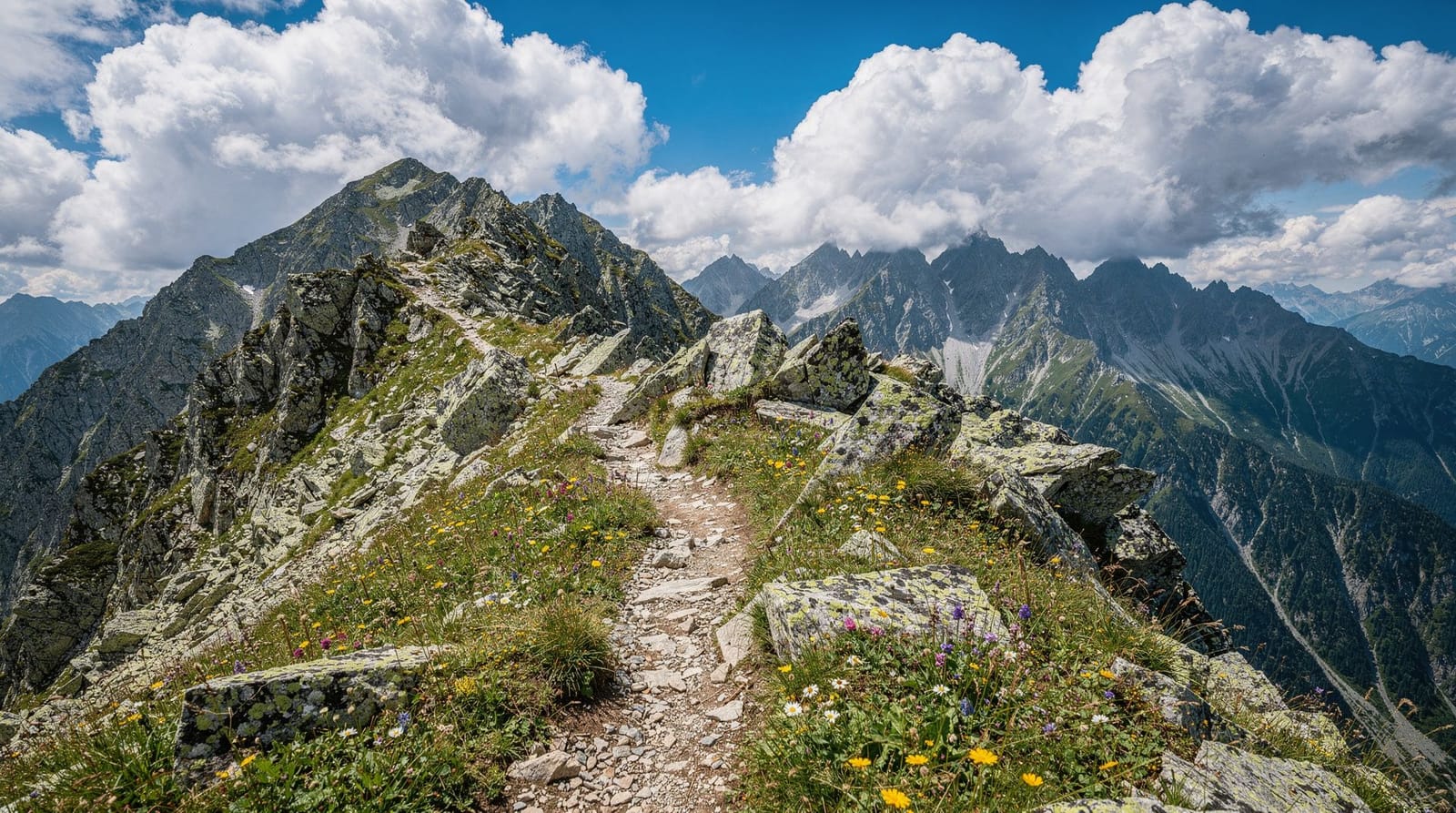
The Pieniny range is not the Tatras. They are smaller (highest point: Trzy Korony at 982 metres on the Polish side), less famous, and visited by a fraction of the people who head to Zakopane. They are also, in their own way, extraordinary — a compact range of white limestone peaks rising sharply from the Dunajec River valley, geologically older and structurally different from the granite Tatras 50 km to the west.
What the Pieniny offer that the Tatras do not: the Dunajec gorge, one of the most beautiful river canyons in Central Europe, and the traditional wooden raft journey through it. The combination of canyon scenery, traditional rafting culture, spa town arrival point (Szczawnica), and accessible hiking above the gorge makes the Pieniny an exceptional day out from Kraków — arguably more distinctive, if less dramatic, than the Tatra Mountains.
The Polish-Slovak border runs along the Dunajec through the heart of the gorge, meaning the right bank of the river throughout the rafting route is Slovak territory. This bicultural dimension is part of the experience: you pass within metres of Slovakia without crossing a border crossing.
| Where | 120–130km south of Kraków, Polish-Slovak border |
| Time needed | Full day (9–10hrs) via guided tour; half day if driving directly |
| Cost | Guided tour 130–170 PLN; independent raft ticket: check flisacy.pl |
| Season | April–October only |
| Best months | June–early July or September for reliable water and fewer crowds |
For the full destination overview, see Dunajec Gorge; for the Tatra range immediately to the west, see Tatra Mountains.
Distance and getting there from Kraków
The main rafting departure point — Sromowce Niżne, landing area “Kąty” — is approximately 120–130 km south of Kraków city centre.
By guided tour from Kraków (recommended): The Dunajec River rafting day trip from Kraków covers all logistics — coach from Kraków, transfer to the raft landing, the full 18 km raft journey, time in Szczawnica, and return to Kraków. Total door-to-door: 9–10 hours. This is the most practical option for visitors without a car.
By car: Approximately 2 hours from Kraków via Nowy Targ and Krościenko nad Dunajcem. Park at the Kąty landing point (small fee). Important: after the raft trip you end in Szczawnica, 18 km from where you parked — you need to either take a taxi back to Kąty (~40 PLN), use the raft operators’ return minibus service, or arrange to be picked up.
By public transport: Feasible but complex. Train from Kraków to Nowy Targ (1h45), then local bus to Krościenko or Sromowce. Journey time 3+ hours each way, multiple connections. Not recommended unless you enjoy transport logistics as part of the adventure.
The Dunajec raft trip: what to expect
The craft and the raftsmen
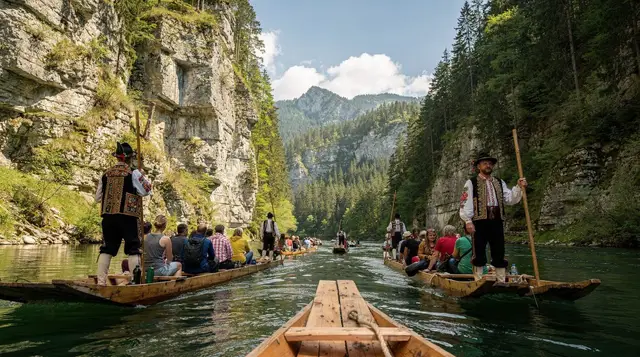
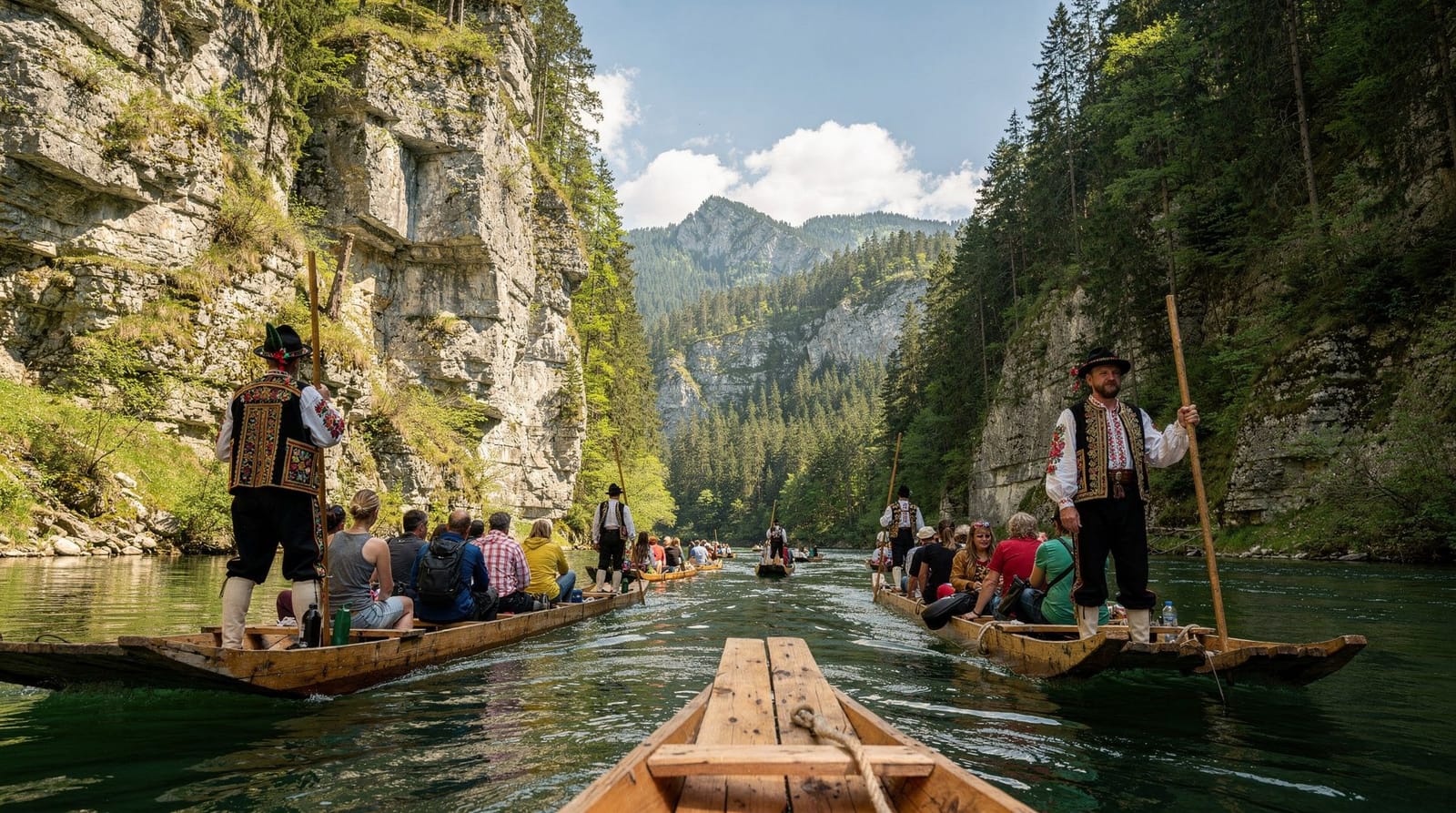
The traditional Dunajec raft (flisacka tratwa) is a flat-bottomed vessel made of five or six pine log sections lashed together. Two rafters — flisacy — stand at either end and steer with long wooden poles. The raft carries up to 10–12 passengers on wooden bench seats.
The flisacy wear traditional Podhale highland dress: white woollen trousers (spodnie z białego sukna) with black braid trim, embroidered waistcoat, wide leather belt with decorative studs, and a felt hat with cowrie shell trim. This is not costume for tourists — it is the authentic working dress of the Podhale region, maintained as a living tradition by the raftsmen’s guild (Stowarzyszenie Flisacy Pienińscy), which has operated continuously since 1832.
The raftsmen typically speak Polish and basic English, and will point out key landmarks as you float past. Tips of 20–40 PLN (€5–10) per boat are appropriate and appreciated.
The 18 km route: key landmarks
The raft journey from Sromowce Niżne (Kąty) to Szczawnica takes 2–2.5 hours at the speed of the current (supplemented by the raftsmens’ poles where needed). Key sights along the route:
Sokolica Peak (747 m): A pointed limestone peak rising directly from the river’s edge on the Polish side, with a steep wooded face. This is the iconic image of the Pieniny gorge, visible from the first major bend in the river.
Three Crowns massif (Trzy Korony, 982 m): The highest point in the Polish Pieniny — a triple-peaked limestone massif whose three rocky summits are visible from several points on the river. The summit is accessible by hiking trail from Krościenko (2.5–3 hours return).
Červený Kláštor (Red Monastery): On the Slovak bank of the river, the distinctive red-roofed buildings of a 14th-century Carthusian monastery founded in 1319. Now a museum on the Slovak side.
The limestone cliffs: At their most dramatic in the middle section of the gorge, where the river makes tight S-bends between near-vertical cliff faces rising 200–300 metres. The narrowest section of the gorge (about 200 metres wide) is here.
Wildlife: Common sightings include cormorants, grey herons, dippers, and common sandpipers on the water. Peregrine falcons nest on the limestone cliffs. In the forest: roe deer sometimes visible from the river. The gorge is within a National Park on both sides.
The destination: Szczawnica
The raft journey ends at the spa town of Szczawnica, established around its mineral springs in the 1830s–1850s. Allow 30–60 minutes to explore before the coach returns to Kraków.
The mineral springs: Several naturally carbonated mineral springs are freely accessible at the spa pavilions on the main promenade. The water has distinct mineral flavours — acidic and metallic, with high iron content in the Siarczysty spring. An acquired taste, but worth trying.
The promenade (Deptak): A well-preserved 19th-century tree-lined spa promenade with historicist villas and the original Zakład Przyrodoleczniczy (hydrotherapy centre, still operating).
Food in Szczawnica: Several cafés and restaurants on the promenade, including oscypek (smoked sheep cheese) vendors. Prices are at a slight tourist premium: main courses 40–65 PLN (€9.50–15.50).
Hiking above the gorge: the Pieniny trails
For visitors arriving by car or who extend the day, the Pieniny National Park offers excellent hiking above the gorge with stunning views down into the river canyon.
Three Crowns (Trzy Korony) — the main hike
Starting point: Krościenko nad Dunajcem (accessible by car from Kąty in 20 minutes, or from Szczawnica in 10 minutes). Route: Marked trail from Krościenko via the gorge viewpoints to the Trzy Korony summit (982 m) and back. Distance: Approximately 8 km return. Time: 2.5–3.5 hours depending on pace. Difficulty: Moderate — significant ascent (approximately 500 metres), some rocky sections near the summit. Proper footwear essential (hiking boots or trail shoes).
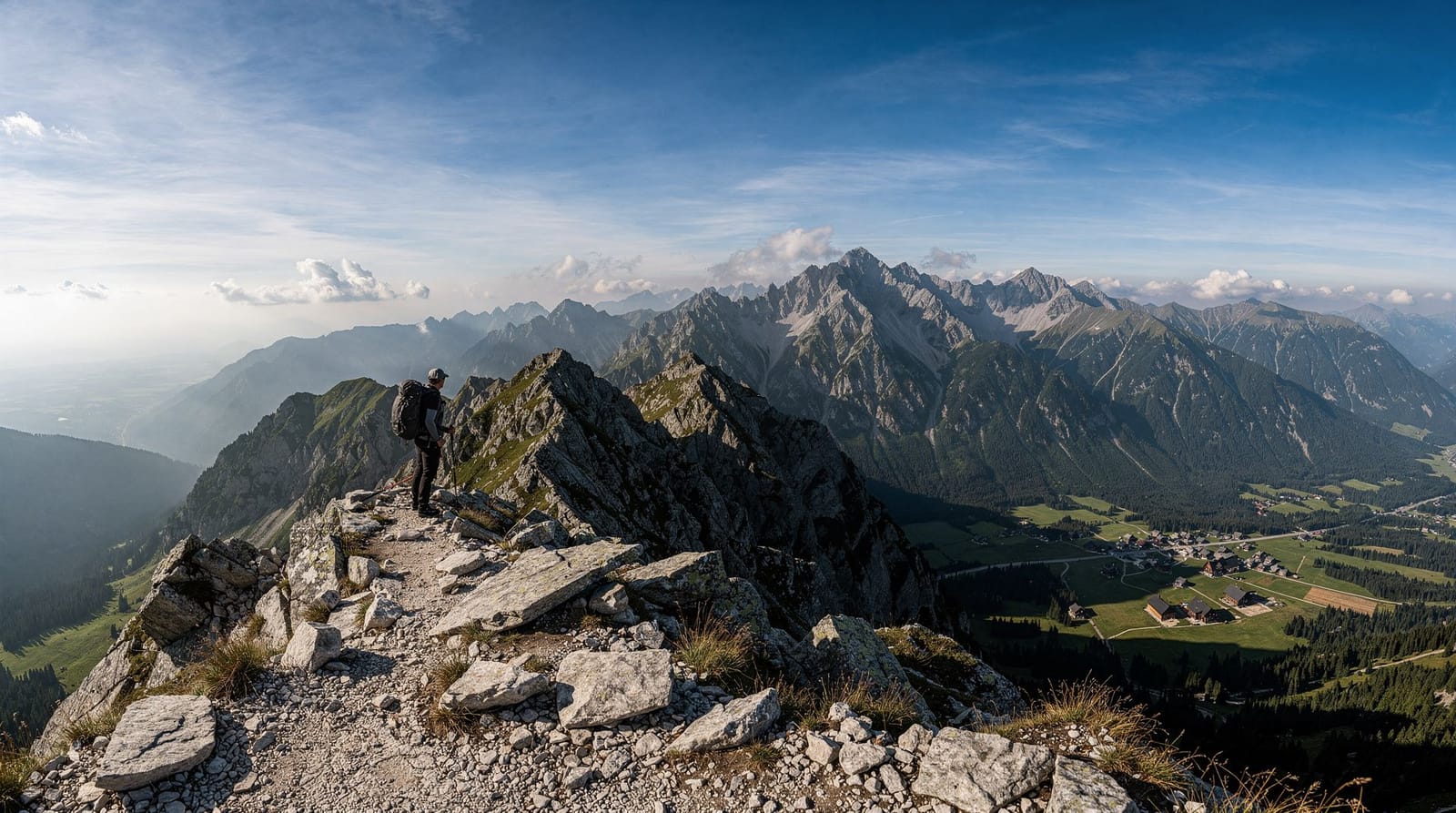
From the summit: views of the entire Pieniny range, the Dunajec gorge below, and on clear days the Tatra range to the west including Rysy (2,499 m). One of the finest viewpoints in southern Poland.
Pieniny National Park entry fee: check current fees and any trail charges on the official website of the park (piepn.gov.pl). This is separate from the Tatra National Park entry fee — two different parks, two different fees if visiting both in the same trip.
Sokolica ascent
Starting point: From Kąty landing or via Czorsztyn village. Time: 1.5–2 hours return. Difficulty: Moderate — steep sections, some scrambling near the top.
Views from Sokolica are the most dramatic of the gorge itself — you are directly above the limestone cliff that forms the visual centrepiece of the raft journey, looking down at the river bend below.
Combination options from Kraków
Dunajec rafting + Zakopane
The Dunajec River Gorge and Zakopane full-day trip combines both southern highlights in one 11–12 hour day. The rafting typically runs in the morning, Zakopane in the afternoon. Possible and popular, but leaves little time to linger in either place. Best for first-time visitors who want to cover maximum ground.
Dunajec rafting + Slovakia Treetop Walk
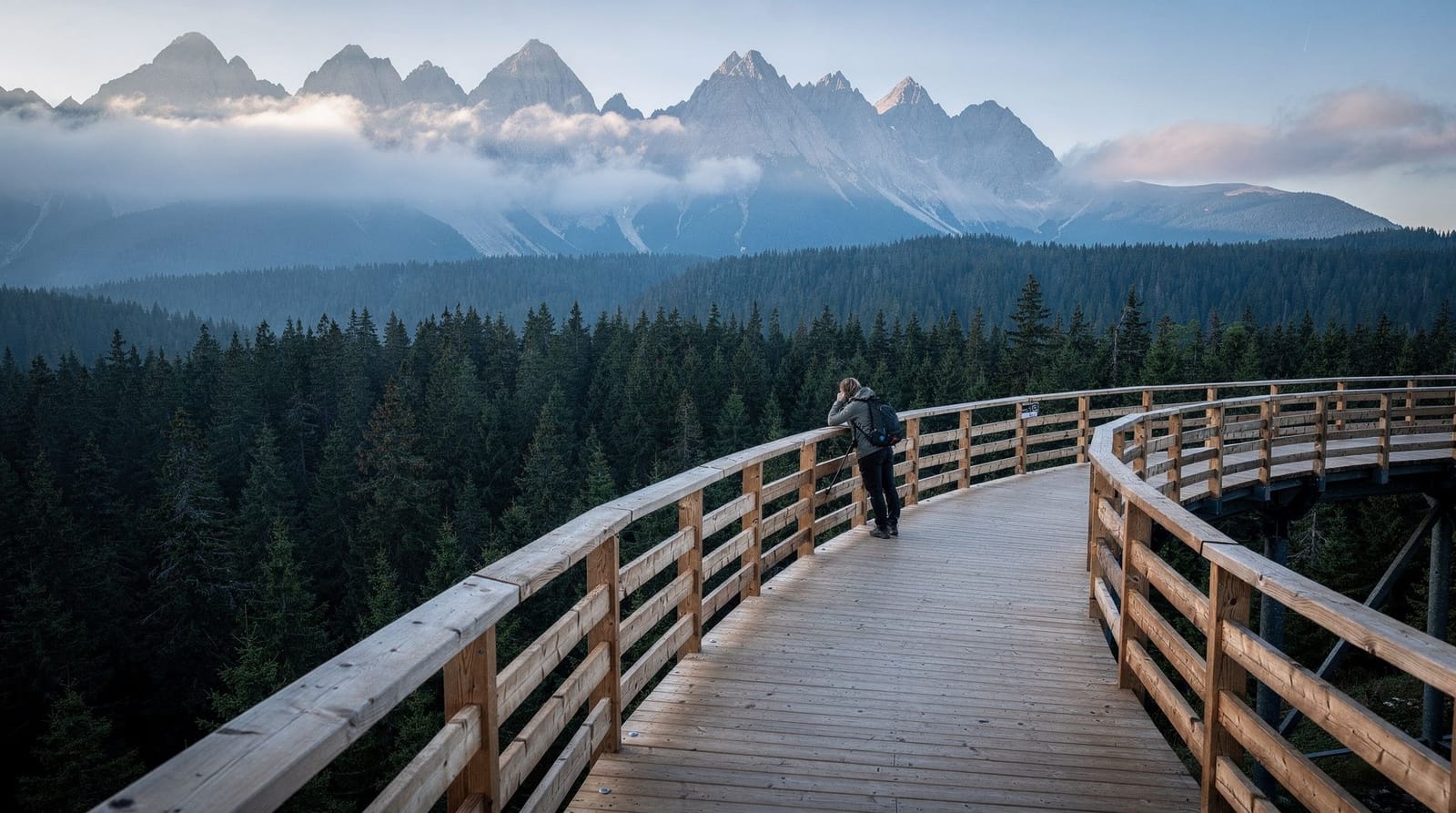
The Dunajec River Gorge rafting and treetop walk from Kraków combines the gorge raft trip with the Bachledka Treetop Walk in Slovakia — two very different outdoor experiences in one day. Good for families and nature enthusiasts.
Dunajec rafting + thermal baths
The Dunajec River rafting with thermal baths option adds time at the Chochołowskie or Szymoszkowa thermal baths — ideal in spring or autumn when a warm soak after the river is particularly welcome. Full thermal baths and Zakopane itinerary covers the bath options in detail; the Zakopane thermal baths guide has more on the specific pools.
Dunajec vs the Slovakia Treetop Walk: which extra to add
If you’re combining rafting with a second activity, it helps to know how the main add-on options compare:
| Add-on | Time | Best for |
|---|---|---|
| Zakopane | +4–5hrs | First-time visitors wanting mountain town atmosphere too |
| Slovakia Treetop Walk | +2–3hrs | Families, a physically different outdoor activity |
| Thermal baths | +2–3hrs | Relaxation after the river, especially spring/autumn |
The Zakopane from Kraków guide and the Dunajec river rafting day trip guide both cover these combinations from the opposite angle, if you’re planning around Zakopane first rather than the gorge.
Season, conditions, and what can go wrong
Season: April to October. Outside this window, the raft service does not operate.
High water: After heavy rain or rapid spring snowmelt, the Dunajec can run too high for traditional raft traffic — the service is suspended when water levels exceed safe operating thresholds. April and early May carry the highest risk of high-water cancellations. Most tour operators offer full refunds or rescheduling for weather-related cancellations. Always check the cancellation policy when booking.
Best months for conditions:
- June–early July: Reliable water levels, warm weather, peak scenery (the forests are at maximum green)
- August: Peak season, most crowded; excellent weather
- September: Excellent — reliable conditions, dramatically reduced crowds, early autumn colour beginning in the gorge forests
- April–May: Variable; possible high-water closures, but the gorge can be magnificent with spring snow still on the peaks
Rain during the trip: Light rain does not cancel the rafting and can actually be atmospheric — mist in the limestone cliffs creates a dramatic landscape. Bring waterproof layers regardless of forecast.
Practical details
What to wear: Layers — the gorge is often cooler than the surrounding valley, especially in the narrow sections. Waterproof jacket. Closed shoes (no flip-flops — the raft landing points can be muddy and the raft requires boarding via stepping planks).
What to bring: Camera with secure strap or waterproof bag. Small backpack with water and snacks (vendors at Kąty but prices are tourist-elevated). Cash for Szczawnica refreshments and the Pieniny National Park fee.
Life jackets: Available on request at most raft operations. Not compulsory on the traditional raft service, but children should wear them. Inform the raftsmen if you want one.
Costs in PLN
| Item | Approx. cost |
|---|---|
| Guided day trip from Kraków (rafting) | 130–170 PLN (€31–40) |
| Rafting + Zakopane combination tour | 170–210 PLN (€40–50) |
| Raft ticket only (independent, Kąty landing) | check flisacy.pl |
| Pieniny National Park entry fee | check piepn.gov.pl |
| Taxi Szczawnica to Kąty (car return) | 35–50 PLN (€8–12) |
| Meal in Szczawnica | 35–65 PLN (€8–15) main course |
Frequently asked questions about the Pieniny and Dunajec gorge
Is Dunajec rafting suitable for children?
Yes — the wooden rafts are stable flat-bottomed craft, the current is gentle, and the journey is scenic rather than adrenaline-driven. Children love the experience. Life jackets are available for those who want them. No minimum age, though very small children (under 3) should be held securely. This is one of the best outdoor activities in the region for families.
How dangerous is Dunajec rafting?
Under normal water conditions, the risk is minimal. The Dunajec through the gorge has no serious rapids — it is a scenic river journey, not whitewater rafting. The main hazard is high water after heavy rain, at which point the service is suspended. Standard safety precautions (sitting down, not standing on the raft) apply and are enforced by the raftsmen.
Can I do the rafting independently without a tour?
Yes — drive to the Kąty landing at Sromowce Niżne, buy your raft ticket at the ticket office (check current prices at flisacy.pl), ride the raft to Szczawnica, and arrange a return to your car by taxi (35–50 PLN) or the operators’ shuttle. The ticket office at Kąty operates on a first-come basis in high season — arrive early (before 9:00) to avoid queues.
Is the Pieniny better than the Tatras for a day trip from Kraków?
They offer completely different experiences. The Tatras are higher, more dramatic, and better for serious hiking. The Pieniny offer the unique rafting experience, more accessible trails, and a quieter, less crowded atmosphere. Many visitors do both — the Tatras for mountains, the Pieniny for the gorge. If you have only one day for southern day trips, Zakopane and the Tatras is the stronger choice for mountain scenery; the Pieniny is the stronger choice if the raft journey appeals.
What is the best way to see both the Pieniny and the Tatras?
A two-day approach is ideal — one day for the Dunajec rafting (with or without a Zakopane extension), one day dedicated to hiking in the Tatras. Alternatively, the combination tours that cover both in one long day work if time is tight. See the Tatra Mountains day trip guide and the Tatra Mountains hiking guide for the Tatras specifics.
Is the Dunajec raft trip worth it if I’m not into hiking?
Yes — the raft journey itself requires no physical effort beyond sitting on a bench for 2–2.5 hours; the Three Crowns and Sokolica hikes are optional extras for those who want them. Many visitors do the raft trip alone as a relaxing scenic experience without hiking at all.
Top experiences
Bookable activities with verified prices and instant confirmation on GetYourGuide.