Kalwaria Zebrzydowska: UNESCO Calvary paths and Mannerist monastery
A UNESCO World Heritage pilgrimage park 40 km from Kraków. Baroque Calvary paths, a Mannerist monastery, and deep connections to Pope John Paul II.
From Krakow: Wadowice John Paul II hometown & Kalwaria tour
Quick facts
- Distance from Kraków
- 40 km south-west (about 50 min by car)
- UNESCO status
- World Heritage Site since 1999
- Calvary paths
- 42 chapels and churches across 6.5 km of landscaped grounds
- Best combined with
- Wadowice (15 km away)
- Entry
- Free (monastery and paths open to all)
A pilgrimage landscape with UNESCO recognition
Kalwaria Zebrzydowska occupies a wooded hillside 40 km south-west of Kraków, and it is one of those rare places where landscape, architecture, and living faith have been interwoven so completely that UNESCO felt compelled to protect the result. The site received World Heritage status in 1999 — the same year Pope John Paul II visited during his final pilgrimage to Poland — and the inscription cited its outstanding universal value as a Mannerist architectural and park landscape complex.
| Where | 40 km south-west of Kraków, 15 km from Wadowice |
| Cost | Free entry to the monastery grounds and Calvary paths |
| Time needed | 2–3 hours for a thorough visit |
| Getting there | Car (~50 min), PKS bus (~60–70 min), or an organised tour |
| Best time | May–October; avoid Easter and 15 August unless you want the pilgrimage crowds |
For most international visitors, Kalwaria is less well-known than the major Kraków sights, which means it is quieter and less commercialised than places like Wieliczka or Auschwitz-Birkenau. That relative obscurity is part of its appeal. You can walk the Calvary paths in near-solitude on an ordinary weekday in June; you can stand in the monastery courtyard and hear nothing but wind in the beeches. On major feast days, the atmosphere is entirely different — but either experience is worthwhile.
The Mannerist monastery and its history
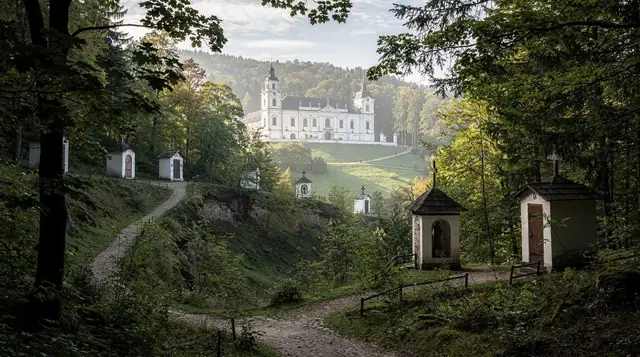
The complex was founded in 1600 by Mikołaj Zebrzydowski, Voivode of Kraków, who was struck by the resemblance between the local landscape and topography of Jerusalem as described in pilgrim accounts. He commissioned the construction of a series of chapels representing the Stations of the Cross across the hillside, then added a Franciscan Bernardine monastery at the centre of the complex.
The monastery church, dedicated to Our Lady of the Angels, contains the miraculous image of Our Lady of Kalwaria, a seventeenth-century painting of the Madonna that draws pilgrims from across Poland. The Baroque interior is rich without being overwhelming; the most striking element is the elaborate carved and gilded high altar framing the icon.
The architectural style of the chapels — Mannerist, with a sprinkling of early Baroque — is unusual in Poland, which tends towards Gothic and Baroque ecclesiastical architecture. The chapels were designed in part to evoke specific locations in Jerusalem: the Chapel of the Tomb of the Virgin, the Chapel of the Last Supper, Pontius Pilate’s Praetorium. Walking the circuit is a genuine pilgrimage route, not merely a walk through ornamental grounds.
Walking the Calvary paths
The 42 chapels and churches are spread across 6.5 km of landscaped terrain on the wooded slopes of the Lanckorona hills. The full circuit takes two to three hours at a leisurely pace, with the paths varying from wide, paved promenades to narrow forest tracks.
You do not need to follow any particular order. The most common approach is to start at the main monastery entrance, climb through the Via Dolorosa sequence of chapels representing Christ’s last journey, then loop back through the Mary paths — a separate circuit of chapels associated with the life of the Virgin. The views from the upper paths over the Beskid foothills to the south and the Małopolska plains to the north are genuinely beautiful.
Signage is in Polish with some English translation; a simple map of the paths is available free at the monastery entrance. The ground is mostly firm and can be walked in comfortable shoes, though one or two sections are steep enough to require proper footwear after rain.
John Paul II and Kalwaria
The connection with Wadowice — birthplace of Karol Wojtyła, just 15 km away — makes Kalwaria a natural companion stop on any John Paul II pilgrimage itinerary. Karol walked these paths repeatedly as a young man from Wadowice. As Archbishop of Kraków he led retreats here. As pope he returned twice: in 1979 during his first pilgrimage to Poland, and again in 1999 in what turned out to be his last visit to the country.
A commemorative area near the main church marks the spot where John Paul II prayed during his 1999 visit. The monastery keeps a small archive of photographs and documents relating to his connection with the site. For visitors already planning a trip to Wadowice, adding Kalwaria is the most natural extension.
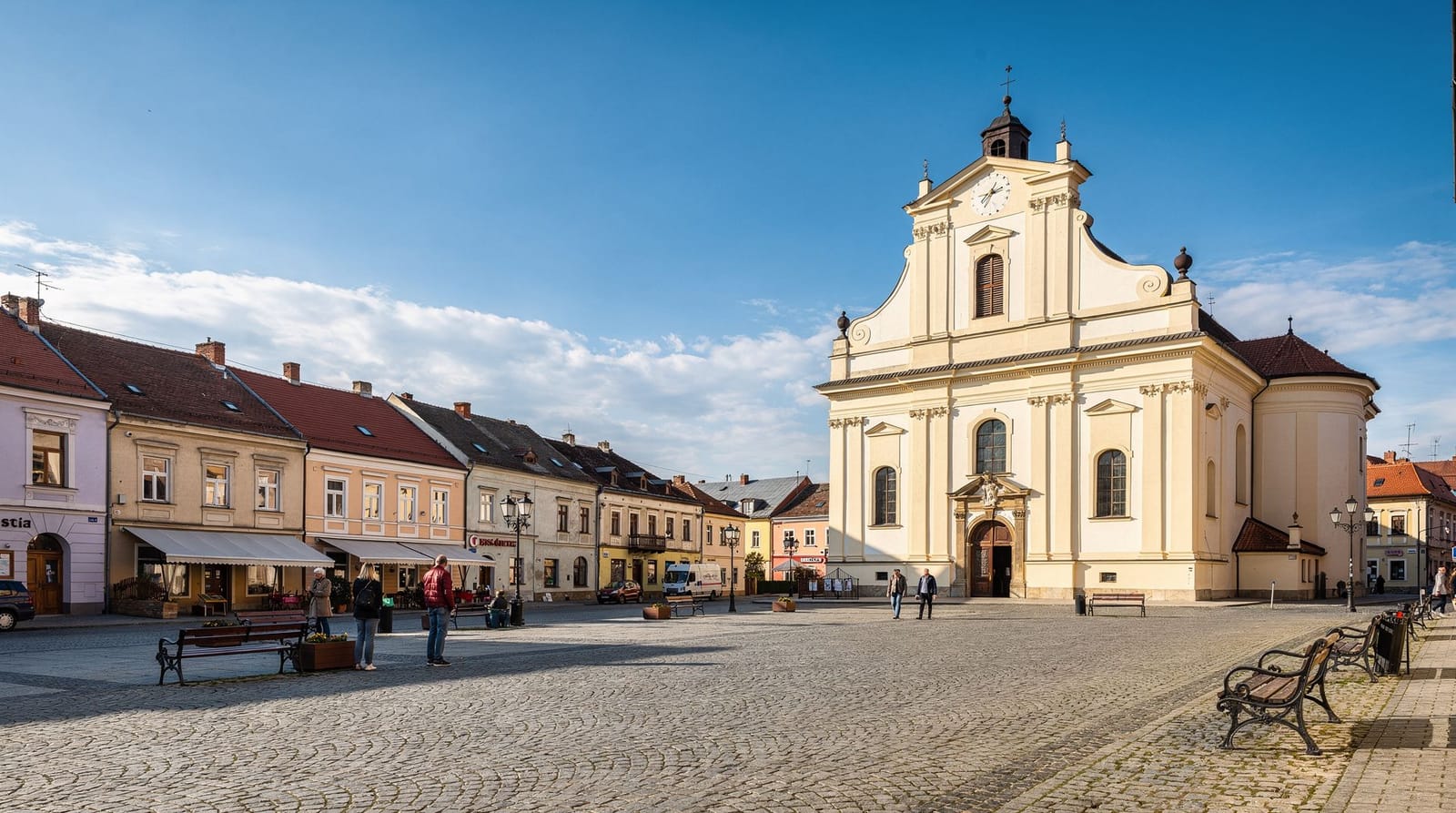
Wadowice and Kalwaria Zebrzydowska — John Paul II combined tour from KrakówMajor pilgrimages and feast days
The site comes alive at certain points in the liturgical calendar:
Easter (March/April): The most dramatic event is the Passion Play performed over the Thursday and Friday of Holy Week. Thousands of pilgrims — often dressed in traditional costumes — walk the Via Dolorosa in a procession that fills the paths from morning to evening. Attendance in recent years has exceeded 100,000 over the two days. If you want to witness this, plan well in advance and be prepared for very large crowds.
Feast of the Assumption (15 August): The second great pilgrimage of the year celebrates the Assumption of the Virgin. Again, tens of thousands of pilgrims come from across Poland and abroad. The paths are packed and the atmosphere is one of intense collective devotion.
On ordinary days outside these events, Kalwaria is peaceful and can be explored at your own pace. The monastery is open for visitors throughout the year; individual chapels along the paths are generally accessible in daylight hours.
| Period | What to expect |
|---|---|
| Holy Week (Easter) | Passion Play procession over Thursday–Friday; 100,000+ attendees, very crowded |
| 15 August | Feast of the Assumption; large pilgrim crowds, intense collective devotion |
| May–October, ordinary weekdays | Quiet, near-solitary walks along the Calvary paths |
| Winter months | Cold and often muddy underfoot; monastery church still open and heated |
If witnessing the Passion Play or the August pilgrimage is the goal, plan accommodation and transport well ahead — both events draw crowds far beyond what the small village can comfortably absorb.
Combining Kalwaria with Wadowice
The most efficient way to see both sites is to start in Wadowice in the morning — museum, basilica, kremówka — then drive the 15 km to Kalwaria for the afternoon. Allow two to three hours at Kalwaria for a proper walk of the paths and the monastery church. Return to Kraków by early evening.
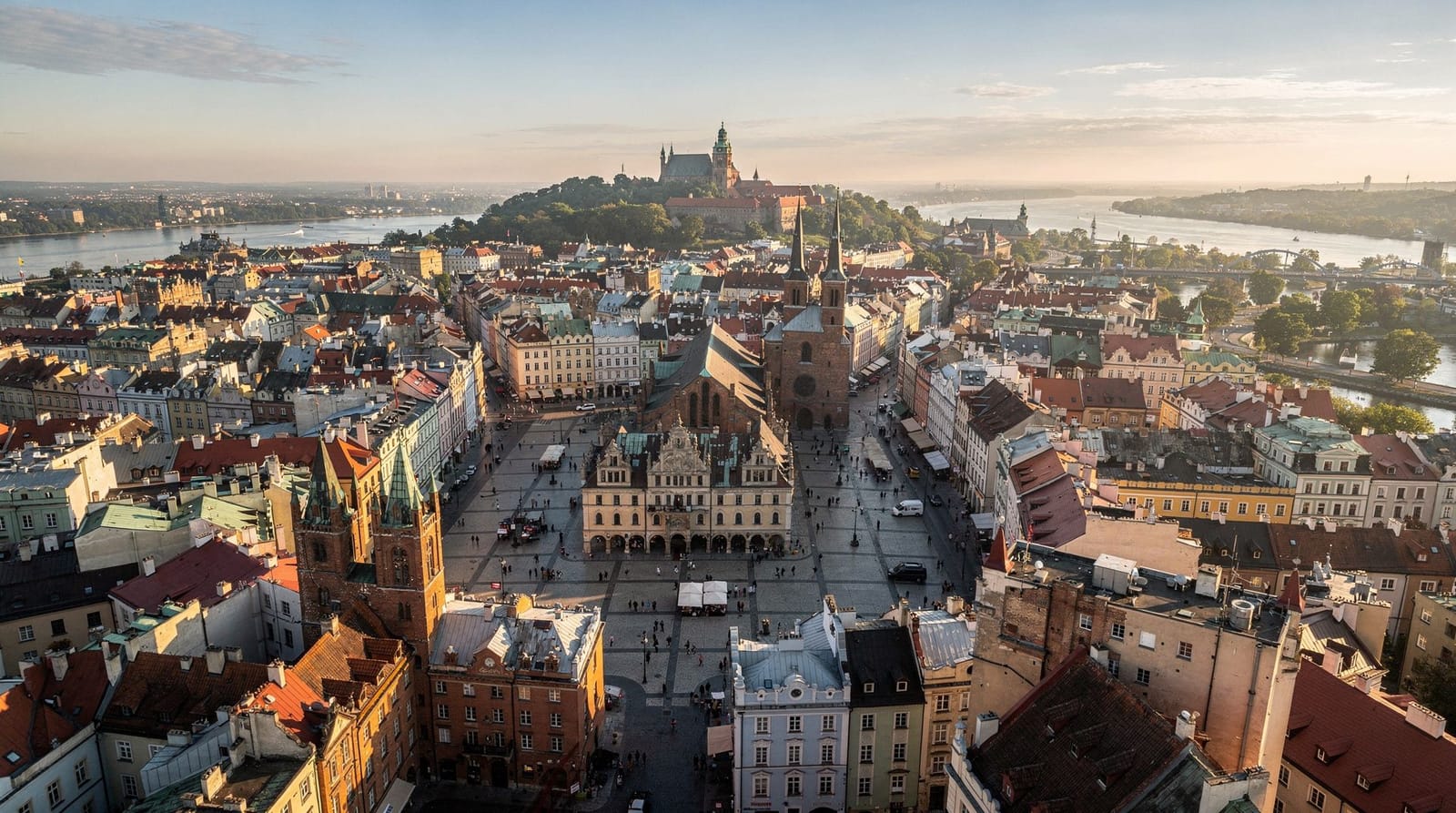
Wadowice, Kalwaria and Łagiewniki — comprehensive John Paul II tour from KrakówThis three-site tour also includes the Divine Mercy Sanctuary at Łagiewniki in southern Kraków — a significant pilgrimage site that John Paul II consecrated as a minor basilica. It makes for a full day but a logically coherent one.
Getting there from Kraków
By car: Drive south-west on the S52 towards Wadowice, then continue a short distance to Kalwaria Zebrzydowska. The journey from Kraków takes about 50 minutes; from Wadowice it is 15 minutes. Parking is available near the monastery (free).
By bus: Regular PKS bus connections run from Kraków to Kalwaria Zebrzydowska via Wadowice. Journey time from Kraków is approximately 60–70 minutes. The bus drops off near the monastery entrance.
Organised tour: The simplest option for visitors without a car; several tour operators combine Wadowice and Kalwaria in a single guided excursion from Kraków.
What to wear and bring
Comfortable walking shoes with good grip are essential — the Calvary paths mix paved promenades with narrow, sometimes muddy forest tracks, and a few sections climb steeply. Bring a light rain layer regardless of forecast; the wooded hillside microclimate can turn quickly. Water is a good idea in summer, as shaded stretches alternate with open, sun-exposed paths. There is little in the way of shops along the route itself, so carry any snacks you want with you rather than relying on the small café near the monastery entrance being open.
Practical notes
- Entry to the monastery grounds and Calvary paths is free.
- Dress modestly for the monastery church: shoulders and knees covered.
- The paths are not paved everywhere — wear shoes with grip, especially in wet weather.
- There is a small café near the monastery entrance and a few restaurants in the adjacent village.
- Dogs are not allowed on the paths near the chapels; leave pets in the car if visiting.
- Photography is generally permitted outdoors; check for restrictions inside individual chapels.
- Honest note: if you are not interested in religious heritage, Kalwaria’s appeal is primarily aesthetic and historical — the Mannerist chapels and the landscaped hillside are beautiful in their own right. But without interest in pilgrimage culture, two hours is plenty. Do not neglect Ojców National Park if natural landscapes are your priority.
Building it into a wider John Paul II trip
Kalwaria is one stop in a small cluster of sites connected to Karol Wojtyła’s life and papacy. The Pope John Paul II in Kraków guide traces the full geography — Wadowice, Kalwaria, Łagiewniki and the churches of Kraków itself — and is worth reading before deciding how many of these stops to fit into a single day. Travellers planning a longer regional trip may find the 7-day Małopolska itinerary useful for placing Kalwaria alongside the region’s other highlights rather than treating it as an isolated half-day.
Frequently asked questions about Kalwaria Zebrzydowska
Why did UNESCO designate Kalwaria Zebrzydowska as a World Heritage Site?
The UNESCO inscription cites the site’s outstanding universal value as a “Mannerist architectural and park landscape complex.” The 42 chapels built from 1600 onward represent a rare and exceptionally well-preserved example of a designed pilgrimage landscape — one where religious symbolism, architecture, and natural topography were deliberately combined to evoke Jerusalem. The site has also maintained its function as an active pilgrimage destination for over 400 years.
Can I visit Kalwaria Zebrzydowska without a car?
Yes, PKS buses run from Kraków to Kalwaria Zebrzydowska, with a journey time of around 60–70 minutes. Bus frequency is reasonable on weekdays but limited on Sundays. The monastery and the start of the Calvary paths are a short walk from the bus stop. Alternatively, an organised tour from Kraków is the most stress-free option.
How long should I allow for Kalwaria?
Allow two to three hours for a thorough visit: 45–60 minutes for the monastery church and courtyard, and 90–120 minutes for a walk through the main Calvary paths. If you want to complete the full circuit of both the Via Dolorosa and the Mary paths, allow three hours. A quick visit focused only on the monastery and immediate grounds can be done in an hour.
Is Kalwaria Zebrzydowska suitable for non-religious visitors?
The site is genuinely interesting from an architectural and landscape perspective regardless of religious background. The Mannerist chapels are historically significant, the hillside setting is beautiful, and the scale of the pilgrimage landscape gives a vivid sense of Counter-Reformation Catholic culture in seventeenth-century Poland. That said, the primary draw is religious heritage, so visitors uninterested in that context may find the site underwhelming after an hour or two.
Top experiences
Bookable activities with verified prices and instant confirmation on GetYourGuide.