Kraków's Vodka Factory Museum: tasting notes and an honest review
I went in to settle an online argument about whether the Vodka Factory Museum is worth two hours of your Kraków trip. Here’s what five glasses of Polish spirits and a guided history lesson actually taught me.
| Where | Zabłocie, near the Schindler Factory Museum |
| Cost | around 90-110 PLN per person |
| Time needed | around 90 minutes |
| Includes | 5-7 samples, guided history |
| Best time | book ahead for English tours, especially weekends |
The building you might walk past
The Vodka Factory Museum (Muzeum Fabryki Wódki, sometimes styled as the Polmos Museum) sits in a restored industrial building in Kraków’s Zabłocie district, not far from the Schindler Factory Museum. The exterior is not shouting. A small sign, a door, the faint smell of industrial renovation and something botanical beneath it. The kind of place that rewards knowing to look for it.
I had read about the museum on several forums and seen it described alternately as “the most fun two hours in Kraków” and “a tourist trap with a novelty angle.” I arrived expecting to settle the argument myself.
What the museum is, precisely
The Vodka Factory Museum is not — despite its name and some photographs online — a working distillery. It is a museum installed in what was formerly a production facility, with historical equipment, period displays about Polish vodka’s history, and — most relevantly — a guided tasting session at the end.
The guided tour runs approximately 90 minutes and includes five to seven vodka samples, depending on the format booked. The English-language tours run at set times; booking in advance is advisable, particularly on weekends when groups of various purposes fill the slots quickly.
Book the guided Vodka Factory Museum tour with tastingThe ticket includes the tasting and the guided portion. An audio-guide-only option exists for the museum without the guided tasting, which I would not recommend — the historical content is interesting but the tasting is the point.
What you actually taste
The tasting moved through several categories, which I will describe in the sequence they arrived.
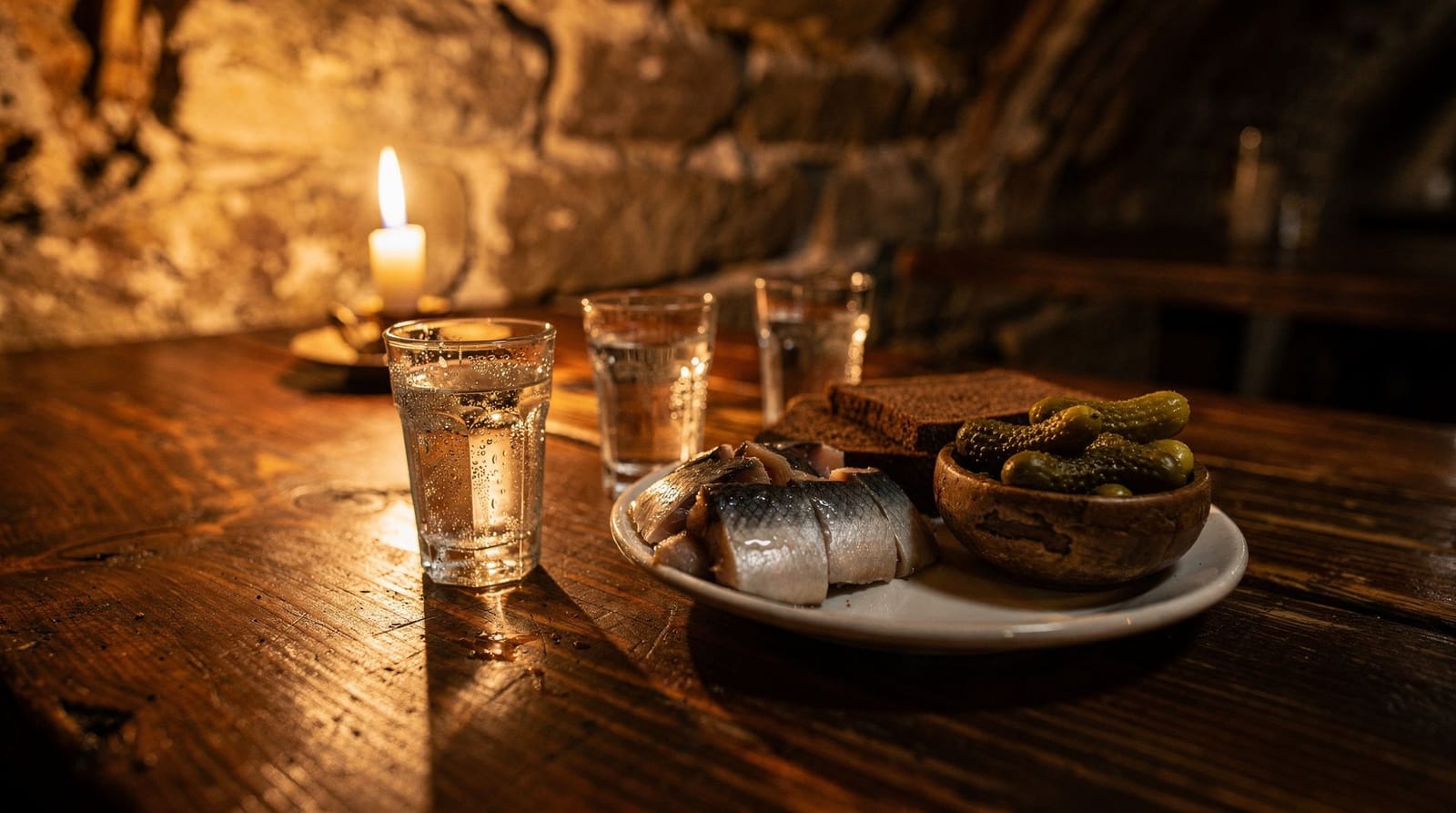
Żytnia (rye vodka): The classic Polish style, produced from fermented rye grain. Clear, with a distinctive grain nose that opens slightly warm. On the palate, dry and clean with a faint bready undertone. Not sweet. The guide described it as “the flavour most Poles associate with vodka, because it is what their grandparents drank.” This is the context in which Polish vodka developed: agricultural, pragmatic, and somewhat severe by modern cocktail-culture standards.
Luksusowa (potato vodka): Made from potato, which produces a subtly different texture — slightly creamier, with less of the sharp grain edge. Poland and Russia debate the superiority of potato versus grain vodka with the kind of conviction usually reserved for more significant disputes. Luksusowa is a credible argument for potato.
Żubrówka (bison grass vodka): A blade of żubrówka grass sits in every bottle — the same grass eaten by the wisent (European bison) in the Białowieża Forest. The result smells unmistakably of new-mown hay and vanilla, and tastes of both. It is the most immediately approachable vodka in the tasting for people unused to the category. The classic Polish serve is Żubrówka mixed with cold apple juice (a szarlotka or “apple pie” drink); the museum serves a small version with the tasting.
Wiśniówka (sour cherry vodka): A nalewka — a Polish fruit liqueur — rather than a vodka in the strict sense. Much sweeter, more viscous, with an intense cherry flavour that is not the artificial-red-candy note of cheap cherry liqueur but something closer to the actual fruit, slightly sour at the edges. This was the most popular among the group I was with, which ran to about twelve people including four stag-party participants who had booked the experience separately from their evening programme.
Starka (aged rye vodka): The finish. Starka is aged in oak casks, sometimes for decades, and the result is something that occupies territory between vodka and whisky — amber-coloured, with wood tannins and vanilla from the barrel, the grain still present beneath. Old bottles of Starka from before the communist nationalisation of the industry are collector’s items. The version served was several years old and noticeably complex. The stag-party participants were less interested in this one; the rest of the group was more interested.
The historical context: what the museum is actually teaching
Polish vodka history is not simple, and the museum is honest about its complexity. Key points that emerged from the guided section:
Poland has been producing rye-based spirits since at least the 8th century, though the product that would be recognised as vodka emerged in the 15th and 16th centuries. The word “vodka” is itself contested — Poles and Russians each claim primacy, and the argument will not be settled here.
The communist period (1945-1989) saw the nationalisation and standardisation of vodka production, which flattened regional variations but also produced the dominant brands that most people still associate with Polish vodka. Post-communism brought privatisation and, eventually, a craft revival that now includes dozens of small-batch producers experimenting with heritage grains, traditional nalewka recipes, and production methods that predate industrialisation.
The museum covers this arc reasonably well without becoming a propaganda exercise for any particular brand.
Honest assessment: worth it?
For vodka-curious visitors: unambiguously yes. The five-to-seven sample format covers enough ground to constitute a real education, and the guide — at least on the English tour I attended — was genuinely knowledgeable and willing to engage with questions beyond the scripted content.
For people who don’t drink: the museum section can be visited independently, and there are non-alcoholic options in the “tasting” for drivers or abstainers. The historical content is less engaging without the sensory component, but it is coherent.
For groups whose interest is primarily the word “tasting” in the sense of a party activity: it functions for this purpose, though the format is more educational than festive. The hidden bar tours (vodka hidden bar) in the Old Town are more suited to that purpose.
The ticket price was around 90-110 PLN (21-26 €) per person at the time of my visit — reasonable for what it includes, overpriced if you walk in expecting something theatrical rather than informative.
Comparisons: other vodka experiences in Kraków
Kraków has multiple vodka tasting options beyond the museum, running from intimate private tours to the more party-adjacent pub-crawl vodka stops. The Polish vodka guide covers these in more detail.
The key distinctions:
Bar-based tastings (in the Old Town or Kazimierz) run cheaper and shorter — 60-90 PLN for 5-7 samples, typically at a dedicated vodka bar — and are more social, less historical.
Private guided tours take small groups to multiple bars, explain the spirits at each stop, and include some food. These run longer (3 hours) and cost more (130-180 PLN) but combine the vodka experience with neighbourhood exploration.
The museum provides the historical and production context that the bar tastings do not.
If you are choosing one, the museum is the right choice for someone who wants to understand what they are drinking. The bar tasting is correct for someone who already knows and wants to taste well.
After the museum: the neighbourhood
The Zabłocie district where the museum sits is adjacent to Podgórze, the former Jewish Ghetto area, and is currently in a sustained state of artistic and residential regeneration. The Schindler Factory Museum is a short walk north. The Vistula riverbank is visible from the street.
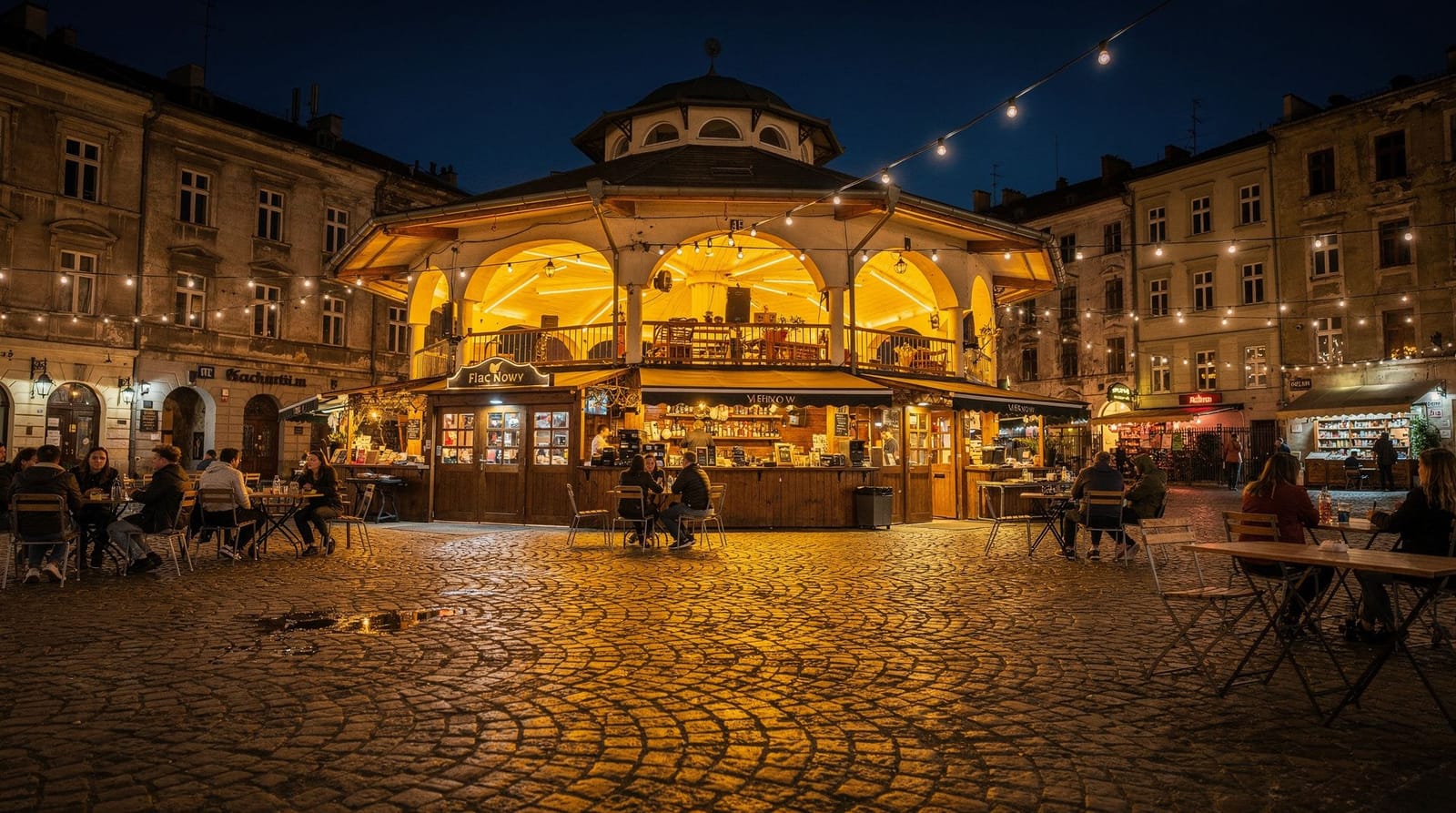
For dinner after the tasting, the easiest move is to cross the Podgórze bridge back into Kazimierz — the former Jewish quarter, now Kraków’s most lively neighbourhood for bars and restaurants. The walk takes about twenty minutes. Several excellent restaurants cluster around ul. Szeroka and the smaller streets of the district; prices are reasonable by Western European standards and considerably more honest than anything immediately adjacent to the main square.
The Kazimierz food and nightlife scene is described in full elsewhere — the short version is that it offers the best value and the most authentic atmosphere of any dining area in the city, and it pairs well with an afternoon that has already involved five glasses of Polish spirits.
The product I bought at the gift shop
The museum has a shop. I bought a small bottle of a craft rye vodka from a Małopolska producer I had not heard of, at around 45 PLN (11 €) for 200ml. The guide had mentioned it during the historical section as an example of the post-communist craft revival. I drank half of it later that evening and gave the rest to the hotel reception, which seemed like the right ending.
Who should skip it
Not every visitor needs this experience, and it’s worth being honest about who it’s not for. If you’re on a tight one-day itinerary with Wawel, the Old Town, and Kazimierz already competing for time, the museum is the first thing I’d cut — its value is real but not essential in the way the old town walking tour or Wawel Castle are. If your interest in vodka is purely social rather than educational, a hidden bar crawl in the Old Town delivers more atmosphere per złoty. And if you’ve already booked an evening pub crawl that includes vodka stops, the museum’s content will feel repetitive rather than additive.
Combining it with the rest of Zabłocie and Podgórze
The museum sits in a district that rewards lingering rather than a quick in-and-out visit. Before or after the tasting, the Schindler Factory Museum is a short walk away and pairs naturally as a half-day combination — sobering history followed by (or before) something lighter, or vice versa depending on your tolerance for tonal whiplash. The wider Podgórze ghetto district has its own layered history worth an hour of walking if you have the time. I’d recommend doing the vodka tasting second, after the historical sites, rather than arriving at Schindler’s Factory five vodka samples in. If you want the history side arranged for you, a skip-the-line ticket with a guided tour of the Schindler Factory keeps the morning tidy, and those who would rather simply walk in for the tasting can pick up an entry ticket to the Vodka Factory Museum with a tasting instead.
Where the museum fits in a wider Kraków plan
The museum works best as one anchor in a day, not the whole day. If you are still sketching your trip, the Kraków 3-day itinerary and the weekend city break both leave room for an afternoon on the Podgórze side of the river. Travellers with more time can lean on the guide to how many days in Kraków to decide whether a tasting deserves a slot. First-time visitors will find the basics in Kraków for first-timers, and my own first-time Kraków tips cover the mistakes I made before I learned better.
Eating and drinking around the tasting
Spirits and food go together in Poland, and the tasting is easier on the head if the day around it is built with that in mind. The traditional Polish dishes guide explains what to order when you want something solid, and the milk bar guide points to the cheap, filling canteens that suit the hour before a tasting. If the vodka leaves you curious about other drinks, the Kraków craft beer guide and the Old Town bar guide are natural next steps. For something fried and cheap on the way home, the zapiekanka street food guide is hard to beat, and my diary of Polish food I tried in Kraków shows how the whole picture fits together.
Getting there and getting back
Zabłocie is easy to reach without a car, and the getting around Kraków guide explains the options. If you plan to drink, it is worth reading the public transport guide beforehand so that the trip home is already figured out. For a lighter evening after the museum, the Kazimierz after dark story describes a walk that follows naturally from the river crossing, and the Kazimierz nightlife guide lists where to go next. Those who prefer a slower evening can browse the Kazimierz Jewish quarter guide for the district’s history before dinner.