Wawel Cathedral guide: tombs, chapels & the Sigismund Bell
Krakow: Wawel Cathedral guided tour with admission
What is inside Wawel Cathedral and do you need a ticket?
Wawel Cathedral contains the tombs of nearly all Polish kings and queens plus outstanding Renaissance and Baroque chapels. Entry requires a single ticket (26 PLN / 6.20 €, reduced 18 PLN) that also covers the Sigismund Bell, the royal tombs and the Cathedral Museum — the nave is free only during religious services, when tourist visits are restricted.
Poland’s Westminster Abbey on a hill
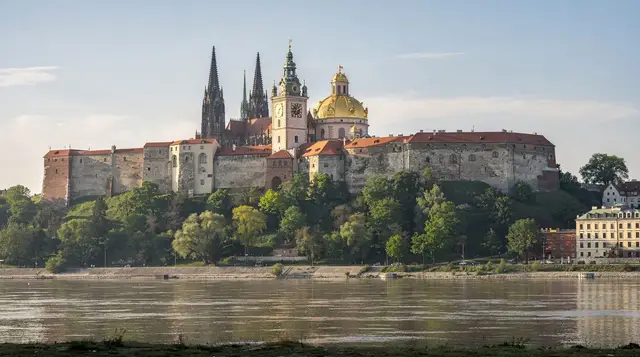
Standing at the edge of Wawel Hill beside the castle, the Cathedral of Saints Stanislaus and Wenceslaus is to Poland what Westminster Abbey is to Britain and the Panthéon to France. Inside this single Gothic building, you can trace a thousand years of Polish history through the tombs of 41 kings and queens, the chapels of noble dynasties, the relics of Poland’s patron saint, and the art commissioned by rulers who saw Kraków as their capital of civilisation.
It is not especially large as cathedrals go — the nave is relatively modest — but every surface has been worked over by history. Gothic vaults meet Renaissance chapels meet Baroque altars, all coexisting within 200 metres of Gothic stonework. The result feels busy in the best sense: accumulated rather than designed.
| Where | Inside the main gate of Wawel Hill, left of the courtyard |
| Cost | 26 PLN (reduced 18 PLN), Sigismund Bell included |
| Time needed | About 40 min for the Cathedral and bell; allow more with the museum |
| Getting there | 10-min walk from Rynek Główny along ul. Grodzka |
| Best time | 09:00–10:00 or 15:30–16:30 for fewer crowds |
The Sigismund Chapel: north of the Alps’ finest Renaissance building
The golden copper-roofed chapel visible from the courtyard — jutting out from the south wall of the cathedral — is the Sigismund Chapel (Kaplica Zygmuntowska), completed in 1533. Italian architect Bartolomeo Berrecci designed it for King Sigismund the Old as a royal mausoleum, and the result is widely considered the finest example of Renaissance architecture outside Italy.
Inside, the walls are lined with alabaster reliefs, the dome is decorated with carved stone coffers filled with rosettes, and the tomb effigies of Sigismund the Old and Sigismund Augustus lie on marble sarcophagi of extraordinary refinement. Light filters through the stained glass softly; the proportions feel Mediterranean rather than Polish. Even visitors with no particular interest in art history tend to stop here longer than they planned.
The chapel is included in the standard cathedral ticket — no separate entry required.
Royal tombs: who is buried here
The crypt beneath the cathedral contains the remains of Polish monarchs from Władysław I (died 1333) to Józef Piłsudski (who, though not a king, was interred here in 1935 reflecting his status as the restorer of Polish independence). Notable tombs include:
- St. Stanislaus (patron saint of Poland, martyred 1079): the cathedral’s centrepiece altar contains his reliquary, and his feast day on 8 May draws large crowds.
- Casimir the Great (died 1370): under the red marble slab in the centre of the nave, the last king of the Piast dynasty.
- Władysław II Jagiełło (died 1434): who defeated the Teutonic Knights at Grunwald; his painted canopy tomb is one of the cathedral’s most striking monuments.
- John III Sobieski (died 1696): who relieved Vienna from the Ottoman siege in 1683; buried in the baroque Sobieski Chapel.
- Adam Mickiewicz and Juliusz Słowacki: not kings but Poland’s two greatest Romantic poets, whose remains were moved here in the 20th century as an act of national recognition.
The crypt is reached via stairs from inside the cathedral. It is atmospheric — vaulted stone, minimal lighting, the actual stone sarcophagi behind iron grilles. Not morbid; more like being in the physical presence of Polish history.
The Sigismund Tower and the Bell
The Sigismund Bell (Dzwon Zygmunta), cast in 1520, weighs nearly 11 tonnes and hangs in the Sigismund Tower. It is rung only for the most significant occasions in Polish life: major religious feasts, state funerals, and events of national importance. When it rang on 11 November 2018 for the centenary of Polish independence, half of Kraków came out to listen.
You can climb the narrow spiral staircase to the belfry, which is included in the Cathedral ticket. The view over Wawel Hill, the Vistula, and the Kraków skyline is good, though the spiral staircase is steep and not suitable for those with vertigo or mobility difficulties. The bell itself is enormous at close range — even at rest it’s impressive.
Tickets and opening hours
Cathedral ticket: 26 PLN (≈ 6.20 €) for adults, 18 PLN (≈ 4.30 €) reduced. One ticket covers the Cathedral, the Sigismund Bell, the royal tombs and the Cathedral Museum; the tower is not an extra charge.
Opening hours (approximate):
- Monday–Saturday: 09:00–16:30.
- Sunday and religious feast days: the Cathedral operates as a place of active worship. Tourist visits are suspended during morning Masses Sunday visits are possible from 12:30 to 16:30.
- The Cathedral is closed to tourists on a number of Polish public holidays and on Easter weekend.
When it’s free: during active religious services — but tourist exploration is not appropriate and is actively discouraged during this time.
A Wawel Cathedral guided tour with admission is the most efficient way to visit, especially if you want context for the 40-odd chapels and the tombs. Audio guides (available at the ticket office in Polish, English, German, French, Italian, Spanish) cover the highlights. The combined Wawel Castle and Cathedral guided tour saves you from managing two separate ticket queues.
For a private visit covering the Cathedral alongside St. Mary’s Basilica, the Wawel Castle, Cathedral and St. Mary Basilica private tour is efficient for those who want depth without the standard group pace.
Practical tips
Photography: permitted inside without flash. No tripods. The Sigismund Chapel is sometimes closed for private events — check at the ticket office.
Dress code: shoulders covered, no shorts. Scarves available at the entrance for those who need them.
Crowds: the Cathedral is substantially less crowded than the castle. Even in peak summer, the early morning (09:00–10:00) and late afternoon (15:30–16:30) are manageable without booking individual timed slots.
Combination with castle visit: most visitors do castle and cathedral on the same morning. Allow at least 45 minutes for the Cathedral alone if you want to read the tomb inscriptions and spend time in the Sigismund Chapel. A combined visit with the State Rooms and Crown Treasury takes a full morning (4+ hours).
Museum vs. Cathedral: what’s the difference
Wawel Hill sells tickets for two separate institutions, which confuses first-time visitors. The Castle museums (State Rooms, Treasury, and the rest — see the Wawel Castle guide) are secular exhibitions run by the state museum administration. The Cathedral is a working parish church with its own ticket office, its own opening hours tied to Mass times, and its own dress-code enforcement. Buying a castle ticket does not include the Cathedral, and vice versa — budget separately and expect two different queues, even though the buildings sit metres apart.
Getting there
The Cathedral stands immediately inside the main gate of Wawel Hill, to the left as you enter from the courtyard side. The approach is the same as for Wawel Castle: walk 10 minutes south from Rynek Główny along ul. Grodzka. The Cathedral entrance has its own separate ticket kiosk from the castle. Trams 3, 6, 8, and 10 stop nearby on ul. Stradomska, and the walk up follows the same route detailed in the getting around Kraków guide.
The Cathedral in context
The Cathedral’s position on Wawel Hill — above the river, above the city, above everything — was deliberate. Polish kings understood that their legitimacy rested partly on proximity to the sacred. The hill held a bishop’s seat before it held a royal court. Visiting the Cathedral after the Castle makes the relationship between sacred and secular power in Polish history immediately legible in a way no book quite captures.
It is also, practically speaking, one of the most atmospheric spaces in Kraków — the crypt especially, with its vaulted stone corridors and the weight of a thousand years pressing down from above. Worth 45 minutes of anyone’s afternoon. Pair it naturally with a walk down to St. Mary’s Basilica on the Rynek, the other essential Gothic interior in the city centre.
Reading the cathedral: how to spend your time inside
Resist the urge to rush from monument to monument. The building rewards a slow loop: start in the nave to get your bearings, let your eyes adjust to the light, then work outward chapel by chapel. Each chapel was paid for by a different family or ruler, so the style, the materials and even the mood change every few steps. Treat it less as one church and more as a street of small private monuments under a shared roof.
If you know little about Polish history, a short read beforehand makes the tombs mean far more. The Polish history for visitors guide gives the outline of the dynasties, and the Wawel royal history page explains how the hill became the seat of power. Those names on the sarcophagi stop being abstract once you know who they were.
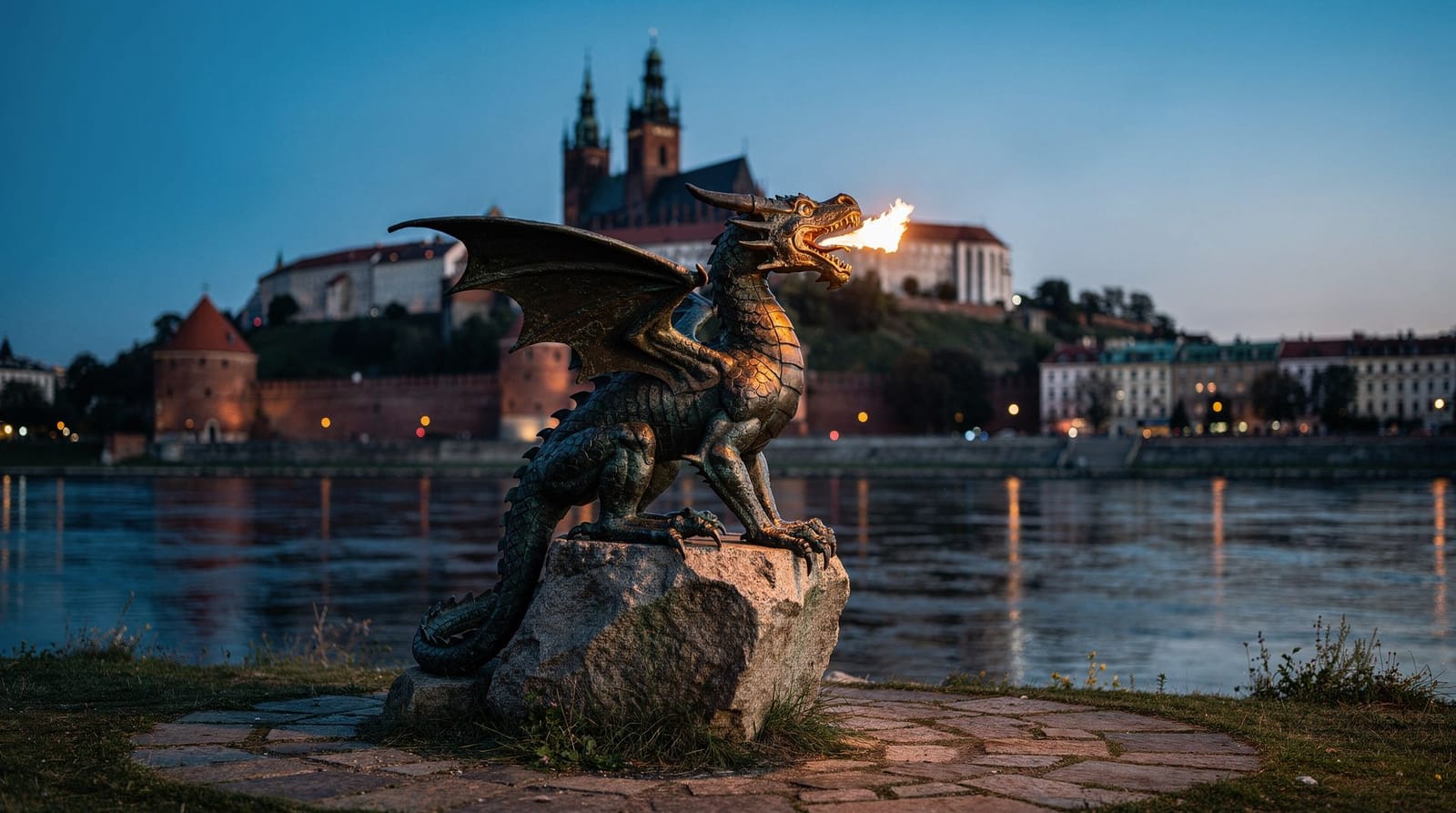
Families with children often find the crypt and the bell the easiest hooks. The legend of the dragon beneath the hill is a good story to tell on the way up, and the Wawel dragon legend guide has it in full. More tales of the city are collected in Kraków legends and myths.
Building the rest of your day around Wawel
The Cathedral sits at the end of the classic city walk, so it combines naturally with what comes before it. Walk down from the Rynek by way of the Royal Route walking guide, or follow the Old Town walking tour and finish on the hill. After the Cathedral, the Wawel State Rooms guide covers the secular side of the same hill, which makes a good contrast with the tombs.
Many visitors also want to understand why this city mattered so much to a particular modern pope. The Pope John Paul II in Kraków guide follows that thread through the city, and the Cathedral is part of that story. If this is your first trip, the Kraków for first-timers guide and the 2-day itinerary show where a Wawel morning fits into a wider plan. After the climb back down, the shaded paths of Planty Park are a quiet way to slow down.
Frequently asked questions about visiting Wawel Cathedral
Is Wawel Cathedral free to enter?
Entry requires a ticket (26 PLN / 6.20 €, reduced 18 PLN). The Cathedral is free to enter only during active religious services, but tourist visits are not permitted during these times. The Sigismund Bell is included in the same ticket.
What is the most important thing to see in Wawel Cathedral?
The Sigismund Chapel (gold dome, Renaissance interior) is widely considered the finest Renaissance building north of the Alps. The royal crypt with its sarcophagi is equally compelling. The reliquary of St. Stanislaus at the main altar is Poland’s most venerated relic. All three are included in the standard ticket.
Can I attend Mass at Wawel Cathedral?
Yes — the Cathedral is an active parish church. Mass schedules are posted at the entrance and on the Wawel website. Sunday Masses in the morning are the most attended; tourist visits resume from 12:30. Attending Mass is one of the more meaningful ways to experience the building’s living dimension beyond the historical.
How long does a visit to Wawel Cathedral take?
With the audio guide covering the main chapels and the crypt, allow 45–60 minutes. The Cathedral and Sigismund Bell take about 40 minutes; the museum adds more time. A guided tour with in-depth explanations runs approximately 60–75 minutes.
Do I need a separate ticket for the Castle and the Cathedral?
Yes. Wawel Castle’s exhibitions and Wawel Cathedral are ticketed and managed separately, even though they share the same hill. A castle ticket does not admit you to the Cathedral, and a Cathedral ticket does not cover any of the five castle exhibitions. If you want both, plan for two queues and two purchases, or book a combined guided tour that handles logistics for you.
Is Wawel Cathedral worth visiting if I’ve already seen the Castle?
Yes — they cover different ground. The Castle exhibitions are about royal life and decorative art; the Cathedral is about death, sainthood, and national memory, through the tombs of kings and the reliquary of St. Stanislaus. Visitors who do only the Castle often say afterward that the Cathedral was the emotional high point they nearly skipped.
Top experiences
Bookable activities with verified prices and instant confirmation on GetYourGuide.