Kalwaria Żebrzydowska day trip from Kraków: the Baroque pilgrimage complex
From Krakow: Wadowice John Paul II hometown & Kalwaria tour
How do I visit Kalwaria Żebrzydowska from Kraków?
Kalwaria Żebrzydowska is about 35 km south-west of Kraków, roughly 45 minutes by road. Buses run from Kraków's MDA bus station to Kalwaria several times daily (journey ~1h, about 12 PLN each way). Most visitors combine it with Wadowice, birthplace of Pope John Paul II, which is just 10 km further. Guided day tours from Kraków cover both sites. Entry to the main basilica is free; the full outdoor pilgrimage route through the 42 chapels takes 2–3 hours on foot.
What makes Kalwaria Żebrzydowska exceptional
| Where | 35 km south-west of Kraków, near Wadowice |
| Cost | Basilica and chapels free; bus ~12 PLN each way |
| Time needed | Half day (2–3 hours on site), full day combined with Wadowice |
| Getting there | Bus from Kraków MDA station, car (40–45 min), or guided tour |
| Best time | May–June or September; avoid Holy Week and 14–15 August unless seeking the crowds |
Most tourists heading south-west from Kraków stop at Wadowice, Pope John Paul II’s birthplace, and miss Kalwaria Żebrzydowska entirely. This is a significant oversight. The Kalwaria complex is one of the most remarkable sacred landscapes in Central Europe — a UNESCO World Heritage Site that combines Baroque architecture of the first order with a living pilgrimage tradition that has continued unbroken since 1600.
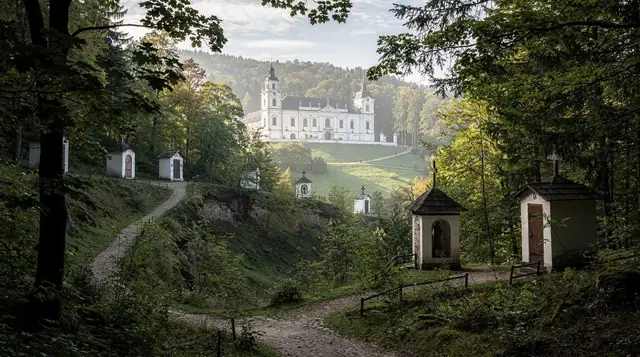
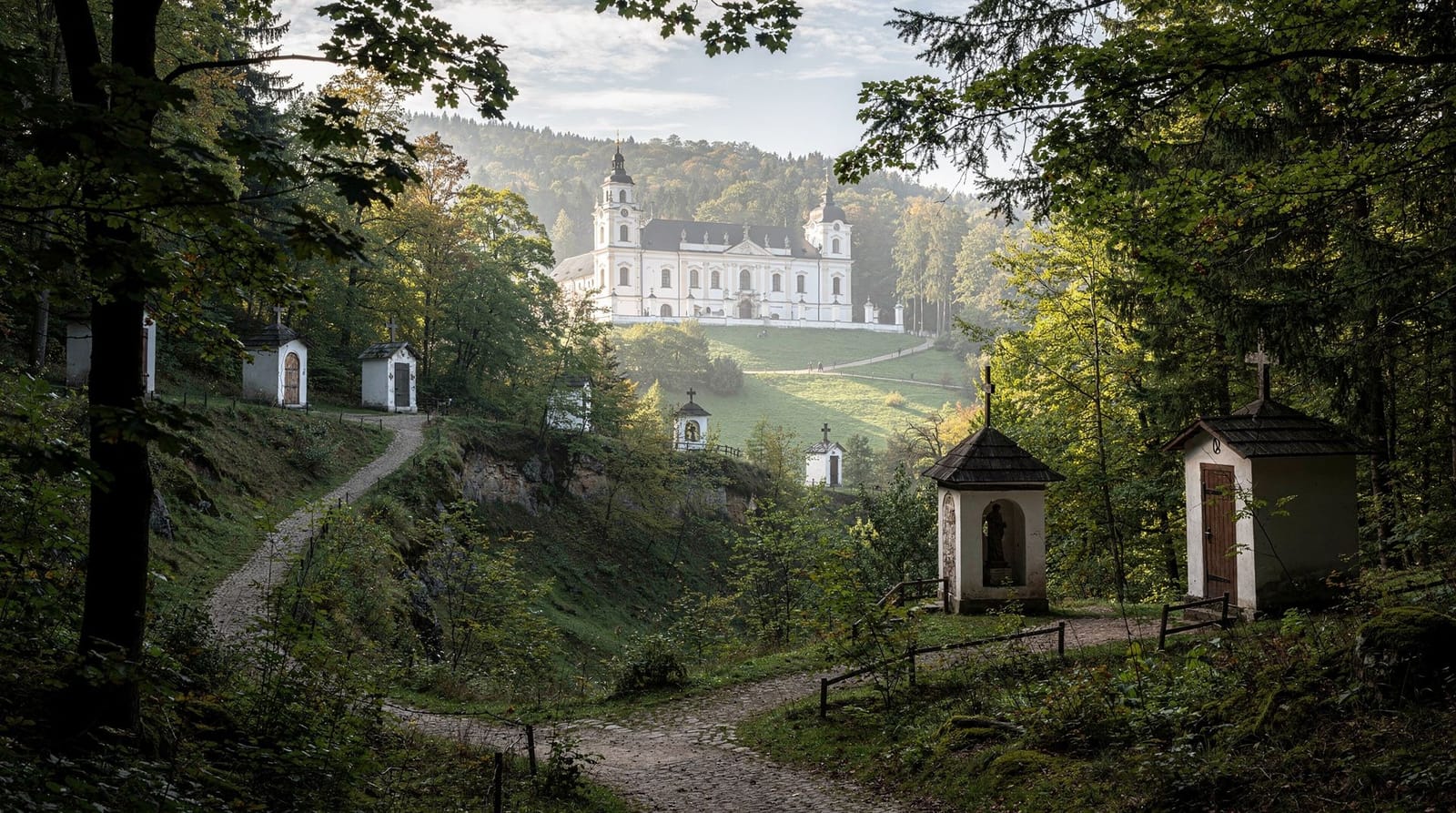
The site was created by Mikołaj Zebrzydowski, a powerful Małopolska magnate, beginning in 1600. His vision was to recreate the topography of Jerusalem in the hills above his Zebrzydów estate: chapels, churches, and paths tracing the Stations of the Cross, the Way of the Virgin Mary, and scenes from the life of Christ and Mary — all adapted to the actual landscape, using hilltops, valleys, and stream crossings that echo the original Holy Land geography.
Over 120 years, 42 chapels and churches were built across the hills. Many were designed by Jan Maria Bernardoni and Paul Baudarth — Flemish and Italian architects working in the elaborate Mannerist-Baroque style that was fashionable among Counter-Reformation patrons. The result is extraordinary: a series of small sacred buildings, many of architecturally exceptional quality, scattered across 6 km of wooded hillside paths.
Distance and transport from Kraków
Kalwaria Żebrzydowska is approximately 35 km south-west of Kraków city centre.
By bus from Kraków: From Kraków MDA Bus Station (next to Kraków Główny), buses run to Kalwaria Zebrzydowska (or Wadowice with a stop at Kalwaria) several times daily. Journey time: approximately 55–70 minutes. Fare: 11–14 PLN each way. The bus drops you near the monastery entrance.
By car: About 40–45 minutes via the DK52 route south-west from Kraków, with good road conditions throughout. Parking available near the monastery entrance (free on the access road, small fee in marked car parks). The Wadowice + Kalwaria loop by car is straightforward — drive to Wadowice (50 km from Kraków), visit, then 10 km east to Kalwaria.
By guided tour from Kraków: The Wadowice John Paul II hometown and Kalwaria tour from Kraków covers both sites with transport and a guide. Recommended for those who want context on the John Paul II connection and on the pilgrimage traditions.
For a broader itinerary covering multiple John Paul II sites, the Wadowice, Kalwaria, and Łagiewniki John Paul II tour also includes the Łagiewniki Divine Mercy Sanctuary in Kraków itself — a third site of importance for JP2 devotees.
The pilgrimage complex: what to see
The Basilica of Our Lady of the Angels
The main basilica at the centre of the complex is a 17th-century Baroque church with an elaborately decorated interior. The focal point is the miraculous image of Our Lady of Kalwaria, a Renaissance-Baroque painting credited with miraculous powers since the 17th century. The painting is venerated behind a silver tabernacle and is revealed during Mass and special pilgrimages. Young Karol Wojtyła (later Pope John Paul II) attended the Assumption pilgrimage here as a child and continued to visit throughout his life — Kalwaria was profoundly formative for his Marian theology.
Entry to the basilica is free. The church is open daily (hours vary seasonally — verify locally). A Franciscan monastery adjoins the basilica.
The 42-chapel pilgrimage route
This is the heart of the Kalwaria experience and what distinguishes it from a simple church visit. The chapels are spread across a 6 km system of paths through wooded hills, each marking a station in the Via Dolorosa, the Way of the Virgin Mary, or other sacred narratives. Each chapel is architecturally distinct:
- The Chapel of the Washing of Feet (late Mannerist, early 17th century) echoes the architecture of the Holy Land Cenacle
- The Chapel of the Tomb of the Virgin Mary (1633, designed by Paul Baudarth) is an unusual octagonal structure
- The Chapel of Carrying the Cross features bas-reliefs of exceptional quality
- Herod’s Palace (1610–1614) is a Renaissance-Mannerist structure unusually large for its position in the route
- The Chapel of Pilate’s Praetorium imitates elements of the actual Praetorium in Jerusalem
Walking the full route takes 2–3 hours at a moderate pace. The paths are well-maintained but involve modest ascent through the hills — sensible walking shoes recommended. The route is freely accessible year-round.
The Calvary Passion Play
The most significant event in Kalwaria’s liturgical calendar is the annual Passion Play held during Holy Week (the week before Easter), culminating on Good Friday and Holy Saturday. Actors from the local Franciscan community and surrounding villages re-enact the Passion of Christ across the full outdoor pilgrimage route. This tradition has run continuously (with a Soviet-era gap) since the 17th century.
Attendance during Holy Week reaches 50,000–100,000 pilgrims. If you visit during this period, expect extraordinary atmosphere — but also significant crowds and limited transport. Book accommodation months in advance.
The Assumption of Mary pilgrimage (14–15 August) is the second major event, drawing another 100,000+ pilgrims. Again: moving and atmospheric, but crowded.
Combining with Wadowice
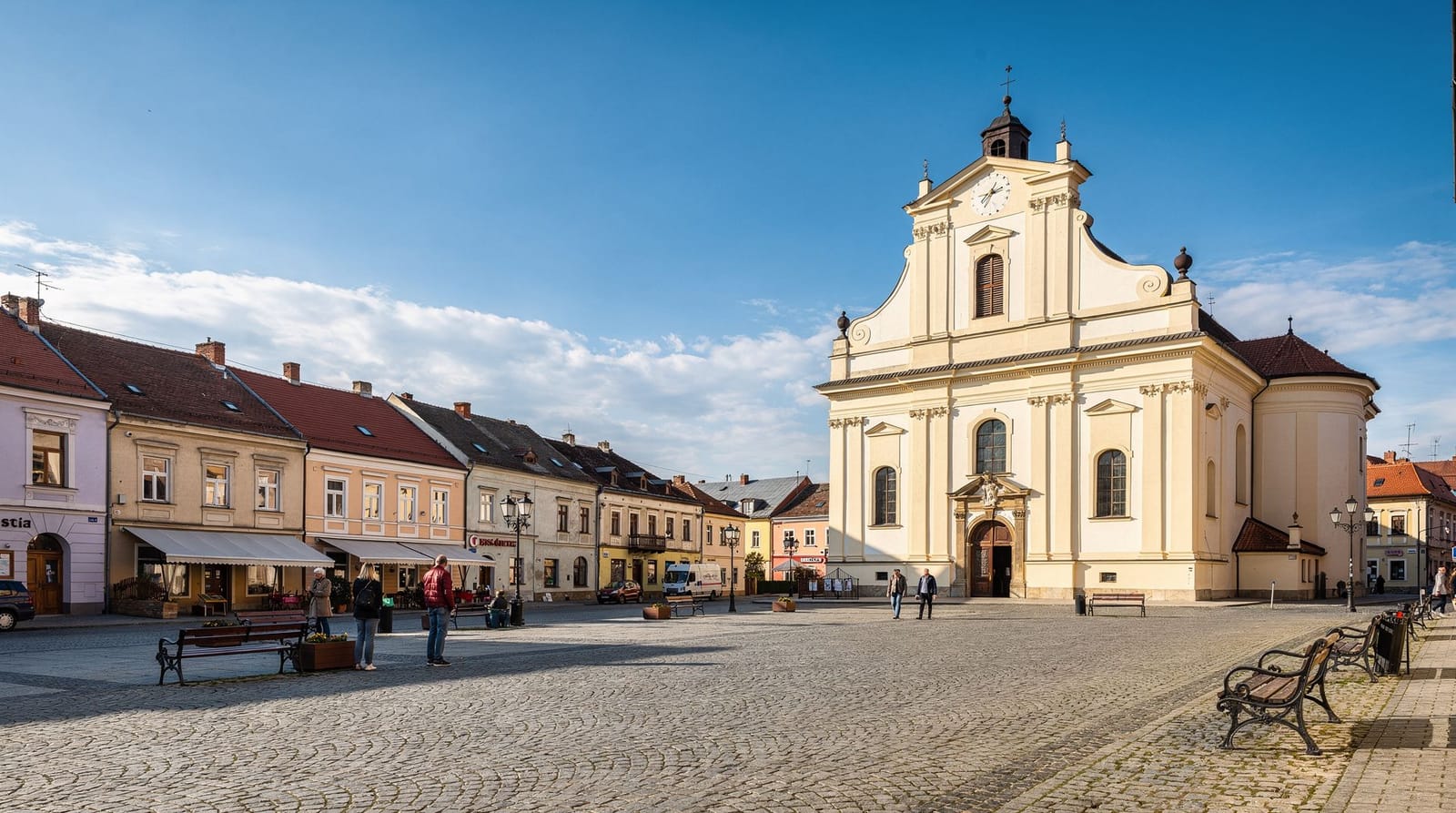
Wadowice, 10 km west of Kalwaria, is the birthplace of Karol Józef Wojtyła, who became Pope John Paul II in 1978. The combination of Wadowice and Kalwaria in a single day is the standard approach for the region, and both sites reinforce each other — Kalwaria was central to Wojtyła’s spiritual development, and visiting his birthplace first gives the pilgrimage complex additional personal resonance. The full Wadowice and John Paul II day trip guide covers the town in more depth if you want to allocate it more than a quick stop.
At Wadowice:
- Dom Rodzinny Jana Pawła II (John Paul II Museum): The family apartment where Wojtyła was born in 1920, now an exceptionally well-done museum. Children under 7 are free; check current ticket prices on the museum’s official website (domjp2.pl). Allow 60–90 minutes.
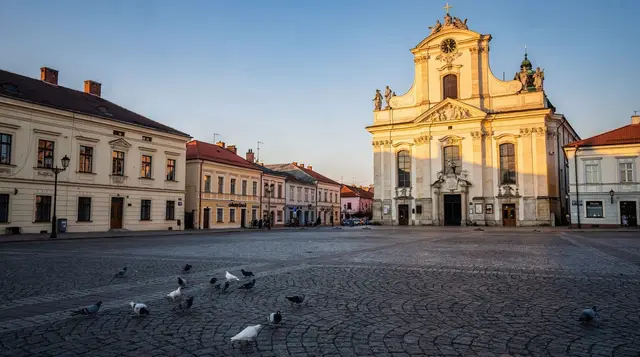
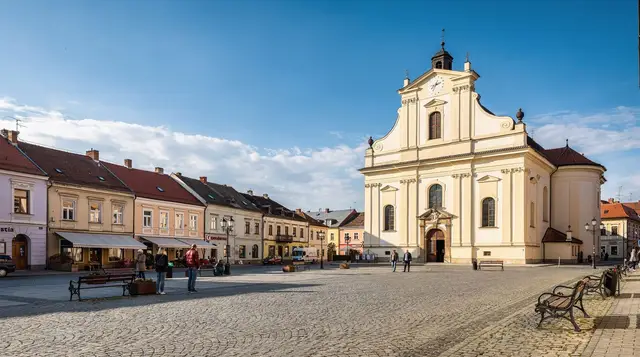
- Basilica of the Presentation of the Virgin Mary: The church where Wojtyła was baptised and served as altar boy. Free entry.
- Kremówki from Cukiernia Galicyjska (Rynek Główny 13): The cream cakes that Wojtyła reportedly loved as a child have become a minor pilgrimage object in themselves. A good one costs 7–9 PLN.
- Rynek Główny: The market square is pleasant, with the parish church dominating one side and various Wojtyła-related monuments.
The “In the footsteps of John Paul II” tour from Kraków includes sites connected to the future Pope across the region, with informed commentary on his life and legacy.
What to know before you visit
Opening hours: The basilica is open daily, roughly 6:00–18:00 (check locally as hours shift seasonally). The outdoor pilgrimage paths are accessible at all times. The John Paul II Museum in Wadowice: 9:00–18:00 with last admission at 16:45 (domjp2.pl; check the site for closed days).
Admission: Basilica free. Outdoor chapels free. John Paul II Museum in Wadowice: check current prices on domjp2.pl. Guided tours extra.
Dress code: Dress modestly for the basilica (shoulders and knees covered). This is an active place of worship, not a tourist site — behave accordingly. During Mass or devotions, wait quietly or join respectfully.
Seasonal note: The outdoor route is pleasant from April through October. In winter, the paths through the wooded hills are beautiful in snow but some chapels may be locked. The Passion Play (Good Friday) and Assumption Pilgrimage (14–15 August) are exceptional but require early planning.
Café and food: Limited options in Kalwaria itself beyond a few small cafés near the monastery. Wadowice has better options on Rynek Główny — try the pierogi at Restauracja Rynek or a full meal at Karczma Pod Dębem before or after Kalwaria.
The spiritual and cultural significance
Kalwaria Żebrzydowska was added to the UNESCO World Heritage List in 1999, cited as “an outstanding example of a late 16th-century pilgrimage park, which has conserved its Mannerist layout and its Baroque churches almost intact.” The UNESCO designation emphasises both the architectural quality and the unbroken living tradition: this is not a preserved historical curiosity but an actively used sacred landscape.
For non-Catholic visitors, the site is fascinating as an example of how Counter-Reformation Catholicism expressed itself spatially — the entire landscape reimagined as a sacred geography, collapsing the distance between Poland and Jerusalem through architecture and pilgrimage. It is Baroque landscape design at a scale that has no real parallel in Western Europe.
For Polish Catholics, and particularly those who grew up with the legacy of John Paul II, Kalwaria is a place of deep emotional significance. The young Karol Wojtyła came here with his father (his mother died when he was eight) and found in the Marian devotions of this complex something that shaped his theology for life. The site connects individual biography to a centuries-long tradition of popular faith.
Practical costs in PLN
| Item | Cost |
|---|---|
| Bus from Kraków (each way) | 11–14 PLN (€2.60–3.40) |
| Guided tour from Kraków (transport + guide) | 110–145 PLN (€26–35) |
| John Paul II Museum, Wadowice (adult) | See domjp2.pl |
| Kalwaria basilica | Free |
| Outdoor pilgrimage route | Free |
| Kremówka cream cake, Wadowice | 7–9 PLN (€1.70–2.10) |
| Lunch in Wadowice | 40–65 PLN (€9.50–15.50) |
Frequently asked questions about visiting Kalwaria Żebrzydowska
Is Kalwaria Żebrzydowska worth visiting if I’m not Catholic?
Yes — the architectural quality of the 42 chapels, the landscape setting, and the cultural significance of a living 400-year pilgrimage tradition are all genuinely fascinating regardless of faith. The site is less visited than its UNESCO status might suggest, making it a rewarding discovery for architecture, history, and landscape enthusiasts.
How long does the full pilgrimage route take?
Walking the complete Via Dolorosa and Way of the Virgin Mary routes takes 2.5–3 hours at a comfortable pace. Many visitors combine a shorter selection of key chapels (1–1.5 hours) with time in the main basilica. The paths are well-marked and not strenuous — modest uphill sections but nothing requiring hiking boots.
Can I visit Kalwaria and Wadowice in one day from Kraków?
Easily — the two sites are 10 km apart and a full day comfortably covers both with transport from Kraków. Allow 2–3 hours for Kalwaria (outdoor route + basilica) and 1.5–2 hours for Wadowice (museum + church + kremówka). A guided tour handles the logistics smoothly.
What is the best time of year to visit?
May, June, and September are ideal — mild weather, accessible outdoor paths, smaller crowds than July–August. The Passion Play at Easter and Assumption Pilgrimage in August are extraordinary but very crowded. Winter visits are possible and atmospheric (snow on the wooded pilgrimage paths is beautiful) but some chapels may be closed.
Is there parking at Kalwaria?
Yes — free parking is available on the approach road to the monastery and in several small car parks nearby. On major pilgrimage days (Good Friday, 14–15 August) parking can be very limited; arrive early or use buses from Wadowice.
How Kalwaria fits into a wider day-trip plan
Kalwaria Żebrzydowska is one of several worthwhile day trips in the region south-west of Kraków, and it’s worth knowing where it sits relative to the alternatives before committing a full day to it. The best day trips from Kraków guide ranks all the major options; Kalwaria stands out as the least crowded of the region’s UNESCO sites, which suits travellers who found Wieliczka or Auschwitz too busy for reflection.
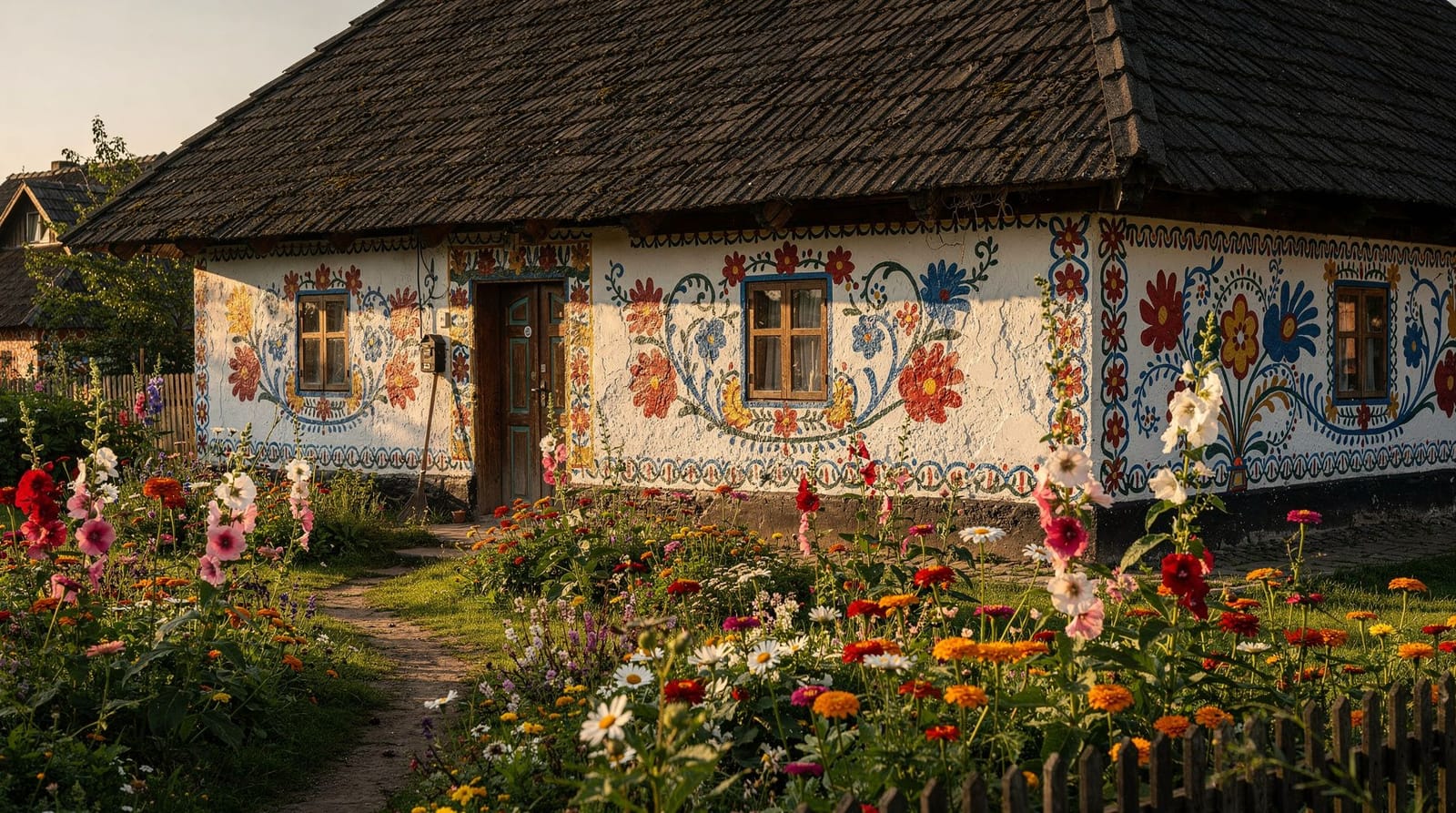
If Baroque pilgrimage architecture appeals but you’d rather see something more colourful and less solemn, the Zalipie painted village day trip is a similar distance from Kraków and offers a completely different, folk-art character. Both are underrated relative to the region’s headline sights, and neither requires the advance booking that Auschwitz or Wawel’s State Rooms demand.
For travellers building a multi-day itinerary, Kalwaria and Wadowice together make a natural half-day-to-full-day addition to any 4+ day Kraków trip — see how many days you need in Kraków for how it slots in alongside the city’s other day trips.
Pairing Kalwaria with other faith and history stops
Kalwaria sits naturally alongside the other sites that tell the story of John Paul II and of Polish religious life. Back in the city, the Pope John Paul II in Kraków guide follows the future pope’s years as a priest and archbishop, which gives the Kalwaria and Wadowice visit a clear before-and-after. The Wawel Cathedral guide covers another major sacred site where Polish history and faith are closely tied together.
If the quiet, reflective mood of the chapel paths is what you are after, Czestochowa and the Black Madonna offers a very different but related pilgrimage experience, and the personal account in the Czestochowa pilgrimage story shows what the journey feels like on the ground. Travellers who prefer a day in nature rather than in churches can look at the Ojców National Park day trip instead.
When you are deciding how to slot this trip into a longer stay, the Kraków weekend city break itinerary and the 7 days in Małopolska itinerary both show where a half-day outside the city can fit without rushing the rest of the plan. For getting back into town afterwards, the Kraków public transport guide explains how to continue from the bus station to wherever you are staying.
Top experiences
Bookable activities with verified prices and instant confirmation on GetYourGuide.